








Executive Overview
For early-stage Software-as-a-Service (SaaS) founders, pricing is frequently approached as an existential puzzle. In the nascent phases of a company’s lifecycle—long before true product-market fit (PMF) has been established—founders often agonize over monetization strategies. Questions paralyze boardrooms and garage offices alike: Should we charge per user, per feature, or on a consumption basis? Is $50 too expensive? Is $15 too cheap? Should we offer a freemium tier?
According to seasoned SaaS investor and SaaStr founder Jason Lemkin, early-stage founders are generally looking at the problem through the wrong lens. In the pre-PMF phase, the directive is remarkably straightforward: start with comparables.
While the marginal cost of software distribution is practically zero—often amounting to mere fractions of a cent per user in cloud hosting and database overhead—the pricing of software is governed not by its marginal cost of production, but by perceived market value and, crucially, psychological benchmarks. Modern enterprise and prosumer buyers are software veterans. Having onboarded, utilized, and discarded dozens or even hundreds of SaaS applications over their professional lifetimes, these buyers have internalized precise expectations regarding what specific categories of software should cost.
This article explores the foundational philosophy of early-stage SaaS pricing, dissecting why pricing innovation is often a dangerous distraction, how market context reduces sales friction when every single lead is precious, and how founders can anchor their pricing strategies to existing market standards before embarking on advanced optimization.
Detailed Chronology: The Evolution of Early-Stage Pricing Dilemmas
To understand how modern SaaS pricing has evolved, one must look at the shifting landscape of software consumption over the past two decades.
Era 1: The On-Premises Monopoly (Pre-2010s)
In the era of enterprise software dominated by legacy giants, pricing was deeply complex, opaque, and heavily negotiated through lengthy sales cycles. Software was shipped on physical media or deployed locally on servers. Implementation costs ran into the hundreds of thousands of dollars, and pricing was dictated by upfront licensing fees paired with mandatory annual maintenance contracts. Startups imitated these models, attempting to lock early customers into high-ticket enterprise agreements before proving long-term value.
Era 2: The Cloud Revolution and the Race to the Bottom (2010–2018)
As cloud infrastructure matured through Amazon Web Services (AWS), Google Cloud, and Microsoft Azure, the barriers to building software plummeted. Thousands of founders entered the market, sparking an unprecedented SaaS boom. During this period, many early-stage startups attempted to undercut incumbents aggressively, offering rock-bottom prices ($5 to $10 per month) under the assumption that low friction would automatically translate into viral mass adoption.
However, many of these companies discovered a fatal flaw: rock-bottom pricing often signaled low quality, failing to cover customer acquisition costs (CAC) or sustain healthy unit economics. Furthermore, it attracted low-intent users who churned at the first sign of friction.
Era 3: The Sophisticated Buyer and the "Comps" Mandate (Present Day)
Today, the average corporate buyer or modern knowledge worker suffers from "SaaS fatigue." Organizations manage bloated software portfolios, forcing IT and finance departments to scrutinize every recurring subscription.
Concurrently, these buyers have become hyper-literate in SaaS economics. They instinctively know that a basic workflow automation tool should not cost as much as an enterprise resource planning (ERP) suite. For early-stage founders operating pre-PMF, the historical timeline has converged on a singular realization: Do not try to reinvent pricing models when your product itself is still iterating. Instead, anchor your pricing to established market comparables ("comps"), ensuring alignment with buyer expectations from day one.
Supporting Context & Metrics: The Economics of Software and Buyer Psychology
To grasp why comparable pricing works, we must analyze the structural economics of software alongside contemporary buyer psychology.
The Zero Marginal Cost Paradox
In traditional manufacturing, price is heavily anchored to cost-of-goods-sold (COGS). If a physical item costs $50 in raw materials and labor to manufacture, it cannot be sold profitably for $10.
Software operates under a radically different economic paradigm. The initial research and development (R&D) phase is exceptionally expensive, requiring significant capital expenditure in engineering talent, architecture, and design. However, once built, the marginal cost of shipping an additional copy of software is near zero. For a non-storage-intensive application, hosting charges may hover around $0.10 to $0.50 per user per month.
Given that the cost of delivery is negligible, why do SaaS price points vary wildly—from $5 per month for consumer productivity tools to $150+ per user per month for specialized B2B vertical software, scaling into thousands for enterprise platforms like Salesforce or Workday?
The answer lies in two variables:
- Value Provided: The quantifiable business impact (revenue generated, hours saved, risk mitigated) delivered to the customer.
- Comparables (Market Context): The psychological anchor established by existing tools solving adjacent or similar problems.
The Culinary Analogy: Setting Consumer Expectations
Consider the restaurant industry, which relies heavily on intuitive consumer pricing anchors:
- The Fast-Food Tier (McDonald’s): If a restaurant looks like McDonald’s and tastes like McDonald’s, consumers expect a $4 to $5 hamburger. Deviating significantly upward without a radical shift in quality causes immediate consumer rejection.
- The Mid-Tier Brasserie: A standard casual dining establishment can comfortably charge $20 for a steak frites because the ambiance, service, and ingredients match consumer mental models of that category.
- The Fine-Dining Tier (The French Laundry): A multi-course tasting menu priced at hundreds of dollars is accepted because the extreme quality, exclusivity, and preparation justify the price point.
The same mental calculus occurs in the minds of SaaS buyers. If a startup builds a project management tool that functions similarly to dozens of existing task-tracking utilities, pricing it at $200 per user per month will cause instant friction. Conversely, pricing it within the industry standard of $10 to $30 per user aligns with the buyer’s mental model, smoothing the path to adoption.
The High Cost of Wasting Leads in the Early Days
Pre-PMF startups operate in a fragile state. Traffic is low, brand awareness is minimal, and every inbound lead or early design-partner conversation is precious.
When a founder introduces experimental or overly complex pricing models—such as consumption-based tiers combined with feature-gated utility meters before the core value proposition is even understood—they introduce buying friction. Friction kills early momentum. By adopting standard, recognizable pricing structures, founders remove cognitive load from the buyer, ensuring that sales conversations focus on product capability rather than financial negotiation.
Expert Perspectives & Industry Insights
Industry veterans and venture capitalists consistently warn early-stage founders against the temptation of pricing wizardry.
"Later, you can raise prices and optimize. But 95 times out of 100, don’t innovate on pricing. Especially in the early days. That’s too clever by half." — Jason Lemkin, Founder of SaaStr
Lemkin’s axiom underscores a common trap for technical founders. Engineers and product-led growth advocates often love complicated pricing matrices because they represent intellectual elegance. They want to design dynamic pricing engines that charge based on usage variables, API calls, active seats, and data throughput.
However, venture capitalists note that pre-PMF companies lack the statistical data required to make such models effective. Without deep historical usage data, attempting to engineer a novel pricing structure is an exercise in guesswork that often backfires, alienating the very early adopters a startup desperately needs for feedback.
Furthermore, early pricing is rarely permanent. Successful SaaS companies typically undergo multiple pricing overhauls and packaging adjustments after achieving product-market fit. Companies like Twilio, Snowflake, and Atlassian evolved their monetization strategies over years of scaling, once their market dominance and product indispensability were firmly established. In the beginning, however, simplicity and conformity are strategic assets.
Future Outlook: The Next Wave of SaaS Pricing and Packaging
As the software ecosystem continues to mature, what does the future hold for early-stage pricing strategies?
1. The Rise of AI-Driven Value Metrics
With the explosion of Generative AI and Large Language Models (LLMs), the SaaS landscape is experiencing a paradigm shift. Unlike traditional deterministic software, AI-driven applications consume heavy compute resources per interaction. Consequently, early-stage AI startups are being forced to navigate a hybrid pricing model that balances traditional seat-based "comps" with consumption-based token metrics.
However, even within the AI sector, the rule of comparables holds true. Successful AI startups are anchoring their pricing against the human labor costs they replace (e.g., pricing an AI copywriting tool relative to freelance writer rates or customer support tools relative to hourly agent wages) rather than inventing arbitrary billing units.
2. The Move Toward Transparent, Self-Serve Packaging
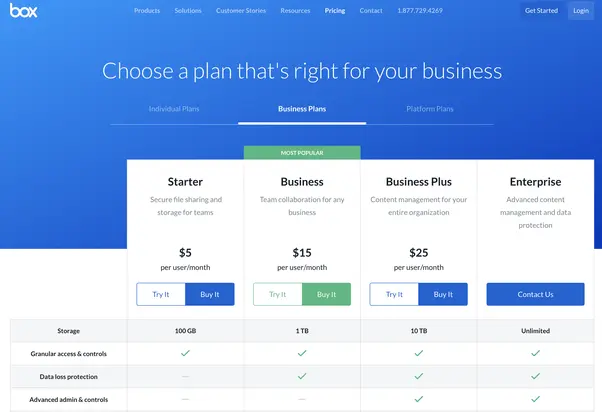
Enterprise and prosumer buyers increasingly demand transparent, self-serve pricing models. Hidden "contact sales" walls for entry-level products are generating more friction than ever. Future early-stage startups will rely even more heavily on transparent, comparable pricing tiers displayed directly on their websites to capture immediate intent.
3. Pricing as a Secondary Priority to Product Validation
Ultimately, the future outlook for pre-PMF pricing remains anchored in fundamental startup discipline: solve a burning problem first, figure out the exact monetization maximization later. By leveraging market comparables early on, startups can eliminate friction, secure their first wave of mission-critical customers, and buy themselves the runway needed to achieve true product-market fit.