






Executive Overview
In the high-stakes landscape of enterprise computing, a silent parasite is bleeding budgets, rack space, and electrical power. Though no human resources department has yet posted an opening for a “Zombie Workload Hunter,” the role is urgently required. With every successive generation of information technology, orphaned libraries, abandoned programs, neglected microservices, and forgotten storage volumes linger within corporate infrastructure. They consume power, saturate fabrics, and drain operational capacity long after their original business utility has expired.
What you do not turn off, you pay for—and in the era of generative and agentic artificial intelligence, the stakes have escalated exponentially.
Historically, zombie workloads were treated as an annoying byproduct of cloud clutter or legacy sprawl. Today, however, the proliferation of specialized hardware—specifically Graphics Processing Units (GPUs)—has fundamentally transformed the economic calculus of waste. According to industry estimates, cloud waste routinely hovers between 25% and 30%, while specific multi-cloud footprints attribute up to 13% of their utilization entirely to zombie assets. When these figures apply to generic CPU cores, the waste manifests as a bloated corporate IT bill. When they apply to high-performance AI clusters, an idle GPU sitting behind a crashed machine learning pipeline represents thousands of dollars in squandered electricity and hardware depreciation.
As enterprises rush to deploy large language models (LLMs) under intense public and executive scrutiny, the data center industry is facing a reckoning. Cloud FinOps engineers, cost optimization specialists, and infrastructure inventory managers are waging a seek-and-destroy war against these digital specters. Utilizing advanced observability platforms, automated remediation policies, and container orchestration tools, this emerging technical cohort is attempting to automate asset decommissioning before unmonitored resources ever hit the corporate balance sheet.
Detailed Chronology: The Evolution of Digital Waste
To understand how modern data centers became overrun with computational ghosts, it is necessary to examine how architectural paradigms have evolved over the decades—and how each leap forward made orphaned workloads harder to hunt down and eliminate.
The Mainframe and Client/Server Era: The "Pull the Plug" Methodology
The phenomenon of the endlessly running, unmonitored program is nearly as old as commercial computing itself. In the era of mainframes and early client/server architectures, applications were monolithic and hardware was fiercely guarded. When a program became obsolete or a developer abandoned a test script, the operational model for remediation was delightfully blunt.
"A tried-and-true operating model was to ‘pull the plug and wait for somebody to scream,’" recalls Eric Newcomer, a distributed computing veteran and analyst at Intellyx. If an unmanaged job was abruptly terminated and no internal stakeholder complained, administrators could safely assume the resource was dead weight. Hardware was centralized, visibility was relatively straightforward, and waste was bounded by physical constraints.
The Virtual Machine and Cloud Revolution: Distributed Sprawl
The advent of virtualization and the subsequent explosion of hyperscale cloud computing shattered the physical boundaries of the data center. Enterprises gained the unprecedented ability to spin up virtual machines (VMs) and storage buckets instantly with the swipe of a corporate credit card.
Inevitably, this flexibility introduced unprecedented sprawl. Cloud FinOps providers note that zombie workloads frequently emerge when individual developers or departments stop using applications but fail to delete the underlying instances. Furthermore, corporate mergers, acquisitions, and internal reorganizations routinely leave orphaned cloud resources stranded in legacy environments, with no assigned owner responsible for cleaning them up. IDCA research indicates that roughly 13% of US cloud usage is directly attributable to these unmanaged zombie instances.
The Microservice Maze: Headless Complexity
The transition from monolithic architectures to cloud-native microservices compounded the problem. Modern applications are frequently composed of hundreds of loosely coupled, asynchronous services communicating across complex internal networks.
"Cloud computing brought with it ‘headless’ services that run in the background to serve up some data to another service or the like," Newcomer explains. "If the main application stops, the zombie services might still keep going—and do nothing."
Because microservices operate independently without a direct user interface, traditional manual checks fail. An entire web of microservices can hum along silently in the background, consuming container CPU cycles, consuming memory footprints, and generating continuous inter-service network traffic while contributing zero business value.
The Generative AI and GPU Epoch: High-Stakes Inefficiencies
Today, the industry has crossed into a new computational epoch defined by generative AI, transformer models, and autonomous agents. This shift has fundamentally altered the workload profile. Commodity cloud hardware and container orchestrators like Kubernetes—pioneered for traditional web applications—are suddenly being forced to manage complex, resource-intensive AI pipelines.
This transition has introduced an entirely new class of digital specter: the idle or abandoned GPU. Because artificial intelligence research and development involves prolonged training runs, experimental model weights, complex data ingestion pipelines, and frequent mid-flight crashes, orchestration scripts regularly fail to clean up after themselves. Under these conditions, software inefficiencies that were once considered negligible rounding errors on a cloud bill have transformed into massive financial drains.
Supporting Context & Metrics: The Cost of Computational Inertia
The sheer volume of wasted computational power can no longer be ignored by corporate boards. While software developers historically prioritized speed-to-market over operational efficiency, modern financial realities—coupled with grid capacity constraints—have placed resource optimization at the forefront of IT strategy.
Quantifying the Waste
- 13% to 30% Cloud Inefficiency: Research conducted by the International Data Center Authority (IDCA) reveals that up to 13% of baseline US cloud usage stems directly from unmanaged zombie workloads. Meanwhile, leading FinOps tool providers, including Broadcom (via VMware Aria Cost/CloudHealth) and AWS (Cost Explorer and Compute Optimizer), estimate total cloud waste between 25% and 30%, driven heavily by orphaned storage volumes and forgotten compute instances.
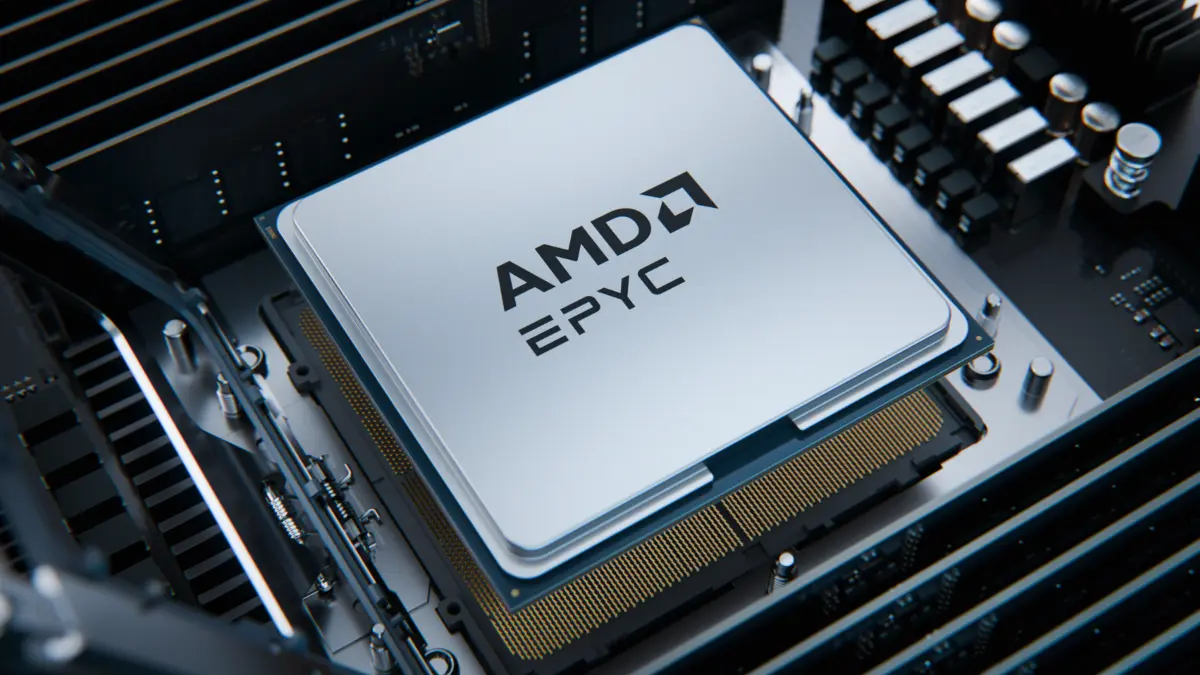
- The GPU Price Premium: A standard CPU core consumes minimal power and represents a fraction of data center operating expenditures compared to specialized AI accelerators. Modern enterprise GPUs (such as those produced by NVIDIA and AMD) cost tens of thousands of dollars per unit, require dedicated liquid or advanced air cooling, and draw substantial electrical currents. An idle GPU is not a minor budget variance; it represents an active hemorrhage of capital expenditure and electrical grid capacity.
- Environmental Impact: Data centers are facing severe public scrutiny regarding their carbon footprints and strain on local electrical grids. Power consumed by zombie workloads translates directly to unnecessary greenhouse gas emissions and accelerates the depletion of constrained regional power supplies.
Official Statements and Expert Perspectives
Industry leaders, standards advocates, and infrastructure analysts agree that traditional methods of tracking utilization are insufficient for the modern, AI-driven enterprise.
Graziano Castro on the Reality of GPU Waste
Graziano Castro, a developer relations engineer at AI optimization platform Akamas and a Cloud Native Computing Foundation (CNCF) Ambassador, emphasizes that the economic stakes of inefficiency have shifted dramatically in the Large Language Model (LLM) era.
"GPUs are more expensive than CPU cores, so inefficiencies that were just rounding errors on a cloud bill become very real numbers. A GPU sitting idle isn’t a minor waste," Castro states. "What changed with the LLM era is that the cost of ignoring inefficiency went up by an order of magnitude almost overnight."
Castro notes that while modern cloud-native orchestration frameworks are attempting to adapt, they are constantly exposed as legacy systems built for a cheaper, more elastic style of computing.
Furthermore, Castro warns that monitoring GPU health requires looking past superficial utilization metrics:
"A GPU can look busy on a DCGM [NVIDIA Data Center GPU Manager] utilization number while it is actually just sitting there waiting on some other action—like data that hasn’t arrived yet, or another GPU running behind on the same job."
Roger Strukhoff on Policy and Human Governance
According to Roger Strukhoff, chief research officer at the IDCA, technological solutions alone cannot solve a problem rooted in organizational behavior and governance.
"Cloud zombie workloads frequently trace back to individuals or departments that stop using applications but never delete them," Strukhoff notes. "They appear when internal organizations are consolidated, or companies are acquired, and no one is tasked with cleaning up unused cloud instances and applications."
Strukhoff stresses that technical observability must be paired with fundamental administrative hygiene: "Individual users must be reminded to close their instances when finished with them. Or better, organizations should institute monitors that remind administrators of zombie workloads and set policies to close those that are not being used."
Future Outlook: Remediation in the Age of Intelligent Infrastructure
As enterprises navigate the complexities of hybrid and multi-cloud architectures, the toolkit for combating zombie workloads is evolving rapidly. The industry is moving away from reactive manual audits toward proactive, automated observability and policy enforcement.
1. Advanced Observability and OpenTelemetry
To eradicate hidden resource drains, organizations are adopting unified observability frameworks. Vendors such as Google, Flexera, Datadog, and IBM are embedding cross-domain telemetry into their platforms. By correlating billing data with performance metrics, these systems can flag charged resources exhibiting zero actual output. Furthermore, ongoing developments within OpenTelemetry standards are creating a common vocabulary for distributed systems, allowing diverse monitoring tools to interoperate and track network blind spots across complex microservice chains.
2. AI-Aware Kubernetes and Specialized Schedulers
The CNCF and the broader Linux Foundation are actively evolving Kubernetes to natively support AI workloads. Emerging features include dynamic resource allocation for specialized hardware and intelligent batch-job schedulers that account for the strict topology and locality requirements of distributed AI training. These advancements aim to prevent orphan jobs from lingering in container clusters by enforcing automated lifecycle boundaries.
3. Automated Decommissioning and FinOps Culture
Ultimately, the future of infrastructure management relies on embedding FinOps automation directly into the continuous integration and continuous deployment (CI/CD) pipeline. Rather than waiting for a monthly cloud bill to reveal multi-thousand-dollar anomalies, modern engineering teams utilize automated policies that tear down unverified processes, archive stale model weights, and purge unreferenced storage volumes automatically.
The transition from the cloud boom to the AI era has proven that compute power is no longer an infinite, inexpensive utility. In this new operating environment, the old adage remains truer than ever: What you don’t turn off will cost you.