








Executive Overview
In the relentless race to integrate artificial intelligence into the core of enterprise operations, businesses have invested billions of dollars into amassing vast data lakes, training sophisticated large language models (LLMs), and spinning up autonomous AI agents. Yet, despite having access to petabytes of information, modern enterprise AI systems frequently suffer from a surprisingly fundamental flaw: a crippling lack of organizational knowledge.
There is a profound operational gulf between data and knowledge. While data represents raw, unstructured, or structured digital inputs, knowledge is the contextual understanding of what that data actually means within the unique ecosystem of an individual organization. Enterprise AI agents require this rich, dynamic context to reason through complex operational scenarios, make sound decisions, and take autonomous actions that drive business value. Without it, even the most advanced models are reduced to high-speed pattern-matchers prone to flawed, unreliable, and sometimes disastrous decisions.
According to a comprehensive new research report based on a survey of 300 data, AI, and technology executives, this knowledge deficit is the primary reason agentic AI use cases routinely stall during the pilot phase and fail to reach production. The stakes could not be higher. Driven by intense competitive pressure, organizations must rapidly deploy and scale agentic projects to capture the elusive efficiency gains promised by generative AI. Failing to do so not only wastes millions of dollars in sunk capital investments but also cedes critical market share to industry rivals who have successfully figured out how to put intelligent agents to work at scale.
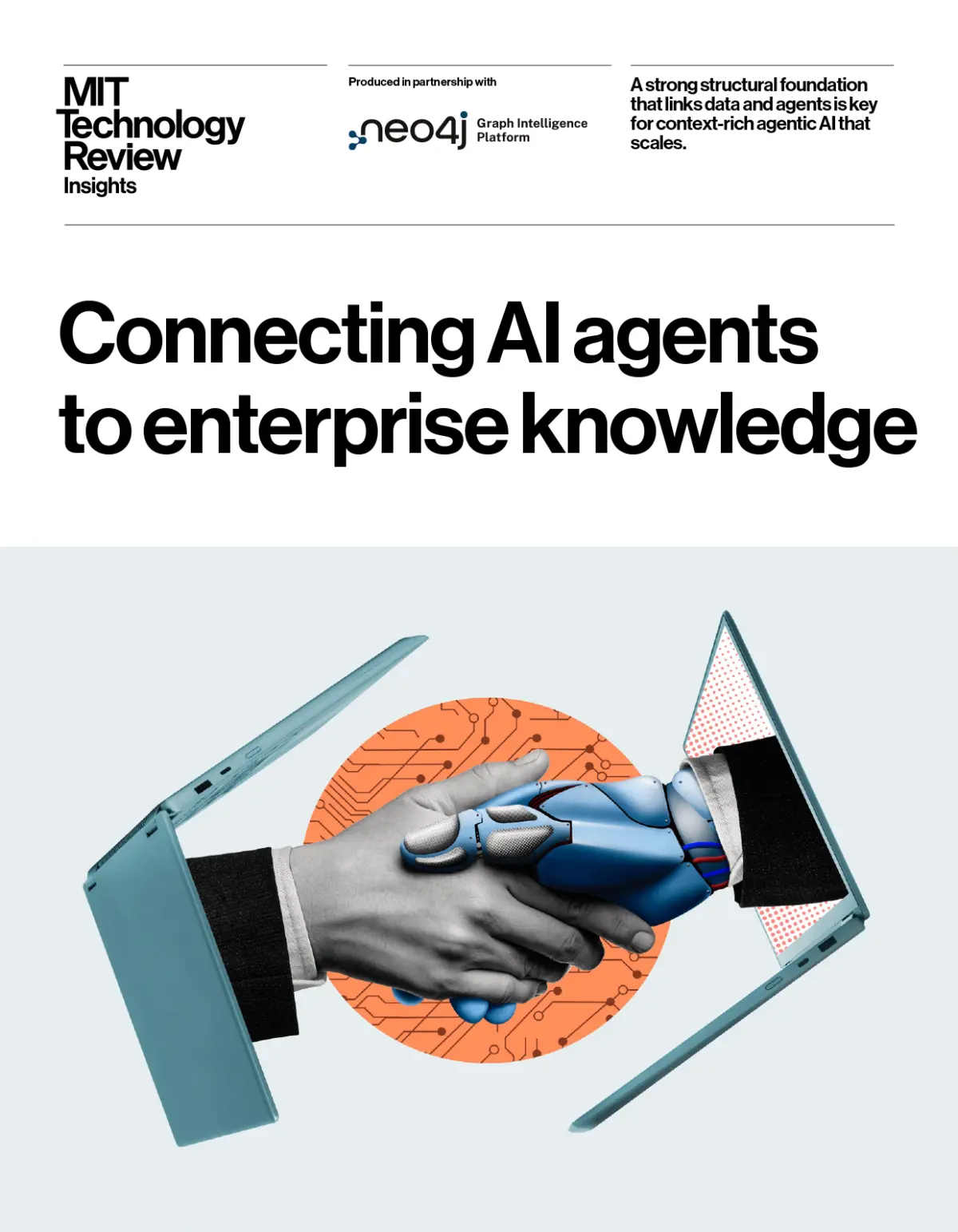
To unpack the anatomy of this production bottleneck, the research report—produced by Insights, the custom content arm of MIT Technology Review, in collaboration with Neo4j—examines how organizations manage their agentic knowledge capabilities. Specifically, the study investigates semantic knowledge, episodic memory, and procedural knowledge, shedding light on the major barriers to deployment and outlining strategic roadmaps for overcoming them.
Detailed Chronology: The Evolution and Stagnation of Enterprise AI Agents
To understand how enterprises arrived at the current impasse, it is necessary to retrace the evolutionary trajectory of corporate artificial intelligence over the past decade.
Phase 1: The Era of Data Accumulation (2015–2021)
For years, the corporate mantra was simple: collect everything. Organizations rushed to build massive cloud data warehouses and data lakes, vacuuming up customer logs, financial records, emails, supply chain telemetry, and internal documentation. The underlying assumption was that more data inherently equaled better intelligence. Companies poured resources into hiring data scientists, building ingestion pipelines, and ensuring data compliance. However, this accumulation occurred largely in silos, creating fragmented digital repositories where data was collected simply for the sake of retention.
Phase 2: The Generative AI Boom and the Agentic Shift (2022–2024)
The public debut of generative AI and transformer-based architectures transformed the corporate landscape overnight. Organizations quickly realized that static dashboards and predictive analytics were no longer enough. The frontier shifted toward agentic AI—autonomous systems capable of executing multi-step workflows, interacting with enterprise software, and making independent business decisions.
Companies rushed to deploy AI agents across customer service, software engineering, human resources, and financial forecasting. Vendors promised plug-and-play automation that would revolutionize productivity. However, as organizations pushed these pilots beyond controlled sandbox environments into live enterprise workflows, a harsh reality set in.
Phase 3: The Production Wall (2025–Present)
As revealed by the new MIT Technology Review Insights data, the initial euphoria surrounding autonomous agents has hit a brick wall. The vast majority of agentic AI initiatives are currently trapped in perpetual proof-of-concept limbo.
The chronology of failure follows a predictable pattern:

- The Pilot Phase: An enterprise builds or deploys an AI agent connected to corporate documentation using basic Retrieval-Augmented Generation (RAG). In a controlled test environment with curated queries, the agent performs brilliantly.
- The Deployment Collision: The agent is pushed into production, where it encounters the messy, fragmented, and contradictory reality of enterprise data. It lacks the deep contextual framework required to understand organizational hierarchies, legacy system dependencies, or unwritten business rules.
- The Trust Deficit: Because the agent makes erratic decisions, hallucinates facts, or violates internal compliance parameters due to insufficient context, IT leaders pull the plug. The project is shelved, joining the cemetery of failed digital transformation initiatives.
Addressing this historical trajectory requires a fundamental shift in architecture: moving away from brute-force data ingestion and toward structured, relational knowledge layers that mirror how human organizations actually operate.
Supporting Context & Metrics: The State of Enterprise Knowledge Capabilities
The empirical data gathered from 300 senior technology executives provides a stark, quantitative look at the challenges facing enterprise AI adoption today. The findings dismantle the hype surrounding autonomous agents and offer a clear diagnostic of where and why these systems fail.
1. The Production Bottleneck
The most striking metric in the report is the low conversion rate of agentic projects:
- Only 34% of organizations’ agentic AI projects successfully make the transition from pilot testing into full production.
- Even among high-tech firms—traditionally the most agile adopters of emerging technologies—navigating this transition remains an uphill battle.
The primary culprits behind this stagnation are legacy data systems that resist modern integration, persistent security and privacy anxieties, and, most importantly, a profound lack of operational knowledge and context.
2. The Profile of Production Leaders
Not all companies are failing, however. A small, elite cohort of survey respondents—termed "production leaders"—have successfully driven an average of 61% of their agentic projects beyond the pilot phase and into full operational deployment.
An analysis of these leaders reveals a distinct competitive advantage:
- Superior Knowledge Capabilities: Production leaders possess significantly more mature capabilities across all three pillars of agentic intelligence: semantic knowledge (understanding the meaning and relationships of data concepts), episodic memory (retaining context from past interactions and decisions), and procedural knowledge (understanding how processes and workflows are executed).
- Semantic Mastery: Their advantage is particularly pronounced in semantics. While average firms struggle to map data relationships across disparate business units, production leaders have established robust frameworks that give their AI agents a coherent, unified worldview of the enterprise.
3. The Fragmentation Quagmire
When executives were asked to identify the single greatest obstacle to expanding their AI agents’ access to knowledge, data fragmentation emerged as the runaway winner.
- 55% of all respondents cited data fragmentation—defined as the inadequate sharing and isolation of data across disparate business systems—as their top challenge.
Interestingly, the perception of risk shifts dramatically as organizations mature. While average firms are paralyzed by basic data silos, production leaders are far more likely to cite security and privacy concerns (72%) as their primary hurdle. Having already solved the architectural challenge of data fragmentation, these frontrunners are now grappling with the governance, compliance, and access-control complexities of feeding sensitive enterprise data to autonomous agents.
Official Statements and Industry Insights
The research report underscores that solving the agentic knowledge crisis requires more than just better algorithms; it demands a wholesale reimagining of how enterprise data architecture interfaces with AI models.
Industry experts interviewed for the study emphasize that traditional approaches—such as relying solely on vector databases or naive keyword search—are fundamentally insufficient for complex enterprise environments. Without a structural bridge connecting raw data silos to the reasoning engines of LLMs, agents will remain brittle and unreliable.

"For AI agents to transition from novelty demos into trustworthy enterprise workers, they require an institutional memory and a deep comprehension of business semantics," notes the report’s commentary. "Organizations cannot simply throw more parameters at a model and expect it to magically understand why a specific customer account requires special handling or how a legacy ERP system processes an inventory write-down."
Technology executives surveyed in the report overwhelmingly agree on the prescribed remedy. Among all potential interventions aimed at elevating the quality of agentic decisions, respondents placed their highest confidence in strengthening the structural foundation between corporate data and AI agents. Industry practitioners point to the implementation of a dedicated "knowledge layer" as the optimal architectural strategy to achieve this unification.
Future Outlook: Building the Enterprise Knowledge Layer
As competitive pressures mount, organizations can no longer afford to let expensive agentic AI projects languish in pilot purgatory. To capture the promised efficiency gains and outpace rivals, enterprise technology leaders are aggressively reshaping their investment portfolios to prioritize knowledge infrastructure.
Strategic Investment Priorities for the Future
To bridge the gap between raw data and agentic intelligence, executives report that capital allocation is shifting toward three core technology pillars:
- Advanced Retrieval Technologies: Enterprises are upgrading their data ingestion pipelines, deploying AI-ready Application Programming Interfaces (APIs), and moving beyond basic search to sophisticated Retrieval-Augmented Generation (RAG) frameworks capable of dynamically fetching precise contextual snippets.
- AI Evaluation Agents: Recognizing that human oversight alone cannot scale to monitor thousands of autonomous agent transactions, organizations are beginning to deploy specialized AI evaluation agents designed to audit, test, and validate the reasoning paths and outputs of operational agents.
- Knowledge Graphs: Perhaps most importantly, organizations are turning to knowledge graphs to map the intricate web of relationships between enterprise data points. By structuring data as a network of interconnected concepts rather than isolated tables, knowledge graphs provide AI agents with the exact semantic context they need to reason accurately across complex business domains.
The Road Ahead
The evolution of enterprise AI is entering its most critical phase. The era of easy wins—where simple chatbots and standalone models could impress stakeholders—is over. The next generation of business value will belong exclusively to enterprises that successfully master agentic intelligence.
Overcoming the knowledge deficit will require sustained cross-functional collaboration between data engineers, security officers, and AI developers. Organizations that invest today in building a robust, secure, and semantically rich knowledge layer will unlock the true potential of autonomous agents, transforming them from unpredictable experimental novelties into the reliable digital workforce of the future.
To dive deeper into the empirical data, explore detailed breakdowns of semantic and procedural knowledge capabilities, and review strategic frameworks for scaling your enterprise AI initiatives, you can read the complete findings in the official report: Download the report from MIT Technology Review Insights and Neo4j.
This content was produced by Insights, MIT Technology Review’s custom content arm, not its editorial staff. It was researched and written by humans, with any AI tools that may have been used limited to production processes under human oversight.