






Executive Overview
The landscape of modern enterprise marketing is undergoing a tectonic shift. Driven by the rapid proliferation of generative artificial intelligence, decentralized content supply chains, and an escalating demand for hyper-personalized digital experiences, the role of the Chief Marketing Officer (CMO) has never been more complex—or more critical. Against this backdrop of rapid technological transformation, the global digital asset management (DAM) and content communities are turning their attention toward Munich, Germany.
On October 27th, 2026, the Bavarian capital will serve as the epicenter for the industry’s premier gathering: the Content Creation Conference. This high-profile global event is designed to bring together more than 100 senior marketing executives, content strategists, Vice Presidents, and Directors primarily hailing from the DACH (Germany, Austria, Switzerland) region. However, its implications stretch far beyond Central Europe, offering a bellwether for how enterprise organizations worldwide will manage, distribute, and protect their brand assets in the years to come.
As organizations grapple with the challenges of digital saturation, the conference promises a deep-dive exploration into the intersection of cutting-edge technology and creative strategy. Attendees will immerse themselves in critical discussions spanning AI-powered content generation, next-generation Digital Asset Management (DAM) and Content Management System (CMS) integrations, advanced visual storytelling, comprehensive content marketing frameworks, data-driven social media strategies, and uncompromising brand compliance.
With industry heavyweights such as Bynder and Papirfly confirmed as key speakers and sponsors, the Munich event is not merely a conference; it is a collaborative laboratory for the future of enterprise digital operations. This report provides an exhaustive, in-depth look at the upcoming conference, contextualizes its significance within the broader global DAM ecosystem, and highlights other critical industry milestones—including the imminent virtual DLF Forum 2026—shaping the profession this October.
Detailed Chronology: The Road to Munich 2026
To understand the strategic importance of the October 27th conference, one must examine the rapid evolution of content operations over the past several years. The trajectory from static file-sharing repositories to intelligent, AI-driven content ecosystems has accelerated dramatically, forcing organizations to rethink how they plan, produce, and distribute digital media.
The Evolution of Content Operations in the DACH Region
The DACH region has long been recognized as a hotbed for precision engineering, rigorous data privacy standards, and sophisticated enterprise software adoption. In the early 2020s, marketing departments in Germany, Austria, and Switzerland faced a dual challenge: the sudden transition to remote work infrastructures and an exponential explosion in digital asset creation. Marketing teams were producing localized video, high-resolution imagery, and interactive digital experiences at a scale that traditional, siloed storage systems could no longer support.
By 2024 and 2025, the conversation shifted from simple cloud storage to intelligent automation. Organizations began realizing that having terabytes of digital assets was a liability rather than an asset if those files could not be easily discovered, tagged, repurposed, and deployed across omnichannel campaigns in real time. This realization sparked a massive wave of DAM and CMS modernization initiatives across DACH enterprises.
The Genesis of the Content Creation Conference
Recognizing a vital gap in the executive event calendar—specifically, the need for a high-level, peer-to-peer forum dedicated exclusively to senior content and marketing leadership—organizers established the Content Creation Conference as a premier global series. Unlike broad IT summits or generic digital marketing expos, this event was intentionally curated to address the operational realities faced by CMOs, VPs of Content, and Creative Directors.
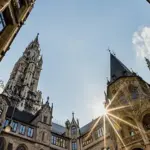
The decision to anchor the 2026 flagship event in Munich was strategic. Munich represents one of Europe’s leading technological and economic hubs, boasting a dense concentration of multinational corporations, agile Mittelstand enterprises, and innovative software houses.
Key Milestones on the Event Horizon (October 2026)
- Mid-October (October 14–15, 2026): The global digital preservation and cultural heritage sectors converge virtually for the DLF Forum 2026, setting the stage for cross-industry discussions on archiving, metadata standards, and digital longevity.
- October 27, 2026: The Content Creation Conference opens its doors in Munich, drawing senior marketing decision-makers from across the DACH region and beyond for a day of intensive keynote sessions, technical workshops, and high-level networking.
- Post-Conference Phase (Late Q4 2026): Organizations begin translating the frameworks, AI governance models, and DAM integration strategies acquired in Munich into their 2027 enterprise operating budgets and technology roadmaps.
Supporting Context & Metrics: The Economics of Content and DAM
To fully appreciate the urgency driving senior executives to Munich, one must examine the macroeconomic and operational metrics defining the modern content landscape. The management of digital assets is no longer a back-office administrative task; it is a core driver of enterprise valuation, brand equity, and operational efficiency.
Financial Investment and Tiered Access
The financial commitment required to attend the Content Creation Conference reflects its executive-tier positioning. Pricing is structured intentionally to distinguish between corporate brand practitioners and commercial solution providers:
- Content Marketing Professionals & Enterprise Practitioners: €1,400. This tier is designed to encourage in-house marketing leaders, CMOs, and content strategists from non-vendor organizations to participate, collaborate, and share best practices without prohibitive cost barriers.
- Vendors, Consultants, and Solution Providers: €2,500. This commercial tier reflects the immense value technology vendors derive from presenting their platforms directly to a concentrated audience of enterprise decision-makers with active procurement budgets.
The Value Equation: Productivity vs. Chaos
Industry research consistently highlights the hidden costs of poor digital asset management. Without a centralized, AI-enhanced DAM system:
- Time Lost Searching for Assets: Knowledge workers spend an estimated 20% to 30% of their working hours searching for, recreating, or verifying digital files. In a 500-person marketing organization, this inefficiency equates to millions of dollars in lost productivity annually.
- Brand Non-Compliance Risk: Using outdated logos, unapproved imagery, or expired licensing agreements across global channels exposes enterprises to severe legal liabilities and brand erosion.
- Content Duplication: Organizations frequently re-shoot or recreate expensive digital assets simply because existing assets are buried within fragmented cloud drives or local folders.
By implementing sophisticated DAM and CMS technologies—topics occupying a central track at the Munich conference—enterprises routinely report productivity gains exceeding 35%, dramatic reductions in time-to-market for global campaigns, and airtight brand governance.
Official Statements and Industry Perspectives
The philosophical core of the Content Creation Conference is rooted in empowerment, efficiency, and professional growth. Event organizers have articulated a clear vision for what delegates can expect to achieve by immersing themselves in the day’s curriculum.
The Official Event Manifesto
In their official call to action, conference organizers emphasize the transformative power of modern content operations:
"Attend our conference to stay informed on the latest marketing and content creation trends, network with peers and experts, boost your creativity, and build your personal brand recognition. Enhance your skills and stay ahead of the curve. Learn how efficiently organizing your digital assets can boost productivity and streamline workflows. Experience the benefits of seamless collaboration and get ahead in the game by learning about digital asset management from experts."
This statement underscores a vital truth in contemporary corporate leadership: the modern marketer must operate at the intersection of left-brain analytical rigor (data, taxonomy, DAM workflows, AI prompt engineering) and right-brain creative vision (storytelling, visual design, brand voice).
Perspectives from Leading Sponsors: Bynder and Papirfly
The involvement of industry giants such as Bynder and Papirfly brings institutional credibility and real-world technological insight to the Munich stage.
- Bynder, globally recognized for its cloud-based digital asset management solutions, has consistently championed the concept of the "ecosystem approach" to marketing. By integrating DAM seamlessly with product information management (PIM), customer relationship management (CRM), and advanced content delivery networks (CDNs), Bynder enables brands to maintain a single source of truth across all global touchpoints. At the conference, Bynder representatives are expected to showcase how automated tagging, smart cropping, and taxonomy management powered by machine learning are transforming daily creative workflows.
- Papirfly, a powerhouse in brand management and template localization software, brings a complementary focus to the table. Papirfly’s solutions empower localized markets and regional sales teams to create on-brand marketing collateral autonomously, while maintaining strict adherence to corporate brand guidelines managed centrally. Their participation in Munich will highlight the delicate balance between empowering decentralized creative execution and maintaining centralized brand compliance.
The Broader Digital Ecosystem: Spotlighting the DLF Forum 2026
While enterprise marketing leaders gather in Munich to discuss commercial content creation and DAM return on investment, the broader digital preservation community is concurrently preparing for another monumental event: the DLF Forum 2026, taking place virtually on October 14th and 15th, 2026.
Bridging Galleries, Libraries, Archives, and Museums (GLAM)
The DLF (Digital Library Federation) Forum is an essential annual fixture for practitioners operating within the GLAM sector. While commercial DAM systems focus primarily on campaign velocity, sales enablement, and revenue generation, the GLAM sector focuses on long-term digital preservation, historical integrity, open access, and cultural heritage stewardship.
The juxtaposition of these two events—occurring within weeks of each other in October 2026—highlights the universal nature of digital asset challenges. Whether an organization is a multinational retail corporation managing millions of product images or a national library preserving centuries-old manuscripts, the underlying technical pillars remain strikingly similar:
- Robust metadata schemas.
- Scalable, secure cloud storage architectures.
- Interoperable APIs ensuring seamless data transfer between systems.
- Ethical governance regarding digital rights and automated content processing.
The virtual nature of the DLF Forum ensures that practitioners from around the globe can participate in vital discussions regarding cutting-edge technologies, preservation techniques, and community-driven standards without the carbon footprint of international travel.
Future Outlook: What the Post-Conference Era Demands
As the digital marketing and DAM industries look beyond October 2026, several defining trends will dictate how organizations leverage the insights gained from events like the Content Creation Conference.
1. The Autonomous Content Supply Chain
The convergence of generative AI with enterprise DAM and CMS platforms is rapidly giving birth to the autonomous content supply chain. In the near future, AI agents will not only assist in tagging and categorizing digital assets but will actively predict content performance, automatically generate localized variations of visual assets based on regional compliance rules, and retire underperforming creative assets without human intervention. Enterprise leaders attending the Munich conference will be on the front lines of defining the governance frameworks required to manage these autonomous systems safely.
2. Hyper-Personalization at Scale
Consumers and B2B buyers alike now expect real-time, contextually relevant digital experiences. Achieving hyper-personalization requires millions of micro-assets—variations in copy, imagery, video formatting, and interactive elements. Without an advanced, AI-driven DAM backbone to orchestrate these assets flawlessly across channels, marketing teams will drown in operational complexity.
3. Sustainability and Digital Carbon Footprints
An emerging conversation within the digital asset management community is the environmental cost of digital storage. Storing redundant, uncompressed, or obsolete digital files across multiple cloud regions consumes vast amounts of energy. Future DAM strategies will increasingly incorporate "green storage" metrics, helping organizations audit their digital footprints, purge redundant assets, and optimize energy efficiency across their content operations.
How to Engage with the Community
For professionals looking to stay ahead of these monumental shifts, continuous education and community engagement are paramount.
- Event Registration: Senior marketers and technology leaders wishing to secure their place at the Munich event can explore the full agenda and purchase tickets via the official Content Creation Conference event page.
- Calendar Integration: Industry practitioners can also explore the virtual DLF Forum 2026 scheduled for mid-October.
- Community Contributions: Industry professionals are invited to submit their own events, webinars, and conferences to the global directory. Standard DAM News Subscriber accounts are entirely free to register, allowing members to contribute to the official events calendar and engage with a worldwide network of digital asset management experts.
As Munich prepares to open its doors on October 27th, 2026, the message to the global marketing community is unmistakably clear: mastery over digital assets is no longer a competitive advantage—it is the foundational prerequisite for survival in the digital age.