



Published: October 7, 2026
Author: Tech & Venture Capital Desk
Reading Time: 5–7 minutes
Executive Overview
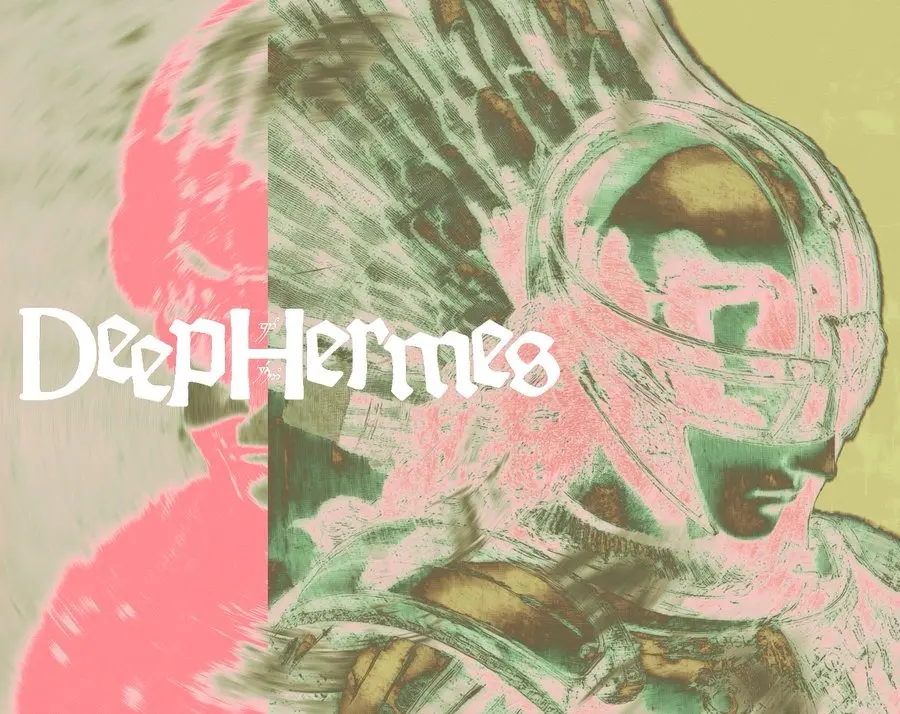
In a landmark transaction that underscores the skyrocketing commercial demand for open-source artificial intelligence, Nous Research—the pioneering startup behind the ubiquitous Hermes Agent—has officially closed a $90 million Series B funding round. This massive capital injection values the three-year-old enterprise at an impressive $1.5 billion, officially confirming earlier market speculations and reports by TechCrunch.
The financing round was spearheaded by Robot Ventures, with heavy-hitting participation from legacy tech giants, prominent venture capital funds, and politically connected investment firms, including Nvidia, Union Square Ventures, Menlo Ventures, Samsung, and 1789 Capital (where Donald Trump Jr. serves as a partner). This latest influx of capital brings Nous Research’s cumulative funding to $158 million since its inception.
Driven by the monumental success of its developer-adored Hermes Agent—which has been cloned over 24 million times and currently accounts for an estimated 2.5% of all global AI token usage—Nous Research is now positioning itself to capture the lucrative corporate market. The fresh capital will directly fuel the rollout of "Hermes for Businesses," a dedicated enterprise suite designed to allow corporations to deploy customized, privacy-focused AI agents capable of autonomously navigating complex, multi-step workflows.
Detailed Chronology: From Open-Source Darling to Unicorn Status
The meteoric rise of Nous Research mirrors the blistering pace of the broader generative AI boom, yet the startup’s trajectory has been distinctly unconventional due to its unwavering commitment to open-source methodologies.
The Early Days and Foundational Growth
Founded roughly three years ago by a collective of machine learning researchers and open-source advocates, Nous Research emerged during a period when closed-source models from giants like OpenAI and Anthropic dominated the public consciousness. Rather than building proprietary moats, the startup focused on fine-tuning, distilling, and pushing the boundaries of open-source language models.
By prioritizing developer accessibility, transparency, and community-driven iteration, Nous quickly cultivated a cult following. The release of their flagship offerings—culminating in the Hermes Agent architecture—struck a chord with developers seeking customizable, highly responsive, and uninhibited AI pipelines.
The Rumor Mill and Market Speculation (July 2026)
In mid-July 2026, TechCrunch broke the initial story that Nous Research was actively courting institutional investors for a substantial equity financing round that would value the burgeoning startup at the coveted $1.5 billion unicorn threshold. At the time, venture capitalists were closely monitoring the startup’s unprecedented consumption of global compute resources. Industry insiders noted that the Hermes Agent ecosystem was beginning to rival proprietary systems in sheer volume, capturing the attention of silicon manufacturers and enterprise software buyers alike.
The Deal Materializes (October 2026)
By October 7, 2026, the negotiations culminated in the official $90 million Series B announcement. The composition of the investor syndicate revealed a fascinating convergence of Silicon Valley institutional powerhouses and strategic hardware/hardware-adjacent partners. Nvidia’s participation highlights the hardware giant’s ongoing strategy to back high-throughput ecosystem drivers that consume massive GPU cycles, while Samsung and prominent venture firms signal broad institutional confidence in the startup’s underlying technology stack.
Supporting Context & Metrics: The Scale of the Hermes Phenomenon
To understand why investors have poured $90 million into a three-year-old startup at a $1.5 billion valuation, one must examine the staggering metrics powering the Nous Research ecosystem.

Unprecedented Global Adoption
- 24 Million+ Clones: The open-source Hermes Agent has achieved viral adoption among independent developers, academic researchers, and enterprise engineering teams, having been downloaded and cloned over 24 million times across repositories like Hugging Face and GitHub.
- 2.5% of Global AI Token Usage: According to internal company estimates validated by industry analysts, the various implementations and deployments of Hermes models currently drive approximately 2.5% of all AI token usage globally. This positions Nous Research not merely as a boutique research shop, but as a foundational infrastructure player in the global AI consumption pipeline.
Hyper-Growth Financials
While many early-stage AI startups struggle to convert open-source popularity into sustainable revenue, Nous Research has defied expectations through targeted API services, enterprise support contracts, and customized deployments.
According to reports published by The Wall Street Journal, Nous Research hit approximately $36 million in annualized revenue (ARR) by mid-September 2026. Propelled by the organic conversion of its massive developer base and anticipation of its enterprise product line, company leadership expects to surpass $100 million in ARR before the close of 2026—a blistering velocity that places it among the fastest-scaling software startups in history.
Official Statements and Strategic Vision
The leadership team at Nous Research, alongside their newly minted roster of investors, emphasized that the fresh capital is not merely a financial cushion, but a strategic weapon designed to capture the next phase of enterprise automation.
The Pivot to Enterprise Security and Customization
While consumer and developer-driven open-source projects built the foundation of Nous Research’s brand, the company recognizes that long-term sustainability and hyper-growth lie within the enterprise sector. With the upcoming commercialization of "Hermes for Businesses," Nous aims to solve one of the corporate world’s most pressing dilemmas: how to leverage autonomous AI agents without compromising proprietary data, regulatory compliance, or cybersecurity standards.
"Businesses are no longer satisfied with generic chatbot interfaces that require constant human prompting for basic tasks," noted industry analysts tracking the transaction. "They need autonomous agents capable of chaining together data retrieval, internal software execution, and multi-step decision-making processes. Nous Research’s architecture provides the ideal open-source foundation for this exact requirement."
Backing from Industry Titans
The inclusion of Nvidia in the Series B syndicate emphasizes the critical intersection between advanced AI software frameworks and high-performance computing hardware. As Nous models consume billions of tokens daily, optimized hardware-software integration remains paramount.
Meanwhile, the participation of 1789 Capital—noted for its investments in technology companies aligned with decentralized or alternative market ecosystems, and counting Donald Trump Jr. among its partners—highlights the growing bipartisan and diverse financial backing flowing into generative AI infrastructure capable of bypassing traditional big-tech gatekeepers.
Future Outlook: What Lies Ahead for Nous Research
As Nous Research steps into its unicorn era armed with $158 million in total historical funding, the startup faces both immense opportunities and significant execution hurdles.
- Enterprise Deployment & Integration: The successful rollout and adoption of "Hermes for Businesses" over the next six to twelve months will be the ultimate test of whether open-source models can successfully capture high-margin corporate contracts traditionally dominated by Microsoft-backed OpenAI and Google.
- Maintaining Community Trust: As Nous pivots deeper into commercial enterprise offerings, leadership must carefully balance its foundational open-source ethos with the proprietary security and monetization demands of its corporate clients.
- Scaling Infrastructure: Sustaining 2.5% of global AI token usage—and scaling past that figure toward 5% or higher—will require rigorous optimization of model weights, inference efficiency, and cost management, making Nvidia’s continued partnership invaluable.
With financial metrics pointing toward a $100 million ARR run-rate by the end of the year and a war chest of $90 million in fresh capital, Nous Research has firmly established itself as a titan of the open-source AI revolution—proving that community-driven development can command elite venture backing and multi-billion-dollar valuations.