





Executive Overview
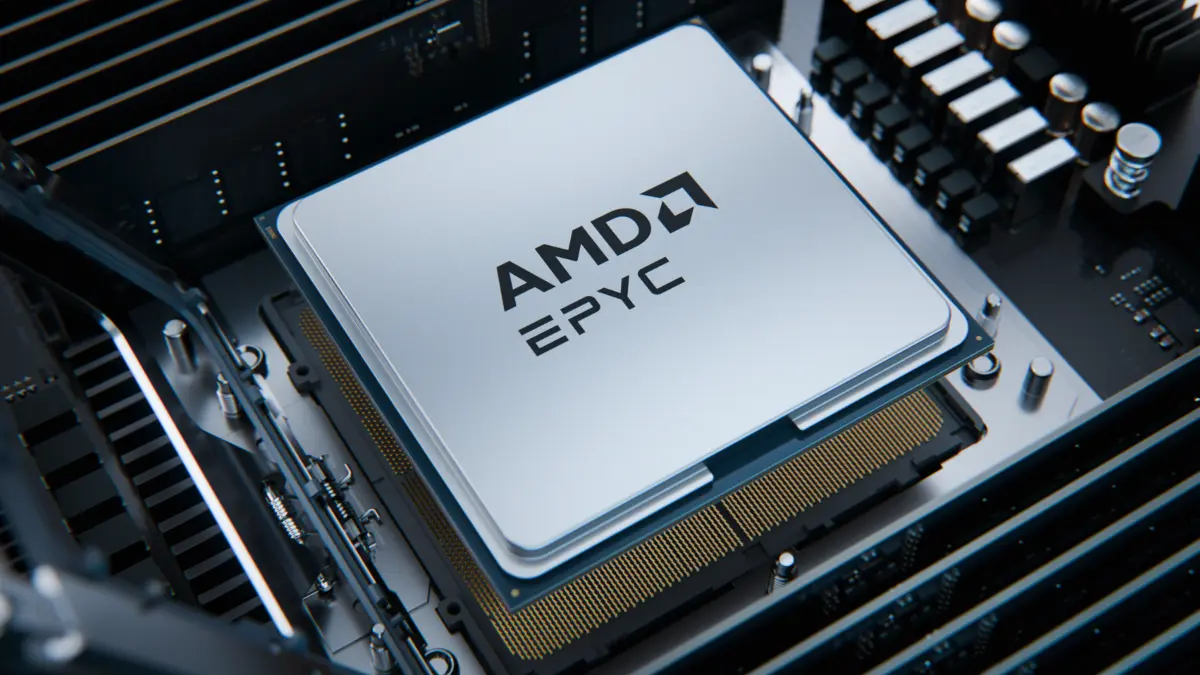
Hewlett Packard Enterprise (HPE) has officially broadened its enterprise infrastructure portfolio, announcing the debut of its next-generation ProLiant Gen13 server lineup. Anchored by AMD’s forthcoming sixth-generation Epyc 9006 SP7-series processors—marketed under the code name "Venice"—this new hardware ecosystem is explicitly engineered to handle modern, computationally demanding workloads. These include AI inference, retrieval-augmented generation (RAG) fine-tuning, complex analytics, enterprise virtualization, and the rising tide of agentic AI orchestration.
Unveiled on October 7, the initial rollout comprises four distinct server models designed to straddle the line between heavy-duty GPU-accelerated computing and high-density CPU infrastructure. Unlike massive, hyperscale systems like the Nvidia NVL72 or AMD Helios, HPE’s latest enterprise-tier offerings are tailored specifically for mainstream enterprise customers and specialized cloud providers (often referred to as "neoclouds").
By leveraging the massive core density and superior memory bandwidth of AMD’s "Venice" architecture, HPE aims to solve a fundamental bottleneck in modern enterprise architectures: the immense orchestration, tool-calling, and subagent traffic required to run autonomous AI agents efficiently. Furthermore, the Gen13 systems introduce robust management automation through HPE Integrated Lights-Out 8 (iLO 8) and Compute Ops Management software, integrating advanced self-encrypting drive protocols and early post-quantum cryptography (PQC) readiness.
Detailed Chronology of the ProLiant Gen13 Release and Roadmap
The rollout of the ProLiant Gen13 architecture follows a carefully calibrated release schedule, timed to coincide with the production availability of AMD’s next-generation silicon and the shifting demands of enterprise IT budgets.
The October 7 Announcement
HPE formally unveiled the first four models of the ProLiant Gen13 family. The strategic focus of the launch was clear: providing a flexible infrastructure capable of bridging traditional enterprise workloads (such as fraud detection, virtualization, and market data processing) with cutting-edge generative and agentic AI capabilities.
November 2026: The Debut of the ProLiant DL525
The first system to hit the market in late 2026 will be the compact, single-socket ProLiant DL525. Engineered as a 1U system, it packs a single AMD Venice processor equipped with up to 256 cores. This platform is targeted directly at organizations seeking high core counts in a dense form factor for AI inference, predictive modeling, and simulation tasks.
March 2027: High-End Accelerated Computing with the DL585a
Scheduled for general availability in March 2027, the flagship ProLiant DL585a Gen13 server represents HPE’s most powerful enterprise-grade hybrid node to date. Featuring up to eight accelerators alongside two AMD Venice CPUs, this system supports hardware from major GPU vendors—including Nvidia, AMD, and Intel. It is aimed squarely at enterprises building RAG pipelines, fine-tuning large language models (LLMs), and executing complex enterprise analytics.
Later in 2027: Rack-Scale Liquid and Air-Cooled Systems
Rounding out the initial roadmap are two high-density, rack-scale computing systems slated for release later in 2027.
- The ProLiant XD245: A four-node, liquid-cooled architecture designed for extreme thermal efficiency in high-performance computing (HPC) and data-intensive AI clusters.
- The ProLiant XD285: A two-node, air-cooled alternative engineered for environments where liquid cooling infrastructure is not yet viable.
Both systems target large enterprises and specialized neocloud providers operating at scale.
Supporting Context & Metrics: The Shift Toward Agentic AI and Heterogeneous Hardware
The architectural choices embedded within the ProLiant Gen13 lineup reflect a broader evolution in how enterprises design their data centers. For years, the prevailing wisdom dictated a simple infrastructure formula: throw the largest, most expensive GPU clusters at every AI problem. However, industry analysts and hardware architects are realizing that this "one-size-fits-all" approach is economically and operationally unsustainable.
The Rise of Agentic AI Workflows
As organizations move beyond simple static chatbots, they are increasingly deploying agentic AI systems—autonomous software agents capable of breaking down complex goals, making multiple API or database calls, invoking subagents, and dynamically executing multi-step workflows.
While GPUs excel at the heavy matrix multiplication required for raw model inference, they are ill-suited for the chaotic, branching logic of orchestration. Agentic workflows generate a massive volume of control-plane traffic, tool calls, and data retrieval tasks that fall squarely on the shoulders of the central processing unit.
Why AMD’s "Venice" Silicon Matters
According to industry analysts, AMD’s sixth-generation Epyc "Venice" architecture is exceptionally well-suited for this paradigm shift. By offering unprecedented core counts (reaching up to 256 cores in single-socket configurations) alongside massive memory bandwidth and high single-threaded performance, the Venice platform acts as an ideal "head node."
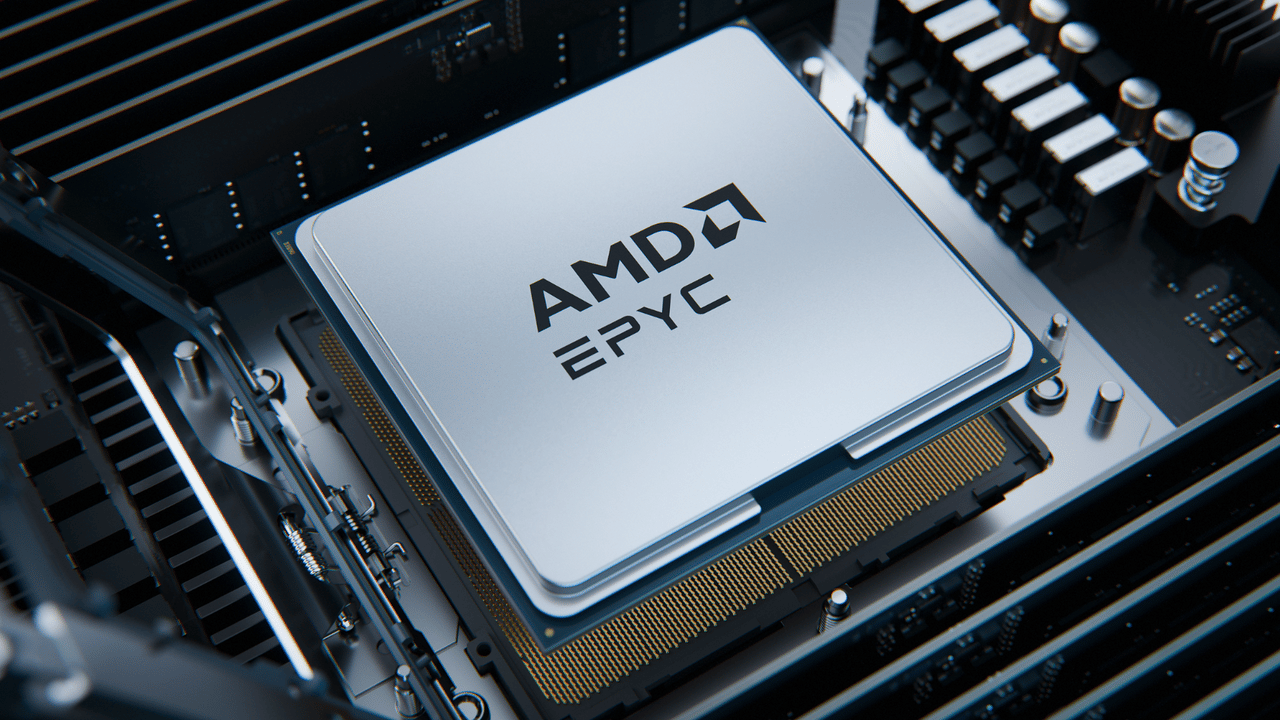
In a typical ProLiant Gen13 agentic deployment, the AMD CPU orchestrates the continuous traffic frenzy of subagent communications, data fetching, and security policy enforcement, while dedicated GPUs handle the downstream heavy lifting of token generation and model inference.
Bridging the Efficiency Gap
The enterprise push toward these architectures is also driven by cost and efficiency. Data center operators can no longer afford to let expensive accelerators sit idle while waiting for CPU-bound orchestration loops to resolve. By designing systems with high-performance AMD head nodes, HPE aims to maximize overall pipeline throughput and drive up effective GPU utilization rates.
Official Statements and Industry Perspective
HPE executives and leading industry analysts have underscored the strategic necessity of balancing CPU and GPU investments as enterprises mature their artificial intelligence strategies.
John Carter, HPE’s vice president of server product management, quality, and technical pursuit, emphasized that the Gen13 systems are purposely tailored for the practical realities of corporate IT buyers rather than multi-node hyperscale builders.
"These are not the big [Nvidia Vera Rubin] NVL72 or AMD Helios scale-up type systems. This is for your enterprise-grade customer," Carter explained in an interview with Data Center Knowledge. "This is the first time we’ve done this kind of enterprise-grade AI system with an AMD head node. There is a lot of great performance improvements there, utilizing the larger memory bandwidth, higher-performance CPU."
Matt Kimball, an analyst at Moor Insights & Strategy, noted that HPE’s aggressive stance reflects a correct reading of market trends. Enterprises are actively preparing to move agentic systems into production environments.
"You need a whole lot more CPUs to drive orchestration because these agents are making calls, and subagents are making calls," Kimball remarked. "It’s just an ongoing traffic frenzy, and that’s what makes AMD’s Venice so interesting. That high core count and high single-threaded performance do a very good job of supporting orchestration for agentic AI."
Echoing this sentiment, Kuba Stolarski, research vice president at IDC, pointed out that infrastructure diversification is mandatory for modern enterprise success.
"Every enterprise is going to have a variety of different AI use cases. So you can’t have a one-size-fits-all from an infrastructure perspective," Stolarski stated. "You can’t just put up the largest, most expensive GPU cluster and expect that’s going to be the best solution for every enterprise."
Future Outlook: Security, Management, and Quantum Preparedness
Beyond raw compute power and AI orchestration capabilities, HPE has infused the ProLiant Gen13 lineup with advanced systems management and forward-looking security frameworks.
Automated Security and iLO 8
Chris Bradley, director of mainstream compute customer advocacy and technical enablement at HPE, highlighted the integration of HPE Integrated Lights-Out 8 (iLO 8). The latest iteration of HPE’s proprietary silicon root-of-trust management engine introduces automated security protocols designed to combat increasingly sophisticated firmware and supply-chain attacks. Crucially, iLO 8 includes native support for self-encrypting drives and establishes foundational readiness for post-quantum cryptography (PQC)—ensuring that encrypted data stores remain secure even as quantum computing capabilities advance over the next decade.
Software-Driven Fleet Operations
To simplify management across hybrid deployments, HPE has updated its Compute Ops Management software. The platform now features low-touch onboarding for rapid zero-touch provisioning and near-real-time power capacity insights. These tools are increasingly vital as data centers push thermal and electrical limits to accommodate high-density AMD and GPU nodes.
Long-Term Market Implications
As the timeline toward the late 2026 and 2027 rollouts progresses, HPE’s bet on AMD’s sixth-generation Epyc processors could redefine enterprise infrastructure expectations. By providing a scalable continuum—ranging from the compact 1U DL525 to the eight-GPU DL585a and liquid-cooled rack systems—HPE is positioning itself as an indispensable partner for enterprises navigating the complex transition from experimental machine learning projects to autonomous, agentic AI production environments.