








Bridging the Context Gap: Why Enterprise AI Agents Fail to Scale—and How a New "Knowledge Layer" Is Changing the Paradigm

Executive Overview In the boardrooms of the Fortune 500, the narrative surrounding artificial intelligence has shifted dramatically. The initial gold rush—characterized by the breathless adoption of large language models (LLMs) and generalized generative AI tools—has matured into a hard-nosed demand for operational efficiency and return on investment. Enter agentic AI: autonomous systems designed not merely…


Read Full News

The Missing Intelligence Layer: Why Enterprise AI Agents Fail to Scale—And How Organizations Are Bridging the Gap

Executive Overview In the relentless race to integrate artificial intelligence into the core of enterprise operations, businesses have invested billions of dollars into amassing vast data lakes, training sophisticated large language models (LLMs), and spinning up autonomous AI agents. Yet, despite having access to petabytes of information, modern enterprise AI systems frequently suffer from a…

Read Full News

Bridging the Context Chasm: Why Enterprise AI Agents Fail and How a New "Knowledge Layer" Is Reshaping Production

Executive Overview In the boardrooms of global enterprises, a quiet realization has turned into an urgent alarm: despite amassing petabytes of structured and unstructured information, enterprise artificial intelligence systems are suffering from a critical, paradoxical deficiency—a profound lack of knowledge. While modern large language models (LLMs) and autonomous agents can ingest millions of data points…

Read Full News

The Missing Link in Enterprise AI: Why Agentic Systems Need a "Knowledge Layer" to Move From Pilot to Production

Executive Overview For all the computational muscle, algorithmic sophistication, and petabytes of data continually amassed by modern enterprises, corporate artificial intelligence systems suffer from a surprisingly fundamental flaw: an acute lack of genuine understanding. While enterprise AI can ingest data at lightning speeds, it frequently stalls when asked to reason about what that data actually…

Read Full News

Bridging the Enterprise Intelligence Gap: Why AI Agents Fail Without the "Knowledge Layer"

Executive Overview In the relentless race to integrate artificial intelligence into enterprise operations, corporations have amassed staggering volumes of data. Modern organizations stream petabytes of telemetry, customer interactions, financial transactions, and operational metrics into sophisticated data lakes and warehouses. Yet, despite this data abundance, enterprise AI agents continually stumble over a fundamental hurdle: a severe,…

Read Full News

Bridging the Enterprise Intelligence Gap: Why AI Agents Fail Without Context—And How the "Knowledge Layer" Changes Everything

Executive Overview In the modern enterprise technology landscape, artificial intelligence is often marketed as an omniscient engine capable of ingesting petabytes of structured and unstructured information in seconds. Companies pour billions of dollars into advanced machine learning architectures, high-performance computing clusters, and sophisticated large language models (LLMs), anticipating an immediate transformation in operational efficiency, automated…

Read Full News

The Architecture of Truth: Why E-Commerce Attribution Fails at the Data Layer—And How Data Engineers Can Fix It

Executive Overview For decades, the digital marketing ecosystem has been locked in a circular, often contentious debate over attribution models. Growth teams, performance marketers, and finance executives routinely lock horns over the ideological superiority of last-click versus data-driven attribution (DDA). Yet, behind these boardroom arguments lies an inconvenient truth that seasoned data architects and analytics…

Read Full News

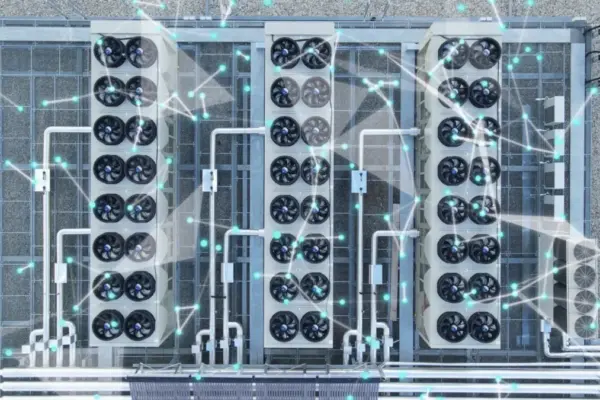
Beyond the Schematic: Why Data Center Cooling Fails at the Control Layer

Executive Overview As high-density computing loads and artificial intelligence workloads push data center power densities to unprecedented levels, the thermal management systems underpinning these facilities face intense scrutiny. Continuous electrical-to-thermal conversion means that data center cooling infrastructure must operate without interruption. To protect against thermal failure, facility designers routinely implement resilient architectures on paper, incorporating…

Read Full News

The Resilience Layer: How Berlin’s Restate Secured $20M to Tackle the Chaos of the Agentic Era

Executive Overview The rapid, chaotic rise of generative artificial intelligence and autonomous AI agents has fundamentally altered the enterprise software landscape. While large language models (LLMs) continue to capture public and corporate imagination, software architects face a daunting, unglamorous engineering reality: AI agents are notoriously unreliable, long-running, and prone to unpredictable failure loops. Enter Berlin-based…

Read Full News

The Attribution Fallacy: Why Your E-Commerce Data Layer Is Broken (And How to Fix It)

Executive Overview In the high-stakes world of e-commerce, few rituals are as predictable—or as futile—as the quarterly attribution debate. Around glass-walled conference rooms and Slack channels alike, marketing teams lock horns over the superiority of last-click versus data-driven models, agonizing over fractional percentage shifts in channel credit. Yet, these fierce arguments fundamentally miss the point….

Read Full News