Executive Overview
The rapid, chaotic rise of generative artificial intelligence and autonomous AI agents has fundamentally altered the enterprise software landscape. While large language models (LLMs) continue to capture public and corporate imagination, software architects face a daunting, unglamorous engineering reality: AI agents are notoriously unreliable, long-running, and prone to unpredictable failure loops. Enter Berlin-based infrastructure startup Restate, which has quietly positioned itself at the epicenter of this operational bottleneck.
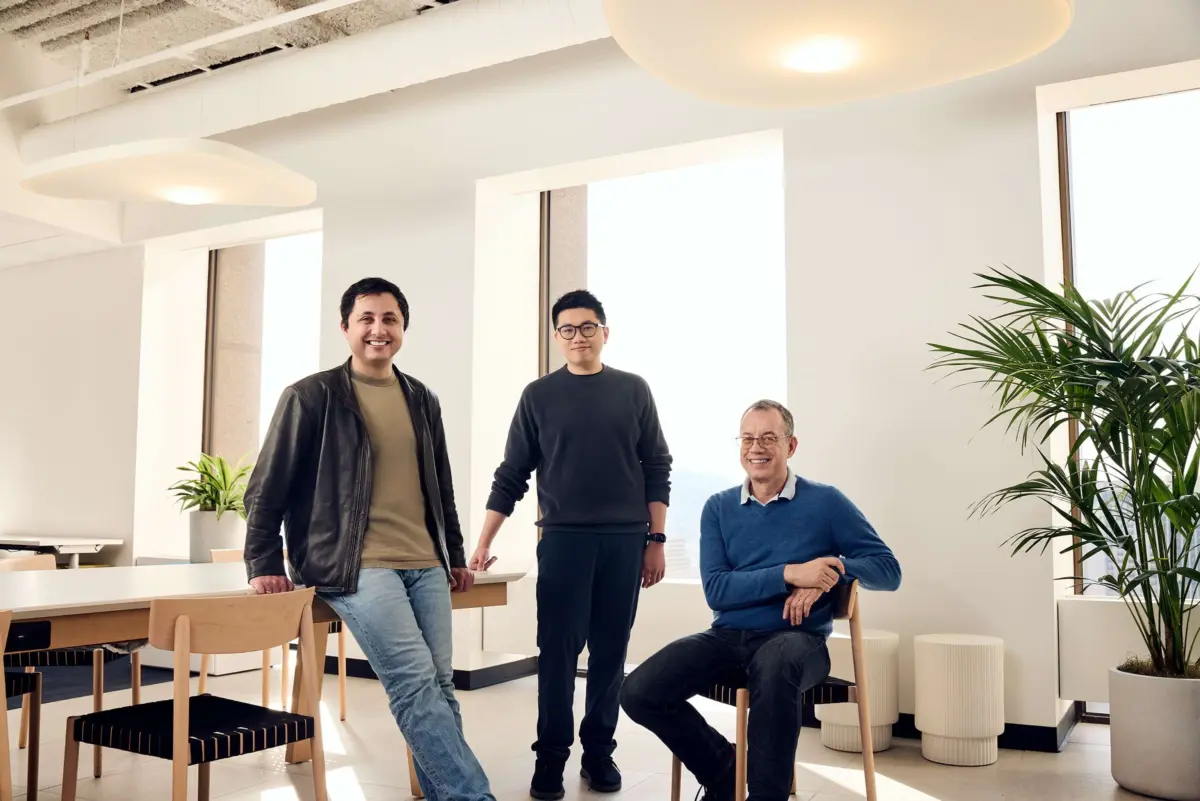
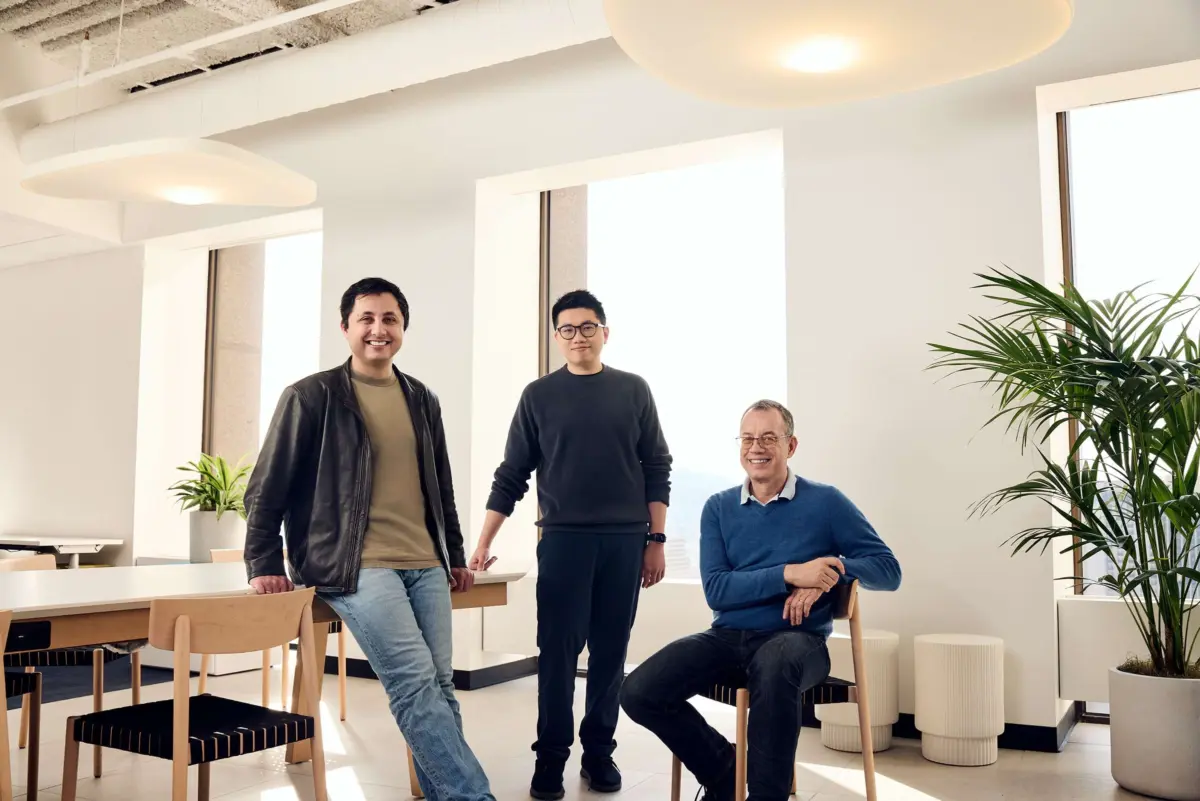
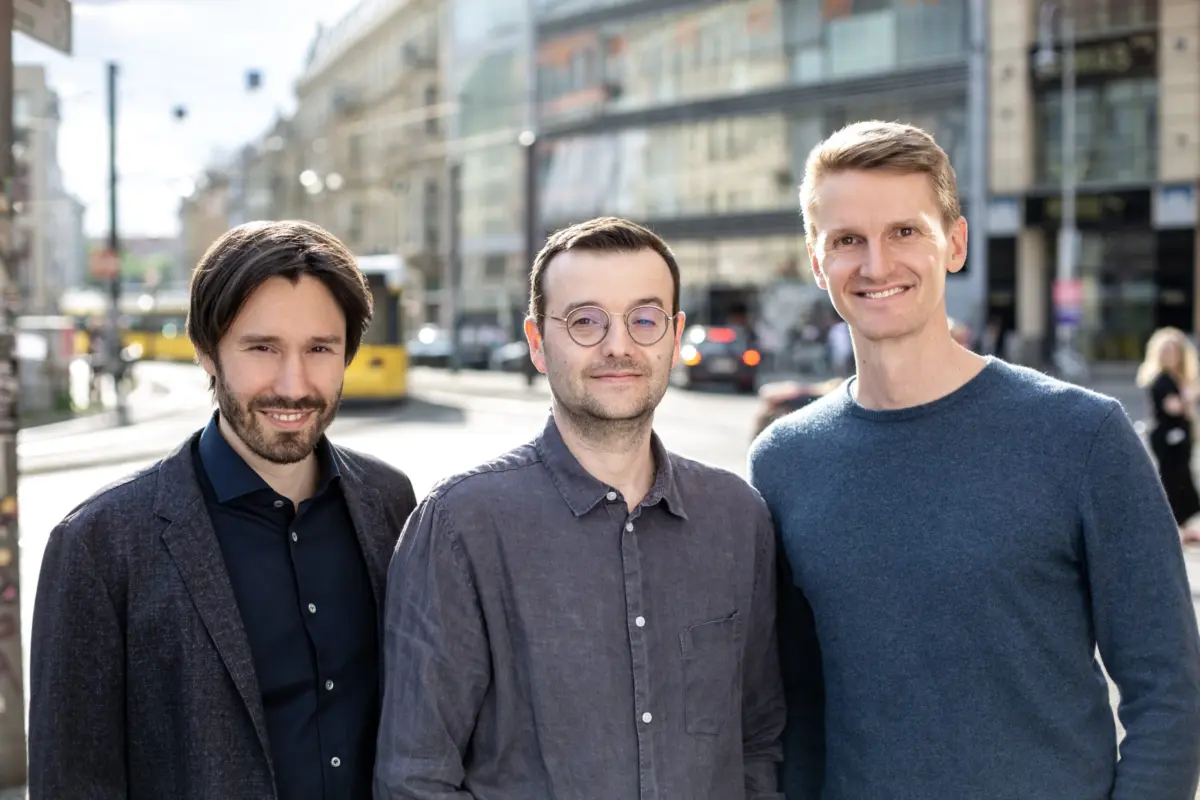
Co-founded in 2022 by open-source veterans Stephen Ewan, Igal Shilman, and Till Rohrmann—the minds behind Apache Flink and Data Artisans—Restate initially set out to build a general-purpose, durable workflow execution engine. Its core mandate was simple yet critical: make multi-step digital workflows completely resilient to server crashes, network partitions, and infrastructure drops. However, as the software industry pivoted headfirst into the "agentic era," Ewan and his team realized that their architecture was a tailor-made antidote to the unique vulnerabilities of AI agents.
This accidental product-market fit has triggered a massive commercial wave for the startup. Over the past few months, Restate has closed a series of lucrative six- and seven-figure customer contracts, culminating in a $20 million Series A funding round. Led by prominent venture capital firm Singular, with continued participation from Redpoint Ventures and Capital One Ventures, this fresh injection of capital arrives at a critical juncture. Restate intends to use the funds to aggressively scale its engineering corps, build out a robust go-to-market (GTM) strategy, and expand its footprint in the San Francisco Bay Area.
Yet, the road ahead is fiercely contested. Restate is stepping directly into the architectural ring against Temporal, the undisputed heavyweight champion of the durable workflow space. Temporal, founded in 2019, made headlines earlier this month by announcing a staggering $550 million Series E funding round at a sky-high $12.55 billion valuation. Despite operating at a different scale, Restate has already proven its mettle, attracting marquee tech innovators like vibe coding platform Replit, alongside heavy-hitting Fortune 500 enterprises in the financial sector.
By bypassing traditional reliance on external databases and developing proprietary storage, replication, and redundancy layers, Restate has engineered a high-speed, lightweight alternative to legacy durability engines. As AI agents transition from experimental tech demos to mission-critical corporate machinery, Restate is betting that durable execution infrastructure will soon become as ubiquitous and indispensable as the database itself.
Detailed Chronology: From Apache Flink to the Birth of Restate
To truly understand Restate’s architectural DNA, one must look backward to the roots of its founding team. Long before conceptualizing durable workflows for AI agents, Stephen Ewan, Igal Shilman, and Till Rohrmann were foundational figures in the world of big data stream-processing. Ewan was a co-creator of Apache Flink, an open-source stream-processing framework that revolutionized how modern enterprises handle real-time data feeds at scale.
The trio subsequently channeled their expertise into Data Artisans, a commercial entity designed to monetize and scale Apache Flink for enterprise clients. Data Artisans became a darling of the data engineering community, ultimately attracting the attention of Chinese tech titan Alibaba, which acquired the company in 2019. Following the acquisition, Data Artisans was rebranded as Ververica, with Ewan remaining at the helm as Chief Technology Officer for another three years.
During their tenure at Ververica and Data Artisans, Ewan, Shilman, and Rohrmann observed a persistent, systemic pain point across distributed software systems: maintaining state and continuity across distributed, failing networks was painfully complex. Developers were constantly writing brittle, error-prone boilerplate code to handle retries, timeouts, and state recovery whenever a microservice crashed mid-transaction.
Recognizing that existing tools were either too cumbersome, slow, or tightly bound to legacy architectures, the trio departed in 2022 to launch Restate. Their original thesis was clear: build an execution engine that abstracts away the complexities of distributed systems, making multi-step workflows inherently durable. They engineered Restate to automatically track execution steps, ensuring that if a process failed halfway through, the system could seamlessly pick up right where it left off without duplicating work or corrupting data states.
Initially, the startup focused on traditional microservices architectures and enterprise backends. However, the software landscape shifted dramatically beneath their feet with the generative AI boom. As enterprises began deploying multi-step LLM chains and autonomous AI agents capable of executing complex, branching tasks over extended periods, the fragility of these systems became glaringly apparent.
Unlike deterministic traditional code, AI agents take unpredictable paths, call external APIs dynamically, and run for minutes or even hours. If an agent crashes midway through a complex financial transaction or a multi-file software generation task, standard applications often break entirely, losing context and requiring costly manual intervention.
To Ewan’s surprise, Restate’s durable execution engine happened to solve these exact agentic failure modes natively. "It never was built for agents in the beginning, but it just happened to be a perfect match for all these problems that agents surface," Ewan noted in an interview with TechCrunch.
By late 2023 and throughout 2024, this alignment catalyzed rapid commercial acceleration. Enterprises scrambling to operationalize AI agents discovered that without a durability layer like Restate, their AI implementations were too volatile for production environments. This realization translated directly into enterprise revenue, driving the closing of multiple high-value contracts and setting the stage for the company’s recent $20 million Series A financing.
Supporting Context & Metrics: The Architectural Edge and Market Dynamics
The $20 million Series A round—anchored by Singular with backing from Redpoint Ventures and Capital One Ventures—provides Restate with the financial runway needed to scale its operations. But in a market dominated by multi-billion-dollar behemoths, financial backing alone is insufficient. Restate’s competitive advantage lies entirely within its unique architectural design.
Bypassing the Database Bottleneck
Traditional durability engines typically rely on an external database (such as PostgreSQL, MySQL, or distributed key-value stores) to persist state changes, track workflow progress, and handle orchestration logs. While effective, this architectural pattern introduces significant overhead:
- Network Latency: Every single step and state transition requires an explicit round-trip write to an external database, slowing down transaction throughput.
- Operational Complexity: Managing database scaling, connection pooling, and eventual consistency alongside a separate orchestration engine adds immense cognitive load to engineering teams.
- Cost Inefficiencies: High transaction volumes generate massive database write costs, making durability economically prohibitive for lighter-weight workflows.
Restate breaks away from this paradigm by developing its own custom storage, replication, and redundancy layers directly into the engine. Instead of bolting onto an external database, Restate manages state persistence natively within its runtime architecture.
According to Ewan, this proprietary approach allows Restate to operate with exceptional speed and a remarkably small memory footprint. By eliminating external database bottlenecks, the system achieves microsecond-level state coordination, making durable execution fast and lightweight enough to handle high-frequency, granular tasks that traditional engines avoid.
Targeting the "Lightweight" Workflow Gap
Historically, enterprises reserve durability engines exclusively for massive, "heavyweight" batch processing or critical financial ledger transactions. Lighter, more frequent programmatic routines are usually left unprotected, relying on simple error-handling blocks that fail silently under high-stress conditions.
Restate is actively disrupting this bifurcation. Because its system is radically more efficient and cost-effective than legacy counterparts, developers can apply durable execution to everyday microservices and granular agentic steps without worrying about performance degradation or runaway cloud infrastructure bills.
The Agentic Tailwinds and High-Profile Validation
The explosion of autonomous agents has fundamentally redefined what software infrastructure must endure. Agent workflows are characterized by three major hurdles:
- Extended Execution Times: Unlike a quick API call that resolves in milliseconds, agents may deliberate, execute tools, and query vector databases over several minutes.
- Non-Deterministic Paths: Agents dynamically decide their next steps based on LLM outputs, meaning execution graphs cannot always be hardcoded in advance.
- External Dependencies: Agents frequently interact with third-party APIs, web scraping tools, and human-in-the-loop validation checkpoints, multiplying the surface area for network timeouts and failures.
To make an agent reliable, developers must meticulously track every action to ensure reproducibility and consistent outcomes. Restate provides this exact ledger-like tracking automatically.
Despite being an underdog against industry giants, Restate has already secured high-profile validation. The platform is utilized by Replit, the popular cloud-based "vibe coding" development platform, to ensure the resilience of its next-generation software creation environments. Beyond the bleeding edge of developer tools, Restate’s client roster extends deep into traditional enterprise territory, including Fortune 500 institutions within the highly regulated financial services sector.
Official Statements & Industry Perspectives
The rapid evolution of durable workflows has brought technical infrastructure to the forefront of executive strategy. Stephen Ewan and his leadership team have been vocal about the inevitable ubiquity of these tools across the modern enterprise stack.
Reflecting on the unexpected alignment between Restate’s original codebase and the demands of the AI agent revolution, Ewan emphasized the fundamental shift in how software must be engineered:
"It never was built for agents in the beginning, but it just happened to be a perfect match for all these problems that agents surface."
Elaborating on the core technical requirements for deploying reliable AI systems in production, Ewan explained the absolute necessity of execution traceability:
"You need to make sure you track exactly what you do to make it reproducible and have a consistent outcome."
Addressing the universal pain point that unites Restate’s diverse clientele—ranging from hyper-growth AI startups to century-old financial institutions—Ewan noted that the underlying requirement remains invariant regardless of the industry:
"Whether applied to AI companies or Fortune 500 financial institutions, customers all have the same need—a way to ensure that if something fails mid-process, the system automatically finds a way to put itself back together."
Looking toward the horizon, Ewan firmly believes that durable execution engines will soon transcend niche tech sectors and become standard enterprise infrastructure:
"If we fast-forward a couple of years, it’s one of those tools, like a database, that I think pretty much any company will have a use case for, no matter their shape and size."
These sentiments underline a broader industry realization: as software becomes increasingly autonomous, distributed, and AI-driven, the infrastructure supporting it must evolve from fragile, reactive error-handling to proactive, native resilience.
Future Outlook: David Versus Goliath in the Durable Infrastructure Market
As Restate channels its newly secured $20 million Series A funding into operational expansion, it faces a formidable landscape defined by intense competition and exponential market demand.
The Temporal Factor
The elephant in the room is Temporal. Armed with a staggering $550 million Series E funding round at a $12.55 billion valuation secured earlier this month, Temporal stands as the undisputed titan of durable execution infrastructure. Backed by massive venture capital and a vast community of enterprise developers, Temporal has spent years establishing market dominance, evangelizing the concept of workflow durability (often referred to as "workflow-as-code").
For Restate, competing against a well-capitalized incumbent with a massive head start requires strategic positioning. Rather than fighting Temporal on every front, Restate is leveraging its architectural innovations—specifically its database-less, high-speed, lightweight design—to target developers who find traditional engines too heavy, complex, or expensive for granular workloads and fast-moving AI agent loops.
Scaling the Go-To-Market Engine
To capitalize on its recent sales momentum and six- and seven-figure contract wins, Restate’s immediate roadmap focuses heavily on organizational scaling. The company plans to:
- Build a Dedicated GTM Team: Transitioning from an engineering-led startup to a commercial powerhouse requires a specialized sales and marketing apparatus capable of navigating complex enterprise procurement cycles.
- Expand Engineering Talent: Continuing to refine its proprietary storage and replication architecture requires top-tier distributed systems engineers.
- Establish a West Coast Hub: Expanding its physical presence in the San Francisco Bay Area will place Restate directly on the doorstep of the world’s leading AI labs, foundational model providers, and agent-centric startups.
The Inevitability of Durable Infrastructure
As enterprises move past the proof-of-concept phase with generative AI and begin deploying autonomous agents into production environments where financial transactions, customer data, and system configurations are on the line, failure is no longer an acceptable baseline. The financial and reputational cost of a rogue, crashing AI agent is simply too high.
Restate’s bet is that durable infrastructure will follow the exact same historical adoption curve as relational databases, message queues, and container orchestration platforms like Kubernetes. What starts as specialized infrastructure for complex distributed systems inevitably becomes foundational plumbing for all software.
With $20 million in the bank, proven architectural differentiation, and a surging tailwind from the agentic AI revolution, Restate is well-equipped to challenge the status quo. Whether David can successfully carve out a dominant market share in the shadow of Goliath remains to be seen, but one thing is certain: the race to make the autonomous software era reliable has officially begun.