Executive Overview
In the modern enterprise technology landscape, artificial intelligence is often marketed as an omniscient engine capable of ingesting petabytes of structured and unstructured information in seconds. Companies pour billions of dollars into advanced machine learning architectures, high-performance computing clusters, and sophisticated large language models (LLMs), anticipating an immediate transformation in operational efficiency, automated decision-making, and unprecedented productivity gains.
Yet, beneath the glossy surface of corporate AI adoption lies a persistent, costly, and deeply frustrating paradox: for all the data these systems continually amass and analyze, enterprise AI agents frequently suffer from a profound, debilitating shortcoming—a critical lack of contextual knowledge.
In the lexicon of modern enterprise architecture, data and knowledge are not interchangeable terms. While data represents the raw, unprocessed digital exhaust of modern business—transaction logs, customer emails, supply chain manifests, and financial ledgers—knowledge is the sophisticated understanding of what that data actually means within the unique operational ecosystem of an individual organization. Enterprise AI agents require this rich, multidimensional understanding to reason effectively about complex, ambiguous situations, make nuanced business decisions, and ultimately execute autonomous, high-stakes actions.
Without sufficient organizational knowledge, these agents are structurally prone to hallucinations, flawed logic, and fundamentally unreliable decisions.
Recent empirical research highlights this deficiency as the primary bottleneck preventing agentic AI use cases from ever escaping the pilot phase and making it into full-scale production. Driven by intense competitive pressure, organizations across virtually every industry feel an urgent mandate to deploy and scale agentic projects to capture the massive efficiency gains promised by the technology. Falling short of this goal carries severe economic consequences: it risks squandering the substantial capital already sunk into early-stage AI initiatives, and it dangerously cedes market share to aggressive rivals who are already figuring out how to put autonomous agents to work more effectively.
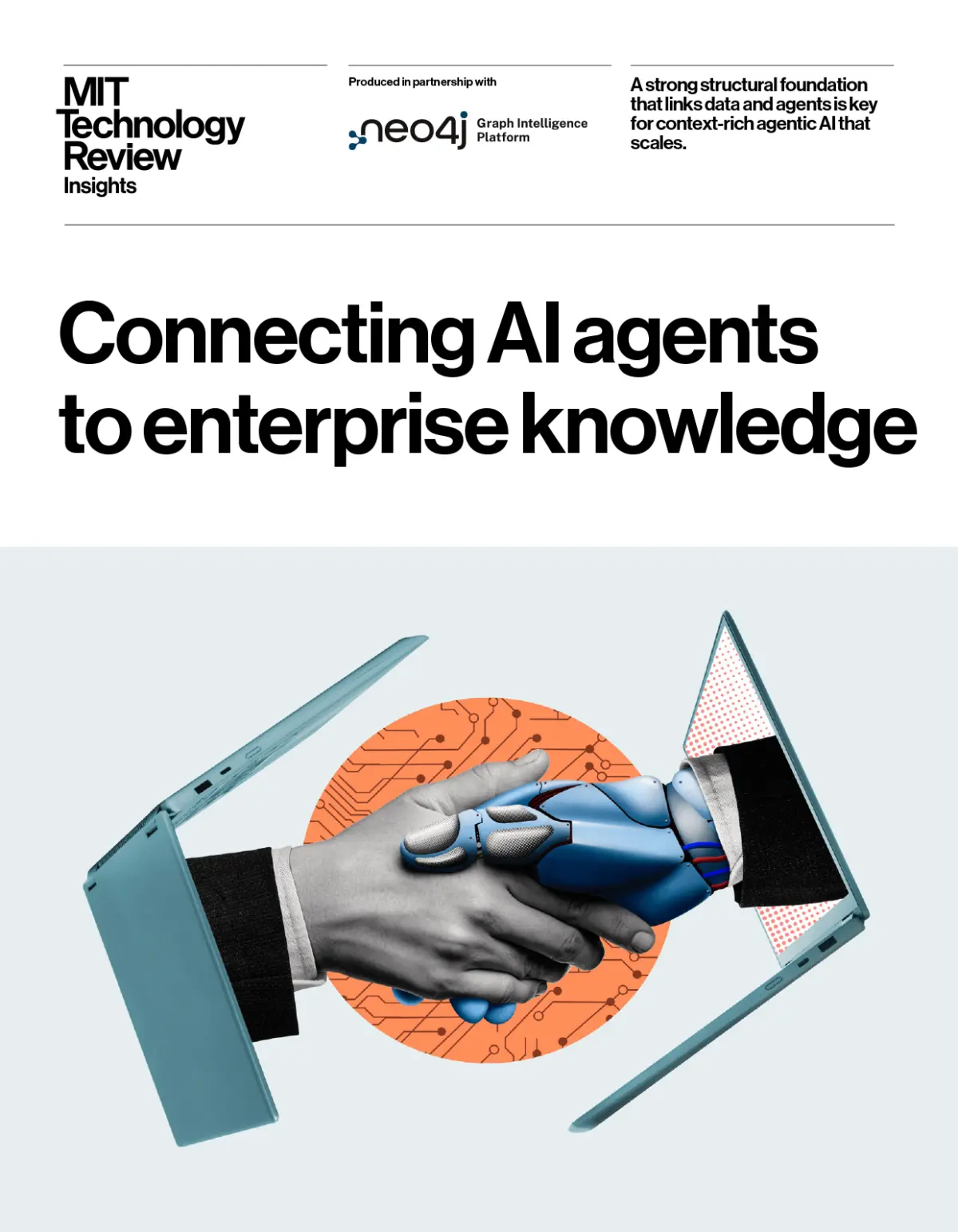
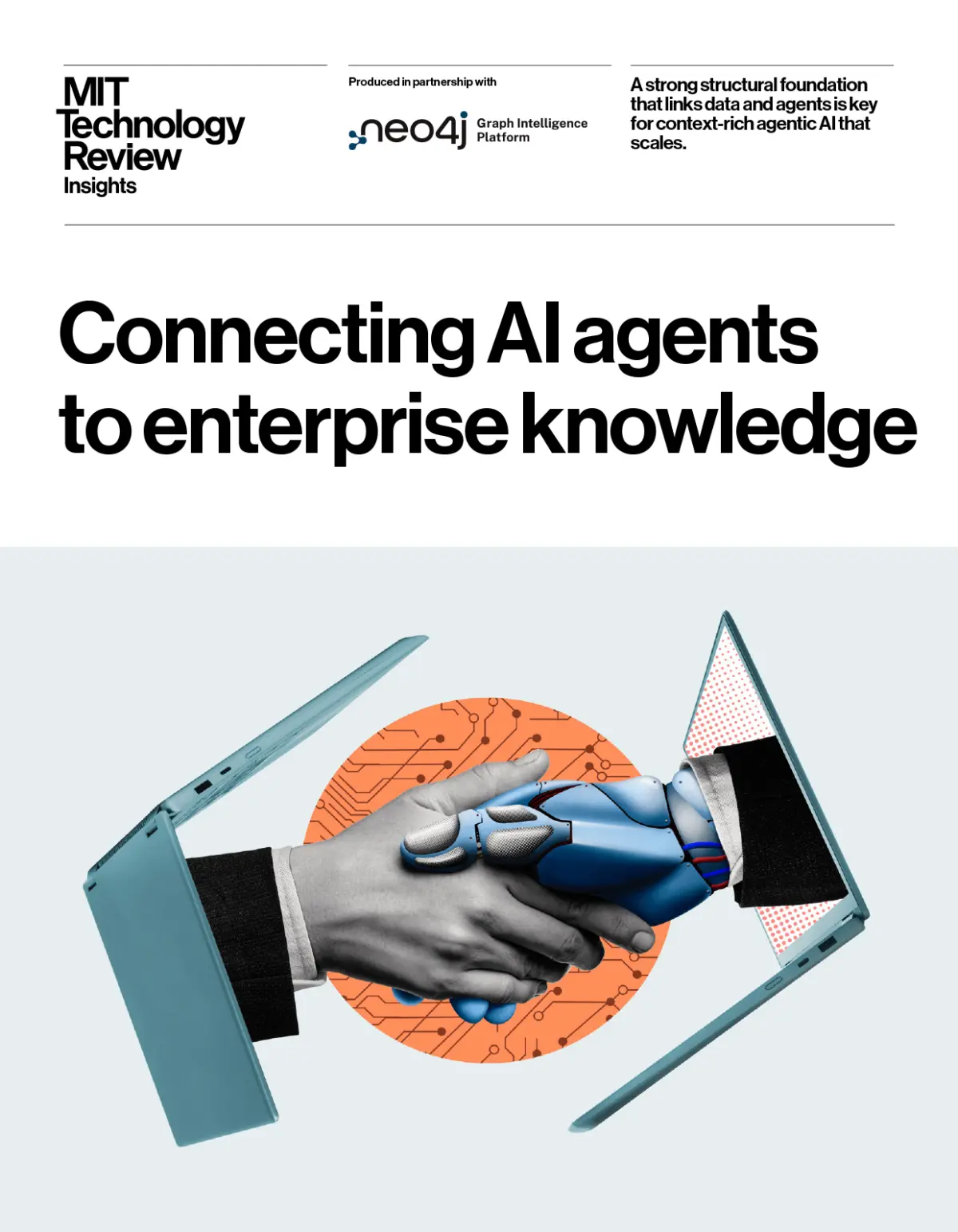
To dissect this phenomenon, a comprehensive new research report—based on an exhaustive survey of 300 data, AI, and enterprise technology executives—sheds light on the state of agentic AI capabilities in the corporate world. Authored by Insights, the custom content arm of MIT Technology Review, and produced in collaboration with graph database leader Neo4j, the report investigates how organizations handle semantic knowledge, episodic memory, and procedural logic. It explores the barriers blocking path-to-production pipelines and charts the strategic investments required to bridge the dangerous chasm between raw enterprise data and autonomous AI execution.
Detailed Chronology: The Evolution of Agentic AI and the Production Bottleneck
The Shift from Static LLMs to Autonomous Agents
To understand the current crisis of context, it is necessary to examine how enterprise AI has evolved over recent years. Initially, enterprise adoption centered on general-purpose, static foundational models. Organizations experimented with chatbots that could summarize documents, draft routine communications, or answer basic human resources queries based on publicly available training data. While these deployments demonstrated the raw linguistic power of generative AI, their utility was inherently constrained by their isolation from internal enterprise workflows.
By 2024 and 2025, the industry witnessed a rapid paradigm shift away from passive conversational interfaces toward active "agentic" AI systems. Unlike their predecessors, enterprise AI agents are designed to operate autonomously over extended periods, invoke external tools, interact with proprietary software applications (such as CRM and ERP platforms), and execute complex, multi-step workflows. An agentic system does not merely write an email; it analyzes incoming customer complaints, cross-references purchase history, checks inventory levels in real-time warehouses, applies corporate return policies, and processes refunds without human intervention.

The Hype Curve Meets Operational Reality
However, as organizations rushed to transition from simple proof-of-concept chatbots to sophisticated multi-agent architectures, they hit a brick wall. The transition from experimental sandbox environments to live, enterprise-grade production proved exponentially more difficult than anticipated.
According to the executive survey data, organizations on average successfully transition only 34% of their agentic AI projects into actual production. Nearly two-thirds of all agentic initiatives stall, stagnate, or are quietly abandoned before delivering tangible return on investment. Even elite high-tech firms—historically regarded as paragons of digital transformation—report struggling with this exact friction point.
This high failure rate has triggered a period of urgent reassessment across boardrooms and chief technology officer (CTO) offices. Early assumptions that simply throwing more compute power or larger parameter models at a problem would yield intelligent behavior have been thoroughly disproven. The industry has realized that an AI agent without access to the deep, interconnected fabric of corporate memory is like a brilliant, highly educated executive dropped into a multinational corporation with total amnesia, blindfolded, and denied access to institutional history.
Supporting Context & Metrics: Unpacking the Research Findings
The comprehensive study conducted among 300 technology and data executives provides granular, quantitative insights into why agentic AI projects fail and what separates struggling enterprises from elite performers.
1. The Production Gap: Leaders vs. Laggards
The survey reveals a stark divide between the average enterprise and a small, highly successful cohort designated as "production leaders." While the broader market manages to push only 34% of its agentic projects into production, this elite group achieves an average production success rate of 61%.
What differentiates these leaders? The research indicates that production leaders possess dramatically superior organizational knowledge capabilities, particularly in the realm of semantics. They have mastered the art of encoding meaning, relationships, and context into formats that AI systems can instantly query and comprehend. This structural advantage tracks directly and linearly with their ability to scale AI initiatives across the enterprise.
2. The Anatomy of Failure: Data Fragmentation vs. Privacy Concerns
When executives were asked to identify the primary challenges preventing them from expanding agents’ access to knowledge, a clear hierarchy of pain points emerged:
- Data Fragmentation (55%): Cited by more than half of all respondents as the single greatest obstacle, data fragmentation represents the historical siloed nature of enterprise IT. Customer data lives in Salesforce, financial records in SAP, engineering notes in Confluence, and legacy mainframe data in isolated repositories. Without a unified view, AI agents hit dead ends when trying to trace information across departmental boundaries.
- Legacy Data Systems: Archaic databases, poorly documented schemas, and unstandardized file formats make it nearly impossible for modern retrieval systems to extract accurate context quickly.
- Security and Privacy Concerns: Interestingly, while data fragmentation plagues the broader market, production leaders are significantly more likely to cite security and privacy as their primary hurdle (72% of this elite group). This paradox makes intuitive sense: organizations that have successfully solved data fragmentation and reached advanced production stages are actively grappling with the governance, compliance, and access-control challenges of granting autonomous AI agents read-write access to sensitive corporate assets.
3. The Three Pillars of Agentic Knowledge
To function effectively, an AI agent requires three distinct categories of cognitive capability, all of which must be engineered into the enterprise architecture:

- Semantic Knowledge: The structured understanding of business entities (e.g., customers, products, regions) and the complex relationships between them.
- Episodic Memory: The ability to recall past interactions, historical decisions, and the sequence of events that led to a specific business outcome.
- Procedural Knowledge: The deep familiarity with operational rules, standard operating procedures (SOPs), regulatory compliance mandates, and step-by-step business workflows.
Official Statements & Expert Perspectives: The Rise of the "Knowledge Layer"
As enterprises grapple with these structural deficiencies, industry experts and technologists are converging on a singular architectural solution: the implementation of a dedicated "knowledge layer."
Interviewed extensively for the research report, top-tier AI and data architects emphasize that plugging foundational models directly into raw, fragmented enterprise databases is an inherently flawed strategy. Instead, organizations must construct an intermediary semantic and structural infrastructure that sits between the raw data stores and the autonomous AI agents.
"For too long, the enterprise AI conversation has been dominated by a obsessive focus on model size and parameter counts," notes one senior technology strategist contributing to the study. "We treated the LLM as the brain, while completely ignoring the nervous system and the memory banks. Without a robust knowledge layer that translates chaotic corporate data into structured, relational understanding, an AI agent is effectively operating in a cognitive vacuum."
Industry consensus points to several key investment priorities that executives are aggressively funding to construct this vital knowledge layer:
- Retrieval Technologies and Advanced RAG: Moving beyond basic keyword search, organizations are investing heavily in sophisticated Retrieval-Augmented Generation (RAG) pipelines, ingestion engines, and AI-ready Application Programming Interfaces (APIs). These tools ensure that when an agent needs information, it retrieves precise, validated, and up-to-date context rather than hallucinating plausible-sounding fiction.
- Knowledge Graphs: Recognized as a cornerstone technology for semantic mastery, knowledge graphs explicitly model the relationships between diverse enterprise data points. By mapping entities (people, places, concepts, transactions) and their interconnections in a graph structure, these systems provide AI agents with the relational context required for complex, multi-hop reasoning.
- AI Evaluation Agents: To ensure the reliability of autonomous systems, organizations are deploying specialized monitoring and evaluation agents. These oversight mechanisms continuously audit the outputs and reasoning paths of operational agents, checking them against corporate policy and factual knowledge bases before actions are executed in live environments.
Future Outlook: Navigating the Next Era of Enterprise Intelligence
The transition from experimental curiosity to indispensable operational engine represents the most challenging hurdle in the history of enterprise software. As the findings from the MIT Technology Review Insights and Neo4j report make abundantly clear, the future of agentic AI will not be determined by who builds the biggest model, but by who best masters the architecture of enterprise knowledge.
Over the next three to five years, the corporate landscape will likely experience a sharp bifurcation. On one side will be organizations that treat data integration as a superficial plumbing exercise, resulting in stalled projects, soaring technical debt, and frustrated executive stakeholders. On the other side will be the agile leaders—those who systematically invest in building robust knowledge layers, advanced retrieval pipelines, and sophisticated knowledge graphs.
For chief information officers, chief data officers, and enterprise architects, the strategic imperative is unmistakable. To capture the promised efficiencies of agentic AI, organizations must systematically dismantle data silos, resolve underlying fragmentation, and institutionalize semantic and procedural knowledge. Only by furnishing AI agents with a deep, context-rich understanding of the corporate ecosystem can enterprises transform autonomous intelligence from an elusive promise into a reliable, production-grade reality.
To explore the complete findings, survey data, and strategic recommendations, you can access the full report via the official Neo4j and MIT Technology Review whitepaper portal.