







Executive Overview
In the boardrooms of the Fortune 500, the narrative surrounding artificial intelligence has shifted dramatically. The initial gold rush—characterized by the breathless adoption of large language models (LLMs) and generalized generative AI tools—has matured into a hard-nosed demand for operational efficiency and return on investment. Enter agentic AI: autonomous systems designed not merely to answer prompts, but to reason through complex operational landscapes, make consequential business decisions, and execute multi-step workflows.
Yet, as organizations race to operationalize these next-generation AI agents, a curious and costly bottleneck has emerged. Despite ingesting petabytes of operational data, enterprise AI agents frequently suffer from a fundamental affliction: a profound lack of organizational knowledge.
In this context, "data" and "knowledge" are distinct entities. Data is the raw material—the unstructured text files, customer transaction logs, enterprise resource planning (ERP) entries, and communication threads scattered across disparate cloud buckets and legacy mainframes. Knowledge, conversely, is the deep, contextual understanding of what that data means within the specific operational ecosystem of an individual enterprise. It encompasses semantic relationships, historical precedents, operational workflows, and the nuanced constraints that govern a business.
Without this vital layer of understanding, AI agents are forced to operate in a cognitive vacuum. They are prone to hallucinations, flawed reasoning, and unreliable decisions that can introduce catastrophic compliance risks or operational paralysis.
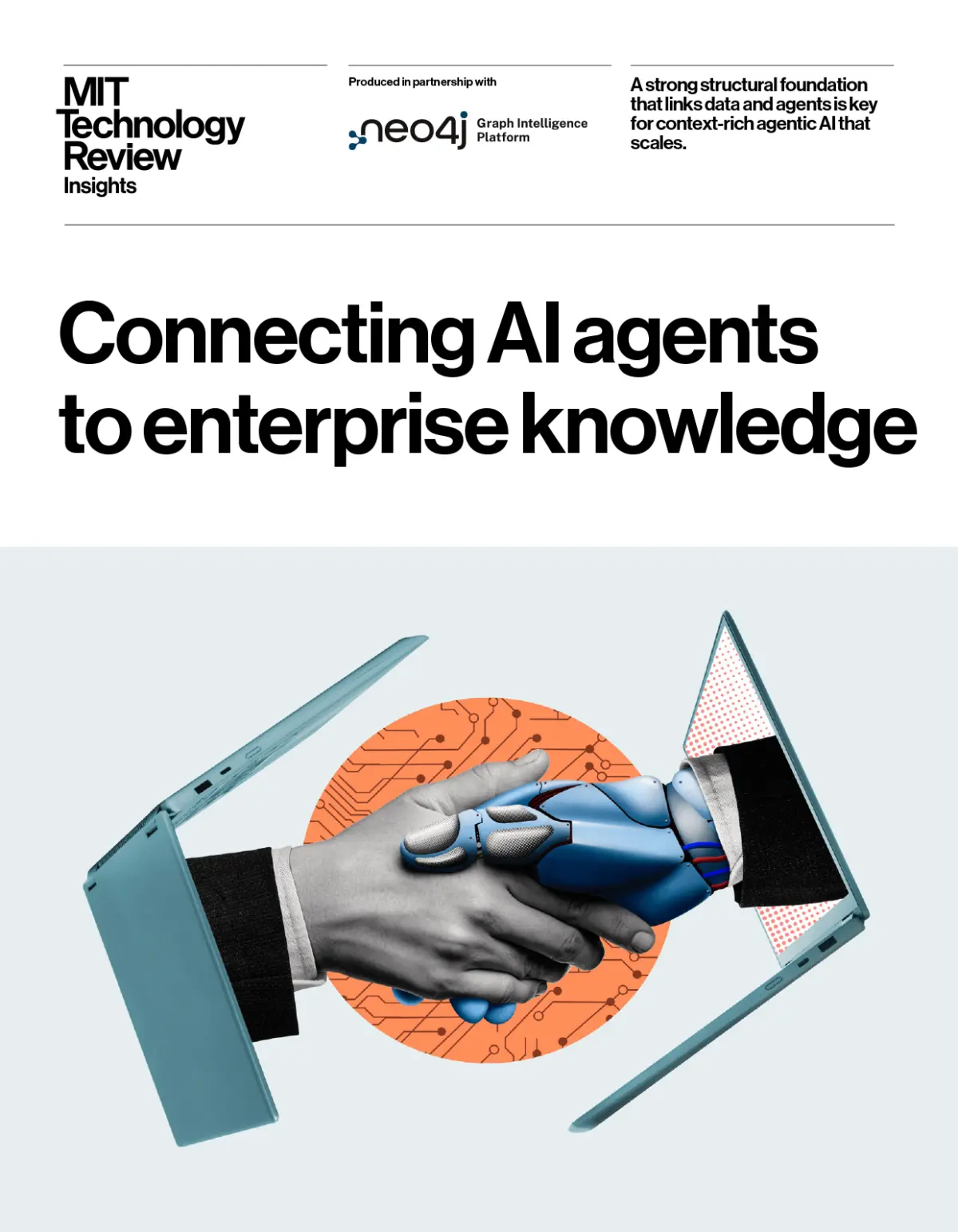
According to a comprehensive new research report based on a survey of 300 data, AI, and technology executives—produced by MIT Technology Review Insights—this acute knowledge deficit is the primary reason why agentic AI use cases routinely stall before ever reaching production. The stakes could not be higher. Organizations that fail to bridge this context gap risk stranding millions of dollars in sunk pilot investments while ceding insurmountable competitive advantages to agile rivals who have successfully armed their agents with institutional intelligence.
This in-depth special report explores the root causes of the enterprise agentic bottleneck, analyzes empirical data from industry leaders, and details the emerging architectural paradigms—chiefly, the implementation of a dedicated "knowledge layer" powered by knowledge graphs and retrieval-augmented generation (RAG)—that are poised to redefine enterprise automation.
Detailed Chronology: The Evolution and Stalling of Enterprise Agentic AI
To understand why enterprise AI agents are stumbling at the production threshold, it is necessary to trace the rapid, sometimes chaotic evolution of generative AI deployments over the past half-decade.
Phase 1: The Prompts and Pilots Era (2022–2023)
When foundational models first captivated the global market, the corporate playbook was defined by speed and experimentation. Organizations established "AI sandboxes" almost overnight. Chief Information Officers (CIOs) and Chief Technology Officers (CTOs) rushed to deploy off-the-shelf chatbots, document summarizers, and basic code-assistants. These tools required minimal integration with core enterprise systems, relying instead on the broad, generalized pre-training of public LLMs.
During this phase, success was measured by novelty and user engagement. However, as leadership teams attempted to transition these sandbox experiments into mission-critical production environments—such as automated supply chain re-routing, dynamic financial auditing, or autonomous customer dispute resolution—the limitations of generalized intelligence became glaringly apparent. A model that could write a convincing poetry verse failed miserably when asked to interpret a localized corporate procurement policy stored across three different siloed legacy databases.
Phase 2: The Agentic Promise and the Reality Check (2024–2025)
Recognizing the limitations of passive chatbots, the industry pivoted toward agentic workflows. Unlike static models, AI agents are engineered to exhibit agency: they plan, utilize tools, evaluate intermediate outputs, and execute workflows autonomously over extended horizons.
Market forecasters predicted an explosion in autonomous software agents capable of handling complex enterprise tasks end-to-end. Competitive pressures intensified, driven by the fear of technological obsolescence. Enterprises poured capital into agentic frameworks, expecting rapid efficiency gains.

Yet, as the findings of the MIT Technology Review Insights report reveal, reality has fallen aggressively short of expectations. Today, on average, only about a third (34%) of organizations’ agentic AI projects successfully make the leap from pilot to production. Even among high-tech firms—traditionally the vanguard of technological adoption—the attrition rate for agentic pilots remains strikingly high.
Phase 3: The Recognition of the Context Gap (Present Day)
As projects stalled, enterprise architects and data scientists began conducting rigorous post-mortems. They discovered that the failure modes of agentic AI were rarely rooted in model capability. Modern LLMs and specialized reasoning models possess more than enough raw computational power.
Instead, the bottleneck is structural and informational. AI agents fail because they lack access to the connective tissue of the enterprise: the dynamic network of relationships, rules, and historical context that human employees absorb through osmosis and institutional memory. Without solving this "knowledge gap," organizations are finding that scaling agentic AI is akin to building a high-performance sports car while refusing to install a transmission.
Supporting Context & Metrics: Inside the Research Findings
The research report—drawing insights from 300 data, AI, and technology executives—provides a granular, data-driven look at the current state of enterprise agentic AI capabilities, the barriers holding them back, and the profiles of organizations that are beating the odds.
+---------------------------------------------------------------------------------+
|                        STATE OF ENTERPRISE AGENTIC AI                           |
|                                                                                 |
|  [========= 34% =========] Successfully Reach Production (Industry Average)     |
|                                                                                 |
|  [=========================== 61% ===========================] Production       |
|                                                               Leadership Group  |
+---------------------------------------------------------------------------------+
1. The Production Gap: A Tale of Two Tiers
While the broader market struggles with a dismal 34% production rate for agentic projects, the research identified an elite cohort of production leaders. Among this vanguard group, an impressive 61% of agentic projects advance beyond the pilot phase into full-scale production.
A comparative analysis between this elite group and the rest of the surveyed organizations reveals a stark divergence in capabilities. Production leaders do not necessarily possess superior base models; rather, they excel across three vital dimensions of agentic knowledge:
- Semantic Knowledge: A rigorous, structured understanding of what enterprise data means, how different data points relate to one another, and how business concepts map to underlying database schemas.
- Episodic Memory: The capacity of an agent to retain, recall, and learn from past interactions, decisions, and outcomes within specific contextual timelines.
- Procedural Knowledge: A comprehensive repository of operational rules, workflows, regulatory constraints, and step-by-step methodologies required to execute business processes correctly.
When evaluated against these criteria, production leaders consistently outrank their peers, proving that robust knowledge capabilities are the single greatest predictor of agentic success.
2. The Anatomy of Failure: Data Fragmentation vs. Security Paralysis
What specifically is stalling enterprise projects? The survey data highlights a fascinating dichotomy between general market struggles and the challenges faced by production leaders.
- Data Fragmentation (55%): Across the general respondent pool, the single most commonly cited barrier to expanding agent access to knowledge is data fragmentation. Inadequate data sharing across disparate corporate systems creates informational "silos." When an AI agent attempts to reason across a fragmented landscape, it encounters conflicting definitions, outdated records, and missing links, resulting in flawed decision-making.
- Security and Privacy Concerns (72% of Leaders): Interestingly, production leaders are far more likely to cite security, governance, and privacy concerns as their primary hurdle. Because these organizations have successfully integrated their data pipelines and built advanced knowledge architectures, their primary focus has shifted upward—from how to connect the data to how to govern it safely, prevent data leakage, and ensure strict compliance with regulatory frameworks like GDPR, HIPAA, and emerging enterprise AI governance standards.
3. Legacy Systems and Infrastructure Bottlenecks
Beyond fragmentation, respondents consistently pointed to legacy data systems as a primary point of failure. Decades-old mainframes, unstructured document repositories hidden away in legacy SharePoint sites, and siloed customer relationship management (CRM) tools are fundamentally incompatible with the real-time, probabilistic nature of modern AI agents. Without a structural overhaul of how data is surfaced and contextualized, attempts to layer autonomous agents on top of legacy architectures inevitably collapse under their own weight.
Official Statements & Industry Perspectives
The structural challenges highlighted in the research point to an urgent need for architectural innovation. Industry experts and enterprise technologists interviewed for the report emphasize that solving the knowledge crisis requires moving beyond traditional database queries and embracing a new layer of enterprise software infrastructure.
"For years, the industry operated under the assumption that if you simply feed enough data into a vector database or scale up the parameters of a foundational model, intelligence would naturally emerge," notes a leading enterprise data architect featured in the study. "We have learned the hard way that this is a fallacy. An LLM without structured organizational knowledge is like a brilliant attorney dropped into a foreign country without access to local laws, corporate history, or office precedents. They can talk fluently, but they will make catastrophic mistakes."

Executives are increasingly aligning around the necessity of a dedicated knowledge layer—an architectural middleware that sits between raw enterprise data stores and autonomous AI agents.
According to technology strategists participating in the research, this knowledge layer acts as the corporate brain. It translates raw, fragmented data streams into coherent semantic graphs, maps out procedural workflows, and equips retrieval-augmented generation (RAG) pipelines with the precise contextual boundaries that agents require to reason safely.
Furthermore, industry leaders emphasize that closing the knowledge gap is not merely a technical checkbox; it is an existential business imperative. "In competitive markets, the speed at which an enterprise can safely automate complex workflows dictates its profit margins and market share," says a participating Chief Technology Officer. "If your agents are stalling out in perpetual pilot phases because they don’t understand your business logic, your competitors who have solved the knowledge layer will outpace you by orders of magnitude."
Future Outlook: Building the Knowledge Layer for Autonomous Enterprise
As enterprises look toward the horizon of 2026 and beyond, the roadmap for agentic AI is becoming increasingly clear. Surviving the current trough of disillusionment requires a decisive shift in investment priorities. Organizations are moving away from brute-force model scaling and redirecting capital toward the foundational plumbing required to give AI true situational awareness.
+---------------------------------------------------------------------------------+
|                       FUTURE ENTERPRISE AI ARCHITECTURE                         |
|                                                                                 |
|  [ Autonomous AI Agents ]  <-- (Reasoning & Action Execution)                   |
|            ^                                                                    |
|            |                                                                    |
|  [ THE KNOWLEDGE LAYER ]   <-- (Semantic Graphs, Episodic Memory, Workflows)    |
|            ^                                                                    |
|            |                                                                    |
|  [ Enterprise Data Stores ] <-- (SQL, NoSQL, APIs, Unstructured Documents)      |
+---------------------------------------------------------------------------------+
1. Prioritizing Retrieval Technologies and Ingestion Pipelines
To bridge the gap between static data and dynamic agents, organizations are aggressively investing in advanced retrieval technologies. This includes modernizing data ingestion pipelines to clean, normalize, and structure unstructured data in real time, as well as deploying AI-ready APIs that allow agents to query enterprise systems dynamically rather than relying on static, pre-digested training sets.
2. The Rise of Knowledge Graphs and Advanced RAG
The limitations of naive Retrieval-Augmented Generation (RAG)—which often struggles to capture multi-hop relationships across complex corporate data—have catalyzed heavy enterprise investment in knowledge graphs. By mapping entities (such as customers, products, transactions, and policies) and their explicit relationships into a networked graph structure, organizations provide AI agents with an intuitive, deterministic map of the business. When combined with advanced RAG frameworks, knowledge graphs allow agents to traverse complex semantic pathways, cross-reference policies, and verify facts before executing high-stakes actions.
3. AI Evaluation Agents and Guardrails
As autonomous agents are granted broader operational permissions, the need for robust oversight mechanisms grows exponentially. Organizations are increasingly deploying secondary "evaluation agents"—specialized monitoring systems designed to audit the reasoning steps, contextual retrievals, and proposed actions of primary agents in real time. These guardrails ensure that agentic workflows adhere strictly to organizational knowledge boundaries, ethical standards, and regulatory mandates.
Conclusion: The Race for Contextual Maturity
The message from the MIT Technology Review Insights research is unmistakable. The era of casual, plug-and-play AI experimentation has drawn to a close. As businesses demand tangible ROI from their automation initiatives, the differentiator between failure and market leadership will not be access to compute or the size of the underlying model.
It will be knowledge maturity.
Organizations that successfully construct a robust, secure, and semantically rich knowledge layer will unlock the true potential of agentic AI—transforming autonomous systems from unreliable novelties into dependable, high-performance engines of enterprise growth. Those that fail to bridge the context gap will find themselves stranded in a perpetual cycle of stalled pilots, wasted capital, and unfulfilled promise.