
Executive Overview
The breathless expansion of the Asia-Pacific (APAC) data center and artificial intelligence (AI) infrastructure market has officially encountered its most formidable reckoning to date. For years, the region has served as a primary engine for global digital transformation, fueled by aggressive venture capital, surging enterprise demand for generative AI workloads, and seemingly limitless investor enthusiasm. However, a compounding series of high-profile market corrections, cancelled mega-IPOs, abrupt partnership dissolutions, and heavy-handed regulatory interventions have exposed deep-seated vulnerabilities across the sector.
The most dramatic casualty in this shifting landscape is the collapse of Australian neocloud firm Firmus’s planned AU$7.1 billion (US$4.97 billion) initial public offering (IPO)—a blockbuster debut that had been widely anticipated as the largest listing on the Australian Securities Exchange (ASX) since Telstra’s historic market entry in 1997. Compounding this financial shock are broader macroeconomic headwinds, including persistent interest rate hikes, and tightening government oversight across Southeast Asia. Regulators in countries like Indonesia, Thailand, and Malaysia are increasingly pushing back against the unchecked strain that massive data center developments place on local power grids, environmental ecosystems, and zoning laws.
This comprehensive report examines the converging financial, operational, and regulatory crises threatening to reshape the APAC data center landscape, offering a granular look at the events rattling investors and industry stakeholders alike.
Detailed Chronology of a Market Correction
The unraveling of what was supposed to be a golden era for APAC digital infrastructure unfolded across a punishing multi-day sequence of corporate stumbles, strategic realignments, and political pushback.
The Firmus IPO Collapse and Shareholder Fallout
The turbulence culminated on a Friday when Firmus, a high-profile neocloud infrastructure company backed by heavyweight institutional and tech stakeholders including Blackstone, Jane Street, and Nvidia, officially withdrew its application for an ASX listing.
The offering was initially structured to raise an astonishing AU$7.1 billion, aiming to value the company at a target share price of roughly AU$11 ($7.67). Yet, as the roadshow progressed, Firmus struggled mightily to secure firm market support. Even after management attempted to salvage the deal by offering downward adjustments to the target price, institutional and retail appetite remained severely depressed.
The reverberations of the aborted IPO were felt immediately across the broader market. Trading in Maas Group—one of Firmus’s key corporate shareholders holding a 3.2% equity stake alongside an extensive pipeline of outstanding infrastructure contracts valued at AU$727 million ($507 million)—was abruptly halted after its stock price plummeted an alarming 27% over a frantic two-day window.
In the wake of the failed public listing, Firmus announced it would pivot away from public markets entirely, shifting gears to secure up to $3 billion through private fundraising channels to keep its capital-intensive expansion plans alive.

The CDC Data Centers Severance
Adding insult to injury, Firmus’s public relations crisis was compounded by severe operational turmoil. Just two days prior to pulling its IPO application, Firmus was unceremoniously dumped by CDC Data Centers from their high-profile joint AI infrastructure buildout in Australia.
The partnership dissolved after CDC executives grew increasingly alarmed by Firmus’s unilateral diversification into Southeast Asian markets—an aggressive expansion strategy that fell entirely outside the scope of their original joint venture agreement. The sudden termination of the CDC partnership dealt a heavy blow to Firmus’s domestic credibility, leaving questions regarding its execution capabilities and operational focus.
PLDT’s Vitro REIT Delay
Firmus was not alone in experiencing a brutal end to the week. Across the maritime border in the Philippines, telecommunications giant PLDT was forced to pump the brakes on its heavily anticipated data center Real Estate Investment Trust (REIT) listing, pushing the timeline out to 2027.
The vehicle, anchored by its data center arm Vitro, was originally projected to generate up to 24.2 billion Philippine pesos (US$385.1 million) on the Manila bourse. In an official exchange filing, PLDT leadership cited deteriorating macroeconomic conditions, specifically pointing to soaring interest rates and an uncertain broader market climate.
The timing of PLDT’s retreat aligns with aggressive monetary policy maneuvers by the Philippines’ central bank, which implemented a 25-basis-point rate hike just weeks prior, with financial analysts widely predicting at least two additional rate increases before the close of the calendar year. Despite the delay, PLDT executives maintain that the Vitro REIT remains a cornerstone of the company’s broader asset monetization and debt-deleveraging strategy.
Supporting Context & Metrics: The Regional Regulatory and Power Crunch
While financial markets recoiled at overvalued tech assets and tightening monetary policy, governments across Southeast Asia have begun erecting stringent regulatory roadblocks to rein in the runaway hyper-scale data center boom.
Indonesia and Thailand Slam the Brakes
Southeast Asian administrations are finding themselves forced to press pause on the AI infrastructure gold rush to catch up with the realities of urban planning and environmental sustainability.
In late September, the West Java provincial government in Indonesia ordered an immediate halt to a massive 640MW data center project spearheaded by Singapore-based BDX. Local authorities intervened on the grounds that the multi-million-dollar development had failed to secure crucial statutory approvals, most notably a comprehensive environmental impact assessment.

Similarly, Thai authorities stunned the regional tech sector by suspending a staggering 166 data center projects across the country. Of that total, 49 projects were already in active phases of construction, while 117 were languishing in administrative queues awaiting formal regulatory approval. The blanket suspension was enacted to grant government committees adequate time to draft modernized industry rules, establish strict performance standards, and ensure that foreign investments deliver maximum measurable economic benefits to the Thai economy.
Malaysia’s Power Grid Anxiety
Malaysia has long positioned itself as the epicenter of Southeast Asia’s data center explosion, particularly in power-dense hubs like Johor and Kuala Lumpur. However, this hyper-growth has triggered profound anxiety among domestic energy regulators.
According to statements from Siti Safinah Salleh, head of the Malaysian Energy Commission, national electricity demand growth has experienced an unprecedented surge. Historically hovering at a modest 1.5% to 2% annually, the proliferation of power-hungry AI data centers has driven demand growth rates toward a staggering 10%.
Salleh issued stark warnings regarding the systemic difficulties of recovering escalating energy generation and distribution costs from data center operators. Many of these tech entities operate under short-term commercial contracts and have consistently resisted making long-term power purchase commitments, leaving state utilities vulnerable to sudden capacity crunches and volatile fuel pricing.
Official Statements and Industry Perspectives
The convergence of failed public offerings, broken partnerships, and heavy-handed state intervention has triggered an urgent reassessment across the digital infrastructure ecosystem.
Industry veterans note that the current correction is a natural—albeit painful—readjustment following a post-pandemic frenzy characterized by cheap capital and unbridled optimism.
- On the Firmus Collapse: Financial analysts watching the Australian market noted that the aborted AU$7.1 billion IPO signals the end of an era where investors were willing to write blank checks for neocloud narratives without proven, stable cash flows. "The market has drawn a hard line," one Sydney-based investment banker remarked. "Investors are no longer willing to price future promises of AI dominance at a premium when macroeconomic realities and governance questions loom large."
- On Regulatory Interventions: Regional governance bodies have defended their sudden halts and suspensions as essential protective measures. Representatives from the Malaysian Energy Commission emphasized that energy security must take precedence over foreign digital expansion. Without long-term supply commitments and rigorous infrastructure integration, unchecked data center growth risks destabilizing national grids and shifting the financial burden of power generation onto everyday retail consumers.
- On Corporate Deleveraging: PLDT’s leadership has reaffirmed its long-term strategic vision despite the Vitro REIT delay. In communications with the Philippine Stock Exchange, executives stressed that while 2027 is a more realistic horizon for the public listing, the fundamental logic of monetizing heavy digital assets to optimize balance sheets remains unchanged.
Future Outlook: Navigating the New Normal for APAC Digital Infrastructure
As the dust settles on a turbulent quarter, the Asia-Pacific data center sector is entering a transitional phase defined by greater maturity, tighter regulatory compliance, and a more cautious approach to capital deployment.
- Private Over Public Capital: Following Firmus’s retreat into private fundraising, expect other over-leveraged neocloud and infrastructure players to eschew public markets in the near term. Private equity, sovereign wealth funds, and venture capital syndicates will likely exert greater direct control over project milestones and governance structures.
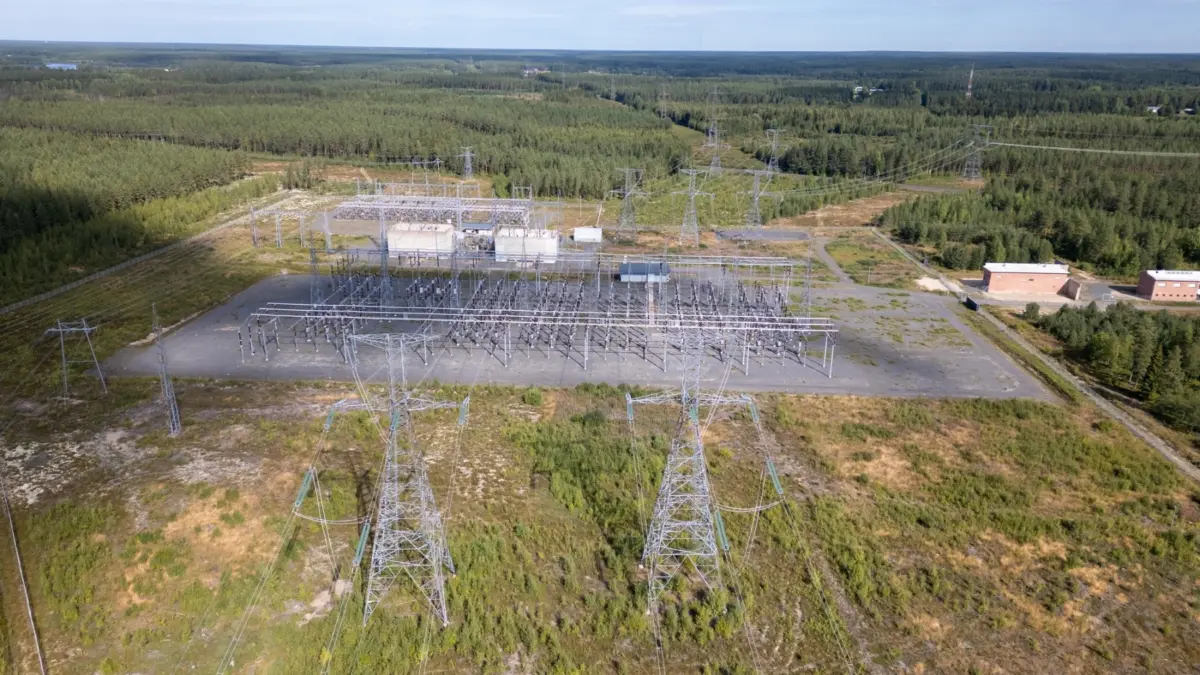
- Grid-Aware Site Selection: Power constraints will permanently alter site selection methodologies. Developers will no longer be able to build wherever fiber is cheap; future projects will increasingly depend on co-locating near stable, renewable energy sources and securing long-term, binding Power Purchase Agreements (PPAs) that satisfy skeptical state regulators.
- Heightened Compliance Regimes: The regulatory interventions seen in Thailand, Indonesia, and Malaysia are unlikely to be isolated anomalies. As governments recognize the immense resource footprints of AI workloads, compliance requirements regarding environmental impact, local economic contribution, and grid stability will become standard barriers to entry.
Ultimately, while the long-term structural tailwinds driving the AI and data center revolution in Asia remain intact, the era of unbridled, speculative expansion has officially drawn to a close. Stakeholders who adapt to the new realities of tighter monetary policy, rigorous regulatory oversight, and sustainable power management will emerge as the true leaders of the next generation of digital infrastructure.