







Executive Overview
The global e-commerce landscape is undergoing a profound structural evolution, propelled by the maturation of artificial intelligence, shifting consumer expectations, and the increasing convergence of social media, logistics, and retail tech. This week’s dispatch of new merchant services highlights a decisive shift from passive digital storefronts to active, agentic commerce ecosystems.
Across the industry, platform providers, logistics giants, and software developers are deploying autonomous tools designed to minimize friction for merchants and shoppers alike. From AI-powered design canvases and conversational shopping assistants to same-day delivery pilots and secure supply-chain frameworks, technology providers are rewriting the playbook for modern online retail.
Key developments this week underscore several overarching trends:
- Agentic AI Integration: Artificial intelligence is moving past simple customer service chat windows. Platforms are introducing AI "agents" that actively design websites, manage advertising campaigns, evaluate brand visibility in generative search engines, and execute multi-channel marketing workflows.
- Logistics-Marketplace Synergy: Traditional parcel carriers and logistics firms are embedding themselves deeper into marketplace ecosystems—ranging from same-day postal collaborations to no-box, no-label returns integrations and comprehensive turnkey outsourcing solutions.
- Enhanced Content & Data Governance: As search behaviors pivot toward AI-driven discovery, platforms are rolling out advanced data-enrichment suites and enterprise control mechanisms to ensure brand safety, accurate product intelligence, and regulatory compliance.
Below is an in-depth chronological breakdown of the most significant product releases, platform updates, and infrastructure expansions impacting merchants this week.
Detailed Chronology: Key Industry Product Releases & Platform Updates
1. Shopify Unveils "Canvas" for Intelligent Store Design
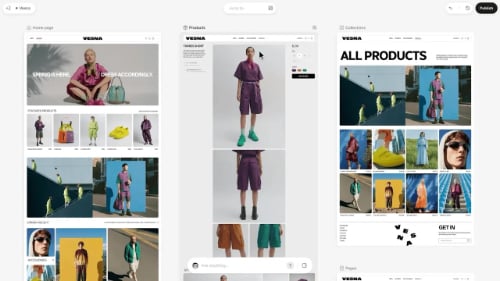
In a move that redefines how merchants approach online store architecture, Shopify has introduced Canvas, a revolutionary design surface operating in tandem with Sidekick, the platform’s proprietary AI agent. Canvas allows merchants to pull back and evaluate overall page layouts and the macro aesthetic of their online storefronts before zooming in to refine granular details.

Rather than relying entirely on manual theme customization, merchants can click directly on page elements to make instant edits or collaborate conversationally with Sidekick via an interactive chat interface. Uniquely, as Sidekick builds out pages, it continuously validates changes and reviews automated screenshots within Canvas to ensure design integrity and responsiveness.
2. ShipStation Launches "Ship with Walmart" Integration
Small and mid-sized businesses utilizing ShipStation now have streamlined access to domestic logistics through the newly launched Ship with Walmart program. Integrated directly within the ShipStation platform, the feature grants U.S. domestic marketplace sellers immediate access to heavily negotiated Walmart shipping rates. Sellers can purchase labels, activate specialized marketplace seller protections, and manage end-to-end order fulfillment workflows without leaving their primary shipping dashboard.
3. TikTok Pioneers "Agentic Commerce" Suite
TikTok continues to blur the lines between social entertainment and transactional retail with a suite of AI-powered updates aimed at driving discovery and immediate action. Anchoring this rollout are two core features: Buy Direct and Shopping Assistant.
- Buy Direct: An in-app checkout infrastructure enabling users to purchase items natively from brands without navigating away from their video feed.
- Shopping Assistant: A conversational AI agent delivering real-time guidance on product specifications, availability, sizing, shipping details, and final payment processing.
Additionally, TikTok introduced an specialized AI Agent explicitly designed to optimize lead generation for brands.
4. Amazon Ads Introduces Unified "Ads Agent" Platform
To simplify increasingly complex multi-format digital advertising, Amazon has rolled out Ads Agent, an agentic AI ecosystem. The platform centralizes disparate campaign formats—including sponsored listings, full-funnel strategies, display advertising, video, and audio—into a unified command center. Advertisers retain the flexibility to manually configure campaigns, lean entirely on Amazon’s machine-learning algorithms for autonomous optimization, or employ a hybrid approach.
5. USPS and Amazon Pilot Same-Day Delivery Collaboration
In a notable public-private operational test, the U.S. Postal Service (USPS) and Amazon have initiated a same-day delivery pilot program. Under this framework, Amazon packages arriving at participating USPS facilities between 12:00 p.m. and 1:00 p.m. local time are rapidly sorted and handed off to local mail carriers for residential delivery between 2:00 p.m. and 8:00 p.m. the same day. To ensure operational feasibility, participating USPS locations are currently capped at a strict volume threshold of 200 packages across three designated delivery routes per site.
6. Swap Acquires Vizby to Fortify AI-Driven Discovery
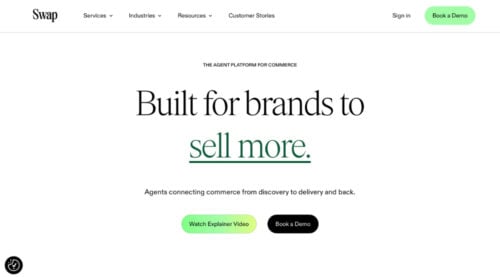
Discovery-to-delivery e-commerce platform Swap has officially acquired Vizby, a Shopify-native AI visibility optimization tool. The acquisition expands Swap’s technological footprint into AI-powered product discovery, complementing its existing agentic storefront and checkout solutions. The move signals a broader industry recognition that ranking in generative AI search engines is just as critical as traditional search engine optimization (SEO).
7. UPS and TikTok Shop Expand No-Box, No-Label Returns
Through its subsidiary Happy Returns, global logistics leader UPS has established a strategic partnership with TikTok Shop. The collaboration introduces a streamlined, sustainable no-box, no-label return service for U.S.-based merchants. Participating TikTok Shop sellers—regardless of whether they fulfill orders independently or utilize TikTok’s outsourced logistics network—can now offer consumers hassle-free drop-offs at designated return locations.
8. Contentstack Launches "Canoe" for AI Search Visibility
Contentstack has debuted Canoe, an advanced AI visibility analytics tool engineered to show brands how generative search engines perceive and describe them relative to competitors. Canoe crawls a brand’s designated URL to automatically map out its business model, product inventory, target buyer personas, and top competitors. Once verified by brand administrators, Canoe projects the likely questions buyers will ask AI models, tagging each inquiry across the consumer journey from top-of-funnel awareness to final conversion.
9. Helppli Deploys Omnichannel AI Customer Service Agent
Product launch and customer journey platform Helppli has launched the HelppliX Agent, a hyper-configurable AI customer service representative. Operating across voice, WhatsApp, SMS, web chat, and email, the AI agent can be tailored to fulfill specific corporate roles—acting as an automated receptionist, proactive sales assistant, or frontline technical support representative depending on merchant requirements.
10. uParcel Introduces "Complete Marketplace Outsource Solutions" (CMOS)
Singapore-based fulfillment provider uParcel has rolled out an end-to-end marketplace management service dubbed Complete Marketplace Outsource Solutions (CMOS). Designed to alleviate the administrative burdens of multi-platform selling, CMOS handles store creation, aesthetic optimization across Shopee, Lazada, and TikTok Shop, daily inventory management, promotional scheduling, on-platform advertising, and customer service, backed by uParcel’s proprietary warehousing and delivery fleet.
11. MoEngage Unveils Native Agentic Platform for Shopify
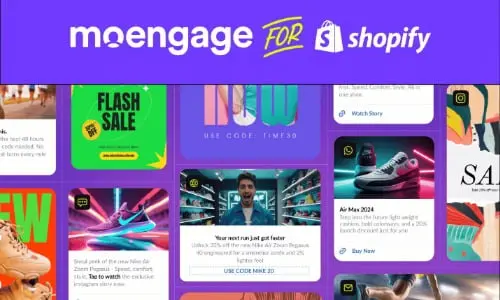
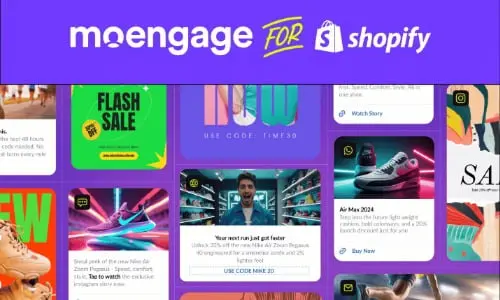
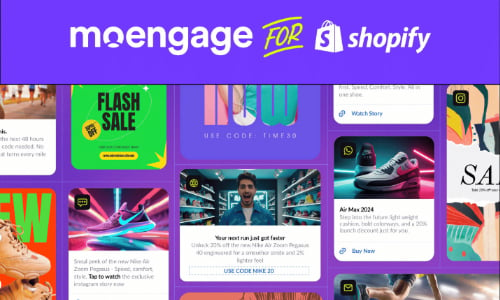
Customer engagement platform MoEngage has launched MoEngage for Shopify, a native integration designed to infuse Shopify merchant data with agentic AI capabilities. By unifying fragmented customer touchpoints across email, SMS, push notifications, WhatsApp, and on-site personalization, marketing teams can deploy automated workflows to draft targeted campaigns, generate performance analytics, and localize messaging across diverse geographic regions.
12. miniOrange Secures WordPress AI with New MCP Server
Addressing growing enterprise concerns regarding data governance and autonomous agent security, miniOrange has released its Secure MCP Server for WordPress. The tool provides a centralized security dashboard enabling businesses to define precise permission boundaries for AI agents operating within WordPress. Administrators can assign role-based access controls, mandate human-in-the-loop reviews for sensitive actions, and continuously monitor real-time agent activity.
13. Commerce Rolls Out AI Data Enrichment for BigCommerce and Feedonomics
Holding company Commerce has introduced robust data enrichment capabilities across Feedonomics and BigCommerce. Designed for high-volume B2C and B2B merchants, the new tools automatically generate optimized product titles, descriptive bullet points, comprehensive FAQs, search-engine metadata, and structured microdata schemas at scale, ensuring product catalogs are fully optimized for both human shoppers and AI algorithms.
14. partnrUP Expands Agentic Creator-Commerce Capabilities
partnrUP has bolstered its influencer and creator-commerce platform with several key architectural additions. The expanded toolset features automated affiliate commission payouts via networks like CJ, Rakuten, and Impact; integrated Shopify product fulfillment for influencer gifting campaigns; automated video syndication from creators directly onto Amazon product detail pages; and cross-retailer sales tracking.
15. Selro Integrates Claude AI for Multichannel Listing Generation
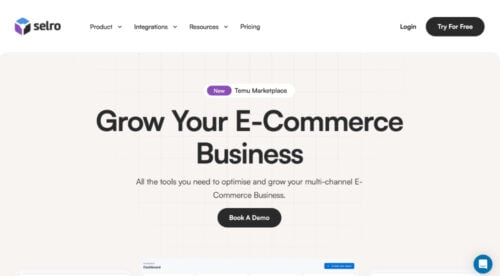
Multichannel inventory and order management platform Selro has integrated Anthropic’s Claude AI directly into its software suite. The integration empowers merchants operating across multiple marketplaces to automatically generate high-converting product titles, engaging descriptions, and concise summary bullet points from within a single inventory dashboard.
16. ThredUp Expands Live Commerce Footprint to Whatnot
Sustainable recommerce pioneer ThredUp is scaling its live-shopping operations through a strategic expansion onto Whatnot, operating across the U.S., U.K., and Europe. ThredUp announced plans to broadcast live shopping events directly from its major distribution hubs in Atlanta and Dallas, while exploring new technological integrations to support Whatnot’s broader independent seller community.
17. Nexa Launches Commission-Free Creator Marketplace
Nexa has officially launched its proprietary creator marketplace, designed to bridge the gap between brands and user-generated content (UGC) creators. Distinct from traditional influencer agencies that take a percentage cut of creator earnings, Nexa displays creator profiles and rates entirely for free, monetizing its platform exclusively through a transparent, brand-side subscription fee.
18. Easyship Scales Export Infrastructure for UK eBay Sellers
Global shipping software provider Easyship has significantly expanded its cross-border export infrastructure to support eBay International Shipping in the United Kingdom. Providing comprehensive hub processing, bulk label generation, compliance screening, carrier routing, and customs documentation, the infrastructure enables UK-based eBay sellers to seamlessly ship to 195 countries with fully cleared export documentation managed through fulfillment hubs in the UK, Canada, and the United States.
19. UPS Unveils "Secure Commerce" Supply Chain Protection Suite
Concluding a massive week for logistics infrastructure, UPS has launched UPS Secure Commerce, a comprehensive suite of supply chain tools engineered to mitigate fraud, prevent revenue loss, and protect shipments. Combining InsureShield shipping insurance, Parcel Pro for specialty high-value goods, and CommerceShield risk-mitigation technology, the suite provides end-to-end visibility across the supply chain, empowering merchants to proactively manage risk before, during, and after the point of delivery.
Supporting Context & Metrics: The Shift Toward Agentic Efficiency
The convergence of these diverse product releases highlights a singular truth: e-commerce operations are becoming too complex for manual intervention alone. As digital storefronts evolve into dynamic ecosystems spanning social platforms, generative search engines, and omnichannel marketplaces, merchants face mounting pressure to automate.
Industry analysts note that generative AI and agentic platforms are no longer experimental novelties; they are becoming foundational infrastructure. Platforms like Shopify’s Canvas and Contentstack’s Canoe reflect an urgent need for brands to understand not just how humans view their digital storefronts, but how machine learning models interpret, index, and recommend their products. Similarly, the proliferation of logistics partnerships—such as USPS-Amazon same-day fulfillment and UPS Secure Commerce—demonstrates that physical delivery speed and supply-chain risk mitigation remain competitive battlegrounds in an increasingly globalized market.
Official Industry Statements
Industry leaders emphasized the transformative potential of this week’s innovations:
- On AI Store Design: "By combining macro-level visual design with real-time AI validation through Sidekick and Canvas, we are reducing the technical barriers of storefront architecture, allowing merchants to focus on brand storytelling and conversion optimization," noted representatives from Shopify.
- On Supply Chain Resilience: "Modern commerce demands end-to-end protection and visibility. With UPS Secure Commerce, our goal is to insulate businesses against fraud and supply chain disruption at every single touchpoint—from warehouse floor to consumer doorstep," stated UPS leadership during the launch of their new risk-mitigation suite.
- On AI Search Visibility: "Brands can no longer optimize exclusively for traditional keyword search. With Contentstack Canoe, we are giving enterprises a vital window into how AI engines perceive their market standing, buyer personas, and competitive landscape," explained a Contentstack spokesperson.
Future Outlook: What Merchants Should Expect Next
As the digital commerce sector looks toward the remainder of the decade, several strategic takeaways emerge for online merchants and brand operators:
- Embrace Agentic Workflows Early: Platforms integrating autonomous AI agents—whether for web design, marketing automation, or customer service—will likely yield significant operational efficiencies. Merchants should evaluate how tools like Shopify Canvas or MoEngage for Shopify can streamline repetitive administrative tasks.
- Optimize for AI Discovery: With acquisitions like Swap buying Vizby and tools like Contentstack Canoe entering the market, search optimization is expanding into generative AI engines. Brands must audit their product data schemas via enrichment tools (such as Feedonomics or BigCommerce Catalog Enrichment) to ensure clear, machine-readable intelligence.
- Leverage Turnkey Fulfillment Partnerships: As demonstrated by uParcel’s CMOS and ShipStation’s integration with Walmart, managing multi-platform storefronts independently is becoming increasingly automated. Smaller brands can leverage these infrastructure partnerships to scale cross-border sales and marketplace presence without ballooning internal headcount.
By staying attuned to these agentic and logistical advancements, merchants can position their operations to navigate the next wave of digital retail evolution successfully.