The modern digital commerce landscape is undergoing a structural paradigm shift. As consumer expectations for hyper-personalization, instant gratification, and frictionless experiences continue to scale upward, merchant platforms, logistics giants, and software developers are rapidly introducing new capabilities. This week’s roundup of commerce technology releases highlights a singular, overarching trend: the maturation of agentic commerce and the deep integration of artificial intelligence across every tier of the merchant stack.
From storefront design and AI visibility tracking to advanced supply chain risk mitigation, no-box return frameworks, and global multi-channel infrastructure, the velocity of innovation is unprecedented. Merchants are no longer merely adopting incremental software updates; they are integrating autonomous or semi-autonomous AI agents into their core workflows—transforming everything from customer service and marketing automation to catalog enrichment and regulatory compliance.
This comprehensive report breaks down the most significant merchant-focused product releases, acquisitions, and logistics developments shaping the future of digital retail.
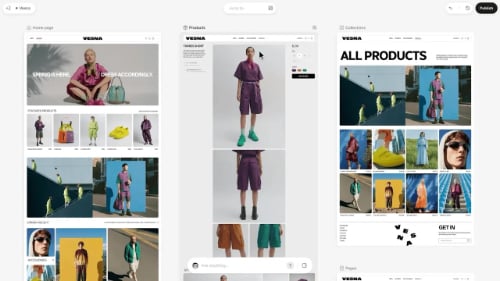
Shopify Introduces "Canvas" for Visual Store Design: Shopify has officially rolled out Canvas, an advanced design surface that fundamentally rethinks how merchants build and organize digital storefronts. Operating in tandem with Sidekick, Shopify’s proprietary AI agent, Canvas allows merchants to pull back and evaluate overall page layouts and aesthetic flow before zooming in on micro-details. Users can interact directly with elements on the screen or converse naturally with Sidekick through a real-time chat interface. As the design evolves, Sidekick runs automated validations, reviewing screenshots on Canvas to ensure adherence to UI/UX best practices and brand guidelines.
Commerce Empowers B2C and B2B Catalogs with BigCommerce & Feedonomics Data Enrichment: Commerce—the parent company holding Feedonomics, BigCommerce, and Makeswift—has introduced sophisticated new data enrichment capabilities. Designed to scale automated catalog intelligence, Feedonomics Enrichment and BigCommerce Catalog Enrichment automatically generate optimized product titles, detailed descriptions, feature bullets, comprehensive FAQs, and search-engine metadata. Furthermore, the systems produce structured data facts, rich snippets, and Q&A fields designed specifically to maximize visibility in AI-driven search environments.
2. The Rise of Agentic Commerce and AI Discovery
TikTok Unveils Agentic Shopping Experiences: TikTok is officially staking its claim in conversational and agentic commerce by introducing Buy Direct and Shopping Assistant. Buy Direct empowers users to complete transactions seamlessly via an in-app checkout without leaving a brand’s video content. Meanwhile, Shopping Assistant acts as a conversational AI guide, fielding real-time inquiries regarding sizing, product specifications, shipping times, availability, and immediate checkout options. TikTok is simultaneously rolling out an AI Agent explicitly tailored for lead generation.
Amazon Ads Launches "Ads Agent": Amazon has debuted Ads Agent, an agentic AI platform designed to consolidate disparate marketing campaigns into a unified ecosystem. By bridging sponsored ads, full-funnel strategies, and display, video, and audio campaigns, Ads Agent gives advertisers an intelligent copilot for data retrieval, strategic decision-making, and automated execution. Advertisers retain the flexibility to utilize traditional manual tools, rely entirely on Amazon’s algorithmic optimization, or deploy a hybrid approach.
Swap Acquires Vizby to Deepen AI Discovery Integration: In a strategic move bridging logistics and search visibility, discovery-to-delivery platform Swap has acquired Vizby, a Shopify-native AI visibility optimization tool. The integration expands Swap’s ecosystem beyond its existing agentic Storefront and Checkout+ services, arming merchants with advanced tools to ensure their products are successfully indexed and recommended by external generative AI engines.
Contentstack Launches "Canoe" for AI Visibility Analytics: Enterprise content management provider Contentstack has introduced Canoe, an analytics platform designed to unmask how AI search engines perceive and describe brands relative to their competitors. Canoe scans a brand’s URL to auto-detect its business model, product line, core buyer personas, and up to 10 key competitors. Once verified by human brand managers, Canoe simulates buyer queries categorized by shopping stage—ranging from top-of-funnel awareness to final purchase consideration—providing a clear roadmap for AI search optimization (AIO).
3. Workflow Automation, Security, and Multichannel Management
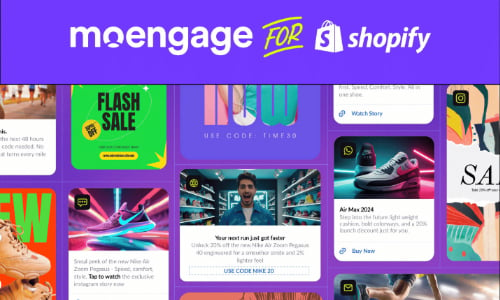
MoEngage Debuts Native Shopify Customer Engagement Platform: Customer engagement platform MoEngage has launched MoEngage for Shopify, a native integration that unifies fragmented merchant data across channels like email, SMS, app and web push, WhatsApp, and on-site personalization. Powered by native agentic AI functionality, marketing teams can deploy automated workflows to draft multi-region campaigns, generate comprehensive performance analytics, and hyper-personalize user experiences in real time.
miniOrange Releases Secure MCP Server for WordPress: To address mounting concerns over data governance and unauthorized autonomous actions, miniOrange has released its Secure MCP Server for WordPress. The tool allows enterprises to connect AI assistants and agents to WordPress sites safely by establishing granular operational boundaries. Businesses can define explicit capabilities agents are permitted to access, enforce role-based permissions, mandate human approval loops for sensitive workflows, and monitor all agent activity through a centralized dashboard.
Selro Integrates Claude AI for Multichannel Listing Generation: Multichannel inventory and order management platform Selro has integrated Anthropic’s Claude AI directly into its interface. This integration enables merchants managing listings across disparate marketplaces to leverage Claude’s advanced natural language processing capabilities to instantly generate, refine, and optimize product titles, descriptions, and summary bullet points at scale.
uParcel Launches "Complete Marketplace Outsource Solutions" (CMOS): Singapore-based fulfillment and logistics firm uParcel has entered the managed services sector with CMOS. The comprehensive solution allows brands to completely outsource their regional marketplace operations. uParcel handles storefront creation and optimization across Shopee, Lazada, and TikTok Shop; manages daily inventory listings, promotions, and on-platform advertising; and provides integrated warehousing, packing, and same-day delivery via its proprietary fleet.
4. Creator Commerce and Affiliate Ecosystems
partnrUP Expands Creator-to-Commerce Infrastructure: Creator ecosystem platform partnrUP has widened its agentic platform capabilities with new integrations designed to streamline brand-creator partnerships. Updates include automated affiliate commission payouts via major networks (CJ, Rakuten, Impact), Shopify fulfillment support for seeding and gifting programs, automated syndication of creator video content directly to Amazon product detail pages, and centralized cross-retailer sales tracking.
Nexa Launches Direct UGC Creator Marketplace: Nexa has officially launched a dedicated creator marketplace enabling brands to source and hire user-generated content (UGC) creators and influencers. Unlike traditional talent agencies that take a percentage cut of creator earnings, Nexa operates on a transparent, brand-side platform fee model, keeping creator compensation intact while giving merchants open access to verified creator portfolios and transparent rate cards.
ThredUp Expands Live Commerce Footprint via Whatnot: Sustainable recommerce giant ThredUp has announced a significant expansion of its live shopping operations through a strategic partnership with Whatnot. ThredUp will host dedicated live-streaming commerce events directly out of its primary distribution hubs in Atlanta and Dallas, further testing innovative ways to engage thrifting communities and monetize second-hand inventory in real-time environments.
5. Logistics, Fulfillment, and Supply Chain Risk Mitigation
USPS and Amazon Pilot Same-Day Delivery Integration: In a notable collaborative pilot program, the U.S. Postal Service (USPS) and Amazon are testing a same-day delivery framework. Under this pilot, Amazon packages arriving at designated USPS facilities between 12:00 PM and 1:00 PM local time are rapidly sorted and handed off to postal carriers for afternoon delivery between 2:00 PM and 8:00 PM the same day. Each participating postal station is capped at a strict limit of 200 packages distributed across three dedicated delivery routes during the trial phase.
UPS Happy Returns Integrates with TikTok Shop: UPS’s returns subsidiary, Happy Returns, has partnered with TikTok Shop to roll out a friction-free, "no-box, no-label" returns service for participating U.S. merchants. Available regardless of whether sellers fulfill orders independently or utilize TikTok’s integrated logistics infrastructure, the service significantly minimizes customer friction during the returns process.
Easyship Expands Export Infrastructure for U.K. eBay Sellers: Global shipping software provider Easyship has scaled its export infrastructure to support eBay U.K. international shipping. The enhanced API and logistics framework delivers automated hub processing, bulk label generation, stringent compliance screening, direct carrier integrations, and comprehensive customs documentation. Sellers can now seamlessly ship to 195 countries and territories, with parcels cleared for export through established Easyship fulfillment hubs in the U.K., Canada, and the United States.
UPS Unveils "Secure Commerce" Suite: UPS has introduced Secure Commerce, an enterprise-grade suite of supply chain tools explicitly engineered to combat fraud, minimize revenue loss, and neutralize supply chain disruptions. By combining InsureShield Shipping Insurance for rapid claims recovery, Parcel Pro for high-value specialty shipments, and CommerceShield technology for proactive risk mitigation, the suite gives merchants end-to-end visibility across their entire supply chain, empowering data-driven decisions before, during, and after package delivery.
Supporting Context & Quantitative Metrics
The convergence of these technologies highlights several critical shifts in global ecommerce economics:
The AI Search Optimization Imperative: With platforms like Contentstack Canoe and Swap/Vizby entering the market, industry analysts estimate that up to 25% of traditional search engine traffic could be displaced by conversational AI queries over the next 36 months. Brands failing to optimize their product data structures for generative AI risk losing top-of-funnel discovery entirely.
Frictionless Returns Impact: Data surrounding no-box, no-label drop-off programs (such as the Happy Returns and TikTok Shop integration) historically demonstrate a 20% to 30% reduction in customer service inquiries related to returns, while simultaneously boosting repeat purchase rates due to the eliminated administrative burden.
The Logistics-Marketplace Convergence: The expansion of localized fulfillment partnerships—such as the USPS-Amazon same-day delivery pilot and uParcel’s CMOS—illustrates that logistics providers are no longer passive delivery utilities; they are active architects of merchant success, offering end-to-end storefront management wrapped around physical supply chains.
Official Statements and Industry Perspectives
Industry leaders emphasized that the rapid integration of autonomous agents marks a definitive turning point for digital commerce operations:
"The transition from passive software to agentic commerce is no longer theoretical," noted platform architects tracking the recent surge in AI integrations. "Merchants are moving past simple chatbots and static web builders. They are deploying autonomous frameworks that can simultaneously design storefronts, manage multi-channel advertising campaigns, optimize data structures for machine consumption, and navigate complex international regulatory and customs environments."
Regarding supply chain resilience, logistics executives pointed out that modern risk mitigation requires unprecedented real-time data transparency:
"Supply chain disruptions and digital fraud evolve faster than traditional security models can adapt," stated representatives during the rollout of the UPS Secure Commerce suite. "Protecting modern revenue streams requires holistic visibility that spans from initial cart checkout to final doorstep delivery."
Future Outlook: What Merchants Should Watch Next
As we look toward the remainder of the fiscal year, several critical trajectories demand the attention of ecommerce directors, brand founders, and platform developers:
Governance and Guardrails for Autonomous Agents: As tools like miniOrange’s Secure MCP Server demonstrate, the rapid proliferation of AI agents will necessitate stringent internal compliance protocols. Brands must establish robust role-based permissions and human-in-the-loop review mechanisms to prevent catastrophic automated errors in pricing, inventory allocation, and customer communication.
The Consolidation of Creator and Social Commerce: With platforms like partnrUP, Nexa, and ThredUp deepening their integration with social video and live-streaming networks (TikTok Shop, Whatnot), the line between content consumption and transactional checkout will continue to dissolve. Brands must treat influencer marketing not as an upper-funnel branding exercise, but as a fully trackable, conversion-driven channel.
Hyper-Localized and Rapid Fulfillment Expectations: Pilot programs like the USPS-Amazon same-day delivery partnership signal that consumer expectations for speed will continue to compress fulfillment windows. Smaller and mid-sized merchants will increasingly rely on outsourced marketplace management solutions (such as uParcel’s CMOS or ShipStation’s expanded carrier integrations) to compete with enterprise giants on delivery velocity.
In summary, the brands that thrive in this next era of digital commerce will be those that successfully blend human strategic oversight with the immense computational power and operational speed of agentic AI and integrated global logistics.