Executive Overview
Enterprise artificial intelligence has reached a definitive tipping point. The era of isolated prototype testing, standalone large language model (LLM) benchmarking, and fragmented pilot projects has given way to complex, multi-model production environments. Today’s global organizations no longer evaluate cloud platforms solely on raw compute capacity or isolated model capabilities; instead, they require cohesive system architectures capable of coordinating hardware, specialized models, enterprise data, autonomous agents, and stringent security frameworks into unified operational systems.
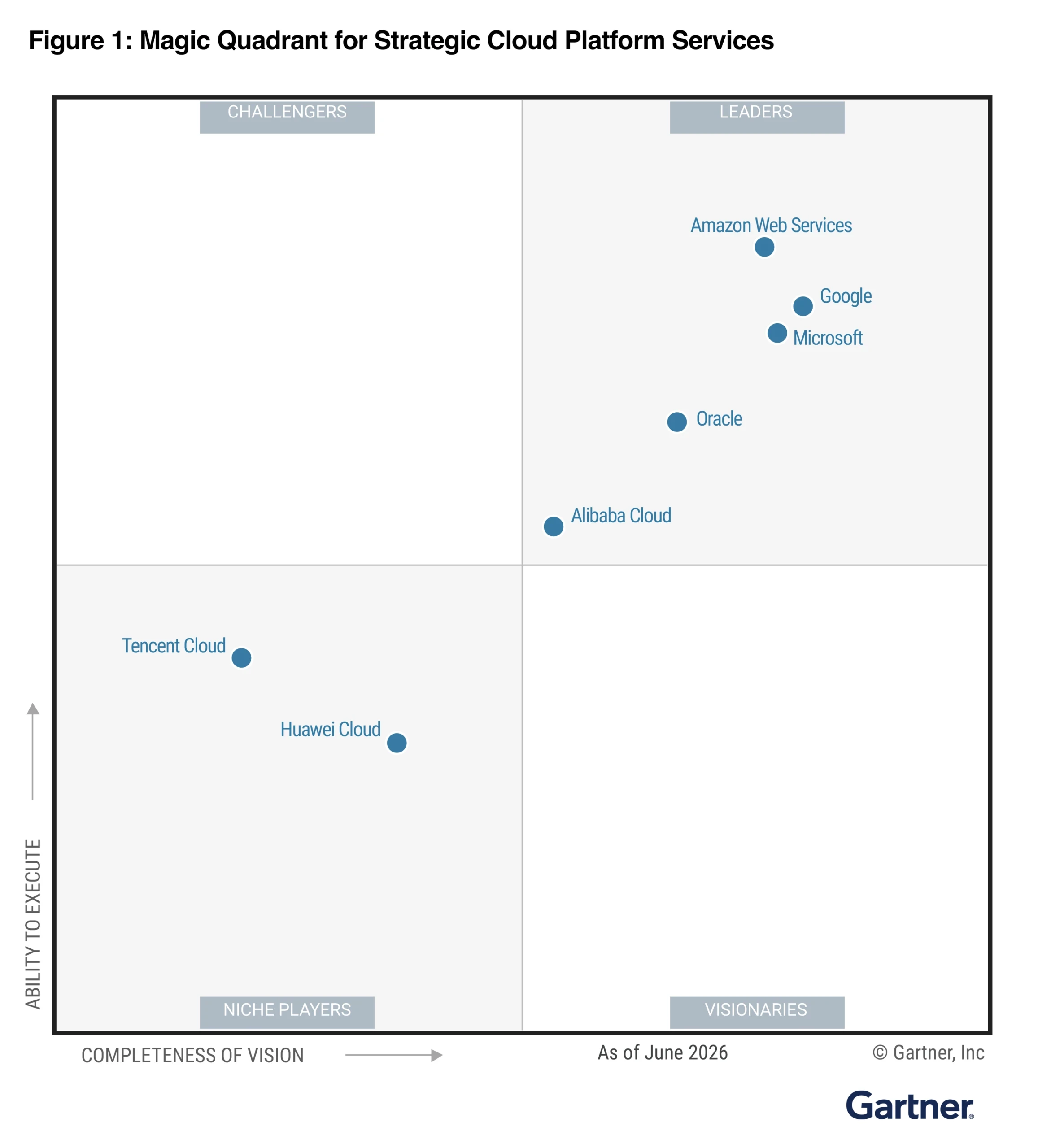
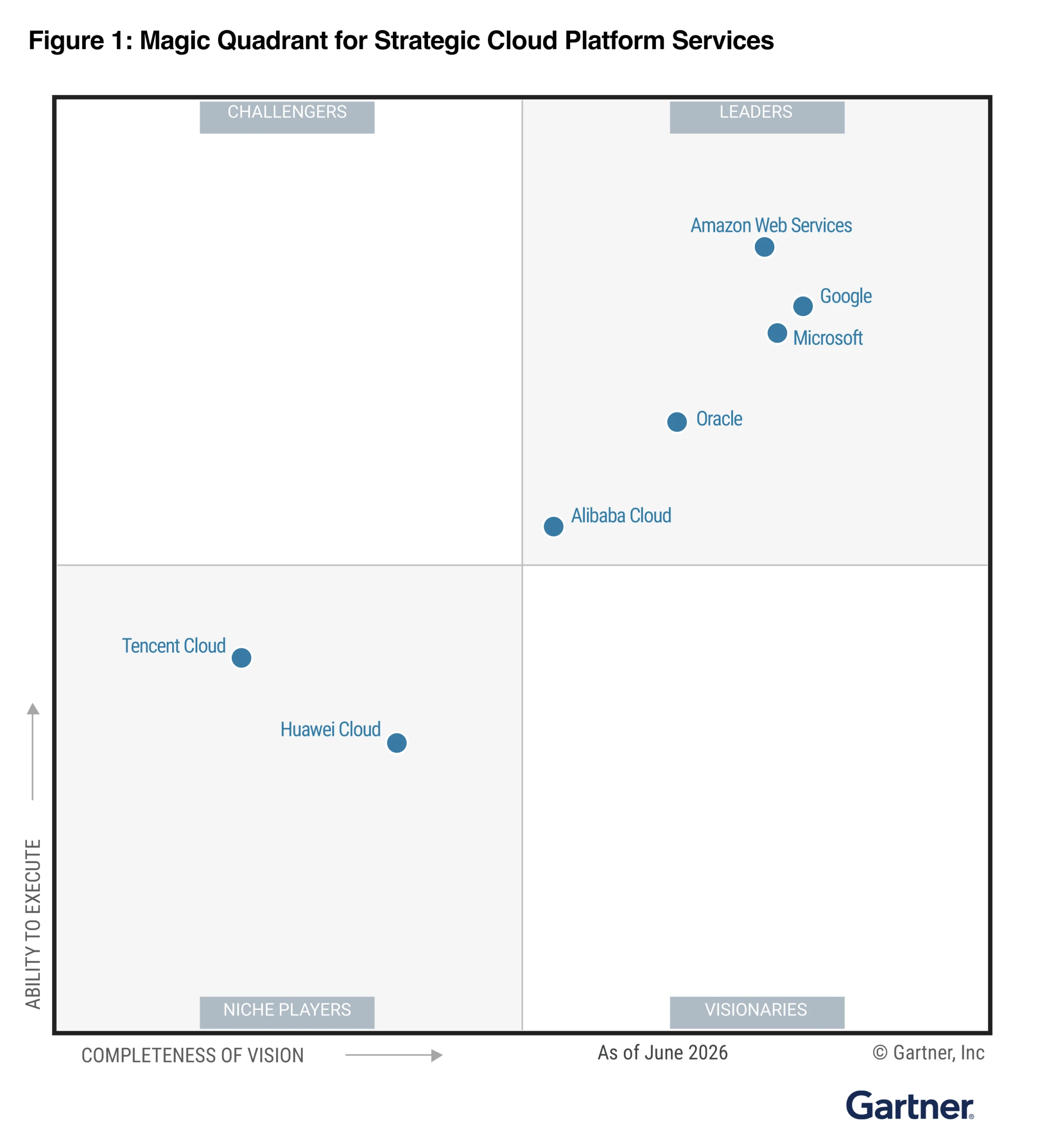
This structural shift in enterprise requirements is reflected in the latest third-party analyst evaluations for 2026. Microsoft Azure has once again been positioned as a Leader in both the 2026 Gartner® Magic Quadrant™ for Strategic Cloud Platform Services and The Forrester Wave™: Public Cloud Platforms, Q3 2026.
While industry awards are common, the underlying driver behind this dual recognition highlights a broader technology transformation: the industry’s transition from point solutions toward vertically integrated systems. According to independent evaluations from both analyst firms, the differentiation among modern cloud providers is defined by how seamlessly a platform integrates compute silicon, data context, model orchestration, and operational security to deliver predictable business outcomes at scale.
       +-------------------------------------------------------+
       |                 ENTERPRISE AI AGENTS                  |
       |  (Workflows, Copilots, Autonomous Business Execution)  |
       +-------------------------------------------------------+
                                   |
       +-------------------------------------------------------+
       |              INTELLIGENCE & MODEL LAYER               |
       |  (Microsoft Foundry, Multi-Model Orchestration, IQ)   |
       +-------------------------------------------------------+
                                   |
       +-------------------------------------------------------+
       |             DATA GRAVITY & GOVERNANCE LAYER           |
       |   (Microsoft Fabric, Purview, Azure SQL, Cosmos DB)   |
       +-------------------------------------------------------+
                                   |
       +-------------------------------------------------------+
       |           INFRASTRUCTURE & SILICON LAYER              |
       |   (Custom Silicon, Managed Compute, Edge & Cloud OS)  |
       +-------------------------------------------------------+
Detailed Chronology: The Shift from Isolated Models to Integrated Systems
The landscape of enterprise cloud computing has evolved rapidly over the past four years, marking a transition from basic infrastructure migration to systemic AI operations.
+-----------------------------------------------------------------------------------+
| CHRONOLOGY OF ENTERPRISE CLOUD EVOLUTION                                          |
+----------------------+------------------------------------------------------------+
| Period               | Strategic Paradigm & Operational Focus                     |
+----------------------+------------------------------------------------------------+
| 2023–2024            | • Era of LLM Discovery and Experimental Pilots             |
|                      | • Focus on single-model capabilities (e.g., frontier APIs)  |
|                      | • Proliferation of unstructured, unmonitored shadow AI     |
+----------------------+------------------------------------------------------------+
| 2024–2025            | • The Data Bottleneck & Governance Friction                |
|                      | • Realization that models require contextual business data |
|                      | • Security, privacy, and token cost management surface     |
+----------------------+------------------------------------------------------------+
| 2026 (Current Era)   | • Production Multi-Model Integration & Agentic Systems     |
|                      | • Heterogeneous compute environments (Silicon to Agent)    |
|                      | • Application modernization as an imperative for AI adoption|
+----------------------+------------------------------------------------------------+
Microsoft’s leadership designation in the 2026 Gartner Magic Quadrant for Strategic Cloud Platform Services marks a continuous four-year run, extending across the 2023, 2024, 2025, and 2026 evaluations.
In the initial phase of the generative AI movement (2023–2024), enterprise tech spending was largely directed toward API access for top-tier reasoning models. However, as organizations attempted to take these applications into production across 2024 and 2025, they ran into operational barriers: data silos, governance compliance gaps, unpredictable latency, and spiraling token costs.
By 2026, the industry standard has shifted. Enterprise architectures now favor a multi-model paradigm where high-parameter frontier models are reserved for complex reasoning, while smaller, open-weight, or domain-specialized models manage latency-sensitive, high-volume operational tasks. Managing this multi-tiered architecture manually introduces severe complexity. Consequently, market leadership is now determined by a provider’s ability to hide this architectural complexity beneath a unified management layer.
Supporting Context & Metrics: Deconstructing the "Silicon to Agent" Stack
To support multi-model operations, cloud providers must offer architectural consistency across every layer of the compute stack. Microsoft’s positioning in the 2026 assessments centers on its integrated approach across four primary layers: Infrastructure & Silicon, Model Orchestration, Enterprise Data Gravity, and Agentic Modernization.
1. Silicon to Platform Orchestration: Choice Without Complexity
Modern workloads require dynamic orchestration across mixed compute environments. A standard enterprise application might simultaneously call an ultra-low-power small language model (SLM) running at the edge, a specialized fine-tuned model hosted on dedicated cloud GPUs, and an external frontier model for final logic validation.
- Heterogeneous Infrastructure: Delivering this requires an underlying fabric that spans custom accelerator silicon, specialized networking, and containerized runtimes without forcing software engineering teams to manually configure low-level drivers or custom routing code.
- Microsoft Foundry: Serving as the centralized control plane for multi-model management, Microsoft Foundry provides developers with unified APIs to evaluate, deploy, monitor, and secure models across diverse computing environments. It allows enterprises to swap underlying model architectures as cost-to-performance ratios change, ensuring operational continuity without code refactoring.
2. The Data Layer: "Models Come and Go; Data Has Gravity"
A central finding highlighted in Forrester’s evaluation is that artificial intelligence capabilities are ultimately bound by the quality and context of the underlying enterprise data. As the report notes, "Models come and go; data has gravity."
Replacing or upgrading an AI model takes hours or days; however, moving, re-indexing, or restructuring corporate knowledge repositories takes months or years. Microsoft’s strategy focuses on bringing multi-model intelligence directly to where data resides:
+----------------------------------------------------------------------------------+
| MICROSOFT DATA & INTELLIGENCE ARCHITECTURE                                       |
+-------------------+--------------------------------------------------------------+
| Component         | Functional Role in Enterprise AI Stack                       |
+-------------------+--------------------------------------------------------------+
| Microsoft Fabric  | Unified analytics engine consolidating telemetry, transactional,|
|                   | and operational data without requiring duplicate copying.    |
+-------------------+--------------------------------------------------------------+
| Microsoft Purview | Enterprise-wide governance, automated data labeling, risk    |
|                   | management, and regulatory compliance mapping.               |
+-------------------+--------------------------------------------------------------+
| Azure SQL &       | Operational databases natively handling hybrid transactional |
| Cosmos DB         | workloads alongside high-density vector search (RAG).        |
+-------------------+--------------------------------------------------------------+
| Microsoft IQ      | Unified enterprise intelligence layer maintaining persistent |
|                   | semantic business context across applications and agents.    |
+-------------------+--------------------------------------------------------------+
By maintaining a unified semantic layer through Microsoft IQ, organizations avoid building custom data-pipeline abstractions every time a new foundation model is introduced.
3. Application Modernization as an AI Catalyst
A major bottleneck to enterprise AI adoption is legacy codebase debt. Core business logic—refined over decades—often remains locked within legacy .NET, Java, or mainframe systems that lack modern API interfaces or event-driven hook points required by autonomous agents.
Rather than treating digital transformation and AI deployment as separate workstreams, current platform strategies treat legacy modernization as a prerequisite for AI adoption:
- Agentic Refactoring via GitHub Copilot: Utilizing agentic tools targeting .NET and Java codebases, enterprise engineering teams can automate codebase analysis, dependency mapping, unit test generation, and code refactoring.
- Preserving Business Logic: This approach allows legacy core operational software to be wrapped in secure, modern interfaces, making existing business logic accessible to dynamic AI agents without requiring risky full-system re-writes.
+-----------------------------------------------------------------------------------+
| REAL-WORLD IMPLEMENTATION CASE STUDIES                                            |
+--------------------+------------------------------------+-------------------------+
| Organization       | Core Modernization Focus           | Business & AI Outcome   |
+--------------------+------------------------------------+-------------------------+
| UNC Health         | Consolidation of clinical and      | Established a compliant |
|                    | operational analytics using        | foundation for AI       |
|                    | Microsoft Fabric in a highly       | deployment across patient|
|                    | regulated environment.             | care and research.      |
+--------------------+------------------------------------+-------------------------+
| Levi Strauss & Co. | Migration of core legacy workloads | Integrated Microsoft    |
|                    | via Azure Migrate into a modern    | Foundry agents into data|
|                    | cloud footprint.                   | pipelines, accelerating |
|                    |                                    | decision-making.        |
+--------------------+------------------------------------+-------------------------+
Official Statements & Analyst Evaluation
The evaluations from both Gartner and Forrester highlight a growing consensus: the competitive metric for enterprise cloud has shifted from feature breadth to vertical cohesion.
Gartner Magic Quadrant Assessment
The 2026 Gartner® Magic Quadrant™ for Strategic Cloud Platform Services (authored by analysts Alessandro Galimberti, Carolin Zhou, Douglas Toombs, Dennis Smith, Ed Anderson, Tobi Bet, and Chuck Lawton, published September 1, 2026) evaluates vendors based on their Completeness of Vision and Ability to Execute.
Gartner’s assessment emphasizes Microsoft’s practical approach to application modernization and its developer tools across the entire software development lifecycle (SDLC). The evaluation highlights that real-world deployment succeeds when cloud platforms minimize operational friction, allowing IT leaders to scale complex systems with predictable governance and cost controls.
Forrester Wave Assessment
Evaluating the market landscape in The Forrester Wave™: Public Cloud Platforms, Q3 2026, Forrester describes Microsoft’s platform trajectory as a vision of Azure operating as a single, vertically integrated system.
Forrester’s independent report notes that as enterprise customers move past isolated AI implementations, platform choice depends on strategic roadmap alignment as much as current features. The report emphasizes Microsoft’s strength in migration and modernization expertise, pointing out that unifying analytics, operational data, developer tools, and model hosting within a common operational boundary provides a distinct enterprise advantage.
Microsoft Executive Perspective
Reflecting on the industry analyst recognitions, Microsoft emphasized that vendor selections made today will define corporate technical debt and operational agility for the decade ahead:
"Enterprise AI is moving into production, and our customers are becoming multi-model… The value does not come from any model in isolation. It comes from the system around it: infrastructure, data, applications, agents, security, and operations working together. That compounding value is what Microsoft Azure is built to deliver."
"For an enterprise building the next generation of AI applications, how the layers work together matters more than any single feature… What matters for customers is whether the platform can translate technology into real impact: better performance, greater cost efficiency, faster delivery, and the ability to scale critical systems with confidence."
Future Outlook: Strategic Implications for the Enterprise
As public cloud platforms mature, the market dynamics governing enterprise IT architecture are fundamentally changing. Moving forward through 2026 and beyond, several structural trends will shape platform strategy:
+------------------------------------------------------------------------------------+
| FUTURE OUTLOOK: THE ENTERPRISE CLOUD PARADIGM SHIFT                                |
+------------------------------------+-----------------------------------------------+
| Legacy Cloud Model (2015–2023)     | Next-Generation AI Cloud (2026+)              |
+------------------------------------+-----------------------------------------------+
| Hand-crafted infrastructure stacks | Vertically integrated "Silicon to Agent" stack |
| Focus on individual hyper-scaler services | Managed multi-model runtime platforms |
| Model lock-in / Single vendor reliance | Multi-model flexibility (Frontier + SLMs)   |
| Siloed analytics & database engines | Unified semantic data gravity (Fabric/IQ)     |
| Manual legacy code migration       | Agent-assisted automated refactoring          |
+------------------------------------+-----------------------------------------------+
1. Commoditization of Raw Models vs. Data Retention Moats
Raw model intelligence will continue to commoditize over time as open-weight models approach frontier performance levels. Consequently, an enterprise’s long-term competitive moat will not be the specific LLM API it calls today, but rather the proprietary enterprise data context, operational logic, and security workflows orchestrated around those models. Platforms providing unified governance (such as Purview) alongside native data virtualization (such as Fabric) will likely see higher customer retention.
2. Autonomous Enterprise Agents Replacing Static Workflows
The dominant software pattern is rapidly shifting from human-driven point-and-click SaaS applications to semi-autonomous agentic workflows. These agents require predictable system responses, low-latency execution, multi-agent communication standards, and reliable policy enforcement. Cloud platforms will increasingly be engineered as execution environments specifically designed for continuous, agentic decision-making.
3. Cost-to-Performance Optimization via Multi-Model Frameworks
As enterprise AI volume increases, routing every prompt to high-cost frontier models becomes economically unsustainable. Future cloud management will rely on real-world semantic routing, automatically dynamically steering incoming calls to low-cost specialized SLMs, internal vector stores, or high-tier reasoning engines based on real-time cost, latency, and precision parameters.
Conclusion
The recognition of Microsoft Azure across both the Gartner and Forrester 2026 reports highlights a broader industry reality: raw AI model power is no longer enough. The future of enterprise cloud belongs to platforms capable of orchestrating hardware, data, software, operational tools, and autonomous agents into a reliable, enterprise-grade system. As organizations move past isolated AI experiments, long-term success will belong to those that build on unified platform foundations engineered to adapt as technology continues to evolve.