Executive Overview
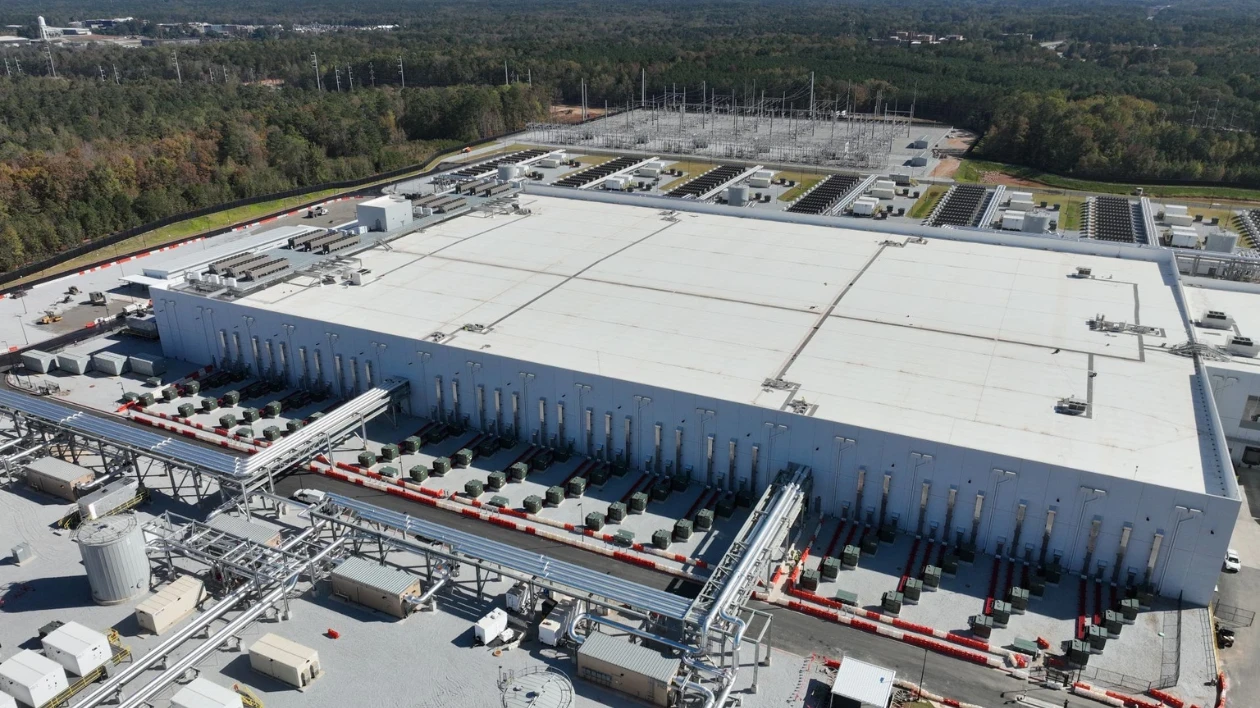
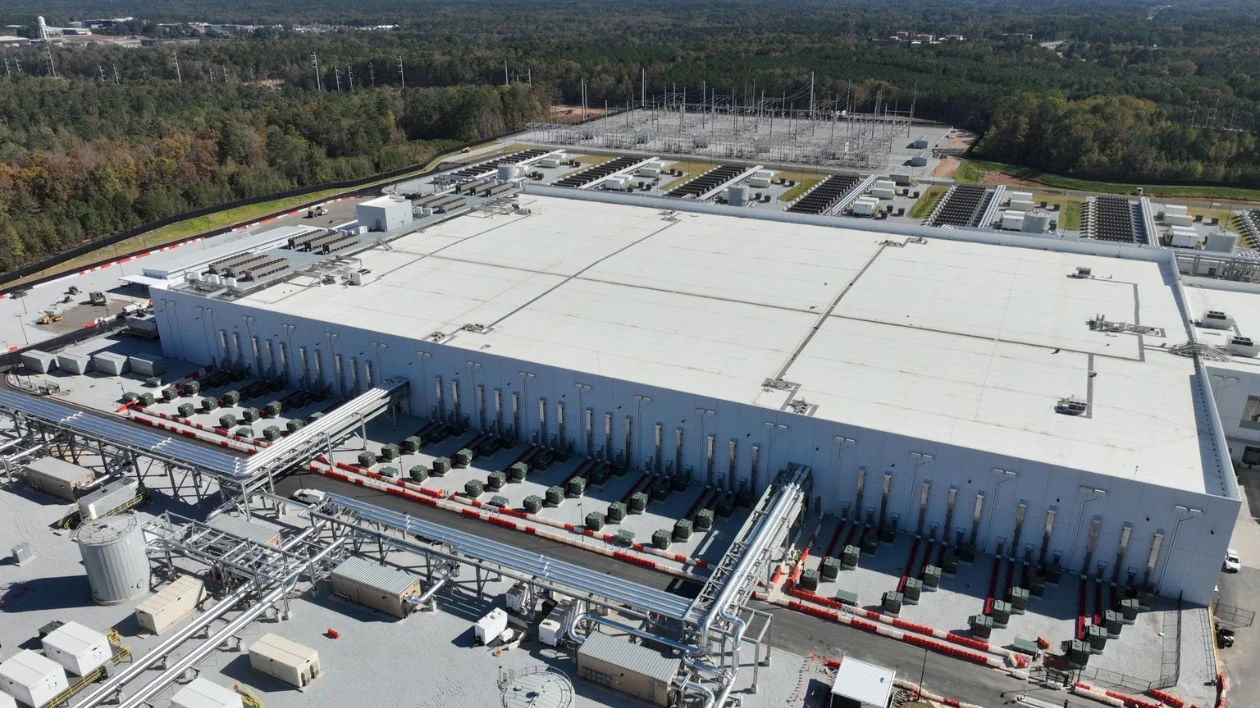
As artificial intelligence models scale exponentially and cloud migration accelerates across global enterprise sectors, tech companies face a dual mandate: expanding compute capacity at an unprecedented pace while mitigating the severe energy, spatial, and e-waste bottlenecks associated with hyperscale datacenters. The compute demand driven by generative AI and complex enterprise workloads requires massive capital deployments in server hardware, silicon fabrication, and real estate. However, the physical realities of power grid constraints and supply chain vulnerabilities mean that simply building more datacenters is no longer a viable long-term strategy.
To address this challenge, Microsoft Azure is executing a comprehensive infrastructure strategy centered on two interconnected operational priorities: maximizing the compute density per watt of new hardware and establishing closed-loop supply chains for decommissioned legacy systems.
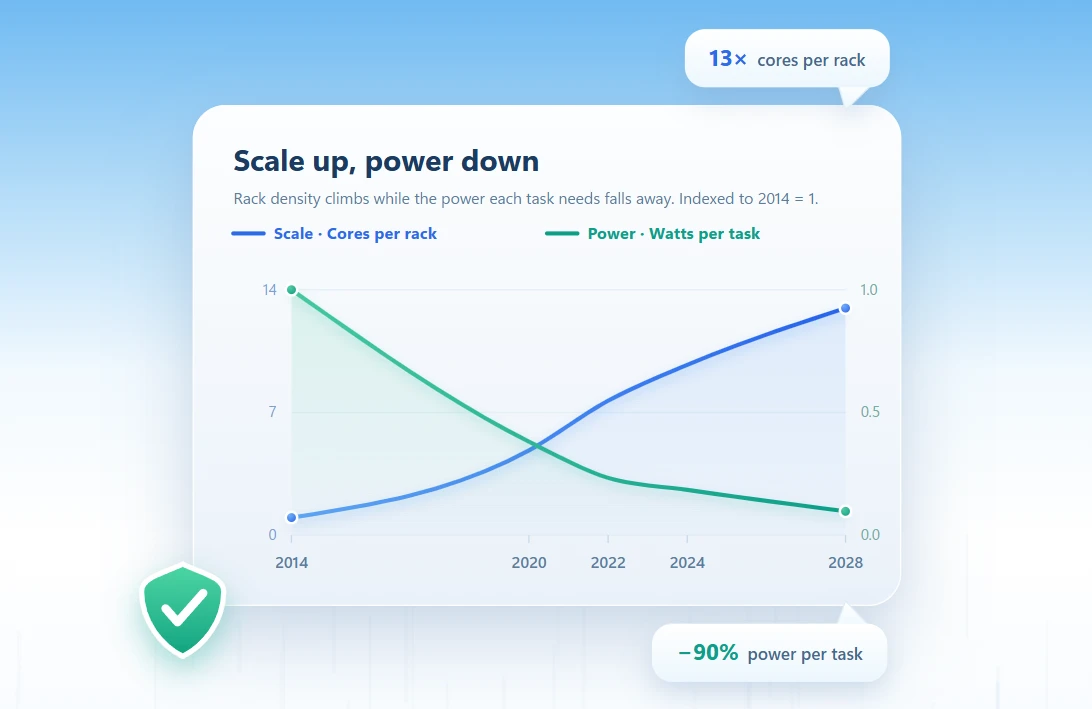
Through custom silicon design—exemplified by its Azure Cobalt processor lineup—Microsoft has achieved a 13-fold increase in server rack core density alongside a 90% reduction in task-specific power consumption since 2014. Simultaneously, the company is scaling its proprietary network of Microsoft Circular Centers across North America, Europe, and Asia-Pacific. These specialized reverse-logistics facilities process decommissioned cloud hardware to recover components, reintroduce critical raw materials to the supply chain, and maintain a 92% reuse and recycling rate for retired server assets.
By integrating custom hardware engineering with advanced industrial automation—such as robotic disassembly and autonomous material handling—Microsoft is redefining the economics and environmental footprint of hyperscale cloud infrastructure.
+-----------------------------------------------------------------------------------+
|                        MICROSOFT AZURE INFRASTRUCTURE LIFECYCLE                   |
+-----------------------------------------------------------------------------------+
|                                                                                   |
|   [ 1. Custom Silicon & Rack Design ]  --> Optimization of Azure Cobalt Processors |
|                                             (13x Core Density, -90% Wattage/Task) |
|                                                                                   |
|                                         |                                         |
|                                         v                                         |
|                                                                                   |
|   [ 2. Active Cloud Operations ]       --> Workload Execution & Datacenter Power  |
|                                             Efficiency Optimization               |
|                                                                                   |
|                                         |                                         |
|                                         v                                         |
|                                                                                   |
|   [ 3. Zero-Trust Decommissioning ]    --> Cryptographic Wiping & Sanitization   |
|                                             of Data-Bearing Media                 |
|                                                                                   |
|                                         |                                         |
|                                         v                                         |
|                                                                                   |
|   [ 4. Microsoft Circular Centers ]    --> Automated Triage & Disassembly         |
|                                             (8 Global Hubs: Sydney, Newport, etc.)|
|                                                                                   |
|                                         |                                         |
|                   +---------------------+---------------------+                   |
|                   |                                           |                   |
|                   v                                           v                   |
|     ( 92% Direct Reuse & Refurbishment )           ( Upstream Material Recycling ) |
|      - Internal Test Labs / R&D                     - Rare Earth Elements         |
|      - Educational Institutions                     - Copper, Aluminum, Gold      |
|      - Secondary Market Hardware                    - Returned to Supply Chain    |
|                                                                                   |
+-----------------------------------------------------------------------------------+
Detailed Chronology: The Evolution of Azure Infrastructure (2014–Present)
The operational playbook governing modern cloud datacenters has shifted dramatically over the past decade. A chronological examination of Microsoft’s infrastructure evolution reveals a transition from standardized off-the-shelf deployments to tightly integrated, end-to-end hardware lifecycles.
2014 ------------------ 2020 ------------------ 2023 ------------------ 2024–Present
 Standardized x86       First Circular Center    Azure Cobalt 100        Cobalt 200 & Global
 Off-the-Shelf          Pilot Launched           Custom Silicon Built    Circular Hubs Expanded
Server Deployments (Closed-Loop Triage) (ARM Architecture) (Sydney, Newport, Texas)- 2014–2018: The Era of Commodity Scale-Out
In the early phase of hyperscale expansion, cloud service providers relied primarily on standard general-purpose x86 hardware provided by third-party OEMs. Datacenter expansion was driven by adding physical server racks across expanding real estate footprints. However, as power usage effectiveness (PUE) gains hit a plateau and multi-core processor performance scaling encountered thermal barriers, the traditional approach threatened to exhaust regional electrical grid allocations. - 2020: The Circular Center Model Originates
Recognizing that server decommissioning created an increasingly complex e-waste stream, Microsoft pioneered its first "Circular Center" pilot. The objective was to transition hardware decommissioning from a decentralized, third-party asset destruction process into an in-house reverse logistics system. The initial pilot targeted automated data wiping, component harvesting, and re-deploying server parts across internal engineering labs. - 2023: Introduction of Proprietary Silicon (Azure Cobalt 100)
To break free from architectural limitations in general-purpose silicon, Microsoft unveiled the Azure Cobalt 100 CPU, an ARM-based custom chip engineered specifically for high-efficiency cloud workloads. By co-designing the silicon, system board, and software stack, the architecture enabled significant performance-per-watt gains over traditional commodity processors. - Present: Next-Gen Silicon, Advanced Robotics, and Global Footprint Expansion
Microsoft has accelerated the deployment of its custom silicon roadmap with the Azure Cobalt 200, which delivers a performance uplift of up to 50% over its predecessor while being optimized for agentic AI workloads. Concurrently, the Circular Center network has expanded to eight operational facilities globally—most recently launching hubs in Newport (Wales, UK) and Sydney (Australia)—with an automated mega-facility slated for San Antonio, Texas. These facilities increasingly employ AI-driven robotics and autonomous material handling to disassemble chassis at industrial scale.
Supporting Context & Metrics: Silicon Efficiency and Circular Operations
Compute Density and Power Demands
The core economic driver behind hyperscale hardware design is compute density: delivering maximum floating-point operations per second (FLOPS) within the constrained physical space and thermal budget of a single server rack.
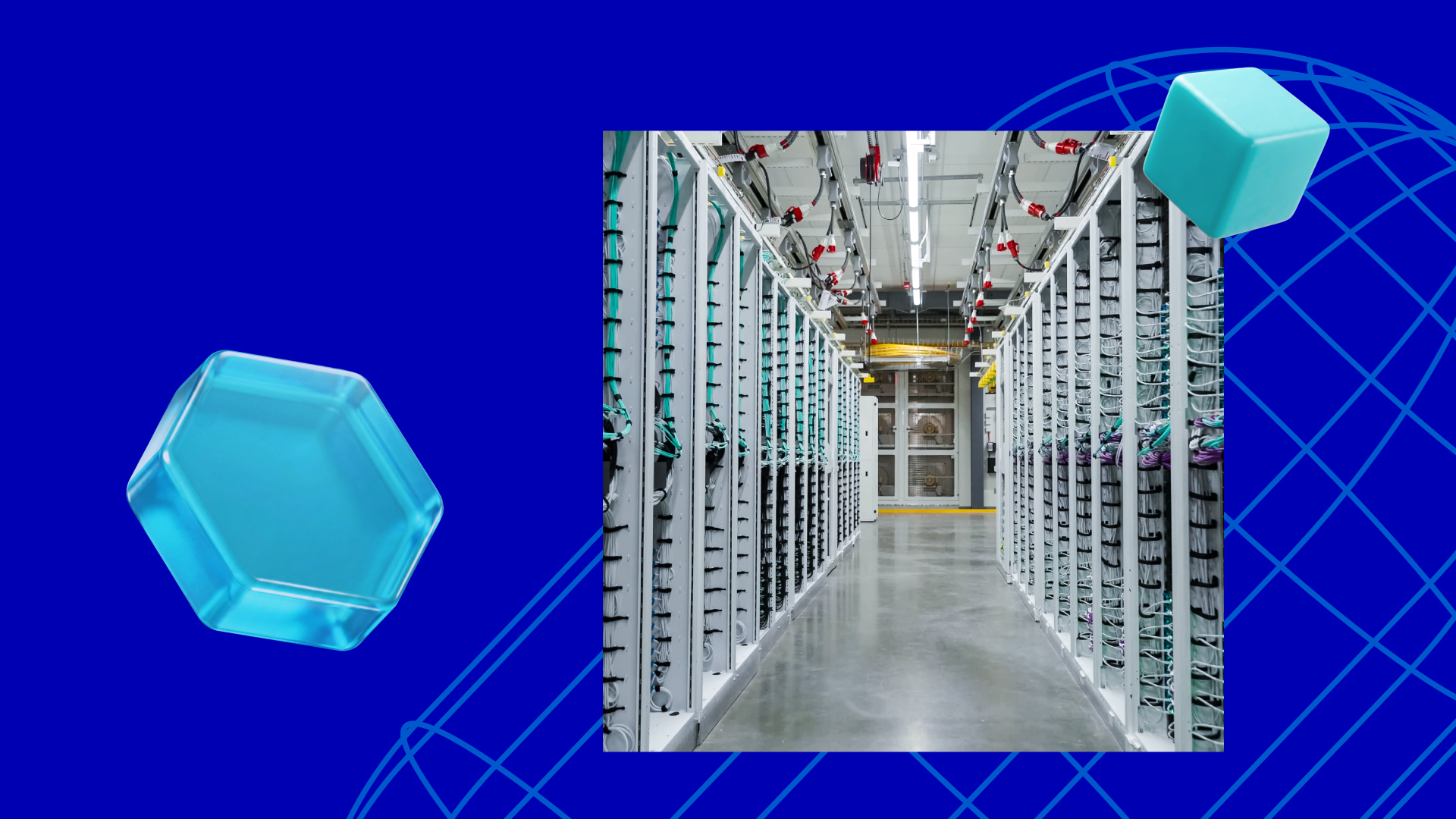
Internal telemetry and standard industry benchmarks—including SPEC CPU reports and SPECpower utilization metrics—illustrate a substantial shift in Azure’s hardware performance envelope over the last decade:
| Metric / Dimension | Circa 2014 Baseline | Modern Azure Infrastructure | Operational Impact |
|---|---|---|---|
| Processor Cores per Rack | Baseline (1x) | ~13x Increase | 1,300% increase in compute density per physical rack footprint |
| Energy Consumption per Task | Baseline (~100W for compile) | < 10W for compile | > 90% reduction in power required for identical compute tasks |
| Hardware Circularity Rate | Fragmented / Out-sourced | 92% Reused / Recycled | Systematic diversion of decommissioned server mass from landfills |
| Silicon Architecture | Off-the-shelf Commodity x86 | Azure Cobalt 200 (Custom ARM) | Up to 50% performance improvement over prior-gen Cobalt 100 |
This compute density surge directly impacts datacenter efficiency. By increasing the core count per rack thirteen-fold, Microsoft can deliver the compute power of a legacy datacenter within a fraction of the physical building space.
On the energy side, reducing power requirements by 90% for standard tasks—such as code compilation—frees up crucial power capacity within existing facility thermal caps. This newly reclaimed power capacity can then be dynamically redirected toward resource-intensive AI inference and training workloads.
POWER CONSUMPTION FOR STANDARD COMPILATION WORKLOADS
(Watts required per benchmark task)

2014 System: [==================================================] 100 Watts
2026 System: [====] <10 Watts  (-90% Power Draw)
The Role of Azure Cobalt 200 Custom Processors
Central to this compute evolution is the Azure Cobalt 200 custom processor. Custom silicon allows cloud architects to eliminate legacy x86 instruction-set overhead and tailor hardware features directly to cloud microservices and agentic AI frameworks.
+-----------------------------------------------------------------------+
|                    AZURE COBALT 200 SILICON STACK                     |
+-----------------------------------------------------------------------+
|  [ Modern Agentic AI & Enterprise Workloads ]                         |
+-----------------------------------------------------------------------+
|  [ Optimized Virtual Machine Layer (vCPUs) ]                          |
+-----------------------------------------------------------------------+
|  [ Direct Hardware Integrations ]                                    |
|   - Hardware Security Engine   - Offloaded Networking Stack           |
|   - NVMe Storage Acceleration  - Custom Power-State Controls          |
+-----------------------------------------------------------------------+
|  [ Co-Designed ARM-Based Core Fabric ]                                |
+-----------------------------------------------------------------------+
Key technical characteristics of the Cobalt 200 platform include:
- Co-Designed Systems Architecture: Silicon, power management modules, network interface cards (NICs), and virtualization software are designed in tandem, eliminating systemic bottlenecks.
- Workload-Specific Optimization: Optimized specifically for multi-threaded cloud applications, high-concurrency microservices, and modern agentic AI workloads that demand high memory bandwidth and low inter-core latency.
- Integrated Security Engine: Silicon-level security extensions that handle cryptographic processing directly on chip, reducing performance overhead during encrypted data transit.
Official Statements & Operational Deep Dive: The Circular Center Pipeline
To maintain security, regulatory compliance, and maximum asset value recovery, decommissioned servers pass through a multi-stage triage pipeline managed by Microsoft Circular Centers.
       DECOMMISSIONING PIPELINE AT MICROSOFT CIRCULAR CENTERS

   [ Server Removed From Datacenter Active Floor ]
                         |
                         v
   [ Zero-Trust Cryptographic Data Erasure / Drive Sanitization ]
                         |
                         v
   [ Robotic Disassembly & Diagnostic Triage ]
                         |
           +-------------+-------------+
           |                           |
           v                           v
  ( Whole System Level )      ( Component Level )
           |                           |
     +-----+-----+               +-----+-----+
     |           |               |           |
     v           v               v           v
  [ R&D /     [ Qualified     [ Harvesting  [ Material
   Labs ]      Resellers ]     Spares ]      Recycling ]
Stage 1: Zero-Trust Security and Cryptographic Wiping
Before any server hardware physically leaves an active datacenter row, all data-bearing components undergo sanitized cryptographic wiping in accordance with strict enterprise compliance standards (NIST SP 800-88 rev 1). If a storage medium fails the automated wiping protocol, it is mechanically destroyed on-site to ensure absolute zero-trust data security.
Stage 2: Automated Diagnostic Triage
Once certified clean of sensitive data, retired server racks are transported directly to a regional Circular Center hub. Here, automated testing platforms evaluate the physical health, lifecycle hours, and electrical integrity of individual sub-assemblies.
Stage 3: Dynamic Value Recovery Allocation
Based on automated diagnostic ratings, hardware is routed along one of four primary pathways:
- Full System Redeployment: Intact server nodes are reconfigured to support internal development networks, stress-testing environments, software sandboxes, or university training labs.
- Secondary Market Commercialization: High-performing hardware that no longer meets hyperscale cloud requirements is reconditioned and sold to vetted commercial partners for enterprise deployment.
- Component-Level Harvesting: Individual high-value assets—such as dual in-line memory modules (DIMMs), custom processors, cooling assemblies, and power supplies—are harvested and routed into Microsoft’s global maintenance inventory as spare parts.
- Upstream Material Reclamation: Legacy hardware that has reached the absolute end of its functional life is disassembled down to bare circuit boards, heatsinks, and wiring. Raw elements—including copper, gold, palladium, aluminum, and critical rare earth elements—are extracted by specialized metallurgy partners and returned directly to the industrial supply chain.
Global Circular Center Infrastructure
The expansion of Circular Centers into Newport, Wales, and Sydney, Australia brings the global operational facility count to eight, creating a localized processing web across key computing geographies:
[ North America ] <=======> [ Europe / Middle East ] <=======> [ Asia-Pacific ]
 - Existing Nodes            - Newport, Wales Hub               - Sydney Hub
 - San Antonio Node          - Continental EU Hubs              - Regional AP Hubs
  (Planned Pipeline)
By placing processing facilities near major datacenter clusters, Microsoft reduces the logistics overhead and carbon emissions associated with moving heavy server equipment across international borders.
Future Outlook: AI, Advanced Robotics, and Urban Mining
As hardware replacement cycles shorten due to rapid advances in AI accelerator technology, the workload burden on reverse logistics networks will scale significantly. To keep pace with this throughput requirement, Microsoft is expanding its investments in advanced industrial robotics and artificial intelligence within its Circular Centers.
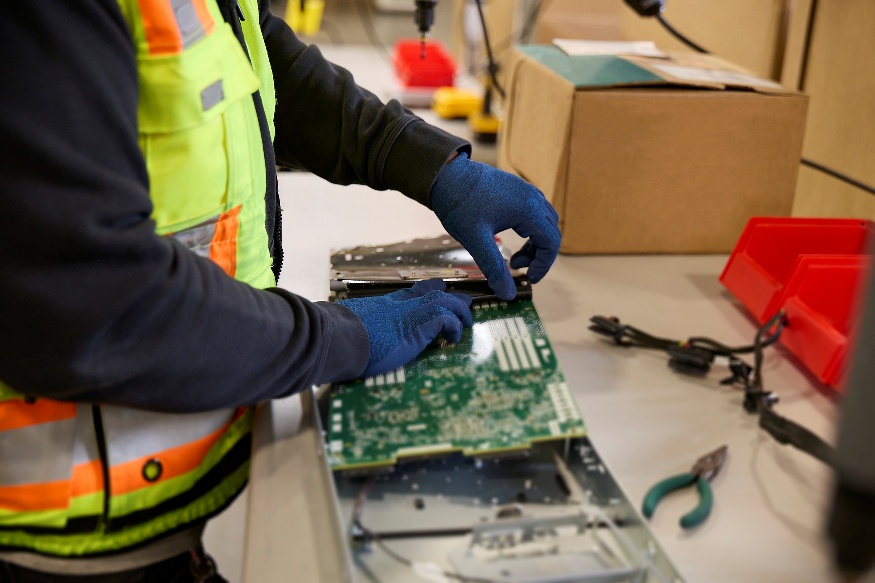
AI-Driven Robotic Disassembly
Disassembling complex, heterogeneous server chassis has historically been a manual, labor-intensive task due to the wide variety of screw types, cable routes, and physical components. Microsoft is now deploying machine vision models paired with robotic arms capable of identifying individual server layouts in real-time.
These robotic systems can autonomously remove fasteners, extract memory modules, and detach cooling blocks without damaging reusable silicon, cutting chassis disassembly times down to a fraction of manual baselines.
+---------------------------------------------------------------------+
|              NEXT-GEN AUTOMATED DISASSEMBLY SYSTEM                  |
+---------------------------------------------------------------------+
|                                                                     |
|   [ Over-Head AI Vision Sensor ] ---> Identifies Server Chassis Type |
|                                       and Fastener Coordinates      |
|                                                                     |
|                                |                                    |
|                                v                                    |
|                                                                     |
|   [ Multi-Axis Robotic Arm ]    ---> Precision Unfastening &       |
|                                       Component Extraction          |
|                                                                     |
|                                |                                    |
|                                v                                    |
|                                                                     |
|   [ Autonomous Mobile Robot ]   ---> Sorts Harvested RAM/CPUs       |
|                                       to Clean-Room Logistics Bays  |
|                                                                     |
+---------------------------------------------------------------------+
Autonomous Material Handling (AMH)
In tandem with robotic disassembly, Circular Centers are introducing Autonomous Mobile Robots (AMRs) to manage intra-facility logistics. AMRs transport harvested chassis and segregated components between processing bays, storage racks, and shipping docks. This continuous, automated workflow allows processing centers to run at high throughput, quickly freeing up space for incoming legacy systems from active datacenters.
The Strategic Imperative of "Urban Mining"
Looking ahead, the hyperscale cloud industry faces growing supply constraints for critical elements like copper, neodymium, gallium, and high-purity silicon. Traditional primary mining cannot always scale rapidly enough to meet the manufacturing demands of next-generation AI infrastructure, and reliance on single-region mineral supplies creates supply chain vulnerabilities.
Through its Circular Center network, Microsoft is establishing a closed-loop supply model often referred to as "urban mining." By recovering high-purity industrial metals and working components from its own operational ecosystem, the company reduces its vulnerability to volatile commodity markets and geopolitical supply disruptions.
As the industry enters a compute-intensive era driven by agentic AI, the ability to balance ultra-dense, custom silicon deployments with automated, circular hardware reclamation will separate cloud leaders from the rest. Microsoft’s dual strategy—optimizing every watt in the datacenter while reclaiming value from every component retired—provides a scalable blueprint for sustainable cloud growth.