Executive Overview
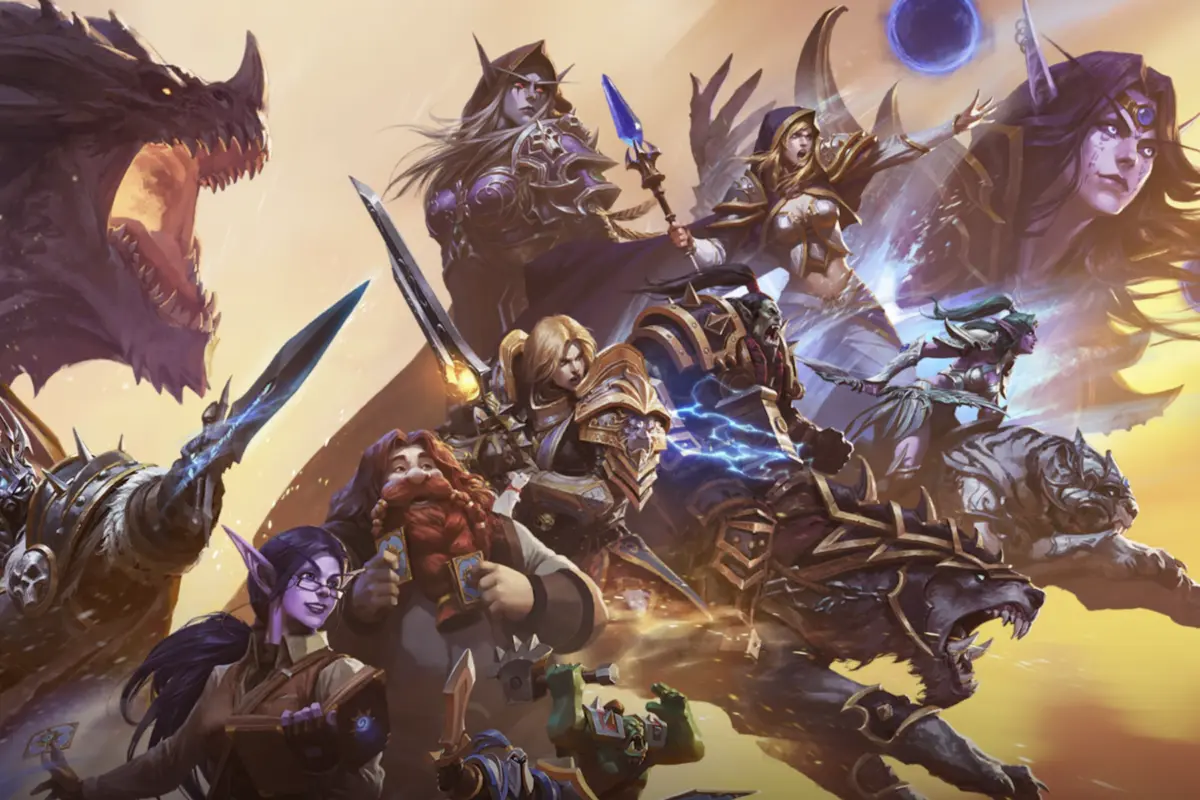
In what is already being hailed as a historic watershed moment for the massively multiplayer online (MMO) genre, Blizzard Entertainment has officially pulled back the curtain on its most ambitious project in decades: "World of Warcraft: Forever." Revealed on Saturday as the grand finale of the opening ceremony at BlizzCon 2026, held at the Anaheim Convention Center, the new title transports players back to the perilous and foundational landscape of Azeroth during the opening year of the original 2004 release.
For weeks, the gaming community has been rife with feverish speculation regarding whispers of a project colloquially dubbed "World of Warcraft Classic+" by fans across online forums and social media. Those rumors have now been definitively confirmed, though the reality of World of Warcraft: Forever far exceeds the speculative boundaries previously imagined by the community. Slated for an official launch on November 4, the game seeks to bridge the nostalgic yearning for vanilla-era gameplay with entirely fresh, professionally crafted content that honors the design philosophy of the original release.
Yet, World of Warcraft: Forever was merely the crown jewel in a staggering cascade of announcements that dominated the BlizzCon 2026 opening ceremony. Blizzard’s leadership utilized the global stage to lay out a multi-year roadmap that spans their most cherished franchises. From the first new Warcraft III campaign in over twenty years—releasing immediately—to long-range tentpole announcements like Diablo V for 2029 and a brand-new StarCraft title slated for 2030, Blizzard signaled an aggressive, multi-front expansion of its intellectual property portfolio.
As the gaming industry digests these staggering revelations, this report provides a comprehensive examination of the announcements, analyzing the structural mechanics of World of Warcraft: Forever, the philosophy driving its development, the staggering slate of accompanying franchise updates, and what this means for the future of interactive entertainment.
Detailed Chronology: The Road to BlizzCon 2026 and the Big Reveal
The path to Saturday’s explosive keynote at the Anaheim Convention Center was paved with months of mounting anticipation and digital breadcrumbs. For years, the undeniable success of World of Warcraft Classic proved that a massive segment of the player base hungered for the deliberate pacing, community-driven social structures, and unyielding challenge of the game’s 2004 incarnation. However, once Classic progressed through its historical expansions—reaching The Burning Crusade, Wrath of the Lich King, and beyond—a distinct faction of purists and innovators alike began clamoring for a divergence. They wanted an alternate timeline: a path where the original world continued to grow horizontally rather than vertically through standard expansions.
Industry insiders and data-miners dropped subtle hints over the late summer, pointing toward internal testing builds and trademark filings that suggested Blizzard was cooking up something substantial under the radar. Forums like Reddit and MMO-Champion were flooded with theories about "Classic+," with players debating whether Blizzard would dare introduce new zones, mechanics, or class balances to the 2004 framework without breaking the fragile nostalgia that made the original experience so magical.
Those months of speculation reached a fever pitch on Saturday morning as thousands of passionate fans packed the convention hall. Following updates on ongoing live-service titles, the energy in the room shifted palpably. As the house lights dimmed, a cinematic trailer unspooled on the massive screens, transporting viewers back to the iconic, rugged aesthetics of Elwynn Forest and Durotar, before introducing fresh, unseen vistas and sweeping orchestral arrangements that signaled this was not merely a re-release.
When Holly Longdale, Blizzard’s Vice President and Executive Producer for the Warcraft universe, took the stage to officially announce World of Warcraft: Forever for a November 4 release, the auditorium erupted. The final announcement of the ceremony delivered precisely what the community had spent years dreaming of, instantly resetting the conversation surrounding the longevity and creative direction of the world’s most famous MMO.
Supporting Context & Metrics: Inside World of Warcraft: Forever
To understand why World of Warcraft: Forever is causing seismic shifts across the gaming ecosystem, one must examine the specific design architecture and content metrics revealed by the development team. Blizzard is not merely flipping a switch on an old server; they are injecting an unprecedented volume of parallel content into a reimagined 2004 sandbox.
Core Launch Metrics and Content Additions
At launch on November 4, World of Warcraft: Forever will deliver a robust package designed to satisfy both veteran explorers and fresh adventurers:
- Three New Zones: Seamlessly integrated into the classic continent structures, offering fresh terrain, lore, and high-stakes encounters.
- Over 1,000 New Quests: Crafted in the distinct narrative style of early-era Blizzard, emphasizing environmental storytelling, deep RPG elements, and community cooperation.
- Nine New Dungeons: Expanding the mid-game and end-game dungeon pool with intricate layouts and challenging mechanics tailored to classic class design.
- Two New Raids: High-tier 40-player and 20-player coordination trials designed to test the absolute limits of optimized classic character builds.
- The Skyborne Race: A brand-new playable race introduced specifically for this alternate timeline, complete with unique racial traits, starting zones, and deep integration into the unfolding lore.
- Level Cap of 60: Preserving the iconic maximum level milestone of the vanilla era, ensuring that character progression remains grounded in the prestige and prestige-associated grinds of 2004.
These metrics represent an extraordinary investment in a legacy product line, proving that Blizzard views the classic iteration of World of Warcraft not as a static museum piece, but as a living, breathing canvas capable of endless reinvention.
Official Statements and Design Philosophy
During and immediately following the BlizzCon opening ceremony, key members of the development team elaborated on the guiding philosophies behind World of Warcraft: Forever. Central to these discussions was the concept of pacing and spatial immersion.
Holly Longdale, addressing the press and the live audience, emphasized a design philosophy that stands in stark contrast to modern, fast-paced MMO trends. "We intend for the world itself to be the main character in Forever," Longdale stated, capturing the ethos of the project. In modern game design, the journey to the maximum level is frequently treated as a tutorial or an obstacle to be bypassed as quickly as possible in order to reach endgame content. Longdale explicitly rejected this paradigm for the new title, noting that in World of Warcraft: Forever, "it’s the journey that counts, not the destination."
This philosophy dictates every facet of the game’s construction. By keeping the level cap at 60 and introducing sprawling new zones, dungeons, and quests across the existing low-to-mid-to-high-level tiers, the developers are actively discouraging the rush to endgame. Instead, players are encouraged to form deep social bonds, spend hours traversing the perilous open world on foot or via ground mounts, and rediscover the sense of genuine discovery and peril that defined the 2004 experience.
Lead systems designers further clarified that class balancing and itemization will mirror the deliberate, crunchy math of vanilla World of Warcraft, while carefully pruning the most egregious design dead-ends of the era. The goal is an authentic tactical feel where choices matter, spells have weight, and the world feels vast, dangerous, and profoundly rewarding to inhabit.
A Multi-Franchise Renaissance: Beyond World of Warcraft
While World of Warcraft: Forever commanded the lion’s share of the headlines, Blizzard utilized BlizzCon 2026 to demonstrate that the studio is entering a period of aggressive, multi-franchise expansion. The sheer breadth of the announcements showcased a renewed confidence across all of the company’s major pillars.
The Return of Warcraft III
In a move that stunned strategy game enthusiasts, the Warcraft team announced a brand-new official campaign for Warcraft III—the first addition of its kind to the legendary real-time strategy title in more than two decades. Available to play immediately, this new campaign bridges historical narrative gaps and proves that Blizzard has not forgotten its RTS roots, offering a nostalgic yet deeply intricate tactical experience for veteran commanders.
Diablo V and the Netflix Animated Series
The forces of Hell are expanding their grip on pop culture. Blizzard officially slated Diablo V for a 2029 release, signaling a massive, long-term development cycle aimed at redefining the action-RPG genre once again following the ongoing support of Diablo IV. Furthermore, cementing the franchise’s multimedia appeal, Blizzard confirmed that a high-profile Diablo animated TV series is currently in active production at Netflix, promising to translate the dark, gothic lore of Sanctuary into prestige episodic television.
StarCraft Rises Anew
Perhaps the most jaw-dropping announcement of the afternoon was the confirmation of an all-new StarCraft game slated for release in 2030. Details regarding the genre and scope of the project remain closely guarded, but the mere confirmation that the dormant sci-fi titan is returning to active development sent shockwaves through the competitive gaming community, ensuring that the Koprulu Sector will once again witness epic interplanetary warfare.
Future Outlook: What Lies Ahead for Blizzard Entertainment
As the dust settles on the opening weekend of BlizzCon 2026, the industry is left to evaluate the profound implications of Blizzard’s aggressive roadmap. By anchoring their immediate future in the cherished nostalgia of World of Warcraft: Forever while simultaneously planting flags for massive technological and narrative leaps in 2029 and 2030, the studio is executing a masterclass in audience retention and generational brand expansion.
For World of Warcraft players, November 4 marks the beginning of a fascinating new epoch. The success of Forever will likely set a precedent for how legacy MMOs can evolve without alienating their core demographic. By choosing to expand horizontally rather than vertically—enriching the foundational world rather than discarding it for higher-level expansions—Blizzard is betting that players yearn not just for new content, but for a deeper, more meaningful connection to the virtual spaces they call home.
Variety will continue to provide boots-on-the-ground, comprehensive coverage of BlizzCon throughout the weekend events on September 12–13. Readers can follow our dedicated portal for real-time updates, developer interviews, and deep-dive analysis into everything Blizzard Entertainment—from the neon-lit battlefields of Overwatch and the dark corridors of Diablo to the sprawling, rediscovered horizons of a timeless World of Warcraft.
As developers, journalists, and fans look toward November and beyond, one thing is abundantly clear: the world of Azeroth is expanding, and the journey is only just beginning.