









Executive Overview
The landscape of software development and security is undergoing a seismic, irreversible shift. As malicious actors increasingly leverage generative artificial intelligence to unearth zero-day exploits, map legacy infrastructures, and automate cyberattacks at unprecedented velocities, enterprise development teams find themselves locked in an asymmetric race against time. To level the playing field, Blitzy—a pioneering force in autonomous software engineering—has officially launched a comprehensive, free sandbox environment designed to give eligible DevOps and DevSecOps teams hands-on access to advanced AI-driven code analysis, reverse-engineering, and vulnerability remediation.
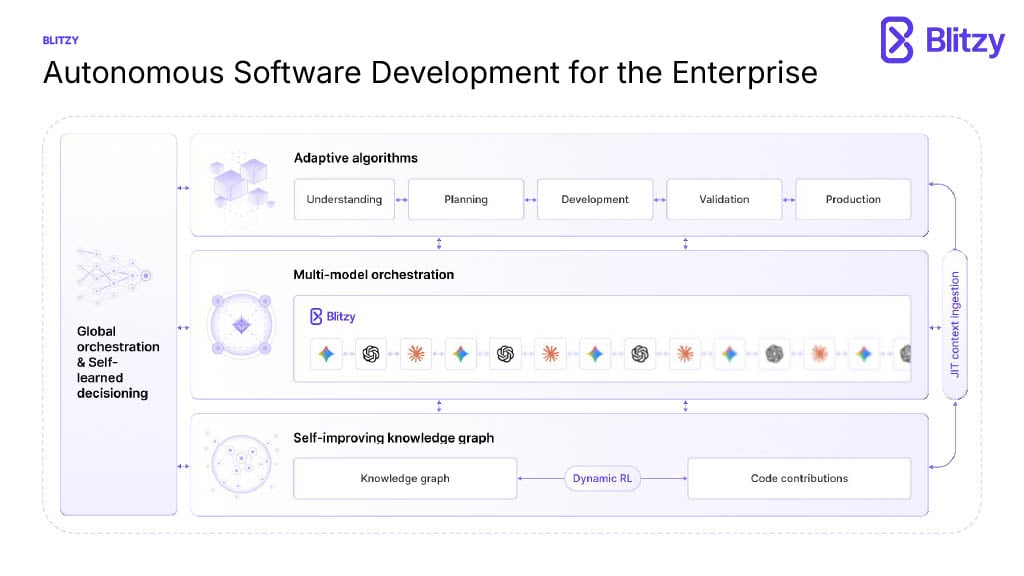
This newly unveiled sandbox offering allows teams to reverse-engineer up to one million lines of existing code and autonomously generate up to 25,000 lines of fully tested, end-to-end production-ready code at zero cost. Powered by Blitzy’s flagship Proactive Insights platform, the environment relies on a sophisticated orchestration of multiple AI models, an all-encompassing architectural knowledge graph, and thousands of autonomous AI agents working in parallel.
Rather than merely acting as an isolated code-completion assistant, Blitzy approaches software development and security holistically. By mapping every facet of a codebase—including intricate business logic, deep dependencies, architectural nuances, and data flows—the platform enables organizations to tackle monumental tasks such as dissecting undocumented legacy applications, upgrading legacy services to modern frameworks, building new applications from scratch, and systematically purging security vulnerabilities before cybercriminals can exploit them.
As software engineering rapidly evolves from writing manual syntax to managing fleets of autonomous AI agents, initiatives like the Blitzy sandbox provide a vital proving ground. This article explores the architecture behind Blitzy’s autonomous platform, the security imperative driving its release, enterprise privacy guarantees, and what this technological leap signifies for the future of software development.
Detailed Chronology & Technical Architecture: How Blitzy Works
The genesis of Blitzy’s autonomous development framework lies in a fundamental realization that has plagued early adopters of generative AI: isolated Large Language Models (LLMs) lack context. When a developer prompts an ordinary chatbot to generate code snippets without understanding the broader system architecture, dependencies, and state management, the resulting code frequently fails in production, introduces subtle bugs, or creates unforeseen security regressions.
To overcome this hurdle, Blitzy engineered a multi-layered architectural approach centered around a dynamic, continuously updating knowledge graph.
[Legacy Code / Modern Codebase]
              │
              ▼
    (Knowledge Graph Engine)
      ├── Architecture Mapping
      ├── Dependency Tracing
      ├── Business Logic Analysis
      └── Data Flow Tracking
              │
              ▼
    (Proactive Insights & AI Models)
      ├── Vulnerability Identification
      ├── Reachability & Execution Path Analysis
      └── Remediation Strategy Formulation
              │
              ▼
    (Parallel Autonomous AI Agents)
      ├── Code Generation / Build / Validate / Test
      └── Risk-Prioritized Pull Requests (PRs)
              │
              ▼
    [Human Software Engineer Review & Approval]
1. The Architectural Knowledge Graph
When a repository is introduced to the Blitzy platform, the system does not simply read text files sequentially. Instead, it constructs a comprehensive knowledge graph that spans the entirety of the software ecosystem. This graph meticulously maps:
- System Architecture: High-level service interactions, microservices boundaries, and infrastructure layouts.
- Dependencies: Internal libraries, external third-party packages, and their respective version histories.
- Business Logic: The core algorithms, functional requirements, and domain-specific rules governing the application.
- Data Flows: How data enters the system, where it is processed, how it is stored, and where it exits.
This knowledge graph is not static; it is queryable and continuously evolves as the codebase changes, ensuring that the AI’s contextual understanding remains perpetually synchronized with the latest commits.
2. Proactive Insights and Vulnerability Tracing
With the knowledge graph established, the Proactive Insights platform steps in to bridge the gap between development and security. Traditional static application security testing (SAST) tools often generate an unmanageable deluge of false positives, leaving security teams overwhelmed.
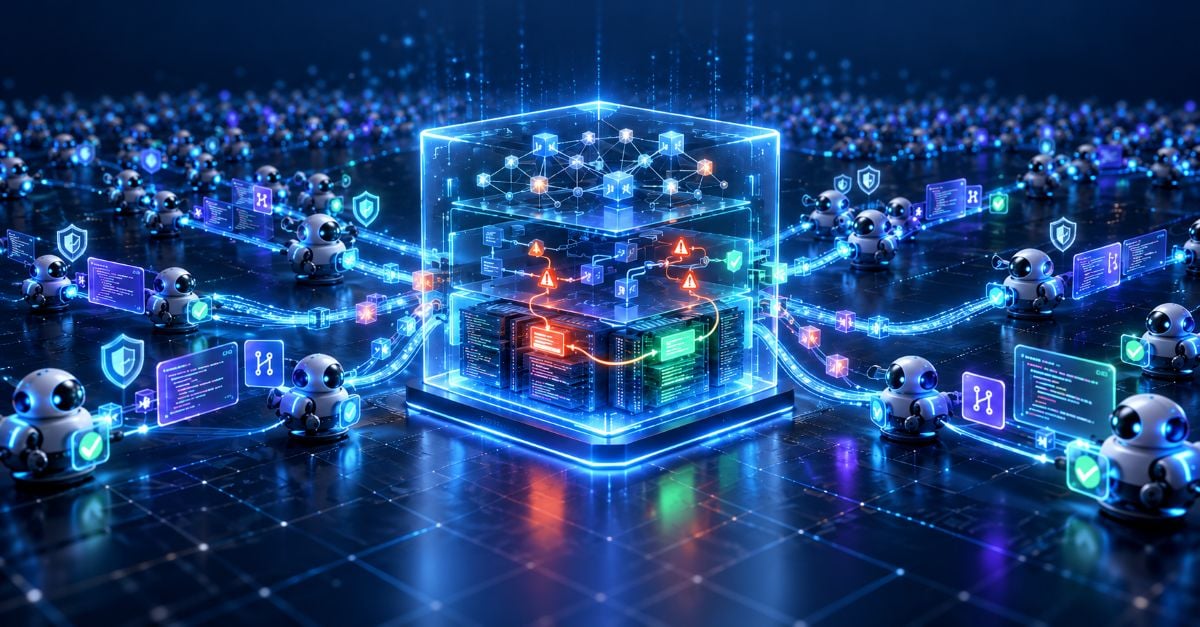
Blitzy addresses this by tracing known and previously undiscovered vulnerabilities through their actual execution paths. The platform evaluates whether a vulnerability is genuinely reachable in a production environment, cross-checks it against active dependencies, and determines its severity. Once a valid threat is isolated, Proactive Insights formulates a precise remediation strategy.
3. Parallel Swarms of Autonomous AI Agents
Once code generation or remediation tasks are defined, Blitzy deploys thousands of specialized AI agents that operate concurrently. These agents handle the heavy lifting of:
- Building new features or upgrades.
- Validating changes against existing test suites.
- Executing rigorous automated testing loops to ensure functional integrity.
Crucially, these agents do not push code directly to production. Instead, they bundle their validated work into meticulously documented, risk-prioritized pull requests (PRs). Human software engineers retain absolute authority, reviewing, tweaking, and approving the AI-generated PRs through standard version control workflows.
Supporting Context & Metrics: The DevSecOps Race Against Time
The launch of the Blitzy sandbox arrives at a critical juncture for the cybersecurity and software engineering industries. According to industry observations shared by industry leadership, DevSecOps teams are currently locked in an unprecedented race against time.
The Threat Landscape
Historically, discovering sophisticated software vulnerabilities required deep technical expertise, extensive reconnaissance, and considerable time. Today, malicious actors are weaponizing automated AI platforms to scan public repositories, discover zero-day flaws, and weaponize exploits within minutes of a vulnerability’s disclosure.
Consequently, enterprise security teams are facing a literal "tsunami" of potential vulnerabilities hidden deep within millions of lines of legacy and modern code. Traditional manual code reviews and legacy security tools are fundamentally unequipped to scale against this volume of automated threats.
Sandbox Metrics and Capabilities
To help organizations evaluate whether they can bridge this capability gap, the Blitzy sandbox provides substantial operational capacity at zero financial commitment:
- Codebase Reverse-Engineering: Up to 1,000,000 lines of code can be ingested, analyzed, and mapped into the platform’s knowledge graph.
- Autonomous Code Generation: Teams can generate up to 25,000 lines of fully tested, end-to-end production-ready code.
- Vulnerability Discovery: Comprehensive scanning across complex codebases to identify hidden security flaws and architectural weaknesses.
By removing financial and operational barriers to entry, Blitzy enables resource-constrained organizations to test the limits of autonomous software development without disrupting active production pipelines.
Enterprise Security, Compliance, and Data Privacy
Whenever organizations consider integrating third-party AI platforms into their software development lifecycles, data privacy and intellectual property protection emerge as primary concerns. Enterprise leaders are understandably protective of proprietary algorithms, trade secrets, and regulated customer data.
Blitzy has architected its platform from the ground up to address these enterprise-grade security mandates:
- Zero Model Training on Customer Code: Blitzy explicitly guarantees that no customer code, proprietary algorithms, or internal documentation is ever used to train foundational AI models. Client data remains strictly siloed and protected.
- End-to-End Encryption: All data processed by the platform is fully encrypted both in transit (using robust TLS protocols) and at rest (utilizing advanced cryptographic standards).
- Compliance Alignment: The platform’s security controls are designed to support organizations operating under stringent regulatory frameworks, ensuring that audit trails, access controls, and data governance requirements are consistently met.
Future Outlook: Software Engineers as AI Managers
As generative AI transitions from an experimental novelty into core enterprise infrastructure, the day-to-day role of the software engineer is undergoing a profound transformation. Writing boilerplate code, manually refactoring legacy modules, and conducting exhaustive routine syntax checks are rapidly being delegated to autonomous agents.
Industry experts suggest that software engineers are systematically evolving into managers of AI agents. In this emerging paradigm, human developers define high-level architectural goals, establish business logic parameters, set security policies, and act as final arbiters and reviewers for risk-prioritized pull requests generated by AI swarms.
While every DevOps and DevSecOps team will transition to this autonomous model at its own pace, the sheer velocity of modern software vulnerabilities suggests that hesitation carries a steep price. Organizations that embrace contextual AI platforms today will be best positioned to secure their codebases, modernize legacy systems, and outpace increasingly sophisticated automated threats.
Frequently Asked Questions (FAQ)
What is the Blitzy sandbox?
The Blitzy sandbox is a free, zero-cost environment that allows eligible DevOps and DevSecOps teams to explore autonomous software development. It enables users to reverse-engineer up to one million lines of existing code and generate up to 25,000 lines of fully tested, production-ready code.
How does Blitzy identify and remediate vulnerabilities?
Blitzy combines multiple specialized AI models, thousands of parallel autonomous AI agents, and a comprehensive architectural knowledge graph. This system analyzes codebases, traces potential vulnerabilities through actual execution paths, assesses reachability, and automatically generates precise remediation code packaged as risk-prioritized pull requests.
What is Blitzy Proactive Insights?
Proactive Insights is Blitzy’s core AI-powered platform. It analyzes software architecture, internal and external dependencies, business logic, and data flows to identify security vulnerabilities, evaluate their impact in production environments, and determine viable remediation strategies.
Does Blitzy use my company’s code to train its AI models?
No. Blitzy maintains a strict privacy policy ensuring that no customer code or proprietary data is ever used to train foundational AI models. All data is fully encrypted in transit and at rest to meet strict enterprise compliance mandates.