Executive Overview
On an unseasonably scorching September afternoon in Chatsworth, California, the air conditioning units at Capital Arts soundstages have given up entirely. Inside, a tight-knit crew of twenty-somethings has a grueling mandate: turn out four vertical microdramas in a single, breathless workday. This isn’t a standard Hollywood indie film shoot or a commercial for an app; it is the vanguard of modern political messaging, deployed directly on behalf of Los Angeles City Councilwoman Nithya Raman’s high-stakes mayoral campaign.
As director Ryan Wagner shouts instructions over the hum of overworked box fans, actors Hannah Martinez and Adriana Palacios tear through a melodramatic, telenovela-themed script, culminating in a farcical, stage-slap crescendo. The production is campy, frantic, and unmistakably tailored for the algorithmic feeds of Instagram and TikTok.
Raman is dominating among young voters, capturing an astonishing 66% of the 18-to-29 demographic in recent polling—trouncing incumbent Mayor Karen Bass, who sits at a paltry 4% among the same cohort. Yet, capturing the attention of a digital-native, perpetually scroll-fatigued electorate remains a monumental challenge. Traditional canvassing and dry mailers fail to penetrate the noise. To bridge this gap, the Raman campaign has turned to the booming, decentralized ecosystem of microdramas—short-form, high-concept vertical videos that have become the financial lifeblood of out-of-work Hollywood crews and the ultimate secret weapon in contemporary political disruption.
Detailed Chronology: Behind the Scenes on a Chatsworth Soundstage
The production schedule is punishing. With Raman due on set in a matter of minutes, the crew races against the clock to bank as many takes of the Spanish-language telenovela spot as possible before pivoting to the candidate’s cameo.
"Quiet please! We’re having fun!" director Ryan Wagner hollers, wiping sweat from his brow. "Even if we mess up, we’re having fun! Action!"
To no one in particular, he mutters between setups, "I am sweating out of every part of my body."
Wagner, a 31-year-old alumnus of independent film who now serves as creative director at the microdrama platform CandyJar, knows the territory well. His directorial credits include genre-staple vertical melodramas like The Arrangement, Double Take, and Loving My Brother’s Best Friend. His journey into mayoral politics, however, began out of sheer exhaustion. During the primary election cycle, Wagner volunteered to knock on doors for Raman. Finding himself sweltering on suburban doorsteps and performing what he jokingly assessed as a "terrible job" at canvassing, he had an epiphany.
"I was canvassing, and doing a terrible job and getting really sweaty," Wagner recalls. "And I was kind of thinking, ‘Is there anything else I could possibly do to contribute to this?’"
Wagner pitched the Raman campaign a radical proposition: in their spare time, he and his network of young, underemployed industry friends would produce a series of bespoke microdramas free of charge. If the campaign liked them, they could publish them. If not, no harm done.
"They were both very supportive and also quite skeptical of… ‘What even is this?’" Wagner says.
When the primary videos dropped, they combined unhinged soap-opera plotlines with granular, wonky policy discussions concerning rent stabilization, public transit expansion, and tenant protections. The gamble paid off exponentially. According to campaign metrics, the guerrilla-style videos racked up upwards of 850,000 organic views, establishing themselves as some of the most viral and high-performing assets of the primary race.
Now, with a modest $15,000 general election investment from the campaign fund, Wagner and producer Kemma Filby are scaling up production. The new slate includes a razor-sharp parody of the hit series The Pitt targeting Mayor Bass’s mega-donor network, a Mean Girls spoof highlighting Raman’s staunch opposition to a controversial $1 billion LAPD contract, and a precinct-set detective sketch defending City Hall’s operational competence.
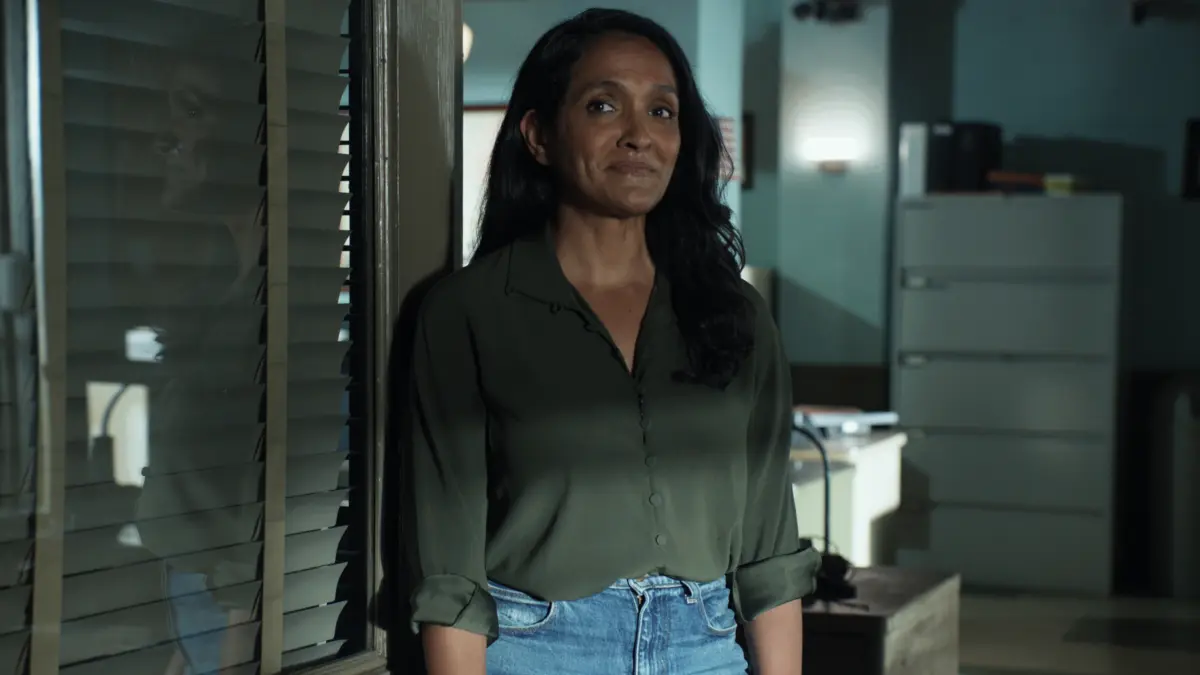
As the afternoon ticks on, Raman arrives precisely on schedule. Microphoned and ready, she hits her mark effortlessly to deliver her punchline. Before calling wrap, Wagner checks in with his candidate to ensure the script’s self-aware humor lands.
"They’re great," Raman reassures him.

After a few crisp takes, Wagner calls it a wrap. Addressing the exhausted, sweat-drenched crew, Raman offers a heartfelt note of gratitude: "Thank you to all of you. Thank you for believing L.A. can be better."
Supporting Context & Metrics: The Microdrama Economy Meets the Ballot Box
The marriage of microdramas and municipal politics represents a fascinating convergence of economic necessity and technological evolution. Over the past two years, as traditional Hollywood production has sputtered, a vast ecosystem of vertical microdrama platforms has exploded across Los Angeles. For hundreds of displaced crew members and independent filmmakers, these fast-turnaround, smartphone-optimized productions have become a vital economic lifeline.
"For so many people, their livelihood right now is dependent on microdramas," notes producer Kemma Filby, whose credits include Chasing Kiarra and I Accidentally Stole the Bad Boy’s First Kiss. "Honestly, while it’s not something I expected to find myself doing, I’m very grateful that the industry exists because it’s given so many of us steady work."
From a political strategy standpoint, the data validates the risk. Raman’s unexpected surge into a second-place finish during the primary was heavily propelled by young voters who consume media almost exclusively in vertical, bite-sized formats. In the runoff election, demographic realities require the campaign to aggressively court Latino voters—prompting the inclusion of a dedicated Spanish-language microdrama in the new slate.
Kemma Filby acknowledges the initial apprehension surrounding the medium. "It’s a bit of a risk, I think, to engage with microdramas. A lot of people still don’t understand them," she reflects. "But I think it’s a space where people are getting lots of views—and it’s also fun. Young people want to see politicians who can engage with the culture and be a little silly."
Despite the tiny budget—supplemented by campaign funds that finally allow for catered lunches and modest crew stipends—the production operates on a currency of genuine political alignment.
"All these people were already Nithya supporters," Wagner notes. "Everyone here wants to be here, and the process of making it is fun. This is one of the least cynical experiences I’ve been part of."
Official Statements & Campaign Perspectives
The campaign’s leadership has moved from polite skepticism to full-throated endorsement. Kyle Rohrbach, who oversees video content for the Raman campaign, emphasizes that meeting voters where they consume media is no longer optional in modern campaign strategy.
"They did such an incredible job that we knew that we wanted to get four more in the general," Rohrbach states. "It’s really important for campaigns these days to meet people where they’re at."
For Wagner, having the candidate physically step onto a microdrama soundstage to deliver a punchline serves as the ultimate validation of the medium’s efficacy.
"It was so amazing," Wagner says of Raman’s on-set appearance. "Having her here, I think, is the most solid endorsement that this is something that feels worth her time, and is actually helping the campaign."
Future Outlook: The New Frontier of Political Communication
As the Los Angeles mayoral runoff accelerates toward November, the experiment in Chatsworth offers a compelling blueprint for political communication in the age of algorithmic fragmentation. Traditional 30-second television spot buys are increasingly losing their grip on voters under 30, who routinely bypass linear television and ad-supported broadcasts entirely.
By weaponizing the campy tropes of vertical microdramas—borrowing the breathless pacing of pulp romances and medical dramas to dissect rent control and police budgets—Raman’s campaign has done what legacy political consultants have struggled to achieve: make local governance genuinely culturally relevant.
Whether this irreverent, decentralized approach can successfully close the gap in a bruising mayoral showdown remains to be seen. But as the cameras stop rolling on the Chatsworth soundstage and the crew packs up their gear in the stifling heat, one thing is abundantly clear. The playbook for reaching the digital electorate has been rewritten, and in Los Angeles, politics has officially entered the vertical age.