Executive Overview
Mark Wahlberg’s trajectory over the past three decades offers a masterclass in modern personal branding, strategic reinvention, and economic diversification. Emerging in the late 1990s as a formidable cinematic force with breakthrough roles in films like Boogie Nights, Wahlberg has since cemented his status as a permanent fixture of Hollywood’s A-list. His multi-hyphenate career spans high-octane action blockbusters, critically acclaimed crime dramas, two Academy Award nominations, a Golden Globe nod for The Fighter, and multiple Emmy nominations as an executive producer for seminal television projects like HBO’s Entourage.
Yet, for all his cinematic pedigree, Wahlberg’s most significant long-term legacy may ultimately reside outside the traditional boundaries of the entertainment industry. Over the past twenty years, he has systematically constructed an expansive entrepreneurial empire. From scalable restaurant chains, performance-driven apparel, and fitness ventures to a robust portfolio of angel investments and the quarter-century-old Mark Wahlberg Youth Foundation, the actor-turned-mogul has quietly mastered the mechanics of capital allocation.
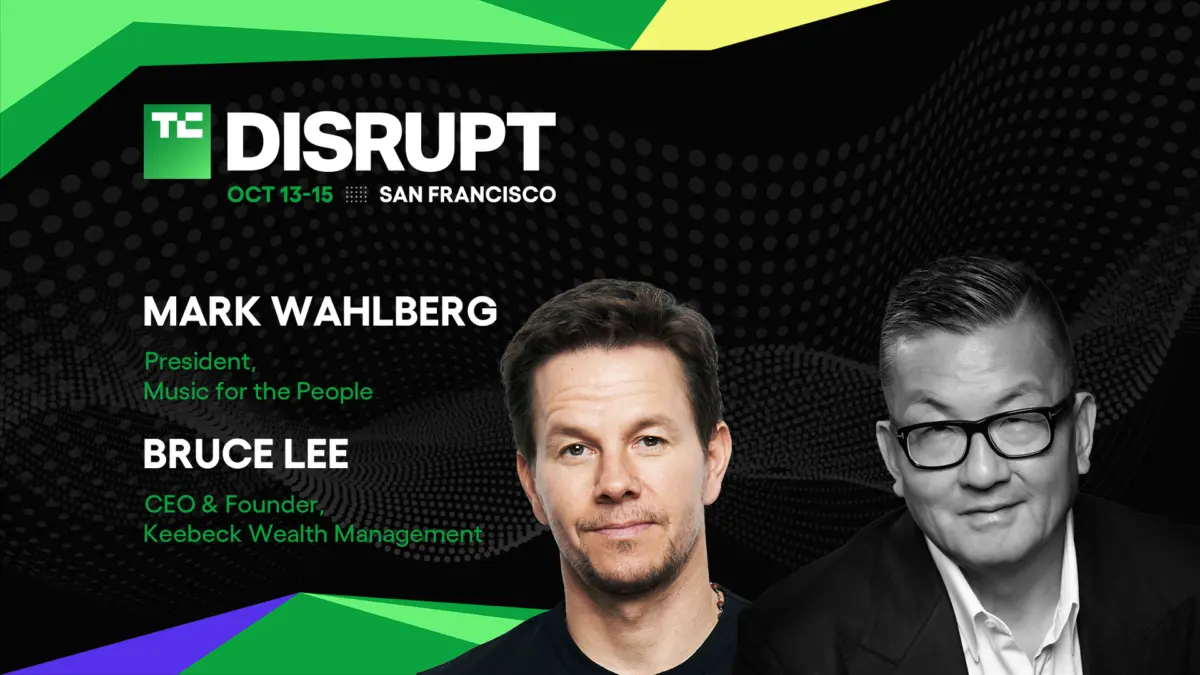
Now, Wahlberg is signaling the next evolution of his career. As he takes the main stage at TechCrunch Disrupt 2026 for a marquee fireside chat alongside Bruce K. Lee—founder and CEO of Keebeck Wealth Management—Wahlberg is opening up about his transition from instinct-driven celebrity founder to disciplined, institutional-level investor. This comprehensive feature explores how Wahlberg’s journey reflects a broader shift among high-profile cultural icons entering the sophisticated worlds of venture capital, private equity, and emerging technology startups.
Detailed Chronology: The Evolution of an Enterprise
To understand Mark Wahlberg’s current standing in the investment community, one must trace the chronological steps that transformed a pop-culture icon into a diversified business builder.
Phase One: The Cinematic Foundation (1997–2005)
Wahlberg’s early career was defined by high-stakes creative risks. Following his transition from music and modeling to acting, his breakout performance in Paul Thomas Anderson’s 1997 period drama Boogie Nights validated him as a serious dramatic actor. Throughout the late 1990s and early 2000s, Wahlberg starred in a succession of commercial and critical hits, including Three Kings, The Perfect Storm, and The Italian Job. During this formative period, Wahlberg established the fundamental currency of his future business ventures: public trust, global recognition, and cultural resonance.
Phase Two: Producing and Early Brand Building (2006–2015)
Recognizing the finite shelf-life of a traditional acting career, Wahlberg pivoted behind the camera. In 2004, he executive-produced Entourage, a semi-autobiographical HBO series that ran for eight seasons and exposed him to the inner workings of media syndication and production financing. Simultaneously, he launched his own production companies, leveraging his star power to greenlight independent projects like The Fighter (2010), which earned him Academy Award nominations as both a producer and an actor.

During this decade, Wahlberg also began testing the waters of consumer product entrepreneurship. Recognizing his personal brand’s alignment with health, wellness, and blue-collar grit, he laid the groundwork for scalable consumer goods, laying the operational foundations that would later materialize into massive retail partnerships.
Phase Three: Scaling Consumer Brands and Institutional Disciplines (2016–Present)
In recent years, Wahlberg’s business portfolio matured rapidly. He expanded into fast-casual dining, fitness concepts, and wellness-focused consumer products. However, early successes driven largely by gut instinct, pop-culture intuition, and raw marketing power exposed a ceiling common to many celebrity-backed enterprises: the lack of rigorous institutional financial architecture.
Recognizing this gap, Wahlberg aligned himself with sophisticated wealth architects, most notably Bruce K. Lee of Keebeck Wealth Management. Under Lee’s guidance, Wahlberg transitioned from ad-hoc angel investing to structured, institutional-level portfolio construction. Today, his focus has shifted decisively toward healthcare, wellness startups, and emerging technologies—sectors requiring deep financial due diligence, regulatory navigation, and long-term capital commitment.
Supporting Context & Metrics: The Economics of Celebrity Capital
The phenomenon of actors, athletes, and musicians morphing into venture capitalists is not entirely new, but the sophistication of modern vehicles has fundamentally changed the landscape. Historically, celebrities settled for endorsement deals, exchanging their likeness for upfront cash or minor equity stakes with limited operational control. Today, figures like Wahlberg are operating more akin to venture partners, leveraging audience capture, community building, and distribution channels to drive proprietary deal flow.
The Rise of Wellness and Healthcare Investing
Wahlberg’s recent pivot toward healthcare, wellness, and longevity startups aligns with broader macroeconomic trends. According to recent market data, the global wellness economy is valued at over $5.6 trillion, driven by post-pandemic consumer consciousness and rapid advancements in personalized medicine, digital health, and biotechnology.
By combining his personal dedication to physical fitness with institutional venture discipline, Wahlberg is positioning himself at the intersection of consumer lifestyle and preventative healthcare. This vertical requires a unique blend of cultural marketing—something Wahlberg possesses natively—and clinical validation, which he accesses through structured advisory partnerships like Keebeck Wealth Management.

Bridging the Knowledge Gap
One of the most candid elements of Wahlberg’s current business philosophy involves unlearning the very instincts that made him a successful entertainer. In the entertainment industry, fast decisions, creative intuition, and high risk tolerances are celebrated. In institutional investing, however, those same traits can lead to overexposure and poor capital preservation.
Industry analysts note that high-net-worth creators frequently stumble when they fail to transition from "promoter" to "fiduciary." Wahlberg’s willingness to publicly acknowledge his past missteps—and his active collaboration with financial strategists to build formal governance models—illustrates a maturation path that few mainstream celebrities successfully navigate.
Official Statements and Industry Insights
The convergence of entertainment capital and venture tech will take center stage at TechCrunch Disrupt 2026, held from October 13–15 at San Francisco’s Moscone West. Over 10,000 technology leaders, founders, and investors are expected to converge for more than 200 sessions exploring the future of innovation.
The fireside chat between Mark Wahlberg and Bruce K. Lee is anticipated to be one of the conference’s defining moments, offering a rare, unvarnished look behind the curtain of celebrity wealth management.
"If you’ve watched Wahlberg build brands, franchises, and businesses over the past decade and wondered, ‘Who is this guy?’, you won’t want to miss this conversation," notes the TechCrunch event curation team. "Mistakes, mentorship, the mechanics of leveling up in a competitive investing landscape—we’ll cover it all at Disrupt."
The session aims to demystify how cultural intelligence can be successfully translated into financial alpha. Lee, whose firm specializes in bespoke wealth structuring for ultra-high-net-worth individuals, brings an institutional lens to Wahlberg’s entrepreneurial dynamism, creating a dialogue that bridges Main Street consumer appeal with Silicon Valley venture engineering.

Future Outlook: The Next Frontier for Creator-Led Capital
As we look toward the remainder of the decade, the boundary lines separating Hollywood from Silicon Valley will continue to blur. The traditional studio system is no longer the sole arbiter of an entertainer’s financial security. Direct-to-consumer platforms, decentralized media, and venture capital syndicates have unlocked unprecedented pathways for creative talent to build generational wealth.
Mark Wahlberg’s evolution serves as a blueprint for this new era. By moving beyond traditional licensing agreements and rolling up his sleeves as an active, disciplined investor, he has future-proofed his career against the cyclical nature of the box office. Whether through his support of inner-city youth via his foundation, his strategic bets on healthcare innovation, or his masterclasses in brand scaling, Wahlberg’s playbook demonstrates that true longevity requires constant reinvention.
For founders, investors, and aspiring entrepreneurs attending TechCrunch Disrupt 2026, the Wahlberg-Lee session offers actionable insights into how trust, distribution, and financial discipline can intersect to build enduring enterprises. As ticket prices for the conference increase following today’s deadline, the urgency to witness these cross-industry paradigms firsthand has never been higher.
The message to the tech community is clear: the most disruptive forces in tomorrow’s economy may not come solely from computer science labs or garage startups, but from culturally fluent operators who have learned how to master the balance sheet.