Executive Overview
For decades, the invisible scaffolding that held modern digital infrastructure together was deceptively simple: human plan review. Before a single line of infrastructure-as-code (IaC) could alter production environments, an engineer—often a senior systems administrator or platform lead—would open a pull request (PR), read the diff line by line, evaluate the operational risks, and decide whether to grant approval.
Crucially, this mechanism did not rely solely on policy documents or automated pipeline configurations. It relied on human cognitive oversight. It worked reliably for one fundamental reason: changes arrived at human speed.
Today, that foundational assumption has completely shattered. Driven by the mass adoption of generative artificial intelligence and autonomous coding agents, the volume of infrastructure changes has exponentially exploded. It is now common for an AI agent to autonomously spin up, configure, and open 40 separate pull requests before lunch.
Faced with an insurmountable tsunami of code, human reviewers have been forced into a defensive posture, rubber-stamping changes en masse simply to clear the backlog and prevent organizational gridlock. The formal approval requirement remains stubbornly embedded in workflow files—it still blocks the merge, it still triggers security audit events, and it still occupies space in developer dashboards—but it is no longer doing its job.
Nothing formally dismantled plan review; rather, change volume saturated it beyond its breaking point. In systems engineering, a saturated control emits the exact same signals as a functional one, creating a dangerous illusion of security.
To survive the era of autonomous agents, platform engineering organizations must fundamentally rearchitect how they govern infrastructure. They must unbundle the four distinct functions historically crammed into plan review: shifting compliance into automated runtime engines, bounding blast radii with hard technical constraints rather than probabilistic guesses, automating immutable audit records, and refocusing human attention strictly where it belongs—verifying intent.
Detailed Chronology: The Evolution and Breakdown of Infrastructure Gatekeeping
To understand why traditional plan review is buckling, it is necessary to examine how the review process evolved over time, accumulating regulatory and operational burdens until its weight finally crushed its efficacy.
The Era of Hand-Crafted Infrastructure (Pre-2018)
In the early days of Infrastructure as Code (e.g., early Terraform and CloudFormation adoption), changes were penned deliberately by human operators. A team might deploy a handful of infrastructure updates per week.
- The Workflow: A developer wrote code, submitted a PR, and notified a peer via chat.
- The Review: The reviewer had time to deeply analyze the diff, cross-reference it with cloud architecture diagrams, consider edge cases, and evaluate blast radius.
- The Friction: Review bottlenecks existed, but they were viewed as a healthy check against human error.
The Shift Toward CI/CD Automation (2018–2022)
As organizations migrated en masse to cloud-native architectures, GitOps and continuous integration pipelines automated the application of infrastructure plans.
- The Accumulation of Duties: With every major outage or compliance audit finding, organizations patched the review process. A security incident led to a mandatory security checklist; an audit finding appended a required secondary reviewer. Every new policy requirement attached itself directly to the human approval action, overloading a single bottleneck with four distinct jobs: policy compliance, blast radius estimation, intent verification, and audit logging.
- The Warning Signs: Pull request queues began to stretch from hours to days. Engineers experienced "review fatigue," leading to the first signs of superficial rubber-stamping.
The Generative AI Tsunami (2023–Present)
The inflection point arrived with the widespread availability of LLM-powered coding assistants and autonomous multi-agent systems.
- The Volume Explosion: Developers are no longer writing every resource block by hand; they prompt agents to scaffold entire virtual private clouds (VPCs), IAM role hierarchies, and Kubernetes clusters. An agent can generate dozens of complex PRs in minutes.
- The Saturation Point: Human attention, however, remains a strictly finite resource. Because review capacity did not scale alongside generation velocity, review queues saturated instantly. A system designed to process 5 changes a day is now expected to process 500, yet it behaves outwardly as though it is still providing rigorous oversight.
Supporting Context & Metrics: The Anatomy of Plan Review Failure
When infrastructure change volume becomes unconstrained, three distinct systemic failures occur within the engineering pipeline.
1. Generated Code Defeats Human Pattern Recognition
Human code review relies heavily on pattern recognition. A seasoned engineer who has read a specific Terraform module dozens of times intuitively knows its normal shape, structure, and variable bounds. Consequently, they can spot dangerous deviations within seconds.
Generated code, however, provides no reliable baseline. Because AI agents often synthesize unfamiliar, highly idiosyncratic, yet syntactically valid code blocks, reviewers are forced to evaluate alien constructs under tight cognitive and time budgets. Under pressure, the reviewer defaults to looking at syntax highlighting and hitting "Approve."
2. The Governance Latency Paradox
When approval latency spikes, developers inevitably seek paths of least resistance.
- If pushing a minor IAM policy fix through the official GitOps pipeline takes 48 hours of waiting for queue clearance, and executing the same change directly via the cloud console takes 90 seconds, engineers will route around the governance structure.
- These unguided, console-driven changes are never planned, reviewed, or recorded.
- The Paradox: As governance latency increases, actual governance coverage decreases.
3. The Audit Log Illusion
Compliance frameworks heavily rely on audit logs to prove that changes were vetted before deployment. However, modern audit logs capture only the action (e.g., "User X approved PR Y at timestamp Z"), not the evaluation.

- A deeply rigorous, 45-minute security audit by a senior architect produces the exact same audit log entry as a desperate engineer clicking "Approve" on 20 generated PRs just to go home for the evening.
- The system records compliance, but the reality is compliance theater.
Official Statements & Industry Perspectives
Industry leaders across cloud architecture and platform engineering are increasingly vocal about the unsustainable nature of human-centric code review in an automated world.
"We spent the last decade teaching engineers to codify everything—infrastructure, security policies, networking. But we left the gatekeeper as a tired human staring at a terminal screen. When an AI agent can generate an entire production-grade multi-region architecture in ten seconds, human plan review is no longer a safety barrier; it’s a glorified speed bump that everyone learns to drive around."
— Dr. Elena Vance, Principal Cloud Security Architect at Enterprise Systems Group
Platform engineering platforms are already adapting to this reality by embedding policy execution directly into the runtime environment rather than relying on human discretion.
"The future of infrastructure governance is not about making humans read faster. It’s about building systems that enforce their own rules so reliably that human intervention is reserved purely for creative intent. If an automated policy engine can mathematically verify compliance before a single cloud API call is made, a human rubber-stamping a diff is just performing an expensive, delayed no-op."
— Marcus Thorne, VP of Product, Platform Automation & Governance
Future Outlook: The Path Forward for Autonomous Infrastructure
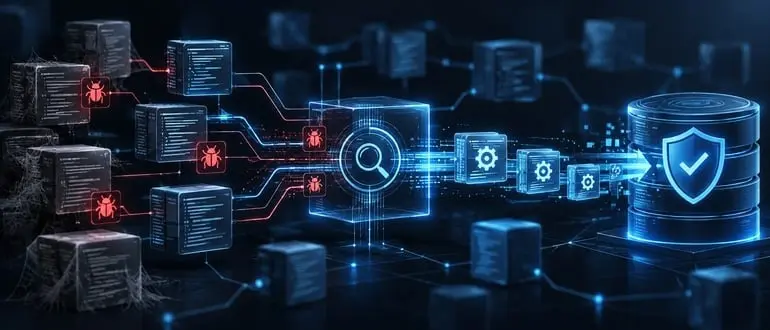
To prevent catastrophic security incidents and operational drift, platform teams must unbundle the four traditional functions of plan review and migrate them into modern, automated architectures.
+-------------------------------------------------------------------+
                   THE UNBUNDLED REVIEW ARCHITECTURE
+-------------------------------------------------------------------+
| 1. Policy Compliance  ---> Moved into Run (Automated Policy Engines)
| 2. Blast Radius       ---> Bounded by Hard Constraints & TTLs
| 3. The Audit Record   ---> Automatically Generated by Enforcement
| 4. Intent Verification ---> Retained by Human Reviewers
+-------------------------------------------------------------------+
1. Compliance Checking Moves Into the Run
Compliance checking is fundamentally a matching operation: it evaluates a proposed change against a predefined rule set. This requires no human emotion, intuition, or creative thought.
- The Solution: Move compliance checking directly into the execution run. Evaluate changes against strict policy frameworks at the moment the plan is generated.
- Deny by Default: Configure "deny by default" protocols for high-risk resource classes where errors are expensive and difficult to reverse—specifically Identity and Access Management (IAM), networking topologies, and core data stores. Automatically approve low-risk changes that pass deterministic policy checks.
2. Bound the Blast Radius Instead of Estimating It
Human estimation of blast radius has always been probabilistic, error-prone, and heavily dependent on code familiarity. Under generative AI workloads, it fails completely.
- The Solution: Replace probabilistic estimates with absolute technical constraints.
- Assign experimental infrastructure hard Time-To-Live (TTL) policies that automatically trigger resource destruction upon expiry. Implement strict cloud budget caps, restrict authorized resource types, and isolate experimental workloads into non-production accounts completely severed from production data pathways.
3. The Audit Record Must Produce Itself
Relying on manual approvals as proof of governance is a failing strategy.
- The Solution: Audit logs must become an automated byproduct of system enforcement. When a policy engine evaluates a change, it must natively emit an immutable audit trail capturing the exact rule executed, input parameters, decision rationale, and timestamp.
- Pair this with scheduled drift detection to catch unauthorized manual console edits. Rather than measuring mere drift counts, platform teams should track Mean Time to Repair (MTTR) for infrastructure drift, measuring how rapidly environments return to their desired state.
4. Preserving the One Job That Belongs to Humans: Intent Verification
While policy engines can evaluate fields, values, and resource types, they cannot inherently verify whether a given configuration matches the human requirement it was written to satisfy.
- The Problem with AI Agents: When an AI agent generates infrastructure code, no human held the operational intent. The request moved from an abstract ticket to an LLM prompt to a pull request without passing through a person accountable for the outcome.
- The Human Role: Intent verification is the sole function that must remain with human reviewers. However, for humans to perform this job effectively, they must be stripped of the crushing burden of checking syntax, compliance, and blast radius.
- Governed Agent Execution: AI agents require dedicated, governed execution paths. This means operating under scoped identities that limit their blast radius, running through automated policy evaluations prior to execution, and maintaining audit trails that explicitly name the agent as the actor.
Emerging Technologies
Platforms are rapidly incorporating these paradigms into daily operations. Modern tooling allows developers and AI agents to provision infrastructure by describing requirements under Intent policies, ensuring the exact same rigorous state management and automated audit trails apply universally. When policy engines evaluate operations prior to execution and hold unmapped operations for targeted human review, governance finally catches up to the speed of software development.
Conclusion
Plan review did not fail because it was poorly conceived; it failed because it was tasked with performing four distinct, heavyweight functions at a volume that overwhelmed human capacity.
By migrating compliance into runtime policy evaluation, replacing blast radius guesswork with hard infrastructural constraints, automating audit trails, and preserving human attention strictly for intent verification, engineering organizations can build guardrails that hold firm—even when nobody is watching.