Executive Overview
In the high-stakes world of enterprise information technology, the finish line is a mirage. For decades, Chief Information Officers (CIOs), engineering leads, and IT architects have operated under the assumption that modernization is a finite project—a grueling marathon with a defined endpoint. Organizations would secure executive sign-off, mobilize massive engineering workforces, execute sweeping enterprise-wide upgrades, and eventually celebrate the arrival of a newly “modernized” technical estate.
That mental model is broken.
The rapid cadence of modern technological evolution—spanned by the seismic shifts of cloud computing, the architectural revolutions of application microservices, and now the relentless integration of generative artificial intelligence (AI) and autonomous agents—has made the traditional, project-based approach to IT modernization obsolete. The future does not wait for organizations to tie up the loose ends of yesterday’s tech debt. Technologies evolve, business requirements shift overnight, and enterprise IT shops are perpetually tasked with keeping their environments not just functional, but hyper-competitive.
In this environment, IT professionals frequently experience life as a relentless, exhausting scramble from one major overhaul to the next. Cloud migrations fundamentally reshaped infrastructure strategies, but they also created years of intensive, ongoing migration burdens. Application modernization subsequently shifted the conversation from where workloads run to how applications leverage advanced cloud architectures and APIs. Today, the generative AI revolution demands that organizations instantly connect autonomous agents to fragmented, legacy enterprise applications and data silos.
Fortunately, a paradigm shift is underway. Industry leaders are moving away from episodic, disruptive transformation campaigns toward a philosophy of continuous modernization. Spearheaded by automated tooling and autonomous remediation capabilities—such as the newly unveiled AWS Transform – continuous modernization capability—enterprises are beginning to treat technical debt maintenance as an automated, background discipline rather than an all-consuming engineering drain.
Early adopters across global digital engineering, multinational consulting, and healthcare technology are already registering dramatic efficiencies, slashing assessment times by up to 80% and compressing project timelines that once spanned quarters into mere days. As the industry recalibrates its relationship with technical debt, one truth becomes undeniable: while modernization may never truly finish, the way organizations manage it is undergoing a radical, permanent transformation.
Detailed Chronology: The Evolution of Modernization Pressures
To understand why continuous modernization has emerged as the definitive enterprise IT strategy of the 2020s, one must examine the compounding waves of technological disruption that have battered enterprise codebases over the past two decades.
[Cloud Migration Era] ---> [Application Modernization] ---> [Generative AI & Agent Era] ---> [Continuous Modernization]
Infrastructure Scalability    Microservices & APIs           Autonomous AI Integration      Autonomous, Ongoing Remediation
Phase 1: The Cloud Migration Wave
The modern era of enterprise IT transformation arguably began with the mass migration to the cloud. For years, organizations viewed their primary technical burden as physical data center footprint reduction and hardware maintenance. The cloud promised infinite scalability, operational agility, and a shift from capital expenditure (CapEx) to operational expenditure (OpEx).
However, moving petabytes of enterprise data and thousands of legacy virtual machines to cloud environments was not a simple lift-and-shift operation. It triggered a decade of intensive re-architecting, security compliance redesigns, and hybrid-cloud balancing acts. Even today, portions of many enterprise estates remain in transitional states, proving that the cloud migration wave never truly broke—it simply settled into the background noise of everyday IT operations.
Phase 2: The Application Modernization Era
As organizations established their cloud footprints, a new bottleneck emerged: running legacy monolithic applications on modern cloud infrastructure did not automatically yield business agility. This realization sparked the application modernization movement.
The conversation shifted decisively from where workloads run to how effectively software applications can exploit cloud-native architectures, containerization (such as Kubernetes), serverless computing, and decoupled microservices. Suddenly, IT engineering teams found themselves caught in a double bind—simultaneously attempting to finish legacy infrastructure migrations while redesigning core business applications to run as distributed services.
Phase 3: The Generative AI and Autonomous Agent Revolution
Before enterprises could catch their breath from application modernization, generative AI arrived to upend the technological landscape entirely. Today’s business leaders are under immense pressure to deploy intelligent AI agents capable of reasoning, executing workflows, and interacting directly with enterprise data and internal applications.
Yet, AI agents are only as effective as the systems they connect to. Fragmented data architectures, deprecated software frameworks, out-of-date API libraries, and accumulated technical debt act as insurmountable friction points for autonomous agents. Organizations find themselves once again scrambling to update codebases—not merely to satisfy standard software hygiene, but to ensure their legacy systems are instantly "AI-ready."
Phase 4: The Shift to Continuous Modernization
Faced with this endless succession of disruptive mandates, forward-thinking organizations have recognized an inescapable conclusion: there is no end state where an enterprise environment is finally, permanently "modern." Technologies will continue to evolve; business models will pivot; new intelligence paradigms will emerge.
Consequently, the industry is transitioning from episodic, high-friction modernization projects to continuous modernization. By embedding autonomous analysis and automated remediation directly into the software development lifecycle (SDLC), enterprises are abandoning the exhausting cycle of multi-month technical debt overhauls in favor of real-time, automated codebase hygiene.
Supporting Context & Metrics: The Anatomy of Technical Debt
Much of what enterprise IT departments categorize as major modernization projects actually consists of tedious, recurring operational chores: updating vulnerable software libraries, remediating security CVEs, deprecating obsolete frameworks, and keeping legacy applications aligned with evolving internal development standards.
Traditionally, treating these maintenance tasks as a series of manual engineering projects has consumed staggering amounts of engineering talent. Highly paid developers spend countless hours auditing dependencies, mapping complex code interactions, writing manual pull requests, and performing regression testing on legacy systems. This manual toil not only eats into budgets but directly starves internal innovation, leaving teams feeling trapped on an endless treadmill.
The Mechanics of Autonomous Remediation
This operational bottleneck is precisely what modern agentic capabilities—exemplified by solutions like AWS Transform – continuous modernization—aim to eradicate.
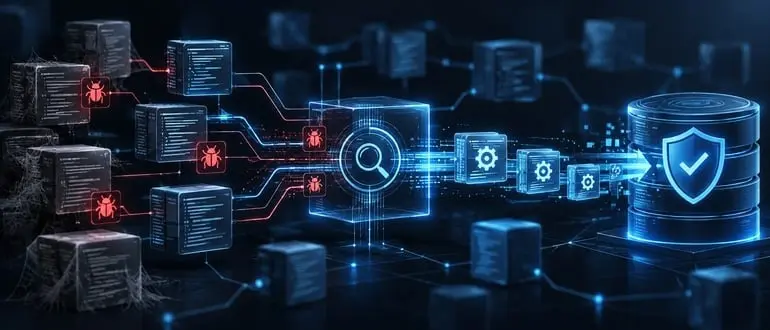
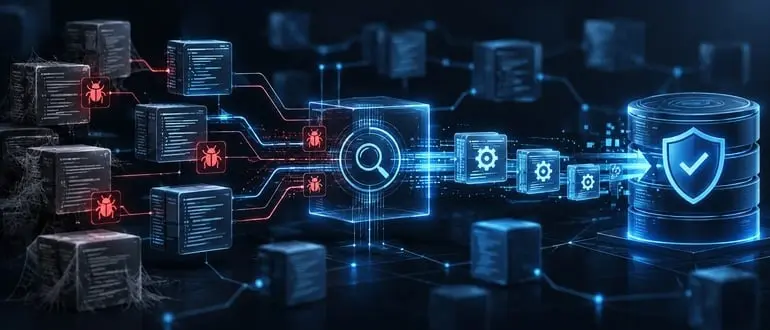
By leveraging automated scanning and analysis engines across thousands of corporate repositories simultaneously, these tools provide unprecedented, deep visibility into the true health of an enterprise codebase. Key architectural components of this approach include:

- Automated Dependency Mapping: Automatically tracing, mapping, and visualizing complex dependency trees across large portfolios of repositories—a task that previously required months of manual architectural documentation.
- Out-of-the-Box and Custom Policy Enforcement: Providing pre-built policy templates for detecting end-of-life (EOL) dependencies, unpatched security vulnerabilities, and deprecated frameworks, while allowing platform engineering teams to layer on custom organizational standards and approved libraries.
- Autonomous Pull Request Generation: Rather than simply generating diagnostic spreadsheets or static code analysis reports, continuous modernization platforms autonomously deliver actionable code changes directly as pull requests (PRs) for developer review and validation.
By automating the discovery and remediation of technical debt, organizations liberate critical engineering capacity. Developers can focus on building high-value, differentiated product features, while legacy applications and databases are systematically prepared for AI agent integration without requiring costly, full-scale rewrites.
Official Statements & Real-World Impact
The theoretical advantages of continuous modernization are rapidly being validated by large-scale enterprise deployments across diverse global industries. Just weeks after the public rollout of advanced autonomous transformation tooling, early adopters have reported staggering efficiency gains.
Quantiphi: Compressing Weeks into Days
Quantiphi, an AI-first digital engineering and services company headquartered in Massachusetts, deployed continuous modernization across a sprawling portfolio of enterprise repositories to evaluate its impact on large-scale technical debt remediation.
"We were able to analyze more than 500 repositories and uncover over 3,000 technical debt findings in under a week," noted engineering leadership at Quantiphi.
By automating what was previously a manual, fragmented discovery process, the company compressed what traditionally would have been a multi-week, resource-intensive assessment into a matter of days. Overall, Quantiphi reported reducing its total technical debt assessment effort by more than 60%.
Tech Mahindra: An 80% Reduction in Assessment Overhead
Tech Mahindra, a prominent multinational consulting, enterprise networking, and digital engineering enterprise based in India, experienced even more dramatic acceleration metrics when testing the technology across 25 core enterprise repositories.
Sanjeev Agarwal, Global Head of the AWS Business at Tech Mahindra, hailed the rollout as the "beginning of a transformative shift" in how the global enterprise services sector approaches IT modernization.
"AWS Transform’s scanning and analysis engine is solid, and the structured output allows our teams to validate findings quickly and build prioritized remediation plans with confidence," Agarwal stated.
By deploying continuous automated analysis, Tech Mahindra slashed assessment times across its enterprise repositories by an astounding 80%, compressing an estimated 40 hours of tedious manual engineering work down to a mere eight hours.
Netsmart: Accelerating Project Timelines by Months
In the mission-critical healthtech sector, U.S.-based Netsmart leveraged AWS Transform – continuous modernization to unblock engineering teams bogged down by complex architectural dependencies. The results radically altered project delivery timelines across five distinct engineering squads.
Projects that had initially been estimated to take anywhere from three months to a full year to complete were systematically accelerated. Under the new autonomous workflow, several of these complex dependency mapping and remediation projects were successfully finalized in as little as two weeks.
"Dependency mapping has historically been a tedious, complex and ongoing effort," observed Pepper Pancoast, Senior Director of Engineering at Netsmart. "This new capability helps automate dependency mapping on a recurring basis, giving us greater visibility into our codebase health at scale."
Future Outlook: Embracing the Infinite Horizon
As enterprise technology enters an era defined by autonomous software agents, real-time generative AI integration, and hyper-distributed cloud architectures, the traditional notion of a "completed" IT modernization project must be permanently retired.
Organizations that cling to the illusion of a finish line will continue to suffer from spiraling technical debt, burned-out engineering talent, and sluggish innovation cycles. Conversely, organizations that embrace continuous modernization—integrating autonomous code analysis, automated dependency mapping, and continuous remediation policies into their standard operating procedures—will unlock unprecedented agility.
The future of enterprise IT does not belong to the teams that run the fastest on a treadmill of endless manual overhauls. It belongs to the organizations smart enough to build systems that modernize themselves, freeing human ingenuity to focus on what truly matters: driving business innovation, creating exceptional customer experiences, and harnessing the next generation of artificial intelligence.
Upcoming Industry Discussion
For IT leaders looking to dive deeper into these strategies, industry experts are rallying to discuss these exact challenges.
On October 22 at 1:00 PM Eastern, AWS executive leaders will join Futurum Group CTO Advisor Alastair Cooke for an exclusive, in-depth webinar titled:
"Continuous Modernization: Why Modernization Never Really Finishes."
This forward-looking session will explore the fundamental operational changes that occur when organizations abandon the myth of the modernization finish line and embrace the tools, automation frameworks, and cultural practices required to maintain a continuously modern IT environment.