As the twilight of Tim Cook’s era as Apple’s Chief Executive Officer approaches, the company’s hardware pipeline exhibits a fascinating dichotomy. On one front, experimentation thrives in novel form factors and niche concepts, highlighted by last year’s ultra-thin iPhone Air and the anticipated arrival of the iPhone Duo. Yet, on the other front, the bedrock flagship lines continue to prioritize iterative perfection over radical reinvention. The iPhone 18 Pro sits firmly in the latter category—a handset that, at first glance, appears mostly the same as its predecessor, but reveals itself through daily use to be significantly refined.
Rather than chasing fleeting design trends, Apple has concentrated its engineering efforts on solving historical pain points. The iPhone 18 Pro delivers measurable generational leaps in two critical areas: thermal management and battery longevity. Powered by the cutting-edge 2-nanometer A20 Pro system-on-a-chip (SoC), packed with a larger vapor chamber, and featuring a subtly miniaturized Dynamic Island, this device functions as the ultimate workhorse for the power user. It is not designed to turn heads at a dinner party with a radical new silhouette; instead, it is engineered to quietly outlast, outperform, and out-cool its forebears while offering granular new controls for mobile photographers.
Detailed Chronology & Design Evolution
A Familiar Aesthetic with a Striking New Hue
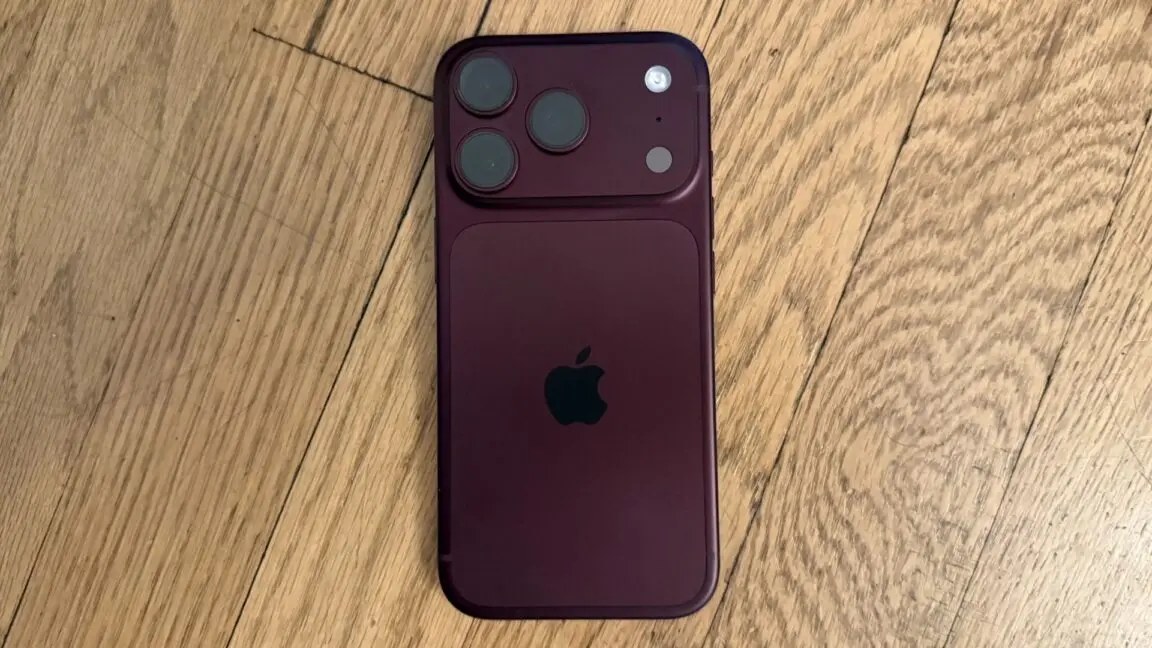
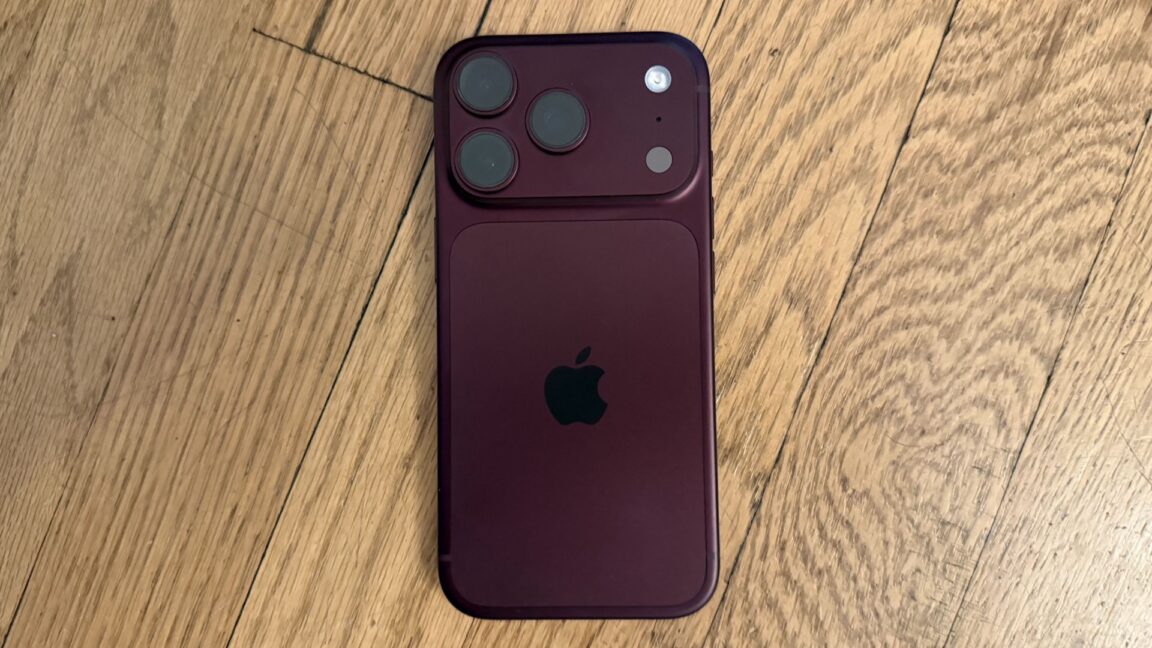
At physical inspection, the iPhone 18 Pro preserves the pragmatic, function-over-form silhouette established by the iPhone 17 Pro. It avoids the ultra-slimming compromises of the iPhone Air, instead opting for robust, high-grade aerospace materials built to withstand the rigors of heavy daily employment.
While historical preferences might lean toward conservative finishes like space black or silver, Apple’s review unit arrives in a newly minted burgundy tone. Striking and sophisticated, the deep red hue immediately injects personality into the chassis, though it remains—in true iPhone fashion—a notorious fingerprint magnet.
Shrinking the Dynamic Island
The most notable structural design revision on the iPhone 18 Pro resides at the apex of the OLED display. Apple has successfully shrunk the physical footprint of the Dynamic Island, the iconic software-hardware interface housing the front-facing camera array and biometric sensors.
This spatial reduction was achieved through an innovative engineering feat: relocating the infrared (IR) camera underneath the OLED panel into the top-left corner of the screen. By engineering a novel pixel arrangement, Apple allows infrared light to pass freely through this specific aperture. To counteract the inherently lower pixel density in this localized zone, the surrounding pixels operate at twice their standard brightness, successfully masking any visual artifacting or distortion to the naked eye. Only under forensic scrutiny and with explicit foreknowledge can an observant user detect a subtle visual variance in that upper corner.
This hardware shrinking translates directly to enhanced software real estate. The Dynamic Island can now comfortably display up to three active Live Activities simultaneously. The central notification expands to offer richer data streams, while the flanking left and right indicators serve as compact, context-aware visual nodes. Alternatively, when managing two active tasks, the system allocates expanded operational metrics to both, heightening the utility of Apple’s clever software masking of what was once an unavoidable hardware intrusion.
Performance, Thermals, and Under-the-Hood Metrics
The A20 Pro Chipset: Transitioning to 2nm
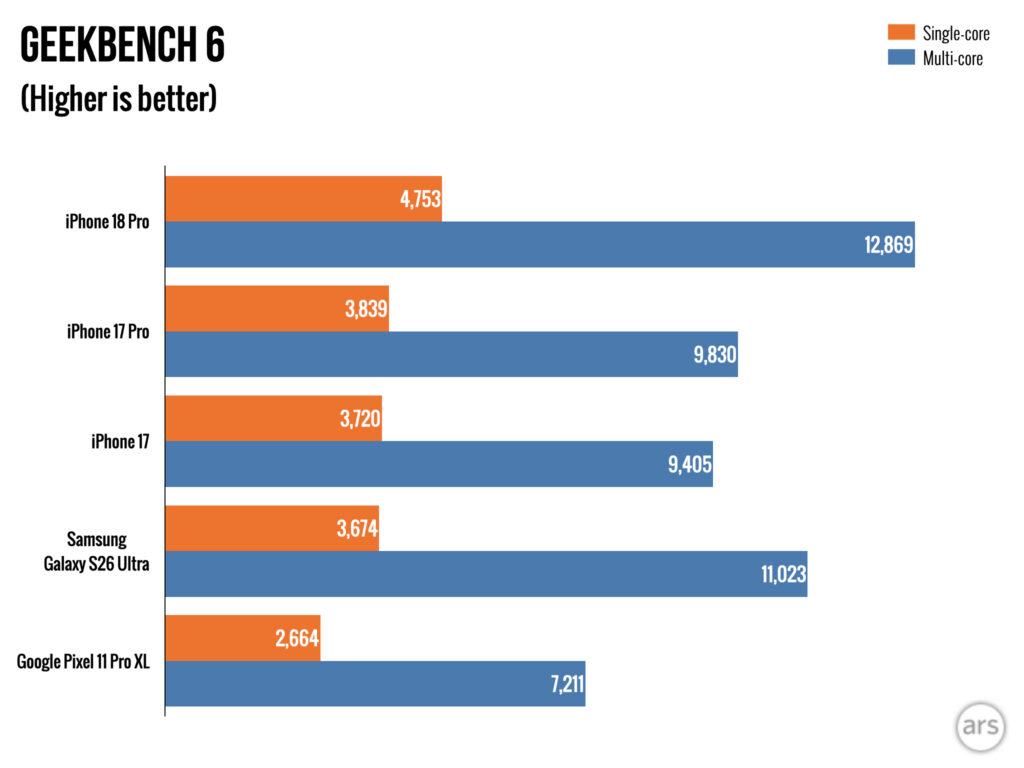
Beneath the exterior styling lies the true engine of change: the A20 Pro. Moving away from the 3-nanometer architecture utilized by the A19 Pro, Apple has migrated the A20 Pro to an advanced 2-nanometer process node.
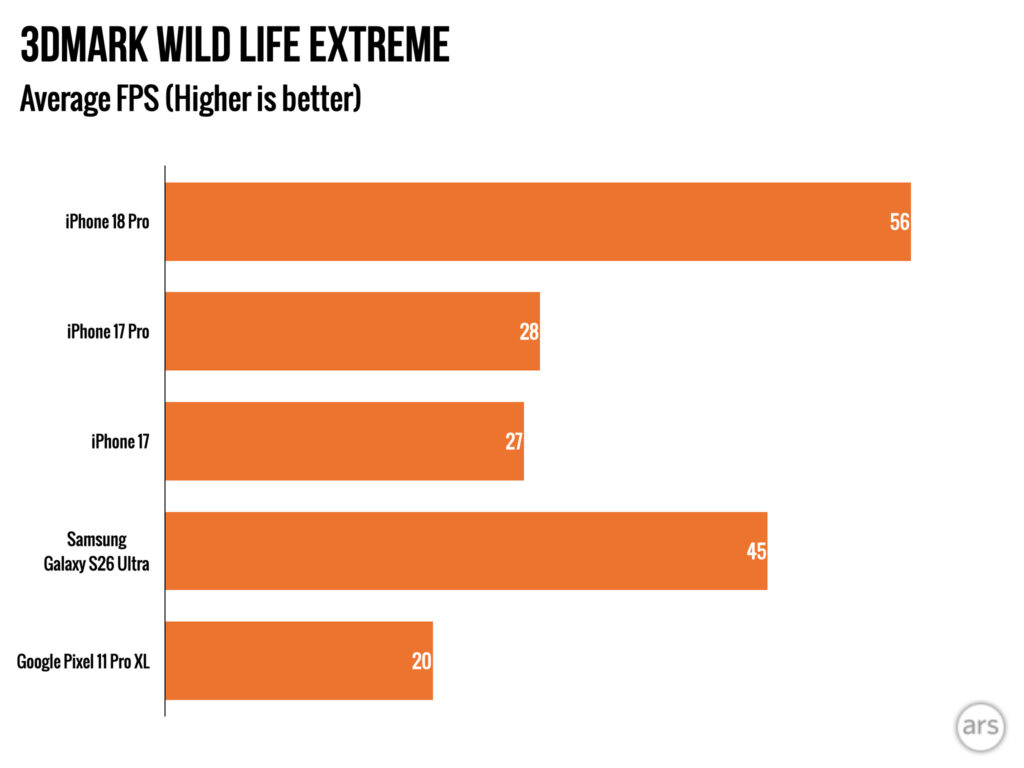
The CPU configuration retains a familiar 6-core layout comprising four efficiency cores and two performance cores. However, the graphical architecture receives a substantial overhaul. The 7-core GPU integrates dedicated Neural Accelerators built directly into each core, designed to offload and accelerate GPU-centric artificial intelligence workloads alongside ongoing hardware-accelerated ray-tracing support. Coupled with a dual 16-core Neural Engine, the platform is comprehensively optimized for the local AI capabilities embedded within iOS 27.
Apple has also implemented what it touts as the widest memory interface ever deployed in an iPhone, boasting a 50 percent uplift in memory bandwidth. While current iOS intelligence features run smoothly on immediate predecessors, this expansive bandwidth acts as critical architectural headroom, ensuring compatibility with upcoming, highly demanding local machine learning pipelines that older iterations will likely fail to support.
Overcoming the Heat: Revolutionary Thermal Engineering
Historically, sustained performance under heavy computational stress or outdoor exposure has been an Achilles’ heel for high-end smartphones. The iPhone 18 Pro addresses this directly via a comprehensive re-architecting of internal thermal management.
The system-on-a-chip is now positioned directly adjacent to the memory modules rather than stacked vertically atop them. This physical separation is paired with a significantly expanded vapor chamber—building upon the introduction of vapor chamber cooling seen in the iPhone 17 Pro—alongside a specialized copper sub-layer integrated into the display assembly to draw heat away from the user’s hands.
Apple claims these modifications yield up to a 40 percent improvement in sustained performance compared to the iPhone 17 Pro, and a staggering 100 percent improvement over the iPhone 16 Pro. In practical terms, this translates to an end of frequent thermal throttling during intensive tasks such as high-framerate 3D gaming (Genshin Impact, Diablo Immortal) or executing complex multi-app workflows. Furthermore, the phone remains remarkably cool to the touch during everyday stressors, eliminating the frustrating "crisis heat-management" shutdowns previously experienced when running high-draw GPS navigation on a car dashboard under direct sunlight.
Battery Longevity and Connectivity
Energy efficiency is deeply intertwined with thermal optimization. Apple estimates the iPhone 18 Pro can deliver up to 36 hours of continuous offline video playback on a single charge (compared to 33 hours on the iPhone 17 Pro).
Real-world usage corroborates these lab metrics. Testers transitioning from older hardware report noticeably higher battery percentages upon waking up after a full day of heavy reliance, high-brightness screen usage, and background synchronization.
This endurance is further bolstered by the integration of Apple’s proprietary C2 cellular modem. Eschewing the Qualcomm modems of previous generations, the C2 modem draws significantly less power during cellular data transmission and standby states. For users relying on cable-free power solutions, the device also introduces up to 25W wireless charging speeds.
Photographic Precision and Granular Control
Apple’s approach to mobile imaging has long favored opinionated, highly automated computational photography. While this philosophy consistently yields stunning, instant results for casual photographers, it has historically frustrated professionals demanding granular creative control. The iPhone 18 Pro introduces significant steps toward bridging this gap.
Manual Variable Aperture and Custom Controls
The most heavily publicized hardware addition to the camera system is the introduction of a physical variable aperture mechanism. While automated systems will dynamically adjust the aperture based on environmental lighting profiles to benefit the casual point-and-shoot user, enthusiasts can manually override these settings to precisely govern depth-of-field and light capture.
This physical capability is paired with expanded direct-control layers inside the native Camera app. Users can fine-tune shutter speeds, exposure bracketing, and ISO parameters with unprecedented responsiveness, effectively muting traditional criticisms that Apple’s software pipeline is overly rigid.
Photographic Styles 3
Complementing the hardware updates is the rollout of Photographic Styles 3. Expanding far beyond simple color saturation and white balance adjustments, this iteration introduces native texture manipulation.
Users can now select from four distinct texture profiles:
Film: Introduces authentic grain profiles and contrast curves reminiscent of traditional analog stocks.
Glow: Softens highlights and introduces subtle blooming effects for dramatic portraits.
Soft Skin: Gently manages blemishes and harsh facial lighting without heavy-handed smoothing artifacts.
Standard: Preserves the natural, neutral processing baseline of the sensor.
These integrated styles allow the native Camera app to compete directly with third-party software alternatives that users previously relied on for stylized, atmospheric imagery. The core camera hardware remains anchored by a triple-48MP rear configuration paired with an 18MP front-facing sensor, but the expanded software and hardware controls make this the most flexible imaging tool Apple has ever produced.
Official Statements and Industry Context
Reflecting on the product lifecycle, industry analysts view the iPhone 18 Pro as the definitive hardware embodiment of the Tim Cook executive era: meticulously engineered, reliably premium, rich in feature utility for niche workflows, and universally dependable.
"The Pro phones aren’t the sexy, cool ones right now; they’re the everything-and-the-kitchen-sink, cover-for-every-kind-of-obsessive-user workhorses. I think that’s a great space for them to occupy, and this year’s iteration is no exception," noted lead tech reviewer Samuel Axon.
Market researchers emphasize that the smartphone industry has firmly transitioned past the era of mandatory annual upgrades. With consumers retaining hardware for longer cycles, manufacturers must justify purchases through foundational quality-of-life enhancements rather than gimmicks. By fixing historical pain points like thermal throttling and battery drain, Apple has ensured that the iPhone 18 Pro serves as an exceptionally durable long-term investment.
Future Outlook and Conclusions
The iPhone 18 Pro is a masterclass in refinement. For users operating an iPhone 15 Pro or older, the cumulative accumulation of improvements—ranging from the shrunk Dynamic Island and the 2nm A20 Pro chip to revolutionary thermal management and extended battery life—presents a compelling upgrade path. However, owners of the iPhone 17 Pro will find minimal incentive to switch, as last year’s hardware remains robustly capable.
Ultimately, the iPhone 18 Pro rejects superficial novelty in favor of structural perfection. It does not attempt to redefine the smartphone paradigm; instead, it perfects the execution of the modern mobile computer. For consumers seeking a reliable, high-performance flagship that harnesses cutting-edge engineering without chasing fleeting trends, the iPhone 18 Pro stands as an uncompromising benchmark for the entire industry.