The explosive global expansion of artificial intelligence (AI) and high-density computing workloads has thrust energy access into the position of the singular, definitive filter for data center development. According to data from the Energy Institute’s 2026 Statistical Review of World Energy, US data centers consumed an estimated 312.6 terawatt-hours (TWh) of electricity in 2025. This represents a staggering 25.5% year-over-year increase—a growth velocity nearly eight times that of overall US electricity generation, which rose by 3.2% to 4,772 TWh.
On a global scale, worldwide data center energy consumption reached 787.8 TWh in 2025, driven by a 19.7% annual surge. The United States alone accounted for 39.7% of this global footprint. Globally, total consumption has very nearly doubled from the 410.8 TWh recorded in 2020.
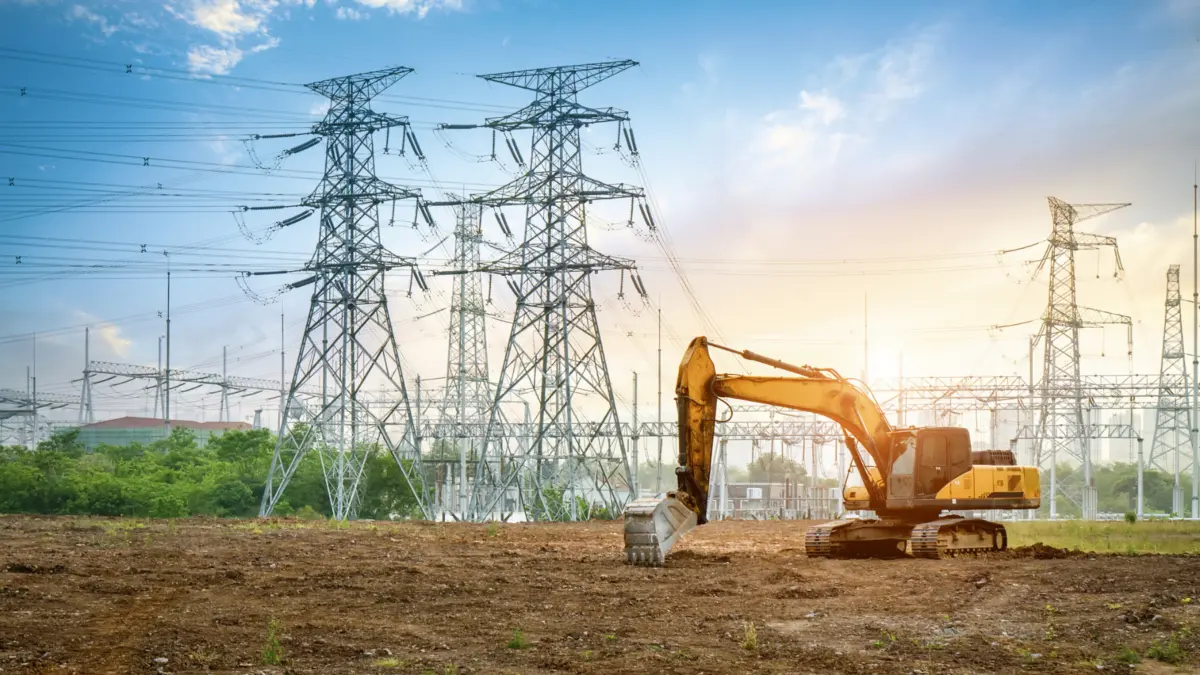
This widening demand-supply chasm has completely overturned traditional data center site-selection paradigms. Historically, developers evaluated markets based on proximity to major population centers, low-cost real estate, robust fiber routes, and water availability, treating power as a secondary utility to be negotiated later. Today, that sequence has flipped. In congested Tier-1 hubs such as Northern Virginia, Dallas, and Phoenix, proximity to electrical infrastructure no longer guarantees access to the hundreds of megawatts required for modern hyperscale and AI campuses.
As a result, power availability now dictates the search area entirely. Developers are prioritizing where utility substations, transmission upgrades, and generation assets can actually be delivered on schedule. With capital markets demanding rapid time-to-revenue, "speed to power" has superseded raw electricity cost as the primary metric of project viability, driving a profound transformation in how digital infrastructure is planned, financed, and built.
Detailed Chronology: The Evolution of the Power Crisis
To understand how the data center industry reached this inflection point, it is necessary to examine the rapid escalation of constraints over the past five years:
2020–2021 (The Pre-AI Baseline): Global data center consumption hovered around 410.8 TWh. Traditional cloud computing and enterprise workloads scaled predictably, and regional utilities could comfortably manage interconnection queues. Standard data center deployments ranged from 10 MW to 30 MW, which could be integrated into existing substations with relative ease.
2022–2023 (The Generative AI Explosion): The public rollout of generative AI models ignited an unprecedented demand for high-density computing clusters. Rack power densities skyrocketed from historical averages of 5–10 kW per rack to over 40–100 kW per rack to support advanced GPUs. Hyperscalers began demanding campus capacities scaling from 100 MW to upwards of 1 GW, triggering an immediate bottleneck in regional transmission grids.
2024 (The Infrastructure Realization): Interconnection queues across major Independent System Operators (ISOs) and Regional Transmission Organizations (RTOs) ballooned into the multi-year backlog zone. Traditional utility planning cycles, which historically spanned 5 to 10 years, clashed violently with the 12-to-36-month deployment timelines demanded by AI developers. Developers began experiencing multi-year delays, forcing a wholesale reevaluation of site-selection criteria.
2025 (The Grid-Edge Pivot): With US data center consumption hitting 312.6 TWh (a 25.5% annual spike), reliance on traditional grid interconnections became a high-risk gamble. The industry witnessed a massive pivot toward "bring-your-own-power" (BYOP) and behind-the-meter generation strategies. Natural gas turbines, fuel cells, nuclear power purchase agreements (PPAs), and advanced energy storage systems transitioned from fringe concepts to mainstream requirements.
2026 and Beyond (The Era of Proof-Driven Development): Lenders, investors, and enterprise tenants no longer accept speculative utility assurances. Financing has become entirely contingent upon verified, funded, and legally binding power-delivery schedules. Site selection is now governed by an uncompromising focus on "time to revenue" and infrastructural certainty over low nominal power rates.
Supporting Context & Metrics
The transformation of the digital infrastructure landscape is underpinned by stark quantitative realities and intricate engineering challenges.
The Scaling Disconnect
The disparity between general electrical demand and data center consumption underscores the unique pressure AI places on the grid. While US total electricity generation crept upward by 3.2% in 2025 to reach 4,772 TWh, data center demand grew at nearly eight times that rate (25.5%). This means that a significant and growing share of all new generation capacity coming online is being absorbed directly by the tech sector, sparking intense public debate regarding grid reliability, consumer rate impacts, and carbon reduction commitments.
+-----------------------------------------------------------------+
|              2025 US Electricity Growth Comparison              |
+-----------------------------------------------------------------+
| Overall US Generation Growth:  [■ 3.2%]                         |
| Data Center Consumption Growth: [■■■■■■■■■■■■■■■■■■■■■■■■■ 25.5%] |
+-----------------------------------------------------------------+
The Shifting Geography of Site Selection
Historically, developers focused heavily on established markets due to their rich fiber ecosystems and low latency. However, these traditional hubs are now buckling under strain:
Northern Virginia (Data Center Alley): Continues to face unprecedented transmission constraints, forcing developers to look outward into rural Virginia and neighboring states.
Dallas and Phoenix: Both markets face severe substation bottlenecks, driving search perimeters deeper into suburban and greenfield territories.
Emerging Markets: Secondary and tertiary markets offer untapped power potential, but they frequently lack the dense fiber network infrastructure required for low-latency AI training clusters. Planning for power and fiber must now happen in strict parallel.
Beyond the Utility Rate: Total Cost of Ownership
In the past, cheap kilowatt-hours were the holy grail of site selection. Today, a low headline utility rate is meaningless if transmission congestion or supply-chain bottlenecks delay revenue-generating capacity. Operators must calculate the all-in delivered cost, which encompasses:
Substation construction and interconnection fees.
Long-term transmission upgrade charges and demand tariffs.
On-site electrical infrastructure and solid-state transformer investments.
Redundant backup generation and emissions compliance costs.
Financial exposure to 12-, 24-, and 36-month project delay scenarios.
Official Statements & Industry Perspectives
Industry leaders and market analysts emphasize that the rules of engagement for digital infrastructure development have permanently changed.
Siddharth Muzumdar, senior vice president of research at DC Byte, highlighted the fundamental shift in developer mindset during an interview with Data Center Knowledge:
"The key shift is from asking, ‘Where do we want to build?’ to ‘Where can we actually secure and deliver the power?’"
Muzumdar further stressed that initial power acquisition is only half the battle:
"A project that initially requires 100 MW could ultimately require several hundred megawatts as additional phases come online. The most attractive market is not necessarily the one with the cheapest electricity. It is the one that can provide competitively priced power reliably and at the scale the operator needs."
Bill Major, CEO of FiberLight, pointed out the critical interdependence between energy and telecommunications infrastructure in emerging markets:
"It could take years to construct a new AI data center, and just as long to build the fiber networks needed to connect it. Planning for both needs to happen in parallel. If their only plan is to interconnect with the grid, their data center may never break ground. Power can no longer be an assumption in the site-selection process; it has to be a fundamental part of the plan from Day One."
Sean Farney, vice president of data center strategy at JLL, underscored the primacy of financial velocity over raw cost:
"There’s more of a focus on time to revenue than cost. What’s not as easy to fix is time-to-revenue pressure or constraints. These deals are not getting financed without firm, real power-delivery dates backed by evidence of infrastructure investment and know-how."
Commenting on the mainstreaming of independent generation, Farney noted:
"For large-scale development, behind-the-meter power is here. It has gone from resistance three or four years ago to being openly accepted right now."
Future Outlook: The Rise of Bring-Your-Own-Power (BYOP)
As traditional utility interconnection queues stretch past half a decade in many regions, the industry is witnessing the mainstreaming of behind-the-meter (BTM) and "bring-your-own-power" strategies. Waiting for regional transmission organizations to build out high-voltage lines is no longer a viable baseline business plan for hyperscalers racing to capture AI market share.
Technological Diversification
To bridge the gap—or to establish permanent, off-grid campus architectures—operators are increasingly deploying:
Natural Gas Turbines and Reciprocating Engines: Providing immediate, firm, and dispatchable baseload power that operates independently of grid congestion.
Advanced Nuclear Power: Exploring direct PPAs and co-located small modular reactors (SMRs) to secure zero-carbon, high-capacity baseload energy.
Renewables and Long-Duration Energy Storage: Combining solar and wind installations with utility-scale battery energy storage systems (BESS) to mitigate intermittency, though navigating air permits, emissions standards, and pipeline access remains a complex hurdle.
The New Standard of Proof
Ultimately, the future of data center development belongs to operators who can provide absolute certainty to stakeholders. General assurances, indicative capacity studies, and preliminary utility queue positions are no longer sufficient to secure institutional financing or tenant pre-leases.
Lenders, investors, and enterprise clients now demand verifiable proof: engineered schedules, fully funded substation and transmission projects, transparent cost-allocation models, and robust contingency plans for construction delays. In the modern AI era, power is no longer merely a utility input—it is the foundational architecture upon which the entire digital economy rests.