Executive Overview
The rapid, explosive growth of artificial intelligence has pushed the technology sector into uncharted territory, creating a high-stakes collision between computational demand and electrical grid infrastructure. For decades, the electrical grid was engineered around predictable human behaviors: predictable morning peaks, afternoon lulls, and evening surges. Utilities relied on large, slow-reacting thermal and hydroelectric generation units that required minutes—sometimes hours—to ramp up or down.
Today, that foundational predictability is being shattered. At the Data Center World Power conference in Dallas, industry leaders from semiconductor titans, cloud hyperscalers, and electrical engineering firms delivered a stark warning: AI workloads do not operate on the cadence of traditional electrical grids. Instead, AI compute workloads exhibit severe power oscillations occurring in millisecond increments.
These rapid load swings—marked by sudden spikes and collapses of hundreds of megawatts—generate frequency excursions that traditional grid infrastructure cannot track, let alone counter. If left unmitigated, these volatile shifts threaten to cascade into wide-area blackouts, mechanical failures in generation equipment, and catastrophic grid instability. Solving this crisis requires abandoning isolated engineering silos. It demands an unprecedented, synchronized "grid-to-chip" paradigm that brings together silicon designers, data center operators, and utility providers to fundamentally reinvent modern electrical architecture.
Detailed Chronology and Industry Developments
The Escalation of Rack-Level Power Density
The root of the grid stability crisis lies in the staggering evolution of processor power requirements over a remarkably short historical window. Traditional enterprise data center racks historically operated at a modest density of 5 to 10 kilowatts (kW). However, the rollout of accelerated computing completely rewrote these physical parameters.
- The H100 Era: Nvidia’s Hopper generation pushed standard rack power densities up to approximately 40 kW, requiring a massive pivot toward liquid-cooling solutions and robust enterprise-grade power distribution units.
- The Blackwell Era: Succeeding architectures drastically accelerated this trajectory, hoisting individual rack densities to roughly 150 kW.
- The Vera Rubin Horizon: Looking toward future deployments, the upcoming Vera Rubin generation targets an astonishing 240 kW per rack.
According to Sai Somayajula, principal electrical design engineer at Nvidia, the upward trajectory is far from plateauing. Industry projections indicate that individual rack densities could reach a staggering 1 megawatt (MW) once 800-volt DC distribution architectures become standard in future data centers. As AI algorithms handle increasingly complex, multi-modal reasoning and reasoning-intensive workloads, the compute engines cycle between massive computational exertion and idle states at lightning speeds, creating violent power fluctuations at the chip, rack, and facility levels.
Oracle’s Abilene Stargate Project and On-Site Generation Realities
While chip designers grapple with microscopic thermal and electrical dynamics, hyperscalers building massive AI training clusters are confronting equally daunting infrastructure bottlenecks at the macro level. Rajesh Gopanath, core infrastructure engineering architect at Oracle Cloud, highlighted the operational realities facing Oracle’s massive AI facilities in Abilene, Texas.
The Stargate data center complex—currently sitting at 60% to 70% operational capacity—is designed to scale into the gigawatt range. However, the sheer velocity of AI expansion has completely outpaced traditional utility infrastructure deployment.
"Compute was needed yesterday, but infrastructure is delayed due to substation, transmission, or grid unavailability," Gopanath noted during panel discussions. "We can’t get enough turbines, reciprocating engines, or natural gas."
This supply chain and transmission grid lag has forced Oracle and other cloud operators to bring power-generation expertise directly in-house, deploying localized, on-site generation assets. Yet, this introduces complex architectural dilemmas. Powering a 1-gigawatt campus with a handful of massive 200-megawatt turbines creates critical single points of failure. To optimize availability down to the rack level while maintaining operational resilience, operators are re-evaluating optimal facility sizing—debating whether 30 MW, 100 MW, or 500 MW modular building blocks represent the ideal sweet spot for modern AI factories.
Supporting Context and Technical Metrics
Understanding Millisecond Oscillations and Subsynchronous Resonance
To fully comprehend the threat AI data centers pose to electrical grids, one must examine the physics of power systems. The standard alternating current (AC) electrical grid in the United States operates at a nominal frequency of 60 Hertz (Hz). Grid stability relies on maintaining this frequency within extremely tight tolerances. When sudden load shifts occur, the frequency deviates.
Traditional large industrial loads—such as manufacturing plants or legacy data centers—draw power in relatively smooth, predictable curves. AI workloads, however, are dynamic and erratic. Millions of GPUs executing massive matrix multiplications can surge from near-zero utilization to peak computational capacity in milliseconds. Conversely, when a major training job concludes or encounters a bottleneck, power draw can collapse just as abruptly.
These erratic swings produce subsynchronous oscillations—frequencies operating below the standard 60 Hz threshold. If an AI data center’s rapid load fluctuations resonate with the natural mechanical frequencies of nearby power generation turbines, it can induce severe mechanical stress. Gopanath warned that unchecked subsynchronous resonance can lead to catastrophic physical damage, including the twisting and destruction of heavy turbine shafts inside power plants.
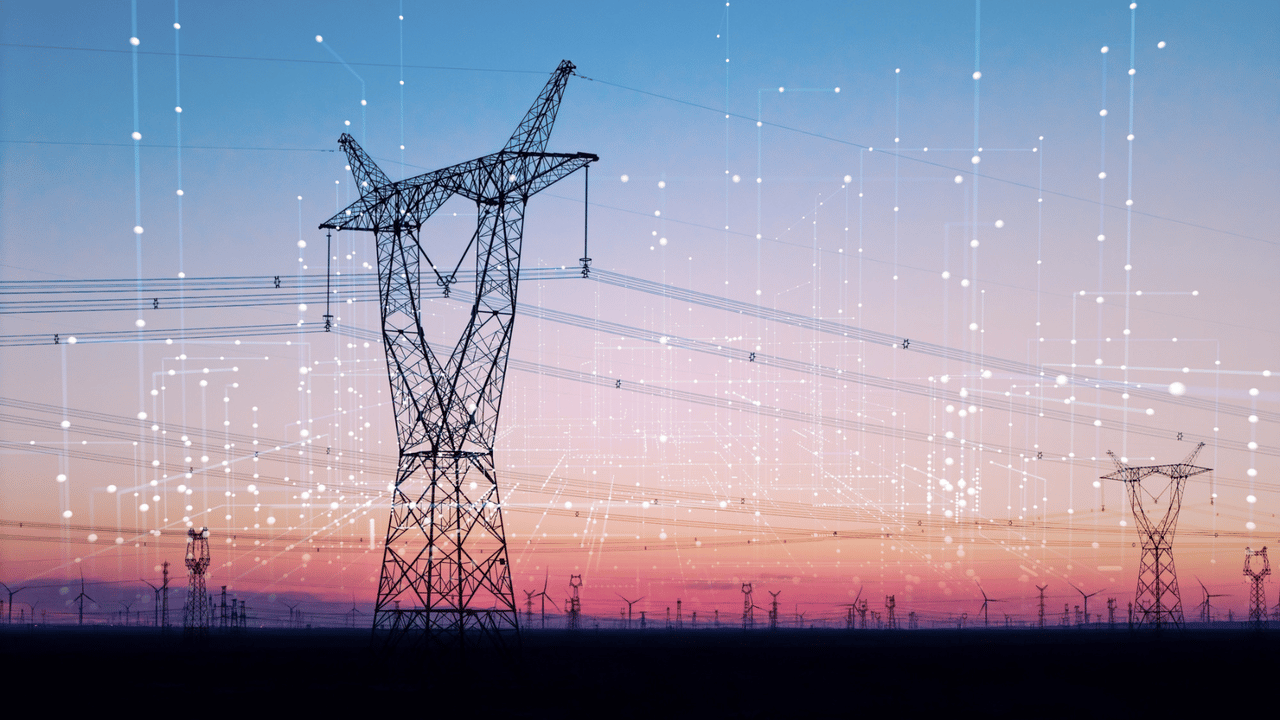
Advanced Mitigation Strategies: From DSX Architecture to Supercapacitors
To prevent these catastrophic scenarios, the industry is racing to deploy advanced multi-layered mitigation technologies.
- Rack-Level Energy Storage and Buffering: Rather than letting raw, volatile load swings pass directly upstream to the utility grid, manufacturers are integrating local energy storage directly into the rack architecture. Batteries and supercapacitors act as shock absorbers, instantly discharging energy to cover sudden compute spikes or absorbing excess energy during draw collapses.
- Nvidia’s DSX Architecture: Designed to maximize AI factory throughput, the DSX architecture integrates chip, thermal, system, and software technologies. It features high-speed telemetry and advanced analytics capable of characterizing and mitigating oscillations in real-time. Furthermore, it dynamically allocates unused power headroom to GPUs while optimizing cooling efficiency through warmer-water liquid cooling loops.
- Low-Voltage Ride-Through (LVRT): Grid operators are increasingly mandating strict ride-through performance metrics. Data centers must not only stay connected during short-duration voltage sags or swells, but they must actively participate in stabilizing local grid voltage rather than disconnecting and exacerbating supply deficits.
Official Statements and Industry Insights
The complexity of the power crisis has fostered an unprecedented spirit of cross-industry collaboration. No single entity—neither the semiconductor designer, the cloud operator, nor the utility provider—possesses the capability to solve the AI power puzzle in isolation.
-
Sai Somayajula (Principal Electrical Design Engineer, Nvidia):
"AI workloads, rack density, and power dynamics require a rethink of how we have been designing the data center. That is why we partner with the industry, openly share information, and co-design all the way from rack to the grid instead of designing in silos."
-
Rajesh Gopanath (Core Infrastructure Engineering Architect, Oracle Cloud):
"All these problems cannot be solved by one technology; you might need capacitors, batteries, uninterruptible power supplies, low-voltage ride-through, power smoothing, and fast-responding generation to ensure catastrophic failures do not occur."
-
David Roop (Head of Power Systems Engineering Division, Mitsubishi Electric Power Products):
"Data centers are going to play a much larger part in terms of grid reliability by understanding utility requirements, control needs, and the architecture criteria required for a layered approach that will deliver faster projects with reduced project risk. New guidelines, new standards, and new compliance criteria are being introduced so we can deal with instability much faster."
Future Outlook: The Road to Grid-Interactive AI Data Centers
As the technology sector looks toward the remainder of the decade, the relationship between data centers and the electrical grid is undergoing a fundamental philosophical transformation. Historically viewed as passive consumers of electricity—and occasionally as disruptive liabilities—AI data centers are rapidly evolving into active grid partners.
The future of AI infrastructure relies on several critical evolutionary steps:
- Regulatory and Standards Evolution: Engineering bodies, utilities, and standards organizations are actively drafting new compliance frameworks tailored specifically to high-density, high-volatility computing facilities. These standards will legally bind data center operators to implement advanced power-conditioning hardware.
- Microgrid Integration and On-Site Generation: As transmission bottlenecks persist, gigawatt-scale AI campuses will increasingly rely on dedicated on-site microgrids—incorporating natural gas reciprocating engines, modular nuclear reactors (SMRs), and advanced energy storage systems—to decouple their operations from strained regional transmission organizations (RTOs).
- Software-Defined Power Management: Future AI data center management software will coordinate directly with utility grid dispatchers. By anticipating workload intensity, data center schedulers can dynamically throttle non-critical AI training runs during periods of peak grid stress, effectively turning compute clusters into flexible, responsive demand-response assets.
The convergence of artificial intelligence and electrical engineering has created an immense challenge, but it has also catalyzed a golden age of infrastructure innovation. By breaking down historical industry silos and embracing a comprehensive, grid-to-chip approach to power management, the technology sector can successfully fuel the AI revolution without destabilizing the vital electrical grids upon which modern society depends.