By Sean Michael Kerner
Special Technology & Energy Report
Executive Overview
When a multibillion-dollar artificial intelligence data center project is paused, downsized, or abruptly canceled, it leaves behind far more than an empty patch of industrial land or a silent assembly of steel framing. Behind every neon-lit corporate announcement of a massive new digital infrastructure campus lies a labyrinth of deep utility commitments, complex electrical engineering deposits, and multi-year grid integration pipelines.
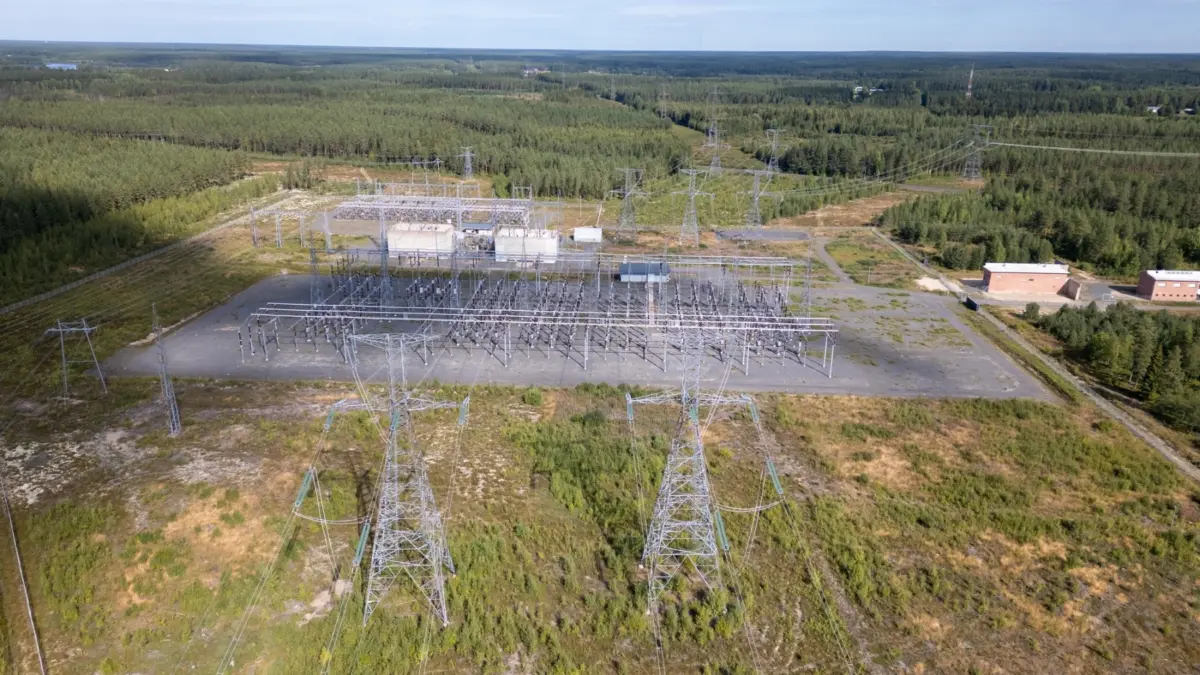
Connecting a modern, high-density computing facility to the electrical grid is not a simple plug-and-play exercise. It requires securing a heavily contested spot in a utility’s interconnection queue, posting substantial financial guarantees to hold that capacity, and frequently forcing regional power providers to design, finance, and construct new substations and transmission corridors explicitly tailored to the facility’s staggering energy footprint.
When a project stalls, these binding commitments do not simply vanish into thin air. Instead, they enter a complex regulatory and financial purgatory. They are reassigned, clawed back, or left trapped in administrative limbo, ultimately generating financial ripple effects that surface in places few casual observers think to look—most notably, on the monthly utility bills of ordinary residential and commercial ratepayers.
According to the groundbreaking 2026 Capgemini Research Institute report, titled "AI Meets the Grid: Shaping the Data Center Power Play," nearly one in five data center interconnection requests never actualize into real electrical load. Drawing on a sweeping January 2026 survey of more than 600 global electricity executives, the report reveals that 67% of industry leaders view these speculative submissions as "phantom load requests."
This massive discrepancy highlights a severe structural vulnerability in modern utility planning. As energy companies rush to invest ahead of an unprecedented, fluid wave of demand driven by the generative AI boom, they face an uncomfortable reality: a substantial portion of the infrastructure being drawn onto the drawing board may never actually draw a single watt.
The Economics of Stranded Capacity: Who Pays, and When?
It is easy to assume that when a high-profile technology developer walks away from a multi-billion-dollar project, the company simply absorbs the loss and the market moves on. Industry experts note, however, that this comforting narrative is only partly true.
Certainly, developers lose significant sums on unrecoverable sunk costs. "Developers do lose real money on sunk costs—mainly engineering, permitting, and early construction that can’t be recovered," explains Sam Tabar, CEO of WhiteFiber.
However, regulated utilities and their general customer bases are heavily exposed as well. By the time a data center project falters or collapses, utilities may have already broken ground on costly substations, high-voltage lines, and dedicated grid upgrades designed exclusively to feed the facility. Once built, these multi-million-dollar capital investments are typically rolled directly into the utility’s rate base—the asset pool used to calculate consumer electricity rates.
Whether the data center materializes to consume that power or vanishes entirely, the capital expenditure remains embedded in the system. Tabar characterizes this hidden transfer of risk as the least examined aspect of the modern infrastructure boom.
"It is this cost socialization that is largely unaccounted for in the public discussion around data center projects," Tabar told Data Center Knowledge.
The Timing Trap
According to Ildi Telegrafi, a Policy Fellow at the Alliance for Innovation and Infrastructure, timing is the ultimate arbiter of who ultimately bears the financial burden of a canceled project.
- The Pre-Construction Phase: If a developer pulls out of a project before the utility has initiated physical construction and before capital costs have been cleared for consumer cost-sharing, the financial liability generally remains contained within the developer’s balance sheet or secured by forfeited utility deposits.
- The Post-Construction Phase: Conversely, if physical construction on substations or transmission tie-ins is underway—or fully completed—at the moment the expected load disappears, the financial obligations frequently shift. Without a paying industrial customer to service the debt, the bill is systematically absorbed by the utility’s wider customer base.
Jim Tyler, CEO of Erthos, frames this dynamic as a profound regulatory puzzle with no uniform default solution. Because electricity markets operate under strict, state-level regulatory oversight, handling abandoned capital investments requires painstaking, case-by-case negotiations.
"This creates highly complex regulatory dilemmas about whether these costs should be reassigned to other projects, sit with the utility, or enter a rate case to be paid by ordinary customers," Tyler notes.
The Interconnection Queue Reality: Why "Moving Up" Is a Myth
A common misconception among policymakers and the public is that when one major energy-intensive project cancels its plans, the next developer in the utility’s interconnection queue simply slides seamlessly into the vacant slot. In practice, regional transmission organizations (RTOs) and independent system operators (ISOs) rarely operate with such frictionless efficiency.
"Interconnection studies are done by location and for a specific load," Tabar emphasizes.
Every electrical interconnection study is meticulously modeled around precise variables: the exact geographic coordinates, the specific voltage requirements, the ramp-up schedule, and the total megawatt volume demanded by a unique facility. Swapping a brand-new, different project into an abandoned interconnection point almost always triggers a mandatory, comprehensive restudy.
These restudies are far from administrative formalities. They represent major procedural bottlenecks:
- Prolonged Timelines: Restudies routinely take anywhere from six months to well over a year to complete, throwing corporate development schedules into disarray.
- Altered Economic Baselines: As Whitaker Irvin Jr., founder and CEO of Q Hydrogen, points out, a project inheriting a stale interconnection spot is subjected to updated assumptions about surrounding grid conditions. "The project inherits updated assumptions about grid conditions that can change its economics significantly," Irvin explains. A grid that looked stable and robust eighteen months prior may now be heavily congested, forcing the new developer to fund millions of dollars in unexpected grid mitigation upgrades.
How Cancellations Cascade: Three Case Studies
To fully understand how project cancellations and capacity reassignments ripple through regional economies, one must examine real-world deployments. Replacing a canceled project—even on the exact same plot of land—rarely inherits the previous developer’s social license or permitting momentum. New environmental reviews, fresh zoning permits, and updated community engagement initiatives are almost always required, compounding delays across the board.
1. The Georgia Blueprint: Project Eisenhower’s Delayed Evolution
In 2022, Atlanta-based T5 Data Centers proposed a massive data center development near Fort Gordon in Augusta, Georgia, only to quietly withdraw its plans before the end of the year. Rather than letting the site languish, Eagle South LLC stepped into the vacuum, filing proposals for "Project Eisenhower"—a staggering $2 billion, 2.1 million-square-foot data center campus.
According to regional reporting by the Augusta Chronicle, the project was naturally drawn to the exact same Georgia Power substation infrastructure that initially made the location attractive. While the site is currently undergoing active development, the multi-year administrative reset caused the project to miss its original target completion date of Q2 2026, demonstrating how even successful site reassignments face unavoidable friction.
2. The Virginia Corridor: The Collapse of the Prince William "Digital Gateway"
In Northern Virginia—widely regarded as the data center capital of the world—the limits of hyper-growth were severely tested along Prince William County’s controversial "Digital Gateway" corridor. The 2,139-acre mega-development zone was projected to draw up to $30 billion in infrastructure investment. However, after local courts invalidated the county’s core rezoning approvals, major players began to retreat.
Compass Datacenters officially walked away in April 2026 after having already sunk an estimated $40 million into the venture, according to investigative reporting by Bisnow. Shortly thereafter, QTS terminated its remaining legal appeals in July. The corridor sat directly atop heavy-duty transmission infrastructure owned by Dominion Energy—infrastructure that the county had spent years aggressively marketing as the crown jewel of its economic development pitch. Today, that hard-won transmission capacity sits in an indeterminate state, with no confirmed successor project ready to utilize it.
3. The Cloud Lease Shuffle: Microsoft and the European Pivot
Not every capacity reassignment involves tearing up utility filings or fighting local zoning boards. In early 2025, Microsoft dramatically re-evaluated its infrastructure portfolio, walking away from roughly 2 gigawatts (GW) of leased and planned data center capacity across the United States and Europe, according to a TD Cowen analyst note highlighted by Bloomberg.
Rather than stranding physical infrastructure, much of this canceled capacity involved pre-leased commercial real estate and wholesale cloud commitments. Competitors quickly capitalized on the sudden market shift; reports indicate that portions of Microsoft’s abandoned European footprint were promptly absorbed by rival hyperscalers Google and Meta, bypassing the traditional utility interconnection queue entirely.
Supporting Context & Metrics: The AI Infrastructure Gold Rush
The underlying driver behind this wave of speculative demand and phantom loads is the unprecedented compute explosion ignited by generative AI. Modern AI training clusters require densities per rack that dwarf traditional enterprise cloud facilities, pushing power requirements from single-digit megawatts well into the hundreds of megawatts—and increasingly toward the gigawatt scale.
Key metrics framing the current crisis include:
- 1 in 5: The proportion of current data center interconnection requests identified by the Capgemini Research Institute that will never mature into real electrical load.
- 67%: The percentage of surveyed global electricity executives who classify these speculative filings as "phantom load requests."
- 2 Gigawatts: The scale of leased data center capacity abruptly abandoned by a single major cloud provider (Microsoft) within a single adjustment cycle in early 2025.
- $30 Billion: The capital value of investments initially targeted for a single contested corridor in Prince William County, Virginia, before legal challenges unraveled the development.
Official Statements and Industry Insights
The disconnect between aggressive corporate announcements and gritty infrastructural reality has prompted warnings from technology and energy leaders alike.
"The biggest shock has been the duration of the ripple effect," notes Sam Tabar, CEO of WhiteFiber.
Tabar argues that public discourse remains dangerously myopic. Financial analysts, media outlets, and local politicians routinely fixate on splashy press releases detailing multi-billion-dollar data center proposals, while largely ignoring the quiet cancellations and the long-term liabilities accumulating on utility balance sheets.
As Whitaker Irvin Jr. points out, the foundational assumptions underpinning grid planning are being stretched to their absolute limits: "Restudies take time, sometimes six months to over a year, and the project inherits updated assumptions about grid conditions that can change its economics significantly."
Meanwhile, regulators are left scrambling to modernize frameworks designed for a 20th-century analog grid, attempting to apply them to a 21st-century digital economy driven by hyper-fast AI deployment cycles.
Future Outlook: Reforming the Interconnection Queue
As utilities, independent system operators, and state public utility commissions grapple with the fallout of phantom loads and stranded capacity, the pressure for systemic regulatory reform has reached a boiling point.
To prevent future grid destabilization and shield ordinary ratepayers from absorbing the costs of speculative tech developments, several critical policy shifts are already underway or actively debated across North America and Europe:
- Stricter Financial Hurdle Rates: Grid operators are implementing much stiffer financial penalties, non-refundable milestone payments, and rigorous proof-of-readiness requirements. Developers can no longer park speculative projects in interconnection queues without demonstrating actual land control, secured financing, and hardware procurement contracts.
- Conditional Transmission Planning: Utilities are moving away from building bespoke, single-customer transmission lines toward more flexible, modular grid architectures that can dynamically reroute power if a primary customer defaults.
- Transparent Cost-Allocation Rules: Public utility commissions are facing mounting pressure to establish crystal-clear legal frameworks regarding who pays for abandoned infrastructure, ensuring that shareholders and developers—rather than residential ratepayers—bear the brunt of failed speculative ventures.
The intersection of artificial intelligence and electrical infrastructure represents one of the defining engineering challenges of our era. However, unless the energy sector successfully filters out phantom loads and tightens interconnection accountability, the true cost of the AI revolution may quietly show up where no one wants to see it: on the everyday electric bills of the public.