Executive Overview
The software supply chain security ecosystem has reached a profound architectural inflection point. For over a decade, organizations operated under a reactive posture: dependencies were pulled into build environments on demand, scanned after installation, and flagged for vulnerabilities via traditional Common Vulnerabilities and Exposures (CVE) databases. Today, that model is obsolete.
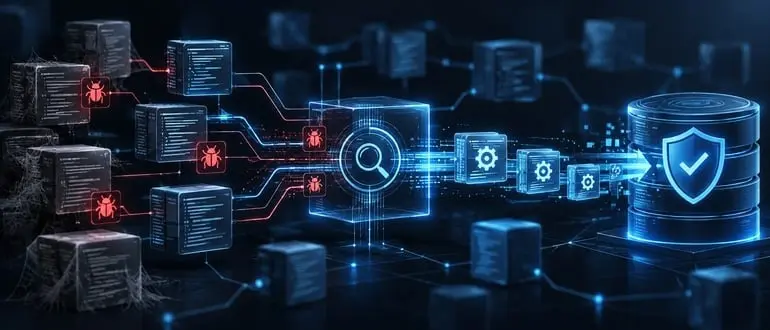
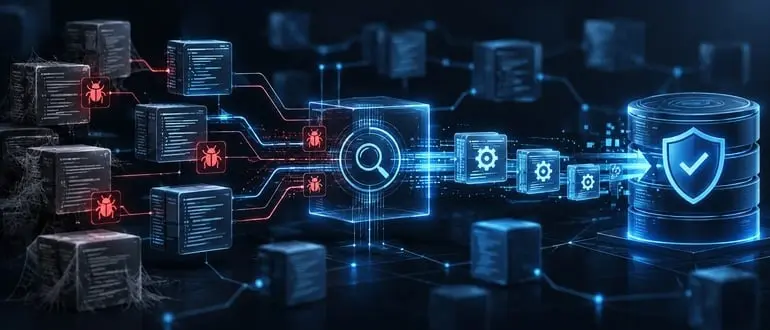
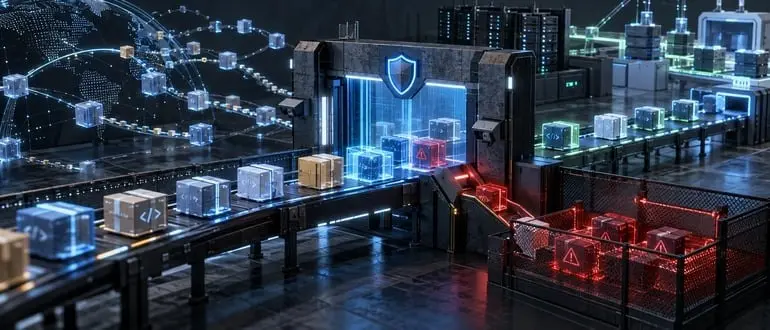
Accelerated by automated account takeovers, sophisticated provenance tampering, and self-propagating worms, software supply chain attacks are now executing faster than human triage or asynchronous vulnerability databases can track. In response, the industry has universally converged on a single defensive standard: proactive, gate-based enforcement.
However, as major players like npm and JFrog fundamentally alter how packages are handled—with npm 12 disabling dependency install scripts by default and JFrog deprecating the "Block Download" feature in Xray—a new set of critical architectural questions emerges. Organizations are no longer debating whether to block packages at the gate, but rather who owns the security policy, where that policy physically executes, and how to maintain multi-registry compatibility without inviting developer friction or platform lock-in.
This investigative report examines the timeline of recent supply chain exploits, analyzes the strategic shifts among major repository and security vendors, and evaluates the growing necessity for edge-native, developer-aligned security frameworks.
Detailed Chronology: The Escalating Threat Landscape (2026)
To understand why the industry is rushing to gate-based enforcement, one must look closely at the velocity and sophistication of recent supply chain attacks. The first half of 2026 exposed critical weaknesses in traditional post-install scanning models.
- March 2026 — The axios Direct Injection: Threat actors successfully bypassed standard verification layers to publish malicious versions of axios directly to the public npm registry. Because axios is a foundational HTTP client utilized across countless applications, the window between injection and widespread downstream exposure was measured in minutes.
- May 2026 — TanStack Provenance Forgery: Attackers achieved a terrifying milestone by successfully forging valid cryptographic provenance for 42 distinct TanStack packages on npm. Before the anomaly was detected and mitigated, 84 malicious versions had already been shipped to production environments, proving that metadata signatures and provenance tokens alone are no longer foolproof if the signing infrastructure or registry validation pipeline is compromised.
- August 2026 — The Self-Propagating keyv Worm: In what many security analysts view as a harbinger of autonomous cyberattacks, an advanced worm leveraged a single software maintainer’s stolen credentials to infiltrate the keyv package ecosystem. The worm dynamically self-propagated through keyv and its extensive web of dependent packages, moving laterally across the supply chain without human intervention.
These incidents underscore a chilling reality: modern builds pull in thousands of open-source packages from public registries without a second thought, and attackers are aggressively weaponizing that trust. Worse still, as dependency installation increasingly shifts away from manual human oversight to autonomous AI coding agents and automated CI/CD pipelines, these supply chain attacks will happen faster, at a larger scale, and with zero human friction to slow them down.
Supporting Context & Metrics: The End of Post-Install Remediation
The cybersecurity industry has spent the last year reacting to this velocity. Security tooling has decisively moved upstream, transitioning from post-install detection to proactive prevention.
1. The Death of Install Scripts
With the release of npm 12, maintainers took a drastic step by disabling dependency install scripts outright by default. GitHub security analysts noted that this single change closed what was historically the single largest code-execution surface in the entire npm ecosystem, cutting off a primary vector used by malicious packages to execute arbitrary shell commands upon installation.
2. The Rise of Repository Firewalls
Repository managers and security platforms have evolved to intercept threats before they touch developer machines or production clusters:
- Sonatype’s Repository Firewall actively quarantines and auto-releases packages based on real-time threat intelligence.
- Cloudsmith enforces cooldown policies, holding newly published packages in escrow until automated safety checks clear them.
- Socket inspects incoming packages for behavioral indicators of compromise (IoCs) ahead of installation rather than relying solely on static signature matching.
3. The JFrog Xray Architectural Shift
Perhaps the most significant architectural adjustment in the enterprise space is JFrog’s deprecation of the "Block Download" feature in Xray, rolling out across 2026. Because thousands of global enterprises rely on JFrog Artifactory and Xray to govern their software supply chains, this change profoundly impacts how code is shipped worldwide.
Under the updated model, Xray continues to scan and flag vulnerabilities, but it loses the direct capability to act on those findings. Instead, gate-based blocking has been shifted into JFrog Curation—a separate, per-seat licensed product that evaluates package metadata (such as author history, age, and publisher reputation) and blocks unauthorized packages at the gate.

This commercial and architectural pivot sends an unmistakable signal to the broader market: enforcement belongs at the gate, evaluated before a package ever downloads, rather than scanned for after it has already been integrated into a build.
Official Statements & Industry Trade-Offs
While the industry agrees on gate-based enforcement, the architectural implementation details have created significant strategic trade-offs for enterprise buyers. When every vendor eventually enforces at the gate, organizations are left with two fundamental decisions beneath the enforcement point:
- Who owns the security policy?
- Where does that policy physically execute?
The Lock-In vs. Deep Tooling Dilemma
Analyzing the current market reveals two distinct paths, each carrying its own structural limitations:
- Platform-Locked Policies: In solutions like JFrog Curation, the security policy lives entirely inside the vendor’s proprietary catalog and user interface. Alternatively, Cloudsmith allows customers to write policies as genuine policy-as-code using Rego, but those policies execute exclusively inside Cloudsmith’s hosted platform. In both scenarios, the vendor’s platform must be present for the policy to run, tying the customer’s governance structure to a single vendor ecosystem.
- SaaS API Dependencies: Tools like Socket, Sonatype Firewall Pro, and Veracode Package Firewall offer registry-neutral integration, fronting whatever registry a customer already runs without requiring a full platform migration. However, these tools rely on external API calls to a remote SaaS cloud before a build can proceed. While flexible regarding registry choice, they introduce external cloud dependencies and potential latency bottlenecks.
Furthermore, enterprise mergers and acquisitions frequently result in fragmented artifact management footprints. It is common for a single large enterprise to run Artifactory in one business unit, Azure Artifacts or Nexus in another, and GitHub Packages elsewhere. A security policy welded exclusively to a single vendor platform creates a fragmented security posture, protecting traffic on one platform while leaving others exposed. True universal compatibility—applying the exact same policy uniformly across any combination of registries—must become a non-negotiable baseline.
The Cost of Developer Friction
Security controls that alienate developers inevitably fail. JFrog’s own release notes explicitly cited CLI timeouts and silent build failures as the primary driver behind their product adjustments. When an infrastructure vendor acknowledges that unpredictable security controls impose a heavy operational cost, the industry must take notice.
Developer friction and developer buy-in are inextricably linked. Security policies delivered as opaque, top-down binaries breed mistrust. Conversely, policies written as code and managed natively in Git allow developers to review changes via familiar pull request workflows, building institutional trust. Similarly, shipping new policies in a "report-only" mode before enforcing hard blocks allows engineering teams to measure real-world impact without breaking active builds.
Future Outlook: Edge-Native Security and the Next Generation of Defense
As the software supply chain security landscape matures, the convergence of edge computing and policy-as-code points toward a new architectural model: edge-native artifact firewalls.
For decades, technologies like Varnish have successfully cached and routed traffic at the absolute edge of enterprise infrastructure. Applying this stateless, high-performance architecture to package management yields a powerful alternative to monolithic cloud dependencies:
- Customer Ownership: Both the policy decision and the execution environment remain entirely under the customer’s control.
- Git-Native Workflows: Policies are expressed as lightweight YAML configurations stored directly in Git, complete with robust fallback mechanisms (such as last-known-good configurations) in the event of source connectivity loss.
- Registry Neutrality: Edge firewalls sit transparently in front of existing registries (Artifactory, Nexus, GitHub Packages, etc.), eliminating the need for disruptive platform migrations.
- In-Process Performance: Because evaluation occurs locally at the network edge before a package downloads, decisions are executed instantaneously without round-trip latency to distant SaaS clouds.
The Mechanics of Modern Quarantine
Underpinning this edge-native approach is an intelligent, multi-stage quarantine and resolution engine:
- Time-Based Escrow: Newly published package versions are held back for a configured stabilization window, hiding them from active builds until enough time has passed for early-stage threats to surface.
- Smart Resolution: Unpinned dependency requests (e.g., requesting the "latest" version) automatically resolve to the newest version that has safely cleared quarantine, ensuring that builds dependent on older versions continue uninterrupted. Pinned requests pass through deliberately, while failed policies return transparent audit errors rather than silent failures.
- Real-Time Threat Feeds: Because sophisticated attacks rarely carry official CVE identifiers while active, security systems must rely on community-driven intelligence databases like OSV.dev, which flag malicious versions within hours of publication. Automated hourly ingestion of these feeds ensures that quarantine windows are driven by real-time threat data.
Conclusion
The deprecation of legacy security features like JFrog Xray’s Block Download is not an isolated event; it is a clear indicator of where the entire software supply chain category is heading. Gate-based enforcement is no longer a competitive differentiator—it is the baseline entry fee for secure software development.
As organizations evaluate their security roadmaps against accelerating automated threats and autonomous AI agents, the defining question of the next era will not be whether to block malicious packages at the gate, but who controls the gate, where the logic runs, and whether engineering teams can trust the process. The future belongs to edge-native, developer-aligned architectures that deliver universal protection without sacrificing speed, flexibility, or control.