








Executive Overview
In an alarming indicator of the hidden security debt lurking within enterprise software supply chains, tech giants IBM and Red Hat have announced a startling milestone. Since the launch of their collaborative Lightwell initiative earlier this year, the companies have successfully identified and remediated more than 400 previously unknown ("zero-day") vulnerabilities residing deep within standard Java libraries.
This revelation is more than just a routine software patch update; it represents a fundamental wake-up call for software engineering, enterprise architecture, and DevSecOps teams worldwide. The sheer volume of unearthed security flaws—double what initial projections anticipated—highlights a systemic blind spot in how modern organizations audit, manage, and trust their legacy open-source software dependencies.
Simultaneously, the companies announced the general availability of the Lightwell Clearinghouse. This vital program empowers enterprise IT organizations to submit specific open-source software dependencies for priority security review, validation, and remediation. However, as industry experts warn, these 400 Java library bugs are merely the tip of a much larger, increasingly dangerous iceberg.
Driven by the weaponization of artificial intelligence (AI) by malicious actors, the economics of software exploitation have shifted dramatically. With the cost of uncovering a software vulnerability plummeting to a mere $30, threat actors are leveraging advanced machine learning models to discover and exploit legacy code flaws in mere hours. In response, technology leaders are urging enterprises to move away from legacy monthly patching cycles toward a continuous, automated DevSecOps posture. Organizations failing to adapt risk catastrophic security failures as the AI-fueled vulnerability deluge intensifies.
Detailed Chronology & Mechanics of the Lightwell Initiative
The genesis of the Lightwell initiative traces back to a growing industry-wide realization: while modern applications are often built using cutting-edge frameworks, they heavily rely on vast, decades-old webs of open-source dependencies. These legacy libraries are frequently maintained by volunteer communities with limited resources, making deep cryptographic and architectural audits rare.
From Concept to General Availability
- Early 2023–2024 (Conception & Pilot Phase): Recognizing that traditional vulnerability scanners were missing architectural flaws in deep-level dependencies, engineering teams at IBM and Red Hat conceptualized a specialized vetting framework. The goal was to systematically comb through foundational enterprise open-source projects.
- Early 2024 (Launch of Lightwell): The initiative officially kicked off, deploying a combination of advanced static analysis, manual security research, and AI-assisted code review tools to target Java libraries—the foundational backbone of enterprise applications globally.
- Mid-to-Late 2024 (The Clearinghouse Rollout): Following successful internal pilots, IBM and Red Hat soft-launched priority review mechanisms for select enterprise partners, allowing them to funnel problematic software dependencies directly into the Lightwell pipeline.
- Current Milestone (General Availability): The Lightwell Clearinghouse is now generally available to the broader market. IT organizations can submit proprietary open-source software dependencies for priority review, gaining access to verified patches via secure, integrated repositories.
How the Lightwell Network Operates
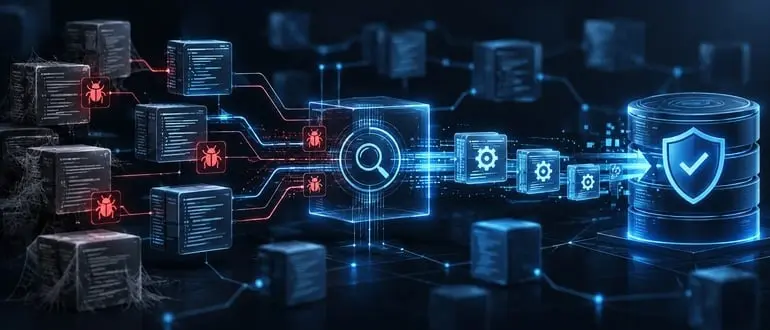
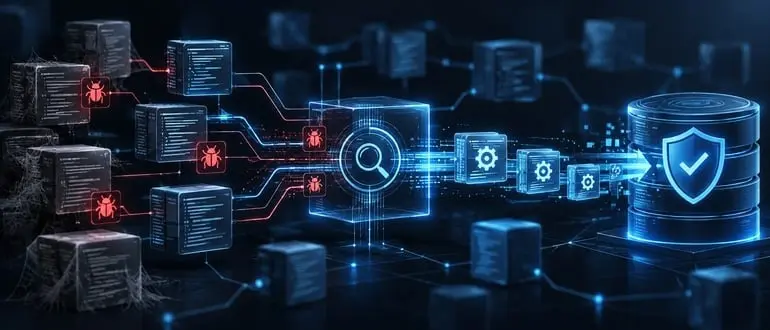
The Lightwell Clearinghouse is designed to integrate seamlessly into existing enterprise software development lifecycles (SDLC). Rather than forcing organizations to rip and replace their toolchains, the program operates through secure repositories that connect directly to existing software building and deployment pipelines.
When an organization submits an open-source dependency for review:
- Deep Code Inspection: IBM and Red Hat security engineers—assisted by automated analytics engines—scrutinize the codebase for logic errors, memory management flaws, and injection vectors.
- Remediation & Patching: Once a vulnerability is identified, engineers develop a robust, production-ready code fix.
- Upstream Contribution: True to the ethos of open-source software, all developed patches are contributed back to upstream open-source projects under responsible disclosure protocols, ensuring the entire global developer ecosystem benefits.
- Secure Delivery: Participating organizations receive verified patches through private, secure repositories, allowing them to instantly integrate fixes into their continuous integration/continuous deployment (CI/CD) pipelines.
Supporting Context, Metrics, and the AI Threat Landscape
To truly understand the gravity of the Lightwell findings, one must examine the metrics provided by the project leads and evaluate how artificial intelligence is rewriting the rules of cybersecurity engagement.
The Numbers Behind the Bug Deluge
According to Ben Bread, a senior principal product manager for Red Hat, the initial batch of 400 remediated vulnerabilities in Java libraries was twice the number anticipated by project forecasters. This massive discrepancy underscores how poorly mapped enterprise software supply chains truly are.
Furthermore, Bread notes that this is isolated neither to Java nor to a single vendor. DevSecOps teams should expect an equivalent, if not larger, volume of unknown vulnerabilities to be discovered across libraries built in other popular programming languages, including Python, C++, Go, and JavaScript.
| Metric / Indicator | Data Point | Industry Implication |
|---|---|---|
| Java Vulnerabilities Found | 400+ | Double original project expectations; highlights hidden technical debt. |
| Cost to Discover a Vulnerability | ~$30 | Highly accessible to threat actors via automated AI scanning tools. |
| Traditional Patch Cadence | Monthly | Dangerously slow; obsolete in the face of automated, AI-driven exploits. |
| Required Patch Cadence | Continuous | Demands full DevSecOps automation and real-time vulnerability ingestion. |
The Economics of Exploitation in the Age of AI
Perhaps the most chilling revelation from the Lightwell findings is the rapid democratization of cyberattacks. Historically, discovering complex zero-day vulnerabilities in enterprise libraries required elite security researchers spending weeks or months manually fuzzing code.
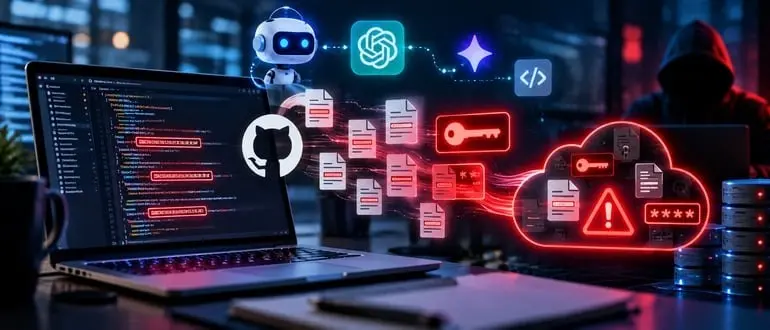
Today, the cost of discovering a software vulnerability has plummeted to approximately $30 through the use of specialized AI models. Threat actors are no longer waiting for human researchers to publish advisories; instead, they are deploying autonomous LLM-driven agents to scour public and private repositories, pinpoint logic flaws, and generate weaponized exploits within hours of a codebase compilation.

This asymmetric economic reality heavily favors the attacker. While an enterprise might spend three months validating, testing, and staging a single code patch, an adversary can analyze that same codebase with AI, find an overlooked edge case, and breach the perimeter before the software bill of materials (SBOM) has even been updated.
Official Insights and Expert Perspectives
The findings from the IBM and Red Hat collaboration have prompted industry-wide discussions regarding the viability of legacy application security frameworks.
Ben Bread pulled no punches when discussing the current state of enterprise preparedness:
"Organizations that today require three months to validate a code fix are simply not going to be able to keep pace with the vulnerability deluge. When the cost of discovering a vulnerability drops to thirty dollars, the economics of application security permanently favor the attacker."
Bread emphasized that many enterprises continue to operate under a false sense of security, assuming that their core repositories are secure simply because they have not yet experienced a high-profile breach. This willful ignorance, he warns, will shatter the moment organizations begin testing their codebases against the advanced AI-driven discovery tools now accessible to cybercriminal syndicates.
The Tipping Point for Test Automation and Scanners
For years, many enterprise IT departments viewed application security testing (AST), dynamic application security testing (DAST), and static application security testing (SAST) as burdensome bottlenecks rather than existential necessities. Bread argues that the ongoing discovery of hundreds of zero-day flaws in foundational libraries will serve as a definitive tipping point.
As building and applying patches transitions from an ad-hoc administrative chore to a high-frequency engineering workflow, organizations will be forced to adopt advanced automated testing platforms. Without end-to-end automation built directly into the CI/CD pipeline, human review boards will become the ultimate point of failure.
Future Outlook: Navigating the Post-Legacy Security Era
As the IBM and Red Hat Lightwell Clearinghouse opens its doors to the broader enterprise market, organizations must fundamentally rethink their approach to software supply chain security. The era of "set-it-and-forget-it" open-source management is officially over.
Strategic Recommendations for Enterprise Leaders
To survive and thrive in an environment where AI tools continuously surface and exploit vulnerabilities, enterprise technology leaders should adopt a proactive four-pillar strategy:
- Embrace Continuous Patching: Move away from legacy monthly or quarterly maintenance windows. Establish automated pipelines capable of ingesting verified patches from trusted networks like Lightwell and deploying them to staging environments instantly.
- Adopt Comprehensive Software Bill of Materials (SBOM) Management: Organizations cannot secure what they cannot see. Automated inventory tracking of every direct and transitive open-source dependency is mandatory for rapid impact analysis when a new zero-day is announced.
- Invest Heavily in DevSecOps Automation: Eliminate manual bottlenecks in code validation. By investing in automated test harnesses and continuous compliance validation, organizations can shrink code-fix validation windows from months to mere hours.
- Assume Compromise and Prioritize Resiliency: Given that the economics of security favor attackers wielding AI tools, enterprises must operate under an assumption of breach. Micro-segmentation, zero-trust architectures, and robust behavioral monitoring are essential safety nets when zero-day exploits inevitably breach the perimeter.
Conclusion
The IBM and Red Hat Lightwell initiative has ripped the band-aid off a festering wound in the global software supply chain. Discovering over 400 unknown vulnerabilities in Java libraries is a monumental technical achievement, but it is also a sobering reminder of the fragility of modern digital infrastructure.
Ultimately, industry experts hope it will not require a catastrophic global event to force enterprises to take application security seriously in the age of AI. The question facing modern organizations is no longer if a breach will be attempted via an exploited legacy library, but rather how serious the fallout will be when it strikes. Through automated clearinghouses, continuous patching, and a cultural shift toward proactive defense, enterprises still have a narrow window to turn the tide against AI-equipped adversaries.