The modern enterprise software ecosystem is drowning in its own exhaust. As applications transition to distributed microservices, Kubernetes clusters, and complex cloud-native architectures, the volume of generated telemetry data has skyrocketed. Every log entry, metric emission, and trace span promises deeper visibility into application health, yet this promise comes with a crippling economic and operational tax. Storing, indexing, and analyzing petabytes of high-cardinality data has transformed enterprise observability platforms from operational lifelines into massive, runaway cost centers.
Compounding this challenge is the sudden, explosive rise of autonomous artificial intelligence agents. As organizations rush to embed AI into their DevOps and Site Reliability Engineering (SRE) workflows, these digital operators rely heavily on telemetry data to reason, troubleshoot, and automate remediation. However, feeding raw, unfiltered telemetry to an AI agent is a recipe for hallucinations, bloated processing tokens, and unsustainable cloud bills. AI systems do not need more data; they need better data.
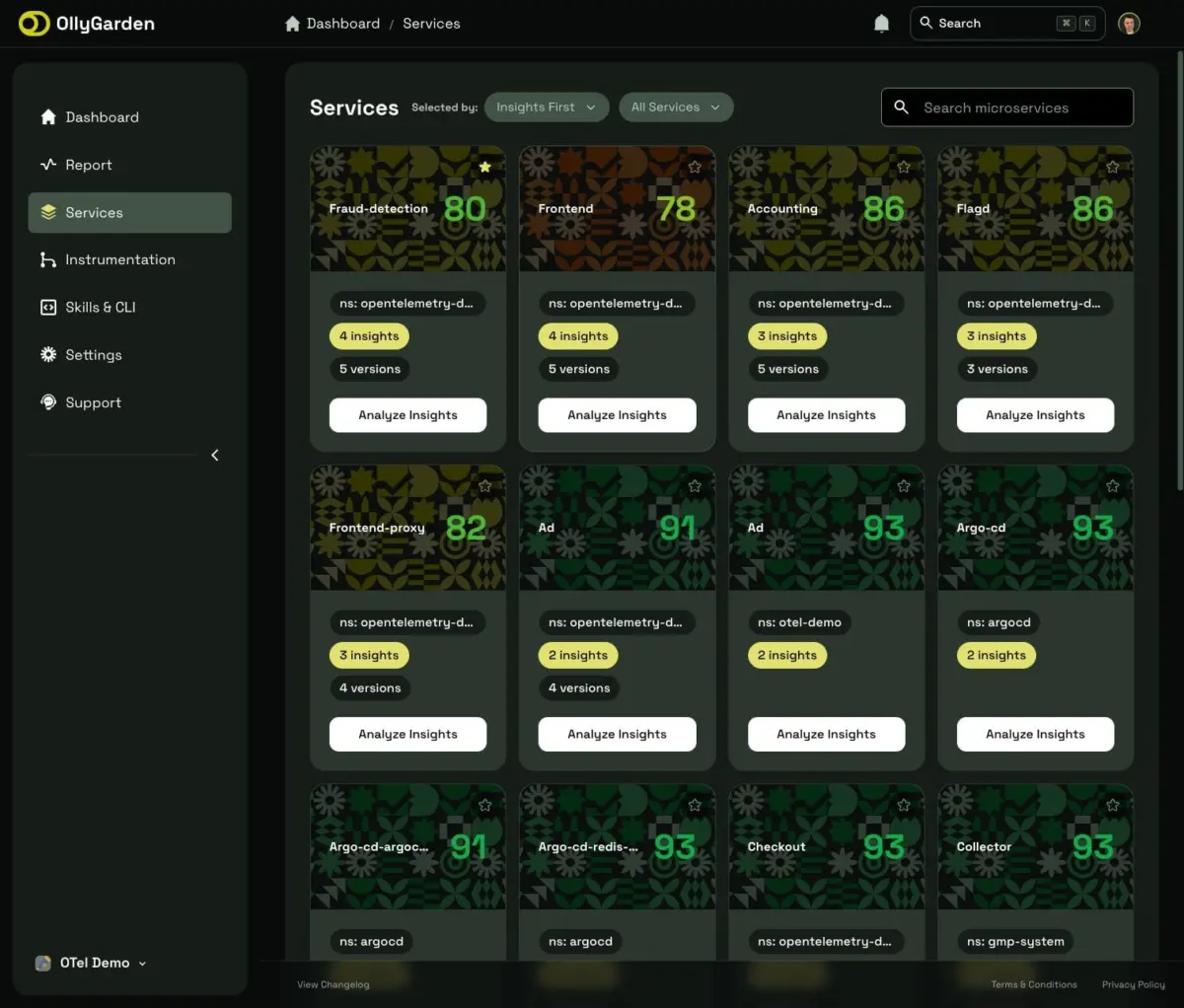
Entering this high-stakes arena is OllyGarden, an emerging innovator in AI-driven observability. Following a successful $4 million funding round, the company has fundamentally expanded the scope of its flagship Rose AI agent. By introducing a pioneering Minimum Viable Instrumentation (MVI) capability, OllyGarden is tackling both sides of the observability coin: stripping away up to 85% of redundant, expensive telemetry noise while simultaneously hunting down blind spots and recommending precise OpenTelemetry data sources to fill critical visibility gaps.
This comprehensive report examines OllyGarden’s latest technological leap, the underlying mechanics of Minimum Viable Instrumentation, the shifting economics of cloud-native data collection, and what this means for the future of AI-driven autonomous IT operations.
Detailed Chronology: The Evolution of OllyGarden and Rose AI
To understand the significance of OllyGarden’s recent product expansion, it is essential to trace the trajectory of the company and its core technology stack over the past several development cycles.
Phase 1: The Genesis of Telemetry Curation
Long before the term "FinOps for observability" entered the mainstream lexicon, OllyGarden recognized that the traditional model of collecting everything "just in case" was fundamentally broken. Founded by Juraci Paixão Krhling, the startup initially focused its engineering efforts on helping overwhelmed DevOps teams prune unnecessary logs, traces, and metrics.
Traditional observability tools operated on an ingest-and-store model: send everything to the backend, apply retention policies, and pay steep licensing fees based on data volume. OllyGarden disrupted this paradigm by pushing intelligence upstream. Through machine learning models designed to understand application behaviors, the initial iterations of the Rose AI agent began evaluating telemetry before it ever left the local environment. By identifying redundant or low-value data points at the source, Rose AI successfully empowered early-adopter engineering teams to slash their telemetry volume significantly.
Phase 2: Securing Capital and Scaling Vision
As enterprise adoption of generative AI and cloud-native infrastructure accelerated through 2025 and into 2026, OllyGarden’s market positioning shifted from a niche cost-saving utility to a strategic infrastructure necessity.
To capitalize on this momentum, the company secured an additional $4 million in funding. This capital injection provided the runway required to accelerate research and development, scale go-to-market operations, and expand the capabilities of the Rose AI agent beyond simple data reduction. The funding round signaled growing investor confidence in a fundamental shift: the future of observability is not about holding more data, but about curating the exact signal-to-noise ratio required for human and machine intelligence.
Phase 3: The Launch of Minimum Viable Instrumentation (MVI)
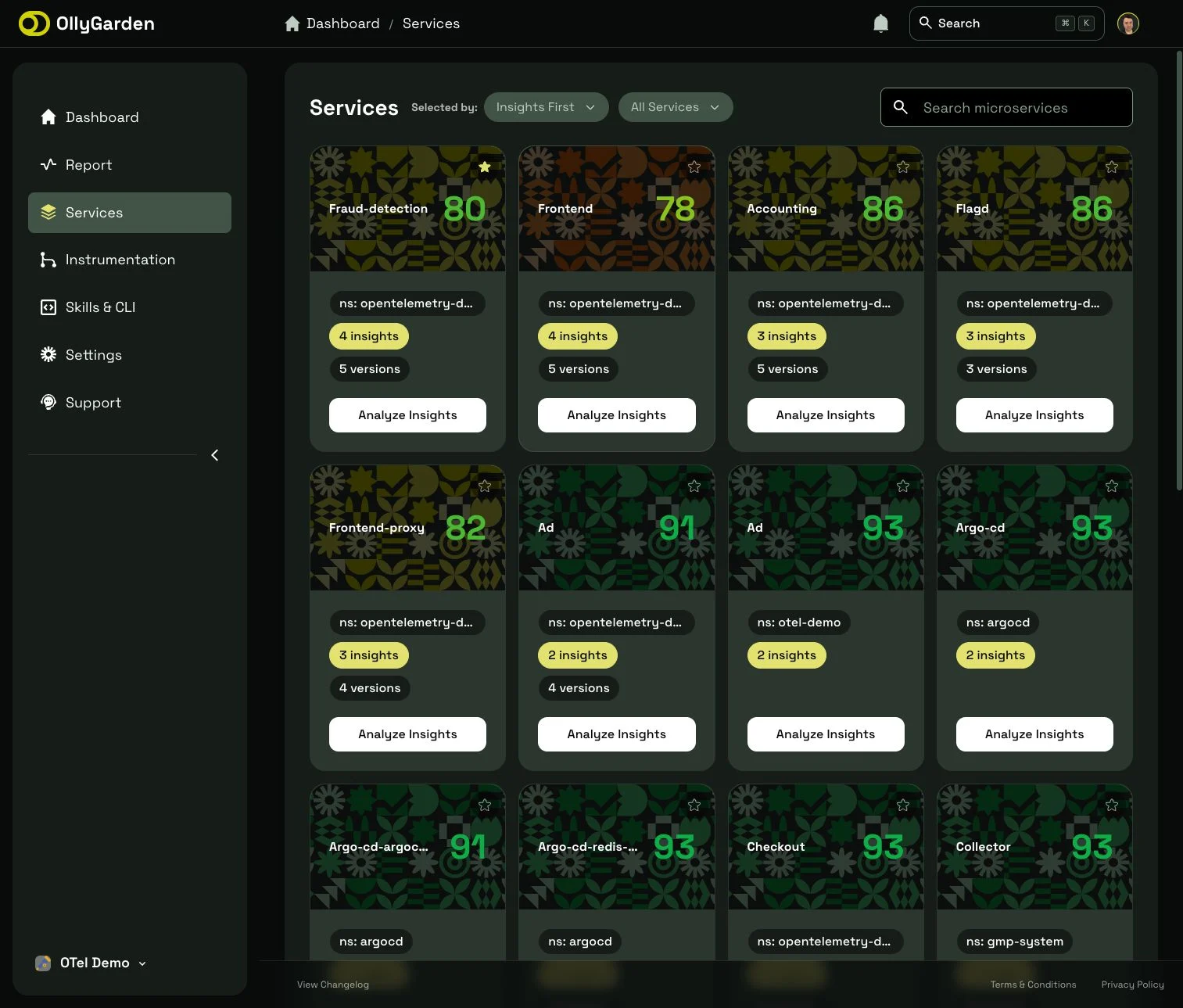
In a major product milestone this week, OllyGarden officially unveiled its Minimum Viable Instrumentation (MVI) framework, deeply integrated into the Rose AI agent.
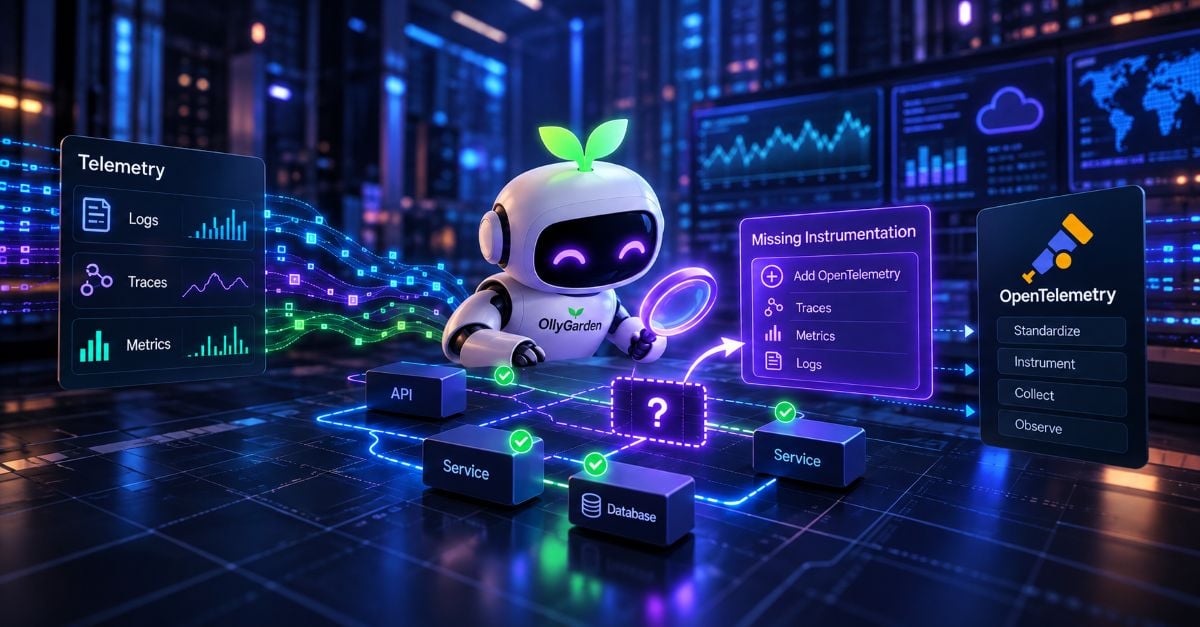
While the previous version of Rose AI excelled at telling engineers what telemetry to turn off, the new MVI capability solves the inverse problem: discovering where instrumentation is entirely missing and prescribing exactly what data needs to be collected. Operating in tandem with OpenTelemetry—the Cloud Native Computing Foundation (CNCF) standard for telemetry collection—the MVI engine analyzes source code repositories, application behavior, and existing telemetry streams to map out blind spots.
By simultaneously pruning the fat and filling the gaps, Rose AI has evolved from a reactive pruning tool into a proactive, intelligent telemetry architect.
Supporting Context & Metrics: The Anatomy of Observability Bloat
To fully grasp the value proposition of OllyGarden’s technology, one must analyze the macroeconomic and technical pressures facing contemporary DevOps organizations.
The Rising Cost of Cloud-Native Exhaust
According to industry benchmarks, telemetry data volumes are compounding at an annual rate that far outpaces revenue growth for most technology enterprises. As organizations scale out Kubernetes clusters, adopt serverless paradigms, and containerize legacy workloads, the number of moving parts explodes.
The High Cost of Cardinality: High-cardinality metrics (such as tracking individual user IDs, unique transaction paths, or container ephemeral IPs) cause explosive growth in time-series databases.
The Ingestion Trap: Most commercial observability platforms charge based on gigabytes or terabytes ingested. Consequently, engineers are financially penalized for wanting deeper visibility.
The Noise Penalty: When logs are flooded with routine HTTP 200 responses, debug statements, and redundant health checks, finding the actual root cause of an outage becomes akin to finding a needle in a haystack.
OllyGarden’s internal data highlights the severity of this bloat. Over the past year, the company has tracked deployments where its technology successfully identified opportunities to reduce telemetry volume across up to 85% of logs without sacrificing diagnostic fidelity. By eliminating this dead weight, organizations can dramatically lower their storage, indexing, and egress costs.
The AI Imperative: Why Autonomous Agents Need Curation
The conversation around telemetry is no longer just about human engineers staring at dashboards; it is about autonomous and semi-autonomous AI agents executing remediation tasks.
AI agents are inherently probabilistic. They consume context window tokens to reason about system health. If an AI agent is forced to process millions of irrelevant log lines or noisy traces, two negative outcomes occur:
Cost Explosion: Processing excessive tokens through large language models (LLMs) or specialized SRE agents becomes cost-prohibitive.
Hallucination Risks: Noise introduces ambiguity. Irrelevant data can distract an AI agent, leading to false-positive alerts, incorrect root-cause analysis, or flawed automated remediation scripts.
By optimizing telemetry streams before they reach backend platforms, OllyGarden ensures that AI agents operate on a pristine, high-signal diet of data. This dramatically enhances the reliability of AI-driven automation while keeping operational budgets under control.
Official Statements and Industry Insights
Juraci Paixão Krhling, founder and visionary behind OllyGarden, has consistently emphasized that the observability market is experiencing a paradigm shift.
"The overall goal is to make it simpler for DevOps teams to calibrate the exact amount of telemetry data they need to observe an IT environment, to ultimately reduce the overall level of noise that prevents meaningful signals from being fully understood," Krhling explained during the recent product launch.
Rather than forcing developers to manually write complex instrumentation rules or guess which metrics matter, Rose AI acts as an autonomous feedback loop.
"Specifically, the Rose AI agent continuously evaluates the quality of the telemetry data being collected, identifies issues, and then generates source-level fixes that DevOps teams can then apply. That approach prevents bad or irrelevant telemetry data from ever reaching a backend observability platform in the first place," Krhling noted.
Industry analysts point out that this approach directly addresses developer friction. Traditionally, instrumentation has been a tedious, manual chore treated as an afterthought during the software development lifecycle (SDLC). By automating both the discovery of missing telemetry (via MVI) and the cleanup of excess data, OllyGarden aligns observability with developer velocity.
Furthermore, the integration with OpenTelemetry (OTel) ensures that organizations are not locked into proprietary vendor ecosystems. By building natively on an open, CNCF-backed standard, OllyGarden future-proofs its technology, allowing enterprises to route their curated telemetry data to any compliant backend platform of their choice.
Future Outlook: The Road to Autonomous DevOps
As the enterprise software landscape marches toward pervasive automation, the role of observability is undergoing a fundamental metamorphosis. Where do tools like OllyGarden and agents like Rose fit into the future of enterprise engineering?
1. From Human-Centric Dashboards to Machine-Centric Pipelines
For the past two decades, observability has been designed for human eyes—dashboards, graphs, flame graphs, and alert feeds. As systems scale beyond human cognitive capacity, observability must evolve to serve machines first and humans second. Clean, structured, and contextualized OpenTelemetry data will serve as the nervous system for enterprise AI. Companies that master telemetry curation will unlock cheap, highly effective autonomous operations, while those clinging to brute-force data ingestion will find themselves priced out of the AI era.
2. The Maturation of Minimum Viable Instrumentation
In the near future, MVI capabilities will likely move further left into the CI/CD pipeline. Instead of discovering missing instrumentation in staging or production environments, AI agents like Rose will analyze pull requests in real-time, automatically injecting OpenTelemetry SDKs and tracing spans before code is even merged. This shifts observability from a retroactive diagnostic exercise into a proactive, design-time specification.
3. Trust, Validation, and Human-in-the-Loop Governance
Despite rapid advancements in generative AI and probabilistic agents, the industry remains cautious about fully autonomous production interventions. As noted by industry observers, deploying unverified AI agents into high-stakes production environments remains a bridge too far for risk-averse enterprises.
For the foreseeable future, AI agents will remain assistants that reduce toil, generate source-level fixes for developers to review, and propose remediation paths that require human sign-off. Trust must be earned incrementally. By ensuring that these agents reason over pristine, filtered telemetry data rather than chaotic noise, tools like OllyGarden provide the foundational reliability required to build that trust.
Frequently Asked Questions (FAQ)
What is OllyGarden’s Minimum Viable Instrumentation (MVI) capability?
Minimum Viable Instrumentation is an AI-powered feature embedded within OllyGarden’s Rose AI agent. It automatically scans codebases and infrastructure to discover blind spots where telemetry is missing, subsequently recommending precise OpenTelemetry data sources that need to be added. This ensures teams capture necessary insights without accumulating excessive data overhead.
How does OllyGarden’s Rose AI agent reduce observability costs?
Rose AI continuously evaluates the quality, relevance, and redundancy of collected telemetry. It identifies unnecessary logs, metrics, and traces at the source and generates concrete source-level fixes for developers to apply. By intercepting and eliminating bad or irrelevant data before it hits backend observability platforms, organizations drastically cut ingestion, storage, and egress fees.
Why is optimized telemetry data crucial for autonomous AI agents?
AI agents rely heavily on system context to troubleshoot issues and recommend actions. However, processing excessive or noisy data increases token processing costs and introduces distractions that can lead to hallucinations or poor decisions. Optimized telemetry ensures AI agents operate on high-signal information, maximizing accuracy while minimizing computational costs—though human validation of agent outputs remains essential.