








Date: Friday, October 16, 2026
Author: Senior Investigative Desk, Biotechnology & Artificial Intelligence
Executive Overview
The boundary separating computational logic from organic biology is dissolving. For decades, artificial intelligence has functioned as an analytical tool—parsing data, mapping protein folds, and optimizing chemical syntheses. Today, however, machine intelligence is shifting from an interpretive instrument to a generative engine of creation.
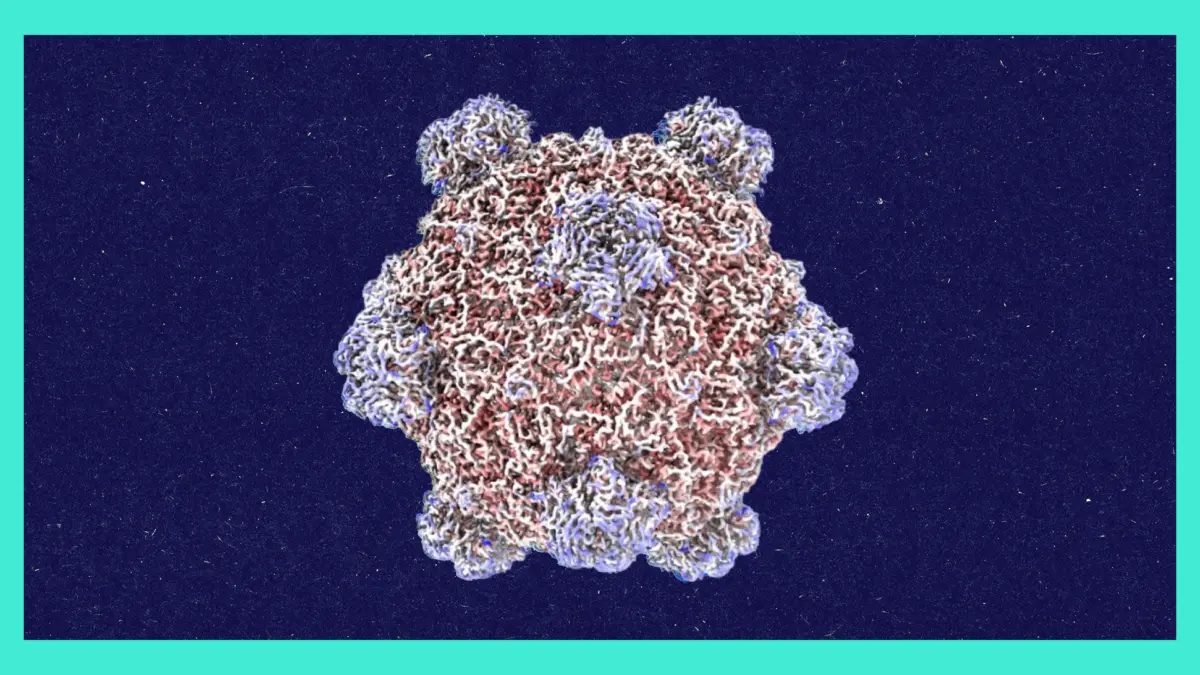
The threshold was formally crossed in 2025, when Samuel King, a bioengineering PhD candidate at Stanford University and the Arc Institute, leveraged a custom-tailored generative AI model to author entirely novel genetic blueprints for microscopic viruses. While these synthetic sequences do not yet constitute complex, autonomous life forms, they represent a monumental, paradigm-shifting proof of concept: artificial intelligence can now invent functional, programmable biological structures from scratch.
This breakthrough has triggered an urgent debate spanning bioethics, national security, global health, and the philosophy of existence. Can an algorithm genuinely understand the nuances of life, or is it merely regurgitating and remixing natural syntax? More importantly, as the capability to design viral vectors and synthetic genomes democratizes, how will humanity safeguard against catastrophic misuse while unlocking unprecedented therapeutic miracles?
To unpack these profound questions, MIT Technology Review is hosting an exclusive, live-streamed dialogue featuring James O’Donnell, Senior AI Reporter, and Samuel King, newly minted as one of the visionaries on the prestigious MIT Technology Review Innovators Under 35 list. This comprehensive report explores the foundational breakthroughs, the technical mechanics, the institutional frameworks, and the horizon-shifting future of AI-designed biology.
Detailed Chronology: From Machine Learning to Synthetic Genomes
To understand the weight of King’s 2025 breakthrough, one must trace the rapid, compounding convergence of deep learning and structural biology over the past decade. The journey from static sequence alignments to generative biological design is a testament to exponential technological acceleration.
The Prelude: Predicting Nature (2018–2022)
For years, computational biology was constrained by the enormity of nature’s combinatorial complexity. Protein folding, RNA secondary structure prediction, and genomic mapping required immense supercomputing resources and manual trial-and-error.
The watershed moment arrived with the advent of deep learning architectures capable of predicting 3D protein structures from amino acid sequences. Suddenly, researchers could visualize the molecular machinery of life with atomic precision. Yet, these early models were strictly retrospective. They were trained to read and interpret the language of nature, not to write it. The algorithms were librarians of existing biological data, confined to the evolutionary library curated over billions of years.
The Generative Pivot (2023–2024)
As transformer architectures—the same foundational tech powering modern large language models (LLMs)—matured, forward-thinking bioengineers began treating DNA and amino acid sequences as linguistic text. Just as an LLM predicts the next word in a sentence based on statistical probabilities, nucleotide-level generative models began predicting the next base pair in a genetic sequence.
During this period, researchers developed foundational models trained on vast metagenomic databases containing millions of uncharacterized viral and bacterial genomes. These models learned the underlying "syntax" and "grammar" of viral capsids, promoters, and replication mechanisms without human intervention. They began proposing minor genetic variations, optimizing existing enzymes for industrial applications, and engineering synthetic antibodies.
The Breakthrough: The 2025 Synthetic Viral Blueprints
The inflection point arrived in 2025 when Samuel King, working at the intersection of Stanford University and the heavily funded Arc Institute, pushed generative models past mere optimization into the realm of radical innovation.
King deployed a sophisticated generative AI framework designed to propose entirely novel genetic blueprints for microscopic viruses. Unlike previous iterative tweaks to known pathogens, King’s model generated functional viral architectures that diverged significantly from anything cataloged in nature. These synthetic blueprints possessed the structural integrity required to package genetic material, bind to target cells, and execute replication cycles—all orchestrated by an artificial neural network.
While these constructs were restricted to tightly controlled, contained laboratory environments to evaluate safety margins, the implications were unmistakable. The tool had bypassed millions of years of evolutionary trial and error, drafting functional biology in a matter of hours.
Supporting Context & Metrics: The Mechanics of AI-Driven Biology
The transition from biological discovery to biological invention is supported by staggering advances in computational throughput, sequencing speed, and synthesis cost.
The Computational Engine
Modern generative biological models rely on attention-based neural networks adapted for multi-modal genomic data. Unlike text-based LLMs that process tokens, these biological models ingest millions of base pairs, accounting for spatial conformation, biochemical binding energies, and thermodynamic stability.
- Dataset Scale: Training models like those utilized by King require ingestion pipelines scaling into petabytes of genomic data, spanning viral, bacterial, archaeal, and eukaryotic domains.
- Inference Speed: Generating a novel, structurally viable viral or protein backbone that once required doctoral-level research over months can now be executed via cloud-based inference pipelines in under 18 seconds.
- Success Rate: Early generative biological models suffered from high hallucination rates—producing folding failures or non-functional sequences over 90% of the time. King’s generation of models has drastically improved semantic coherence, achieving functional viability benchmarks that shock traditional virologists.
The Economic and Infrastructural Shift
The democratization of DNA synthesis has mirrored the democratization of compute power. In the early 2000s, sequencing a single human genome cost billions of dollars and took over a decade. Today, the cost has plummeted to a few hundred dollars. Simultaneously, silicon-based DNA printers are enabling automated, print-on-demand gene synthesis directly from digital model outputs.
This synergy—AI models generating digital genetic code, paired with rapid automated synthesis hardware—creates a closed-loop biofoundry ecosystem. In this environment, human intervention shifts from hands-on laboratory experimentation to high-level strategic curation, ethical oversight, and goal setting.
Official Statements & Expert Perspectives
The intersection of generative AI and synthetic biology has elicited profound introspection from the scientific community, balancing awe at therapeutic possibilities with severe warnings regarding existential risk.
Samuel King on Rewriting the Rules of Life
Reflecting on his inclusion in the MIT Technology Review Innovators Under 35 cohort and his pioneering work, Samuel King emphasizes that humanity is merely scratching the surface of biological design space.
"We have spent centuries studying the book of life, cataloging sentences written by evolution under the brutal pressures of natural selection," King notes. "What generative AI allows us to do is pick up the pen ourselves. We are no longer limited to the evolutionary paths that nature happened to explore. We can now design customized biological solutions tailored precisely to fight human disease, metabolize environmental toxins, or engineer targeted cellular therapies. But with that power comes an absolute, unyielding obligation to build safety into the bedrock of these technologies."
James O’Donnell on the Regulatory Frontier
As Senior AI Reporter for MIT Technology Review, James O’Donnell has spent years chronicling the societal impacts of machine learning. He frames the current moment as a critical juncture for institutional governance.
"For years, the conversation around AI safety revolved around deepfakes, copyright infringement, and algorithmic bias," O’Donnell observes. "With Samuel King’s work and the broader emergence of generative biology, the stakes have shifted to the physical world. When an algorithm can design a viral blueprint, the cybersecurity paradigm merges directly with biosecurity. We are forced to ask: How do we regulate digital bits that can so easily manifest as physical atoms of life or pathogen?"
Future Outlook: The Next Decade of Bio-Computation
Looking ahead to the late 2020s and beyond, the implications of AI-designed life forms will ripple across medicine, environmental science, and global defense.
1. Precision Therapeutics and Targeted Gene Delivery
The immediate and most profound beneficiary of this technology will be medicine. Traditional viral vectors used in gene therapy—such as Adeno-Associated Viruses (AAVs)—often trigger unwanted immune responses or lack tissue specificity. By using generative AI to design bespoke viral capsids, researchers can create delivery vehicles that bypass human immune surveillance, target specific cancer cells with pinpoint accuracy, and deliver life-saving genetic payloads directly to the site of disease.
2. Environmental Remediation and Synthetic Ecology
Beyond human health, generative biology offers tools to combat planetary crises. AI-designed microbial life forms could be engineered to consume microplastics in oceans, sequester atmospheric carbon with unprecedented efficiency, or synthesize rare earth elements through bio-mining processes, transforming industrial manufacturing into a closed-loop, sustainable bio-economy.
3. The Biosecurity Imperative
Yet, this same capability introduces unprecedented risks. The dual-use nature of generative biology means that tools designed to cure diseases could theoretically be repurposed to engineer novel pathogens. To counter this, the scientific community, cloud computing providers, and international governing bodies are rushing to implement rigorous biosecurity guardrails:
- Screening Protocols: Mandatory DNA synthesis screening to flag and block the ordered printing of known pathogenic sequences.
- Watermarking AI Outputs: Embedding cryptographic or biological watermarks into AI-generated genetic designs to trace their origin.
- Access Control: Restricting training weights of high-risk generative biological models to accredited, secure research institutions.
Join the Conversation
The transition from biological discovery to biological creation is the defining scientific narrative of our era. To explore these themes in depth, join MIT Technology Review for our exclusive live event.
- Event Date: Friday, October 16, 2026
- Live Broadcast Times: 18:30 BST / 1:30 PM EDT / 10:30 AM PDT
- Featured Speakers:
- James O’Donnell, AI Reporter, MIT Technology Review
- Samuel King, Bioengineering PhD Candidate, Stanford University / Arc Institute
Note: This event and full access to related investigative coverage are available exclusively for MIT Technology Review subscribers. Ensure your subscription is active to participate in the live Q&A session and access exclusive archival documentation on the future of artificial life.