By Global Investigative Desk
Published in Collaboration with Investigative Media Holdings
Executive Overview
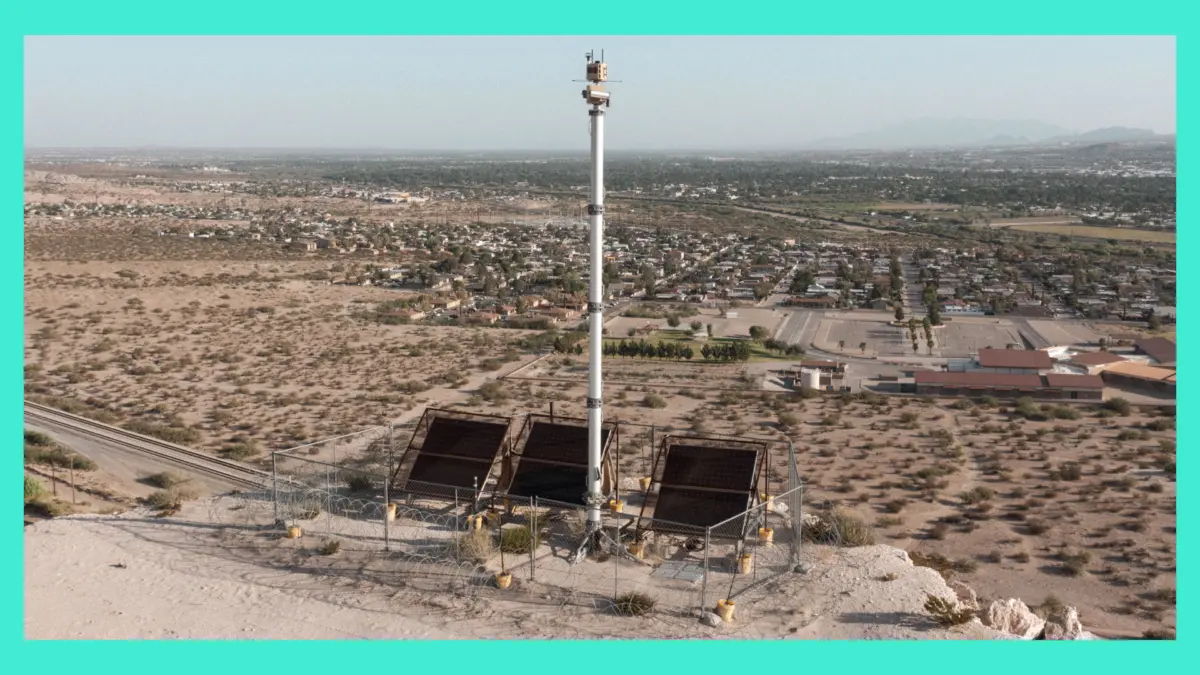
Over the past quarter-century, the United States federal government has invested billions of taxpayer dollars into constructing what officials frequently herald as a "virtual wall" along the sprawling expanse of the southern border. Comprising an intricate network of high-tech surveillance towers, radar installations, long-range thermal-imaging cameras, and, more recently, automated artificial intelligence algorithms, this technological apparatus was pitched as a modern, humane alternative to physical barriers. Proponents promised that the system would act as an all-seeing guardian—simultaneously enhancing national security by detecting and apprehending illicit border crossers while serving as a life-saving mechanism capable of pinpointing individuals in distress and dispatching rescue personnel.
However, a groundbreaking, multi-month investigation by MIT Technology Review has shattered the illusion of the virtual wall’s efficacy. Analyzing extensive geographic data, government records, and tragic mortality reports, the investigation documented over a thousand instances where individuals traversed regions under the watchful lens of these surveillance towers, only to be bypassed, ignored, or left unreached until it was too late. Strikingly, many of these victims perished directly beneath the gaze of newly installed, AI-powered towers explicitly engineered to autonomously detect and classify human movement.
This comprehensive report exposes a severe and pervasive humanitarian catastrophe hiding in plain sight. It reveals a profound disconnect between the marketed capabilities of advanced border surveillance technology and its grim reality on the ground. Rather than functioning as a dual-purpose tool for security and rescue, the virtual wall has frequently functioned as a passive observer of tragedy. As journalists and editors from MIT Technology Review prepare to host a high-level public forum examining these systemic failures, this article provides an in-depth exploration of how billions of dollars in high-tech surveillance infrastructure collided with the harsh realities of the Sonoran and Chihuahuan deserts, leaving a trail of preventable deaths in its wake.
Detailed Chronology: The Evolution and Breakdown of the Virtual Wall
To understand how a multi-billion-dollar surveillance network could fail so catastrophically, one must examine the incremental evolution of the southern border’s technological architecture over the past twenty-five years.
Phase I: The Early Experimentation (2000–2010)
In the early 2000s, following the post-9/11 reconfiguration of national security priorities, the U.S. Department of Homeland Security (DHS) and Customs and Border Protection (CBP) began conceptualizing a technological barrier to supplement traditional fencing. The initial iteration, known notoriously as the Secure Border Initiative (SBI-net), spearheaded by aerospace giant Boeing, sought to create an integrated network of cameras, radar, and sensors.
From its inception, the project was plagued by technical delays, budget overruns, and severe software integration issues. Towers frequently failed in extreme desert temperatures, generating a high volume of false alarms—triggered by wildlife, blowing brush, or shifting shadows—that overwhelmed border patrol agents. Despite these early warning signs of systemic unreliability, the federal government doubled down on the concept, pivoting away from Boeing’s integrated system toward modular, rapidly deployable commercial off-the-shelf surveillance towers (RSTs) and remote video surveillance systems (RVSS).
Phase II: The Expansion of Mobile and Fixed Towers (2011–2018)
During the 2010s, CBP accelerated the deployment of fixed and mobile surveillance towers across high-traffic sectors in Arizona, New Mexico, and Texas. These towers were marketed as force multipliers. By mounting high-definition optical sensors and thermal cameras on tall masts, agents sitting in remote command centers miles away could theoretically monitor vast stretches of inhospitable terrain in real time.
Yet, a critical operational flaw began to emerge: the sheer volume of data outpacing human cognitive capacity. Operators monitoring multiple screens across sprawling sectors frequently suffered from fatigue and "alert fatigue," missing critical feeds of individuals lingering in remote areas. Furthermore, while the technology excelled at detecting movement, it lacked an integrated protocol prioritizing humanitarian rescue. If a camera captured a migrant collapsing from heat exhaustion, standard operating procedures overwhelmingly framed the observation through a law enforcement lens—prioritizing interception and apprehension over immediate medical intervention.
Phase III: The AI Era and the Ultimate Paradox (2019–Present)
In recent years, CBP embraced artificial intelligence and machine learning to address the human bottleneck in monitoring. Partnering with defense contractors and tech firms, the agency deployed next-generation, AI-powered towers designed to automatically detect, track, and classify human silhouettes, distinguishing them from animals or environmental interference.
The promise of AI was absolute autonomy and zero latency: algorithms would instantly alert agents to unauthorized crossings, theoretically ensuring that no one could slip through unnoticed.
Instead, the MIT Technology Review investigation revealed a deeply disturbing paradox. Even under the watch of these state-of-the-art, AI-enabled towers, individuals continued to die in massive numbers. The technology successfully detected the presence of human life, logging timestamps and GPS coordinates, but systemic institutional friction—ranging from delayed agent dispatches to miscommunication between tech operators and field units—meant that detection did not translate into rescue. People were watched, tracked by algorithms, and left to die of dehydration and exposure in the unforgiving borderlands.
Supporting Context & Metrics: The Human Toll of Technological Blindness
The statistical reality of the U.S.–Mexico border is defined by extremes: extreme temperatures, extreme terrain, and increasingly, an extreme reliance on unproven technologies deployed without adequate accountability frameworks.
The Geography of Despair
The vast majority of deaths documented in the investigation occurred in remote, arid expanses where summer temperatures routinely exceed 110°F (43°C). In these regions, a lack of potable water can lead to severe dehydration, organ failure, and death within hours.
For decades, humanitarian organizations have deployed water stations and emergency beacons in the desert, arguing that migrant routes inevitably shift toward more dangerous, remote terrain precisely because traditional enforcement mechanisms (such as walls and physical agents) concentrate in urban corridors. This phenomenon, known to sociologists as "prevention through deterrence," intentionally funnels crossers into deadlier natural environments. The deployment of the virtual wall was supposed to mitigate this danger by providing a safety net of rapid surveillance. Instead, the data demonstrates that the virtual wall acts as an amplifier of the deterrence strategy—watching people enter lethal zones without providing the corresponding rescue infrastructure necessary to preserve life.
Key Metrics and Findings from the Investigation
- Over 1,000 Documented Deaths: The investigation rigorously tracked more than a thousand individuals who traversed sectors monitored by virtual wall towers and subsequently died without receiving assistance.
- The AI Failure Rate: A significant subset of these fatalities occurred within direct line-of-sight of advanced AI-powered towers, proving that automated detection algorithms do not inherently improve humanitarian outcomes.
- Billions in Expenditures: Over the past 25 years, cumulative federal spending on border surveillance technology has exceeded billions of dollars, with contracts frequently awarded to defense contractors with minimal public transparency regarding performance metrics or life-saving efficacy.
- Response Time Disparities: Data analysis indicates that while law enforcement tracking alerts generated by the towers often resulted in prompt interdiction efforts, distress-related alerts suffered from catastrophic administrative delays.
Official Statements and Industry Perspectives
The revelations brought to light by MIT Technology Review have ignited intense debate among policymakers, technologists, and civil rights advocates regarding the ethical boundaries of automated border enforcement.
In response to inquiries regarding the investigation, representatives from Customs and Border Protection defended the agency’s operational record, emphasizing that technology remains an indispensable tool for securing national borders and protecting agents from high-risk encounters. A CBP spokesperson noted that the agency continually refines its technological capabilities and works diligently to integrate humanitarian response protocols into its operational framework, citing thousands of search and rescue missions conducted annually by specialized border patrol units.
However, critics and independent watchdogs argue that these defensive statements gloss over structural deficiencies. Human rights organizations have long contended that CBP’s technological investments prioritize interdiction metrics over human life.
Mat Honan, Editor in Chief of MIT Technology Review, underscored the gravity of the findings during a recent editorial briefing:
"We built a machine to watch the border, and it watched people die. The narrative that technology makes border enforcement smarter and more humane falls apart when you examine the ground-level data. These towers are seeing everything, yet saving no one."
James O’Donnell, Senior AI Reporter, added perspective on the illusion of algorithmic competence:
"There is a dangerous tendency in modern governance to assume that prefixing a system with ‘AI’ solves operational failures. Our investigation shows that artificial intelligence in the borderlands has simply automated indifference at scale. The algorithm logs a body moving through the desert with clinical precision, but it cannot care, and the humans downstream of the data are failing to act."
Eileen Guo, Senior Features and Investigations Reporter, emphasized the human stories behind the statistics:
"Behind every data point in this investigation is a human being—mothers, fathers, sons, and daughters—who undertook an unimaginable journey. They didn’t vanish into an untracked void; they were tracked, logged, and ultimately abandoned by a system that promised safety but delivered only surveillance."
Future Outlook: Re-evaluating Borders, Technology, and Accountability
As public scrutiny intensifies, the conversation surrounding the U.S. "virtual wall" must transcend partisan talking points to confront fundamental ethical questions about the intersection of state surveillance, emerging technology, and human rights.
1. The Call for Algorithmic Transparency and Oversight
Civil liberties groups and technological ethicists are increasingly demanding independent oversight bodies to audit government surveillance systems deployed at the border. Unlike traditional infrastructure, software and AI algorithms are opaque, proprietary, and frequently shielded from Freedom of Information Act (FOIA) requests under national security exemptions. Mandating independent algorithmic audits could help determine whether these systems are genuinely calibrated to assist human life or if they are functioning purely as punitive surveillance apparatuses.
2. Shifting from Deterrence to Rescue Infrastructure
The findings of the MIT Technology Review investigation present a compelling empirical argument for a fundamental redesign of border operations. If surveillance towers are capable of detecting human presence in remote, hazardous zones, policy mandates must shift to ensure that every automated detection in extreme heat automatically triggers a mandatory humanitarian wellness check, decoupled from immediate criminal immigration enforcement. Without a structural decoupling of rescue operations from punitive policing, advanced technology will continue to serve as a passive witness to preventable humanitarian disasters.
3. Public Engagement and Upcoming Forums
To drive these critical conversations forward, MIT Technology Review is convening a special public forum featuring the journalists and editors behind the investigation. This event aims to unpack the complex realities of border surveillance technology, examine institutional failures, and honor the humanity of those lost in the borderlands.
(For readers interested in participating in this vital dialogue, registration details and event access can be found through official MIT Technology Review channels.)
Ultimately, the virtual wall stands as a cautionary monument in the history of modern governance—a stark reminder that technological sophistication without institutional empathy and moral accountability results not in security, but in tragedy.