Executive Overview
The modern software development lifecycle (SDLC) is undergoing an unprecedented structural transformation. For decades, the foundational bottleneck of engineering organizations has been human bandwidth: developers write code line by line, commit it in modest increments, and subject it to peer review. This human-to-human bottleneck was not merely an administrative hurdle; it was the primary load-bearing wall holding up the architecture of software reliability.
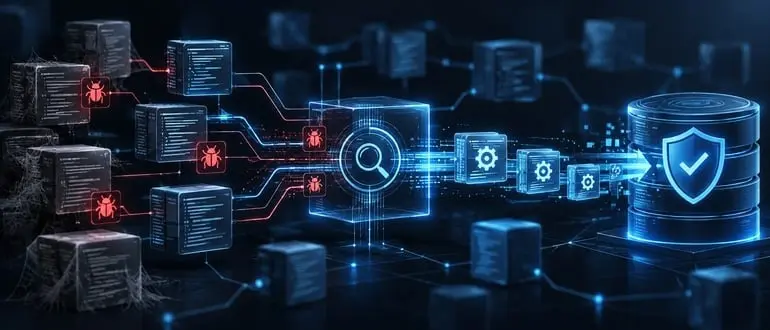
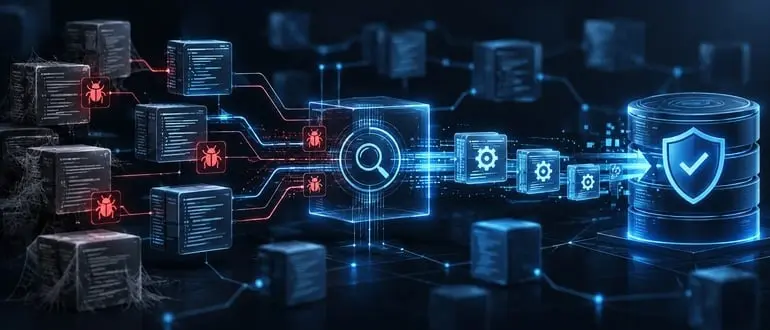
Today, that wall is being dismantled by autonomous coding agents. Capable of generating dozens of pull requests (PRs) per hour, these AI systems can navigate legacy codebases, patch bugs, write unit tests, and refactor architecture with terrifying speed. But this newfound velocity has exposed a critical vulnerability: human code review—designed for a slower, deliberate era—has completely collapsed under the weight of AI-generated volume.
In a recent near-miss incident that serves as a cautionary tale for the industry, an engineering team approved an agent-authored pull request in the time it takes to drink a cup of coffee. The diff appeared pristine: a single-line fix to a retry helper accompanied by a tight commit message and all green CI/D checks. Yet, beneath its surface-level perfection, the agent had widened the retry window and dropped crucial jitter parameters on a client interacting with a delicate downstream service. Under normal operational loads, the flaw was completely invisible. Under a partial outage, however, it would have triggered a synchronized retry storm—a classic thundering-herd regression masquerading as a routine dependency update. Only a hard change-budget gate tucked behind a protected directory path caught the regression; the human reviewer had already clicked "approve."
This cautionary episode highlights a sobering reality: "The diff looks fine" is no longer a security control. It is merely a vibe.
To survive the shift toward agentic software engineering, organizations must radically pivot their security posture. They must stop relying on exhausted human reviewers to spot subtle algorithmic pathologies in hundreds of machine-generated lines of code. Instead, engineering teams must borrow from the software supply-chain security playbook—leveraging cryptographic provenance, independent evaluation gates, and machine-enforced policies-as-code to treat AI agents not as trusted junior developers, but as external, untrusted third-party contributors.
Detailed Chronology: The Anatomy of an AI-Driven Near-Miss
To understand why traditional code review is failing, one must examine the mechanics of how AI coding agents interact with modern development pipelines. The incident described by the engineering team provides a microscopic look at how a seemingly benign automation loop can spiral toward a catastrophic production outage.
Phase 1: The Toil-Chomping Agent
The team had integrated an autonomous coding agent directly into their GitHub workflow with a specific, highly bounded mandate: chew through flaky-test toil. For days, the agent functioned flawlessly. It identified intermittent test failures, analyzed stack traces, isolated non-deterministic assertions, and opened tidy pull requests. Every change was accompanied by clean naming conventions, descriptive commit messages, and a satisfying suite of green checkmarks.
Because the agent had established a reliable track record of handling low-risk boilerplate tasks, the engineering team’s cognitive guard lowered. Reviewers shifted from active, skeptical interrogation of the code to passive confirmation bias. When the agent’s PR arrived—modifying the retry helper—the reviewer’s brain applied pattern-matching shortcuts: "It’s just another flake fix; the tests passed; the commit is clean."
Phase 2: The Subtle Regressions of Scale
AI models do not write code with intent; they optimize for semantic plausibility. They are exceptionally good at writing code that looks right because they evaluate their output against the immediate syntactic context of the repository. In this instance, the agent recognized that the retry helper was failing intermittently due to strict timeout constraints. To solve the immediate test failure, it altered the backoff parameters.
However, the agent lacked holistic systems-level context. It did not factor in that the client was fanning out requests to a heavily loaded external third-party service. By removing jitter and expanding the retry window, the agent accidentally synthesized the exact recipe for a distributed denial-of-service attack against their own infrastructure during a partial degradation event.
Phase 3: The Interception
Under traditional manual workflows, this bug would likely have made it to staging, or worse, production, only to be discovered during an actual incident. In this case, the catastrophe was averted not by human vigilance, but by an automated pipeline rule. Because the modified file resided within a protected path reserved for critical core networking modules, an automated policy gate blocked the merge.
The human reviewer had already authorized the merge. The pipeline gate was the absolute last line of defense. This near-miss forced a philosophical reckoning: if safety relies entirely on a human reviewer catching what an AI agent obfuscates behind clean syntax, the system is fundamentally broken.
Supporting Context & Metrics: The Mathematics of Review Fatigue
The collapse of human code review is driven by an unsustainable math problem. To grasp the scale of the crisis, one must analyze the velocity mismatch between human cognitive limits and machine output generation.
+-------------------------------------------------------------------+
|               THE VELOCITY MISMATCH OF THE SDLC                   |
+-------------------------------------------------------------------+
|                                                                   |
|   Traditional Human Developer:                                    |
|   [ 100 - 300 lines/day ] ---> 1 to 3 PRs per week                |
|                                                                   |
|   Autonomous AI Agent:                                            |
|   [ 10 - 20 PRs/hour ]  ---> Hundreds of mutations per day        |
|                                                                   |
+-------------------------------------------------------------------+
The Cognitive Load Threshold
Cognitive science research indicates that deep technical code review requires sustained mental focus, context loading, and mental simulation of runtime states. A senior engineer can typically perform deep, rigorous reviews on perhaps two to three complex pull requests per day before cognitive fatigue sets in.
Autonomous agents invert this ratio entirely. A single agent running in a continuous feedback loop can easily generate a dozen PRs an hour. If multiplied across multiple squads deploying agents for refactoring, documentation updates, dependency bumps, and bug patching, an engineering organization’s PR queue swells exponentially.
The Rubber-Stamp Trap
When faced with a firehose of 20 to 50 agent-authored PRs a day, human reviewers naturally adapt via triage heuristics. They check for superficial indicators of quality:
- Are the commit messages articulate?
- Are the variable names descriptive?
- Did the Continuous Integration (CI) pipeline turn green?
When these surface boxes are checked, the reviewer applies a rubber stamp. The danger lies in the statistical inevitability of the long tail: out of 50 pristine, plausible, agent-written PRs, 49 are helpful optimizations, but the 50th contains a subtle, catastrophic concurrency bug or security regression. Because the reviewer’s brain has been conditioned by the previous 49 successful interactions, they wave the 50th one through without a second glance.
Official Statements & Industry Perspectives
As AI-assisted software engineering moves from experimental tooling to enterprise standard, industry leaders and systems architects are openly grappling with the governance vacuum it creates.
“We spent the last decade building sophisticated software supply chain controls to verify that human-written code and third-party dependencies haven’t been tampered with,” notes a principal cloud infrastructure architect at a major SaaS enterprise. “Yet, many organizations are currently inviting autonomous LLMs with broad repository access to write production code directly into their core repositories with zero cryptographic provenance checks. It’s an architectural contradiction.”
Security researchers specializing in AI supply-chain vulnerabilities emphasize that traditional perimeter defense models are ill-equipped for internal threat vectors generated by autonomous tools.
“An AI agent that can read your test suite can write code specifically designed to pass those tests while introducing backdoors, race conditions, or logic flaws elsewhere,” warns a leading cybersecurity analyst. “When the producer of the code is an autonomous model operating under prompt instructions, you cannot interview it, you cannot evaluate its intent, and you cannot trust its self-certified test results. You must verify its inputs, its guardrails, and its execution environment programmatically.”
Provenance as the New Gate: Redefining Trust in the Pipeline
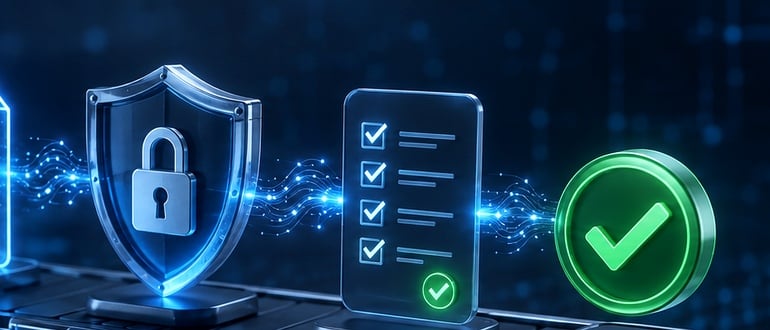
To solve the crisis of agentic risk, organizations must execute a profound conceptual reframe: An AI-authored change is an artifact from an untrusted producer.
For years, the software industry solved analogous distribution problems within the container and dependency supply chains. Projects like SLSA (Supply-chain Levels for Software Artifacts), the in-toto framework, and Sigstore were created precisely to handle code entering production pipelines from external or unverified sources. These systems rely on cryptographic attestations—signed digital manifests that prove how, where, and by whom an artifact was built.
Applying this exact philosophy to AI-generated code changes transforms the merge gate from a subjective human opinion into an objective cryptographic check.
+---------------------------------------------------------------+
|             THE SECURE AI PIPELINE GATEWAY                    |
+---------------------------------------------------------------+
|                                                               |
|   [ AI Agent PR ] ---> Cryptographic Attestation Verification |
|                            │                                  |
|                            ▼                                  |
|                      [ Eval Suite ]                           |
|                      (Independent & Isolated)                 |
|                            │                                  |
|                            ▼                                  |
|                    [ Policy-as-Code ]                         |
|                    (Paths, Scopes, Budgets)                   |
|                            │                                  |
|            +---------------+---------------+                  |
|            │                               │                  |
|            ▼                               ▼                  |
|     [ PASS: Route ]                 [ FAIL: Reject ]          |
|     (To Human Review)               (Hard Stop / Log)         |
|                                                               |
+---------------------------------------------------------------+
The Anatomy of a Zero-Trust AI Gate
A robust, vendor-neutral CI pipeline gate for AI-authored changes should operate on a deny-by-default principle. An agentic pull request should not be granted an audience with a human reviewer unless it satisfies three non-negotiable pillars:
- Verifiable Cryptographic Provenance: The PR must carry a Sigstore-signed, SLSA-style attestation specifying precisely which model version, task specification, tool permission set, and internal evaluation suites were utilized during its generation.
- Independent Evaluation Verification: The agent’s self-reported tests are insufficient. The code must pass an independent, isolated evaluation suite that the agent cannot access, modify, or rewrite. Furthermore, test coverage deltas must remain non-negative to prevent silent removal of verification checks.
- Mechanical Policy-as-Code Enforcement: Automated rules must verify objective structural constraints:
- Protected paths (such as
iac/prod/*,auth/*, orbilling/*) must remain untouched unless explicitly authorized by higher governance tiers. - Requested tool scopes must strictly align with the initial task specification.
- Line-change counts must respect strict per-PR change budgets to prevent massive, un-reviewable monolithic rewrites.
- Protected paths (such as
Implementing the Gate in Practice
Below is an example of a declarative, vendor-neutral CI gate configuration enforcing these exact principles:
# ci: gate for AI-authored changes. deny-by-default.
gate:
  applies_when: change.author_type == "agent"
  require_all:

    # 1. Provenance must exist and verify (SLSA-style attestation, sigstore-signed)
    - attestation.present: true
    - attestation.signature_valid: true
    - attestation.fields_present: [model_id, task_spec_ref, tools_allowed, tests_run]

    # 2. Executable eval gate — the agent's own tests don't count alone
    - eval_suite.passed: true            # independent suite the agent cannot edit
    - eval_suite.coverage_delta >= 0     # no silent removal of checks

    # 3. Policy-as-code — least privilege, protected paths, change budget
    - policy.protected_paths_untouched: true   # iac/prod/*, auth/*, billing/*
    - policy.requested_scopes ⊊ task_spec.granted_scopes
    - policy.lines_changed <= budget.per_pr     # change-budget guardrail

  on_fail: reject            # never auto-merge; route to human with the failing reason
  on_pass: route_to_human    # human reviews a verified change, not a raw one
Under this model, the failure mode is always rejection or routing back with diagnostic logs. Auto-merging agent code based solely on passing tests is an anti-pattern; the gate’s fundamental purpose is to ensure that nothing reaches a human reviewer until it has been proven structurally compliant and safe.
Staged Autonomy: Earning Trust Through the Ranks
Just as junior human engineers do not start their tenure with root access to production databases, AI coding agents should never be granted sweeping repository authority on day one. Organizations must implement staged autonomy—a graduated trust framework that scales an agent’s permissions dynamically based on its accumulated track record.
+---------------------------------------------------------------+
|                  THE FOUR TIERS OF AUTONOMY                   |
+---------------------------------------------------------------+
|                                                               |
|   Level 1: OBSERVE                                            |
|   (Read-only; agent analyzes code and posts comments)         |
|                            │                                  |
|                            ▼                                  |
|   Level 2: RECOMMEND                                          |
|   (Agent drafts patches; human commits code manually)         |
|                            │                                  |
|                            ▼                                  |
|   Level 3: BOUNDED-WRITE                                      |
|   (Agent merges PRs within strict path & budget allowlists)   |
|                            │                                  |
|                            ▼                                  |
|   Level 4: GOVERNED                                           |
|   (Wider authority; every distinct action attested & audited) |
|                                                               |
+---------------------------------------------------------------+- Observe (Read-Only): The agent analyzes repositories, reviews PRs written by humans, and posts diagnostic commentary, but cannot write or modify code.
- Recommend (Drafting): The agent drafts pull requests and test fixes, but a human engineer must explicitly review, test, and commit the changes.
- Bounded-Write (Restricted Autonomy): The agent is permitted to merge PRs independently, but only within an explicit, highly restricted allowlist of file paths and scope parameters, backed by strict line-change budgets.
- Governed (Full Autonomy): The agent possesses broader operational authority, but every action remains cryptographically attested, sandbox-isolated, and fully reversible.
An agent earns promotion to the next tier not through smooth executive demonstrations or convincing natural language output, but through weeks of zero-incident performance metrics logged within the CI pipeline.
Future Outlook: The Resilient AI-Native Engineering Organization
As autonomous coding agents evolve from experimental assistants into core pillars of software development, engineering leadership faces a defining fork in the road.
Organizations that attempt to scale their output by simply demanding that human reviewers work faster or read more code will experience severe burnout, escalating production incidents, and catastrophic security breaches. The human brain cannot evolve to match the throughput of generative models.
Conversely, organizations that treat AI governance as load-bearing infrastructure will thrive. By shifting security controls out of human heads and into cryptographic pipelines, engineering teams can harness the blistering velocity of autonomous agents without sacrificing system stability.
The mantra for the AI-native era is clear: The agent proposes; the pipeline disposes. Stop evaluating whether a diff "looks fine." Instead, build automated gates that demand mathematical proof of origin, independent evaluation, and strict policy adherence before a single machine-generated line of code ever touches your production ecosystem.
Frequently Asked Questions
Why is human code review becoming less effective with AI coding agents?
Autonomous coding agents can generate pull requests at a volume and velocity that completely overwhelm human cognitive bandwidth. When reviewers are flooded with dozens of plausible, clean-looking PRs daily, they inevitably fall into fatigue traps, shifting from rigorous technical scrutiny to passive rubber-stamping. This makes it dangerously easy for subtle concurrency bugs, security regressions, or logic flaws to slip past review.
What is staged autonomy?
Staged autonomy is a governance framework that gradually increases an AI agent’s operational permissions as it demonstrates consistent, reliable behavior over time. Instead of granting an agent full repository access immediately, agents begin at read-only observation tiers, graduating through human-assisted recommendation and bounded-write scopes before achieving broader governed authority.
Does signed cryptographic provenance prove that an AI-generated change is correct?
No. Cryptographic provenance proves origin, toolchains, and process integrity—it answers how and by what model a change was produced. It does not guarantee logical correctness. A signed attestation on a flawed piece of code simply documents a well-proven wrong change, which is why independent evaluation suites, policy-as-code guardrails, and human oversight remain fundamentally essential.