Executive Overview
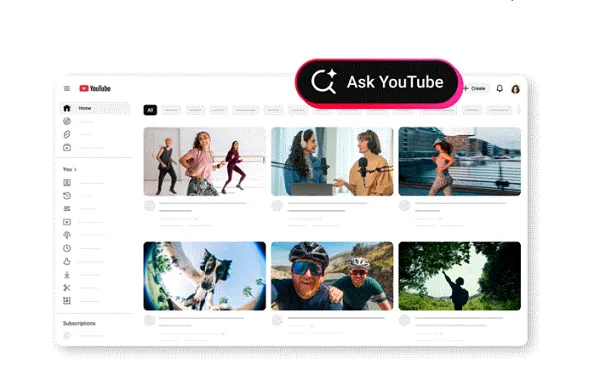
In a strategic move that fundamentally bridges the gap between passive video consumption and active, conversational information discovery, YouTube has announced the nationwide U.S. rollout of its artificial intelligence-powered search tool, Ask YouTube. Initially restricted to a selective cohort of paying Premium subscribers when it debuted on mobile platforms this past April, the feature is now expanding rapidly. All signed-in viewers aged 13 and older across the United States can now harness this conversational search engine across desktop, mobile, and television interfaces.
By allowing users to bypass traditional keyword-matching algorithms in favor of contextual, natural-language prompts, YouTube is positioning itself not merely as a video-sharing repository, but as an authoritative, end-to-end research platform. Whether a user is attempting to coordinate a complex cross-state itinerary or investigating nuanced product specifications, Ask YouTube synthesizes the platform’s vast corpus of video metadata into structured, step-by-step guidance.
This expansion reflects a broader industry-wide pivot toward generative artificial intelligence in consumer search. As tech giants race to redefine how humans interact with digital repositories, YouTube’s integration of conversational AI represents a significant competitive challenge to traditional search engines like Google and Bing. By keeping users within its ecosystem for both initial queries and deep follow-up investigations, YouTube is maximizing engagement while fundamentally altering the user journey of digital discovery.
Detailed Chronology: From Experimental Feature to Nationwide U.S. Deployment
The evolutionary trajectory of Ask YouTube mirrors the broader acceleration of generative artificial intelligence integration across Alphabet’s product ecosystem. To understand the significance of the current U.S. rollout, it is essential to trace the milestones that brought the feature to this juncture.
Phase 1: The Incubation and Premium Testing Ground (April 2024)
YouTube first introduced the Ask YouTube feature to the public as an exclusive, experimental mobile offering tailored for its YouTube Premium subscriber base. During this initial phase, the platform utilized its paying power-users as an active testing ground. By limiting the feature to mobile devices and a locked-in demographic of subscribers, engineers could carefully monitor server loads, evaluate inference costs, and fine-tune the Large Language Model’s (LLM) contextual accuracy.
Feedback from this early window proved critical. Premium users tested the tool’s limits across diverse categories—ranging from complex DIY tutorials to academic overviews—providing YouTube’s machine learning teams with the telemetry needed to refine response times and minimize semantic hallucinations.
Phase 2: Cross-Platform Optimization and Account Expansion (Mid-2024)
As data from the Premium trial rolled in, YouTube’s product development teams began engineering the infrastructure required for a multi-device rollout. Recognizing that discovery happens across varied hardware environments—from living room televisions to commuting mobile phones and office desktops—the platform optimized the feature to operate seamlessly across all form factors.
Concurrently, safety and compliance protocols were codified. To align with digital privacy regulations and platform safety guidelines, access parameters were established for all signed-in viewers aged 13 and older. This eliminated the barrier of a paid subscription, laying the groundwork for a mass-market deployment.
Phase 3: The U.S. General Availability Rollout (Current Milestone)
The current phase marks the official transition of Ask YouTube from an experimental, gated utility into a core pillar of the platform’s user experience. By opening access to all signed-in U.S. users across desktop, mobile, and television devices, YouTube has democratized advanced AI search capabilities.
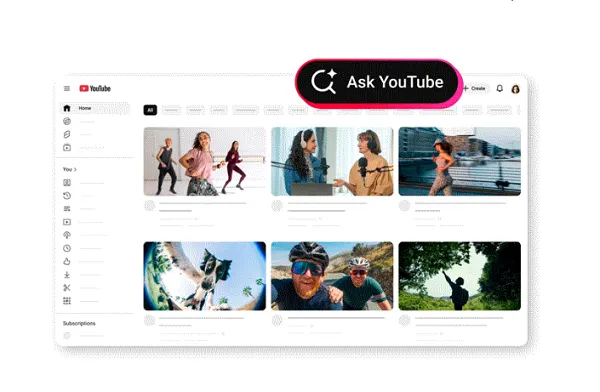
Rather than receiving a static list of video thumbnails based on keyword density, users can now enter complex, multi-layered queries and receive synthesized, contextual intelligence directly beneath or alongside their browsing interface.
Supporting Context & Metrics: Redefining Search Beyond Keywords
To fully appreciate the implications of Ask YouTube, one must analyze the structural limitations of legacy video search mechanics and the unique challenges of parsing unstructured video data.
The Limitation of Traditional Keyword Matching
For nearly two decades, online video discovery relied heavily on metadata: video titles, tags, descriptions, and user-generated comments. While effective for surfacing high-level matches, this system frequently faltered when users sought granular, highly specific answers embedded deep within the timeline of a 45-minute video.
If a user wanted to know how a specific automotive mechanic fixed a particular transmission fault in a two-hour restoration video, traditional search could only point them to the general video, leaving them to scrub through the timeline manually. Ask YouTube changes this paradigm by leveraging advanced AI models that comprehend the semantic context of transcripts, audio tracks, and visual elements, bridging the gap between macro-level video indexing and micro-level information retrieval.
Practical Application: Conversational Intelligence in Action
To illustrate the power of this technology, consider YouTube’s primary use-case example: planning a three-day road trip from San Francisco to Santa Barbara.
- The Old Paradigm: A user searches "San Francisco to Santa Barbara road trip." The search engine returns dozens of travel vlogs, travel agency commercials, and amateur home videos. The user must click through multiple links, watch parts of several videos, and manually cross-reference notes to build a cohesive itinerary.
- The Ask YouTube Paradigm: The user enters the same prompt into the conversational interface. Instead of a list of videos, the system generates a structured, step-by-step itinerary detailing scenic stops, recommended dining options, and driving intervals, synthesizing insights gathered from multiple creators across the platform.
Multi-Turn Conversations and Deep Contextual Memory
One of the most powerful technical dimensions of the expanded Ask YouTube tool is its support for multi-turn conversational memory. The system does not treat each prompt as an isolated event.
If a user receives the aforementioned San Francisco-to-Santa Barbara itinerary, they can immediately issue a follow-up query such as: "What are some pet-friendly hotel options along that specific route?" or "Can you adjust this to exclude driving on Highway 1?" The AI retains the context of the original prompt and the previous response, delivering tailored, highly specific refinements without requiring the user to restate their foundational parameters.
Official Statements and Industry Perspectives
While YouTube has rolled out the feature iteratively, leadership has consistently emphasized the tool’s potential to transform passive viewing into active knowledge acquisition.
In internal documentation and public product briefings, YouTube representatives have framed the conversational search tool as a natural evolution of the platform’s mission to organize the world’s video information and make it universally accessible and useful.
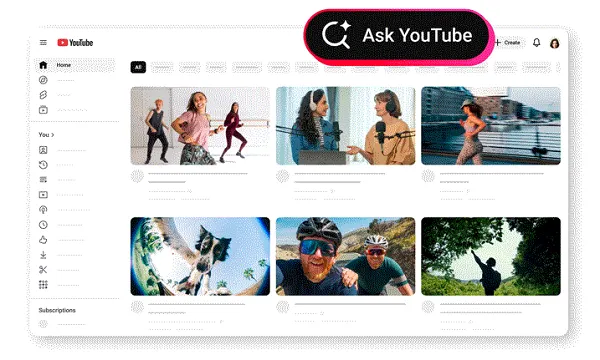
"For example, you can ask for help planning a 3-day road trip from San Francisco to Santa Barbara, and you’ll get a structured, step-by-step itinerary instead of a list of videos."
— YouTube Product Statement
Industry analysts have been quick to note the strategic significance of this development. By transforming search into a conversational dialogue, YouTube is positioning itself as a direct competitor to traditional search engines and dedicated AI chat assistants.
Digital media analysts observe that users increasingly turn to video platforms for practical guidance—ranging from cooking techniques and software troubleshooting to financial literacy and product reviews. By introducing an intelligence layer that reads, synthesizes, and structures this video data, YouTube enhances its own utility as an authoritative research destination. Creators whose content feeds these AI syntheses may also find themselves benefiting from increased visibility as trusted authorities within structured summaries.
Future Outlook: Global Scaling and the Horizon of Video Discovery
As the U.S. rollout establishes a baseline for performance, stability, and user adoption, the immediate horizon for Ask YouTube points toward international expansion and deep linguistic localization.
Global Localization and Multilingual Deployment
YouTube has confirmed that its engineering teams are actively working on bringing Ask YouTube to international markets. Scaling this technology globally, however, presents unique engineering and linguistic challenges.
Unlike text-based LLMs that process primarily written web data, YouTube’s underlying models must parse regional dialects, colloquialisms, and diverse accents across thousands of localized video libraries. Deploying the feature in non-English markets will require extensive fine-tuning to ensure that conversational responses maintain high accuracy, cultural relevance, and strict adherence to local regulatory standards.
The Evolution of Creator Monetization and Discovery
As conversational AI becomes the primary entry point for user discovery, the relationship between creators and platform algorithms will inevitably evolve. If users increasingly rely on AI-generated summaries rather than clicking directly on individual video thumbnails, YouTube will need to develop robust attribution models. Ensuring that source creators receive proper credit—and potentially financial compensation or traffic attribution—within AI-generated responses will be critical to maintaining a healthy, collaborative creator ecosystem.
Furthermore, as Ask YouTube expands to television screens and desktop environments, the interface design will continue to iterate. Voice-activated conversational search on smart TVs, for instance, could radically streamline how families and individuals discover content in living room environments, turning the television remote into a dynamic conversational tool.
Conclusion
The expansion of Ask YouTube to all U.S. users aged 13 and older marks a watershed moment in digital media consumption. By merging the unmatched breadth of user-generated video content with state-of-the-art conversational artificial intelligence, YouTube is successfully redefining what a video platform can be. As the feature scales globally and matures through ongoing user interaction, it promises to permanently alter how humanity searches for, consumes, and applies knowledge found within the digital video landscape.