Executive Overview
The paradigm of open-source software security is undergoing a structural collapse. For well over a decade, security operations teams, platform engineers, and developers have relied on a reactive, after-the-fact methodology: pulling a package from a public repository, running a static or dynamic vulnerability scanner, cross-referencing the results against Common Vulnerabilities and Exposures (CVE) databases, and praying that the metadata remains current and uncompromised.
Today, this "scanner-and-CVE" model is not merely showing its age—it is completely obsolete.
The primary catalyst for this obsolescence is the meteoric rise of autonomous and semi-autonomous artificial intelligence coding agents. Tools like Anthropic’s Claude, Cursor, GitHub Copilot, and specialized terminal-based agents now pull, parse, and integrate open-source components from across the global internet at blistering, machine-driven speeds. Traditional, reactive vulnerability scans cannot maintain parity with this velocity. By the time a traditional scanner flags a malicious package or an unpatched vulnerability in a staging environment, an AI agent may have already replicated that vulnerable component across dozens of microservices.
In a recent expert discussion, industry veteran Alan Shimel sat down with Leslie Pascual, Field Engineering Manager for AI and Security Solutions at ActiveState, to dismantle the shortcomings of legacy software supply chain security. Pascual—bringing over two decades of multifaceted experience across engineering, enterprise architecture, and leadership, coupled with a deep background in hardening mission-critical healthcare applications—argues that security can no longer begin after a package enters an enterprise ecosystem.
Instead, enterprises must shift security far left: vetting, building, and sealing components inside curated, trusted catalogs before they ever touch a development environment. As AI agents increasingly dictate the velocity of software creation, these trusted open-source catalogs are no longer an optional best practice; they are the foundational table stakes for enterprise software engineering.
Detailed Chronology: The Evolution of Software Supply Chain Vulnerabilities
To understand why traditional security models have failed, one must trace the historical trajectory of open-source consumption alongside the evolution of modern development workflows.
Phase 1: The Wild West of Open Source (Early 2000s–2010s)
In the early days of widespread open-source adoption, developers pulled packages directly from public registries such as npm, PyPI, Maven Central, and RubyGems. The guiding philosophy was velocity and utility: if a library solved a specific problem, it was integrated immediately. Security was largely perimeter-based or nonexistent, operating on the assumption that open-source maintainers were inherently trustworthy actors.
Phase 2: The Rise of the Reactive Scanner (2015–2023)
As high-profile supply chain attacks mounted—typified by incidents like the event-stream npm compromise and the Log4j catastrophe—organizations realized that public registries were vulnerable to account takeovers, typosquatting, and malicious dependency injection. The industry responded by introducing Software Composition Analysis (SCA) tools and vulnerability scanners.
However, these tools were engineered for a human timeline. A developer would download a package, commit it to a repository, and a CI/CD pipeline scanner would flag known CVEs hours or days later. While effective at catching known flaws, this model was fundamentally flawed: it relied on the sluggish reporting of CVE databases and assumed that the version of the package analyzed matched the actual compiled binary.
Phase 3: The AI Agent Acceleration (2023–Present)
The introduction of generative AI and autonomous coding agents shattered the human timeline entirely. Modern AI agents do not wait for code reviews or security approvals. When prompted, they scout the open-source ecosystem for dependencies, write integration logic, and deploy code in seconds.
Because AI agents lack intrinsic situational awareness regarding supply chain hygiene, they frequently fall victim to hallucinations, hallucinated package names (which attackers routinely register in public spaces to execute dependency confusion attacks), and unverified packages. Pascual notes that this dynamic has created an insurmountable gap: reactive scanners are simply too slow to intercept machine-speed threats. The only viable defense is a paradigm shift toward pre-curated, cryptographically proven component catalogs.
Supporting Context & Metrics: Anatomy of a Trusted Catalog
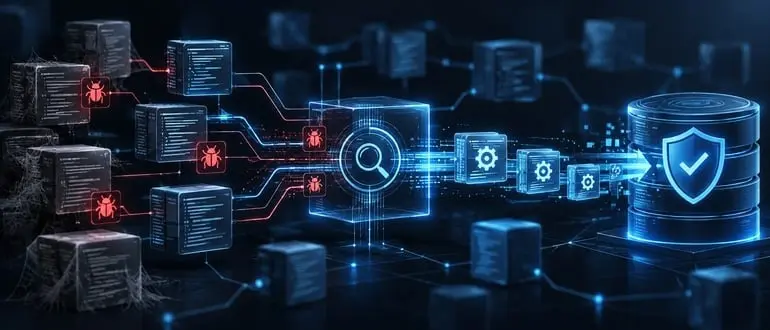
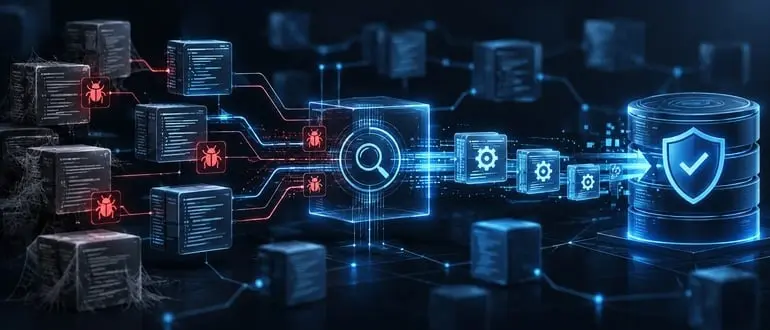
During their comprehensive technical deep dive, Shimel and Pascual dissected the precise mechanics required to build a modern, enterprise-grade trusted open-source catalog. Moving security upstream requires transforming how raw code from public ecosystems is processed before it is deemed safe for internal consumption.
[Public Open Source Ecosystems (Python, Java, JS, R, etc.)]
                          │
                          ▼
             ┌─────────────────────────┐
             │       Cool-down         │
             │         Period          │
             └────────────┬────────────┘
                          │
                          ▼
             ┌─────────────────────────┐
             │      Secure Build       │
             └────────────┬────────────┘
                          │
                          ▼
             ┌─────────────────────────┐
             │ Attestation & Provenance│
             └────────────┬────────────┘
                          │
                          ▼
             ┌─────────────────────────┐
             │  Trusted Open-Source    │
             │         Catalog         │
             └────────────┬────────────┘
                          │
         ┌────────────────┴────────────────┐
         ▼                                 ▼
[Enterprise Artifact Repositories]   [AI Agents / MCP Servers]
 (JFrog Artifactory, Sonatype, etc.)   (Claude, Cursor, etc.)
The Ingestion and Vetting Pipeline
A truly trusted catalog does not merely mirror public repositories; it actively sanitizes and rebuilds them. The architecture outlined by Pascual incorporates several rigorous stages:
- Cool-Down Periods: Newly published packages or sudden version updates are subjected to a mandatory observational window. This mitigates the risk of zero-day account takeovers where malicious actors hijack a legitimate package maintainer’s credentials to push malicious code.
- Secure Builds: Instead of trusting pre-compiled binaries from public repositories, trusted systems pull pristine source code and execute reproducible, isolated builds within hardened container environments.
- Attestation and Provenance: Every component is cryptographically signed, generating Software Bills of Materials (SBOMs) and hardware/software supply chain attestations (such as SLSA frameworks) that verify its exact origin and compilation history.
- Ecosystem Coverage: Modern enterprise demands require breadth. Trusted catalogs currently span the top nine major open-source ecosystems—including Python (PyPI), JavaScript (npm), Java (Maven), and R—with aggressive roadmaps expanding coverage to twelve distinct ecosystems.
- Continuous Monitoring: Vetting does not end at ingestion. Continuous security monitoring tracks downstream patches, zero-day disclosures, and upstream maintainer changes, automatically updating the catalog and notifying downstream consumers.
Seamless Enterprise Integration
A security control that introduces friction will inevitably be bypassed by developers seeking expedient solutions. To combat this, trusted catalogs are designed for absolute transparency within existing developer toolchains.
By integrating natively with enterprise artifact repositories—such as JFrog Artifactory, Sonatype Nexus, and Cloudsmith—catalogs allow organizations to mirror trusted repositories directly inside their internal infrastructure. Developers and AI agents pull components from familiar, internal endpoints without altering their day-to-day workflows.
Official Statements & Expert Insights
To contextualize the urgency of this architectural shift, Leslie Pascual shared critical insights regarding the intersection of enterprise cybersecurity, developer behavior, and artificial intelligence integration.
"For years, our industry has relied on a scanner-and-CVE game," observed Leslie Pascual, Field Engineering Manager for AI and Security Solutions at ActiveState. "You pull a package, run a scan, cross-reference known vulnerabilities, and hope the metadata is current. That model always had gaps, but AI agents are widening them at an exponential rate. Agents pull open-source components from wherever they can find them, at machine speed. An after-the-fact scan is simply not a control that can keep up."
Pascual’s perspective is forged from over two decades of traversing the complex landscapes of software engineering, system architecture, and enterprise cybersecurity—experience that includes hardening critical enterprise healthcare systems where data breaches carry catastrophic human and financial costs.
"When you look at what developers and platform teams actually need, it isn’t another alert window telling you that a vulnerable package was deployed yesterday," Pascual continued. "What they need is a curated catalog that vets components before they enter the environment, not after they cause a production outage or a security breach. Scanners compare packages to CVE metadata after the fact, which is fundamentally different from vetting a component before it ever ships."
Addressing the shift toward AI-assisted development environments, Pascual emphasized the necessity of establishing a single source of truth for autonomous agents:
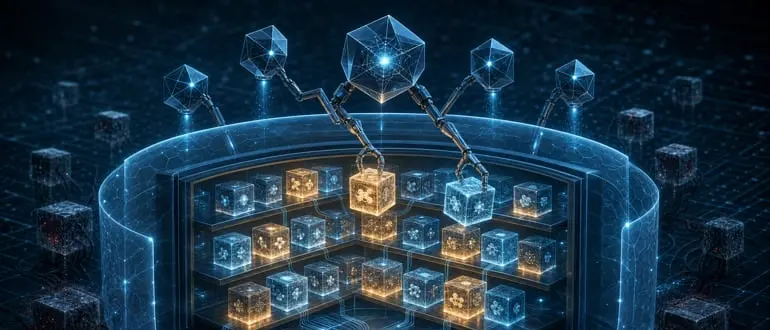
"Tools like Claude and Cursor need a definitive source of truth for open-source components. A trusted catalog becomes exactly that—the authoritative place agents pull from, instead of blindly grabbing whatever arbitrary code the internet returns. By shifting security all the way left, past the scanner and into the catalog itself, we make AI-assisted development safe enough for enterprise teams to scale securely."
Future Outlook: The Road Ahead for AI and Supply Chain Security
As organizations transition from experimental AI usage to core enterprise integration, the mechanics of software security must evolve in tandem. The future of secure software development relies on embedding governance directly into the tools that generate code.
The Model Context Protocol (MCP) and Automated Security
A critical milestone on the immediate technological roadmap is the implementation of Model Context Protocol (MCP) servers. By extending trusted catalogs via MCP, organizations can feed verified, context-aware security intelligence directly into the CI/CD pipeline and the runtime environment of AI coding assistants.
Instead of an AI agent querying public registries or guessing at package dependencies, the agent interfaces directly with the enterprise’s trusted catalog via secure APIs. If a requested package does not meet the organization’s cryptographic provenance, cool-down thresholds, or vulnerability criteria, the agent is automatically redirected to a safe, approved alternative.
Paradigm Shift: Reactive to Preventive Defense
The overarching trajectory of software engineering points toward an inevitable conclusion: reactive security is dead. Organizations that continue to rely exclusively on post-deployment vulnerability scanning will find themselves perpetually outpaced by automated supply chain attacks and the sheer volume of AI-generated code.
By treating the open-source catalog as the primary gatekeeper—enforcing strict provenance, secure builds, and continuous monitoring at the ingestion layer—enterprises can harness the unprecedented productivity gains of artificial intelligence without sacrificing structural security. Ultimately, shifting security past the scanner and into the foundational catalog is the definitive key to scaling secure, AI-driven software development for the enterprise of tomorrow.