Executive Overview
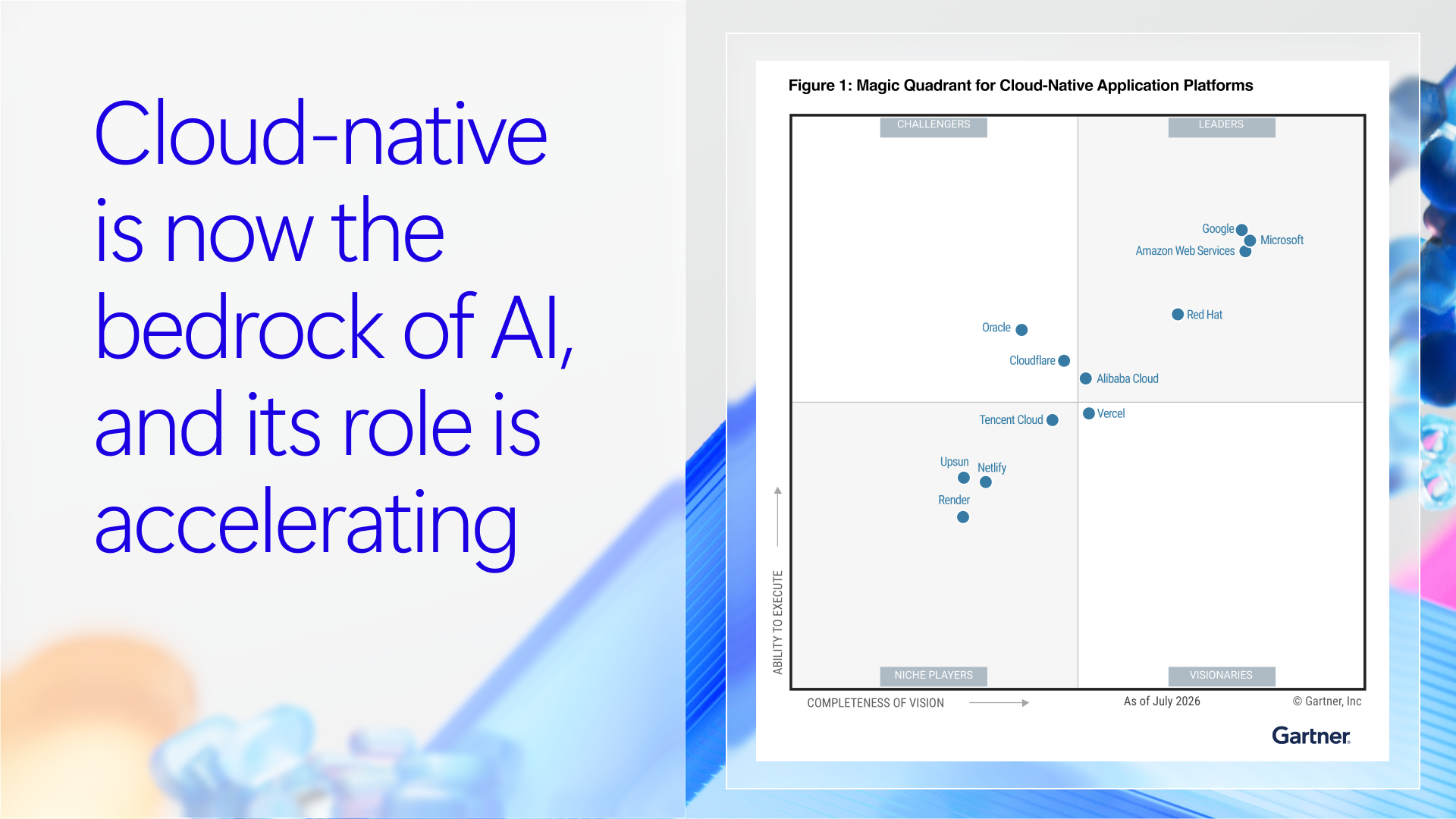
In its newly released 2026 assessment of enterprise cloud infrastructure, Gartner® has named Microsoft a Leader in the Magic Quadrant™ for Cloud-Native Application Platforms. Marking Microsoft’s third consecutive year in the Leaders quadrant for this category, the report underscores a pivotal shift in how global enterprises design, deploy, and scale modern software systems.
The evaluation—authored by Gartner analysts Mukul Saha, Alex Coqueiro, Prasanna Lakshmi Narasimha, and Richard Watson—arrives at a critical inflection point for enterprise IT. Cloud-native platforms are no longer evaluated merely on their ability to host microservices or manage containerized workloads. Instead, they are increasingly judged by their capacity to serve as the operational substrate for generative AI systems, autonomous digital agents, and complex enterprise integrations.
As organizations pivot from localized AI experimentation to mission-critical production systems, the primary operational bottleneck has shifted. The central challenge facing Chief Technology Officers (CTOs) and Chief Information Officers (CIOs) is no longer generating novel AI use cases; it is integrating those models into legacy data environments, maintaining strict operational governance, and ensuring enterprise-grade security at scale. Microsoft’s positioning in the 2026 Magic Quadrant reflects an architecture explicitly structured to converge modern app development, hardware-isolated agent execution, and enterprise security under a unified operational plane.
Detailed Chronology: The Evolution from App Modernization to AI-Native Infrastructure
The trajectory of cloud-native computing over the past decade highlights how architectural paradigms have shifted to meet changing enterprise requirements.
+-----------------------------------------------------------------------------------+
|                            EVOLUTIONARY TIMELINE                                  |
+-----------------------------------------------------------------------------------+
|  Phase 1: Lift-and-Shift to Managed PaaS (Pre-2020)                               |
|  - Migration from monolithic on-premise infrastructure to cloud PaaS.             |
|  - Focus on basic containerization (Docker) and managed web hosting.              |
+-----------------------------------------------------------------------------------+
                                         |
                                         v
+-----------------------------------------------------------------------------------+
|  Phase 2: Microservices & Event-Driven Serverless (2020–2023)                     |
|  - Adoption of decoupled microservices and event-driven functions.                |
|  - Managed container environments (Kubernetes abstractions) and API Gateways.     |
+-----------------------------------------------------------------------------------+
                                         |
                                         v
+-----------------------------------------------------------------------------------+
|  Phase 3: The Enterprise AI Rift (2023–2025)                                      |
|  - Proliferation of standalone LLM sandboxes and experimental chatbots.           |
|  - Operational friction: Siloed AI tools struggle to integrate with core systems. |
+-----------------------------------------------------------------------------------+
                                         |
                                         v
+-----------------------------------------------------------------------------------+
|  Phase 4: Unified AI-Native Cloud Platforms (2026 Baseline)                       |
|  - Convergence of application runtimes, microVM sandboxing, and agent toolchains. |
|  - Standardized governance via Model Context Protocol (MCP) and AI Gateways.      |
+-----------------------------------------------------------------------------------+
Phase 1: Lift-and-Shift to Managed PaaS (Pre-2020)
Early cloud adoption focused predominantly on shifting monolithic on-premises applications to managed Platform-as-a-Service (PaaS) environments. Organizations sought to eliminate infrastructure management overhead, relying on cloud providers for basic OS patching, load balancing, and virtual machine scaling.
Phase 2: Microservices & Event-Driven Serverless (2020–2023)
As digital transformation accelerated, enterprise software decomposed into decoupled microservices, containerized deployments, and event-driven serverless architectures. Runtimes like Azure Functions and managed Kubernetes offerings became standard building blocks. However, managing operational sprawl across disparate API gateways, identity providers, and continuous integration pipelines introduced new complexities.
Phase 3: The Enterprise AI Rift (2023–2025)
The rapid emergence of Large Language Models (LLMs) created a divide within corporate IT. Developer teams quickly assembled experimental AI applications using isolated APIs and standalone vector databases. Yet, bringing these concepts into full production proved difficult. Standalone AI tools lacked direct connections to enterprise data, failed to meet corporate compliance standards, and could not scale predictably without spiraling inferencing costs.
Phase 4: Unified AI-Native Cloud Platforms (The 2026 Baseline)
By 2026, the market consensus—as reflected in Gartner’s evaluation—shifted toward platforms that unify core application modernization with AI orchestration. Runtimes must now execute traditional application logic alongside non-deterministic agentic workflows, providing sandboxed compute, real-time observability, and centralized API policy control within a single operational environment.
Supporting Context & Metrics: Technical Breakdown of the Azure Stack
Microsoft’s cloud-native architecture is built around a series of interconnected services designed to bridge legacy codebases with modern agentic execution engines.
+-----------------------------------------------------------------------------------+
|                      AZURE CLOUD-NATIVE APP PLATFORM                              |
+-----------------------------------------------------------------------------------+
|  DEVELOPER ENGINE & TOOLCHAIN                                                     |
|  [ Microsoft Foundry ]  <--->  [ GitHub Copilot ]                                 |
+-----------------------------------------------------------------------------------+
                                         |
                                         v
+-----------------------------------------------------------------------------------+
|  APPLICATION RUNTIME & EXECUTION LAYER                                            |
|  - Azure App Service (Modernized Web Apps & Legacy Windows/.NET)                  |
|  - Azure Container Apps (Managed Containers, Microservices & Agent Execution)     |
|  - Azure Functions (Event-Driven Execution & MCP Tool Integration)                |
+-----------------------------------------------------------------------------------+
                                         |
                                         v
+-----------------------------------------------------------------------------------+
|  SECURITY, GOVERNANCE & OBSERVABILITY LAYER                                       |
|  - Azure API Management (AI Gateway, Rate Limiting, Semantic Caching)             |
|  - Azure Container Apps Sandboxes (MicroVM Hardware Isolation)                    |
|  - Azure SRE Agent & Monitor (Agentic Incident Remediation & Observability)       |
+-----------------------------------------------------------------------------------+
Core Platform Architecture
Azure App Service & App Service Managed Instance
Serves as the managed foundation for mission-critical web applications. With capabilities such as App Service Managed Instance, organizations can migrate complex legacy enterprise software—including legacy Windows and .NET frameworks—into managed cloud environments without undertaking risky, code-level rewrites.
Azure Container Apps & Container Apps Express
Enables development teams to deploy containerized microservices, APIs, and AI inferencing workloads without directly managing underlying Kubernetes clusters. Azure Container Apps Express streamlines this workflow, allowing developers to push source code directly to production-ready public endpoints.
Azure Functions & Model Context Protocol (MCP) Integration
Provides serverless, event-driven compute that triggers actions based on system events or data changes. Through native integration with the Model Context Protocol (MCP), Azure Functions allows existing back-end business logic to be exposed directly to AI agents as structured, actionable tools.
Azure API Management (AI Gateway Capabilities)
Functions as the governance layer across APIs, model endpoints, and agent tools. The platform enforces central authentication policies, semantic caching (which reduces redundant model calls), rate limits, token quotas, and dynamic model load balancing to keep inferencing costs manageable.
The Compute Primitive for Autonomous Agents: Azure Container Apps Sandboxes
A core technical challenge in modern enterprise AI is safely executing dynamic, AI-generated code. When an agent constructs a script to analyze unstructured corporate data, running that code within a shared environment presents severe security risks.
+-----------------------------------------------------------------------------------+
|                         AGENT EXECUTION ENVIRONMENT                               |
+-----------------------------------------------------------------------------------+
|                                 [ Enterprise Agent ]                              |
|                                          |                                        |
|                                          v                                        |
|                      +--------------------------------------+                     |
|                      |   Azure Container Apps Sandboxes     |                     |
|                      |  +--------------------------------+  |                     |
|                      |  |     Hardware MicroVM Boundary   |  |                     |
|                      |  |                                |  |                     |
|                      |  |  [ Agent Logic ]               |  |                     |
|                      |  |  [ MCP Tools Server ]          |  |                     |
|                      |  |  [ Dynamic Generated Code ]    |  |                     |
|                      |  +--------------------------------+  |                     |
|                      +--------------------------------------+                     |
|                                          |                                        |
|                                          v                                        |
|                          State Preserved Across Execution                         |
+-----------------------------------------------------------------------------------+
Microsoft addresses this threat via Azure Container Apps Sandboxes, which provide hardware-isolated microVM boundaries for individual agent instances.
- Isolated Execution: The microVM primitive runs the agent itself, hosts its MCP server tools, and executes untrusted generated code within an isolated hardware boundary.
- State Persistence: Unlike standard ephemeral container runtimes, the sandbox state survives even when an agent pauses execution, preserving context for long-running multi-step operations.
- Foundation for Microsoft Foundry Agent Service: This sandbox infrastructure serves as the underlying compute layer for Microsoft’s managed agent service, while remaining accessible to enterprises building custom agentic platforms.
Key Integration & Operational Metrics
| Feature / Metric | Operational Impact | Technical Component |
|---|---|---|
| Managed Enterprise Connectors | 1,400+ pre-built connectors handling auth, retries, and data logic | Azure Functions & Logic Apps |
| Provisioning Velocity | Infrastructure setup reduced from 6 weeks to 1 day | Azure App Service (Planet DDS case) |
| Autonomous AI Resolution | 75% autonomous resolution rate across >30,000 monthly transactions | Azure Container Apps (Commerzbank Ava) |
| Model Optimization | Substantial latency and cost reductions via Semantic Caching | Azure API Management AI Gateway |
| Operational Remediation | AI-driven root cause analysis and auditable fix suggestions | Azure SRE Agent + Azure Monitor |
Enterprise Case Studies
The real-world utility of Microsoft’s unified cloud-native environment is demonstrated across diverse vertical markets:
+-----------------------------------------------------------------------------------+
|                        REAL-WORLD ENTERPRISE IMPACT                               |
+-----------------------------------------------------------------------------------+
|  PLANET DDS (Healthcare / SaaS)                                                   |
|  - Shifted to Azure App Service.                                                  |
|  - Cut platform provisioning time from 6 weeks to 1 day.                          |
+-----------------------------------------------------------------------------------+
|  COMMERZBANK AG (Financial Services)                                              |
|  - Deployed "Ava" AI assistant via Azure Container Apps.                          |
|  - Processes >30,000 conversations/month; resolves 75% autonomously.               |
+-----------------------------------------------------------------------------------+
|  GHASSAN ABOUD GROUP (Conglomerate / Retail)                                      |
|  - Built enterprise "Ragin AI" platform on Azure Container Apps.                  |
|  - Delivers agentic operational workflows across multi-industry portfolio.        |
+-----------------------------------------------------------------------------------+
|  LEVI STRAUSS & CO. (Retail & Apparel)                                            |
|  - Embedded Microsoft Foundry across software development pipelines.              |
|  - Streamlined operational decision-making and automated core business workflows. |
+-----------------------------------------------------------------------------------+
1. Planet DDS (Dental Software Solutions)
- Challenge: Traditional infrastructure deployment cycles were consuming significant developer bandwidth, delaying software releases.
- Solution: Transitioned core software services to managed Azure App Service.
- Outcome: Provisioning times fell from six weeks to a single day, allowing engineering teams to reallocate focus from infrastructure management to product feature development.
2. Commerzbank AG (Banking & Financial Services)
- Challenge: Needed a compliant, enterprise-grade architecture to deploy an automated customer service agent capable of executing complex financial tasks.
- Solution: Deployed its agentic AI assistant, "Ava," on Azure Container Apps.
- Outcome: The system handles over 30,000 customer interactions monthly, resolving 75% autonomously without human intervention, while adhering to strict banking security protocols.
3. Ghassan Aboud Group (Diversified Conglomerate)
- Challenge: Operating across retail, healthcare, and logistics, the group required a scalable substrate to deploy customized AI agents across varied operating companies.
- Solution: Standardized its multi-agent platform, "Ragin AI," on Azure Container Apps.
- Outcome: Built a centralized governance model that allows subsidiary business units to launch domain-specific AI workflows safely on shared infrastructure.
4. Levi Strauss & Co. (Global Retail)
- Challenge: Scaling internal software development while integrating generative AI toolchains across enterprise decision-making processes.
- Solution: Combined Microsoft Foundry and GitHub Copilot with standard Azure application services.
- Outcome: Accelerated internal engineering cycles and created unified data pipelines connecting retail inventory systems directly to analytical model endpoints.
Official Statements and Industry Perspectives
Commentary from industry leaders underscores the necessity of anchoring modern enterprise AI strategies in resilient, cloud-native architecture.
"A clean cloud architecture is a prerequisite for AI. You can’t build on top of a weak foundation."
— Mike Gibson, Chief Technology Officer, Planet DDS
This architectural imperative is echoed in Microsoft’s product philosophy. Company leaders stress that enterprise AI adoption fails when treated as a disconnected layer sitting atop fragmented infrastructure. Instead, AI tools, APIs, and autonomous agents must share identity controls, networking boundaries, and operational observability with traditional line-of-business applications.
Gartner Context & Methodological Framework
The Gartner® Magic Quadrant™ for Cloud-Native Application Platforms evaluates vendors based on their Completeness of Vision and Ability to Execute.
+-----------------------------------------------------------------------------------+
|                GARTNER MAGIC QUADRANT EVALUATION CRITERIA                         |
+-----------------------------------------------------------------------------------+
|  COMPLETENESS OF VISION               |  ABILITY TO EXECUTE                       |
|  - Market Understanding & Strategy    |  - Product/Service Viability              |
|  - Infrastructure Convergence Roadmap |  - Customer Operational Success           |
|  - Governance & Security Frameworks   |  - Global Infrastructure & Scale          |
+-----------------------------------------------------------------------------------+
Gartner disclaims endorsement of any vendor, product, or service depicted in its research publications, advising technology users not to select only those vendors positioned in the Leaders quadrant. The report reflects the research methodologies of Gartner’s business and technology insights organization and should be evaluated within the context of the full document, published on August 3, 2026.
Future Outlook: The Converged Future of Cloud and Agentic Systems
As enterprise software transitions into an era dominated by autonomous digital agents, the boundaries between application development, serverless computing, and AI infrastructure are rapidly dissolving.
+-----------------------------------------------------------------------------------+
|                        FUTURE PARADIGM SHIFT: 2026+                               |
+-----------------------------------------------------------------------------------+
|  TRADITIONAL CLOUD DEVELOPER            |  NEXT-GEN AGENTIC ARCHITECT             |
|  - Manages microservice runtimes.       |  - Orchestrates multi-agent systems.    |
|  - Configures manual API routes.        |  - Implements MCP dynamic tool routes.  |
|  - Monitors application uptime.        |  - Governs agentic safety & SRE agents. |
+-----------------------------------------------------------------------------------+
Key Trends Shaping the Enterprise Landscape:
-
Hardware-Level Isolation as Standard Practice:
As AI agents gain autonomous permissions to execute generated code and manipulate dynamic APIs, software boundaries will no longer rely solely on software container isolation. MicroVM hardware sandboxing—similar to Azure Container Apps Sandboxes—will become standard requirements for secure cloud deployments. -
Standardization around the Model Context Protocol (MCP):
The integration of MCP into event-driven runtimes like Azure Functions indicates a future where APIs are authored natively for agent consumption. Legacy systems will increasingly be wrapped in standardized protocol interfaces, enabling AI models to interact securely with legacy enterprise databases without manual integration rewrites. -
Rise of Agentic Site Reliability Engineering (SRE):
Operations teams will increasingly rely on autonomous operational agents, such as the Azure SRE Agent, to manage cloud scale. Rather than responding to static threshold alerts, these SRE agents will trace multi-tier containerized systems, diagnose root causes across complex model pipelines, and execute audited, semi-autonomous remediation actions in real time. -
Strategic Imperative for Modernization:
Organizations continuing to run legacy applications in siloed, unmanaged environments risk exclusion from the agentic economy. Modernizing core application estates using managed PaaS instances serves as a necessary baseline, enabling existing enterprise data and logic to participate directly in modern AI workflows.
The 2026 Gartner Magic Quadrant positioning highlights that the long-term value of cloud-native platforms rests in their ability to bridge yesterday’s enterprise codebases with tomorrow’s agentic systems—providing a unified, secure foundation for continuous technological evolution.