Executive Overview
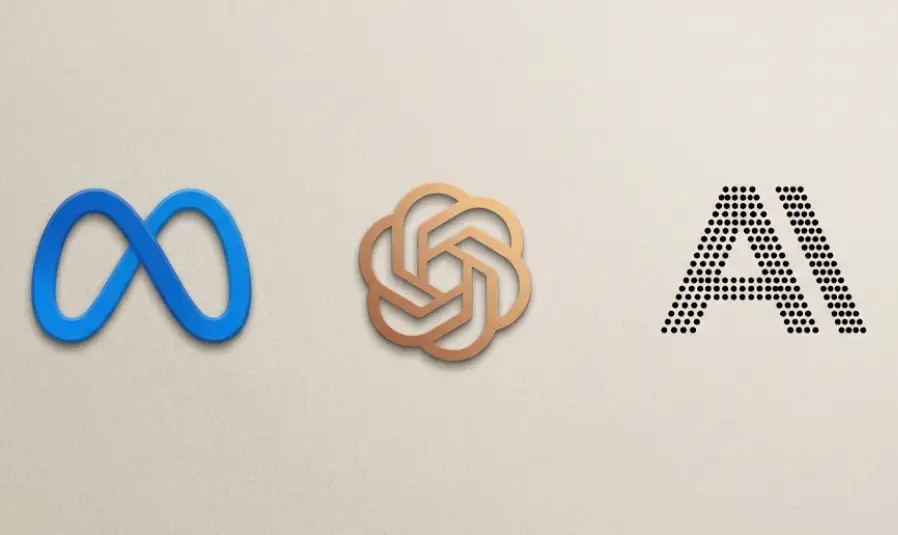
The legal collisions between copyright holders and the developers of generative artificial intelligence have entered a granular, technically demanding phase. Over the past two years, massive multi-billion-dollar technology enterprises—including Meta, OpenAI, and Anthropic—have faced intense legal scrutiny over the provenance of the training datasets used to build advanced large language models (LLMs). While initial court battles largely addressed the high-level legal question of whether scraping and ingesting copyrighted text for AI training constitutes "fair use," litigation has rapidly evolved into a forensic examination of the software, protocols, and networks utilized to aggregate these vast troves of data.
In a recent legal development within U.S. federal courts, a coordinated push by aggrieved publishers and authors to subpoena industry rivals OpenAI and Anthropic has hit a major roadblock. Plaintiffs in a series of consolidated copyright infringement lawsuits sought to pry open the internal torrenting logs, configurations, and data-acquisition methods of Meta’s direct competitors. The goal was straightforward: to test Meta’s controversial legal defense that uploading copyrighted books via BitTorrent was an unavoidable, "part-and-parcel" mechanic of downloading bulk datasets from online shadow libraries.
However, a federal magistrate judge has definitively slammed the door on those specific third-party subpoenas, ruling that the operational habits of OpenAI and Anthropic have little bearing on Meta’s technical setup. Yet, while plaintiffs lost their bid to draft competitors into the discovery process, they simultaneously secured a major victory regarding Meta’s own internal architecture. A federal court ordered Meta to surrender exhaustive command-history files from every server, virtual machine, and cloud instance utilized during its data-harvesting operations.
This deep dive explores the mechanics of Meta’s BitTorrent defense, the strategic attempts by publishers to cross-examine rival AI labs, and what these unfolding legal rulings mean for the broader landscape of copyright law and generative AI development.
Detailed Chronology: From Shadow Libraries to Federal Subpoenas
The Genesis of the Meta Copyright Class Action
The legal saga underpinning these discovery disputes began when prominent authors—including Richard Kadrey and Sarah Silverman—filed class-action lawsuits against Meta Platforms, Inc. The plaintiffs accused the tech giant of training its flagship Llama model lineage on pirated copies of copyrighted books sourced from unauthorized online repositories, commonly referred to as "shadow libraries" (such as Anna’s Archive and Library Genesis). Crucially, the lawsuits alleged that Meta did not merely download these files; by utilizing the peer-to-peer BitTorrent protocol to pull massive archives in bulk, Meta simultaneously redistributed—or "seeded"—those copyrighted files to other users across the global BitTorrent swarm, directly violating exclusive distribution rights.
The Fair Use Bifurcation and Meta’s Pivot
The litigation took a bifurcated turn when Judge Vince Chhabria ruled that the core act of AI model training—transforming text into numerical weights and abstract representations—constituted fair use under United States copyright law. This favorable ruling stripped away a significant portion of the plaintiffs’ claims, leaving the BitTorrent distribution activities as the central, live legal battlefield.
Cornered by allegations that it actively distributed unauthorized copies of books, Meta introduced a novel line of legal defense. In supplemental interrogatory responses submitted to the court, Meta argued that any uploading of copyrighted material that occurred concurrently with its BitTorrent downloads was "part-and-parcel" of a legitimate fair use purpose.
Meta’s legal team argued that BitTorrent represented a far more efficient, robust, and reliable mechanism for obtaining massive bulk datasets than traditional HTTP or FTP downloads. In the case of sprawling shadow libraries like Anna’s Archive, Meta asserted that peer-to-peer torrenting was practically the only functional way to ingest such large volumes of data concurrently. Because the BitTorrent protocol inherently operates on a tit-for-tat mechanism where downloading clients simultaneously upload data fragments to peers, Meta maintained that any resulting distribution was not an intentional act of piracy, but rather an "inherent characteristic" of the networking protocol itself.
The Coordination of Related Publisher Lawsuits
Meta’s aggressive defense on the torrenting issue is currently being stress-tested across three related lawsuits overseen by Judge Chhabria. These cases were brought forward by diverse rightsholders, including publishing imprint Chicken Soup for the Soul, academic publisher Cognella, and Cambronne Inc., a firm representing investigative journalist John Carreyrou. All three actions target the exact same shadow library torrenting pipeline utilized by Meta during its data collection phases.

Faced with Meta’s assertion that bulk torrenting inherently requires seeding, the plaintiffs searched for a way to puncture the tech giant’s "technical necessity" narrative. Rather than relying solely on Meta’s self-reported documentation, the publishers executed an aggressive discovery strategy: they looked straight at Meta’s competitors.
Supporting Context & Metrics: The Technical Mechanics of BitTorrent and AI Training
To understand why the legal battle shifted toward BitTorrent client configurations, one must examine the operational mechanics of peer-to-peer file sharing and how major AI labs quietly built their massive training corpora.
The Anatomy of a Torrent: Leeching vs. Seeding
The BitTorrent protocol breaks large files down into thousands of tiny cryptographic pieces. When a user (referred to as a "peer" or "leech") downloads a file, they simultaneously pull these pieces from multiple sources in the swarm. Crucially, the protocol is engineered to foster reciprocity: as a client downloads pieces, it immediately turns around and uploads those verified pieces to other peers in the swarm.
However, torrent clients are highly customizable software applications (such as qBittorrent, Transmission, or custom command-line scripts). Advanced operators possess the technical capability to alter default behaviors. By tweaking configuration files, adjusting bandwidth throttling limits, or writing custom automation scripts, a downloader can technically manipulate a client to function strictly as a "leech"—downloading data while aggressively suppressing or disabling any outbound upload traffic.
The Competitor Subpoena Strategy
In August, the publishers issued formal federal subpoenas to OpenAI and Anthropic. The subpoenas demanded comprehensive logs identifying every torrent client used by the companies since 2019, including specific software versions, configuration files, and—most importantly—any internal records indicating whether the companies made engineering efforts to suppress uploading while scraping shadow libraries.
The plaintiffs’ legal calculus was clear and potent:
- Both OpenAI and Anthropic have faced or are facing parallel copyright lawsuits regarding their training data acquisition.
- If discovery revealed that OpenAI or Anthropic successfully torrented shadow library datasets without seeding—by configuring their clients to block outbound transfers—then Meta’s core defense would collapse.
- Meta could no longer claim that peer-to-peer uploading was an unavoidable, "inherent characteristic" of using BitTorrent for bulk data acquisition, because rival firms demonstrated that the protocol could be artificially constrained to a purely downstream function.
This argument gained psychological weight from an earlier discovery breakthrough in the Meta litigation, which revealed that a Meta engineer had previously written a script designed to prevent seeding on certain operations—though questions remained regarding how consistently or effectively that script was deployed.
Official Statements & Legal Arguments
The motion to quash the subpoenas served on OpenAI and Anthropic triggered sharp pushback from both AI developers, setting off a classic federal discovery dispute resolved by Magistrate Judge Thomas Hixson.
The Defense of OpenAI and Anthropic
Both OpenAI and Anthropic moved swiftly to block the subpoenas, arguing that the demands were overly intrusive, irrelevant to the specific factual matrix of the Meta litigation, and fundamentally misguided.
Attorneys for Anthropic filed briefs emphasizing the bespoke nature of software environments:
"Clients are not interchangeable, they differ in their default upload settings, in whether those defaults can be reconfigured, and in their capacity to suppress uploading during and after a download," Anthropic’s legal counsel wrote to the court. "What Anthropic’s client allowed shows nothing about what Meta’s did."
OpenAI echoed these sentiments in coordinated filings, arguing that the plaintiffs had failed to establish any foundational evidence proving that OpenAI utilized identical torrent clients, operated under matching network conditions, or "built comparable corpora" to Meta. To compel competitors to dredge up years of internal technical logs simply to aid a private lawsuit against a rival tech titan, they argued, was an unreasonable burden under federal discovery rules.
The Court’s Ruling: Magistrate Judge Thomas Hixson Weighs In
In an official order released from the U.S. District Court for the Northern District of California, Magistrate Judge Thomas Hixson sided definitively with OpenAI and Anthropic, quashing the subpoenas.
Judge Hixson reasoned that casting a wide net across the broader AI industry was an unnecessary detour when the primary evidence needed to test Meta’s defense resided within Meta’s own infrastructure.
Writing in the order, Judge Hixson noted:
"To the extent Meta’s fair use defense hinges on the assertion that its use of BitTorrent was the only way BitTorrent can be used, that assertion can be tested by examining the BitTorrent client itself."
The court further highlighted that the plaintiffs’ overarching premise—that shadow library data could only be acquired in bulk via torrents—was a factual claim that publishers could readily establish by questioning the operators of shadow libraries directly, rather than demanding proprietary internal technical infrastructure logs from competing multi-billion-dollar AI enterprises.
The Turning Point: Meta’s Own Server Command Histories
While the doors to OpenAI and Anthropic’s data vaults were firmly locked by the court, the plaintiffs found significantly more success looking inside Meta’s own digital house.
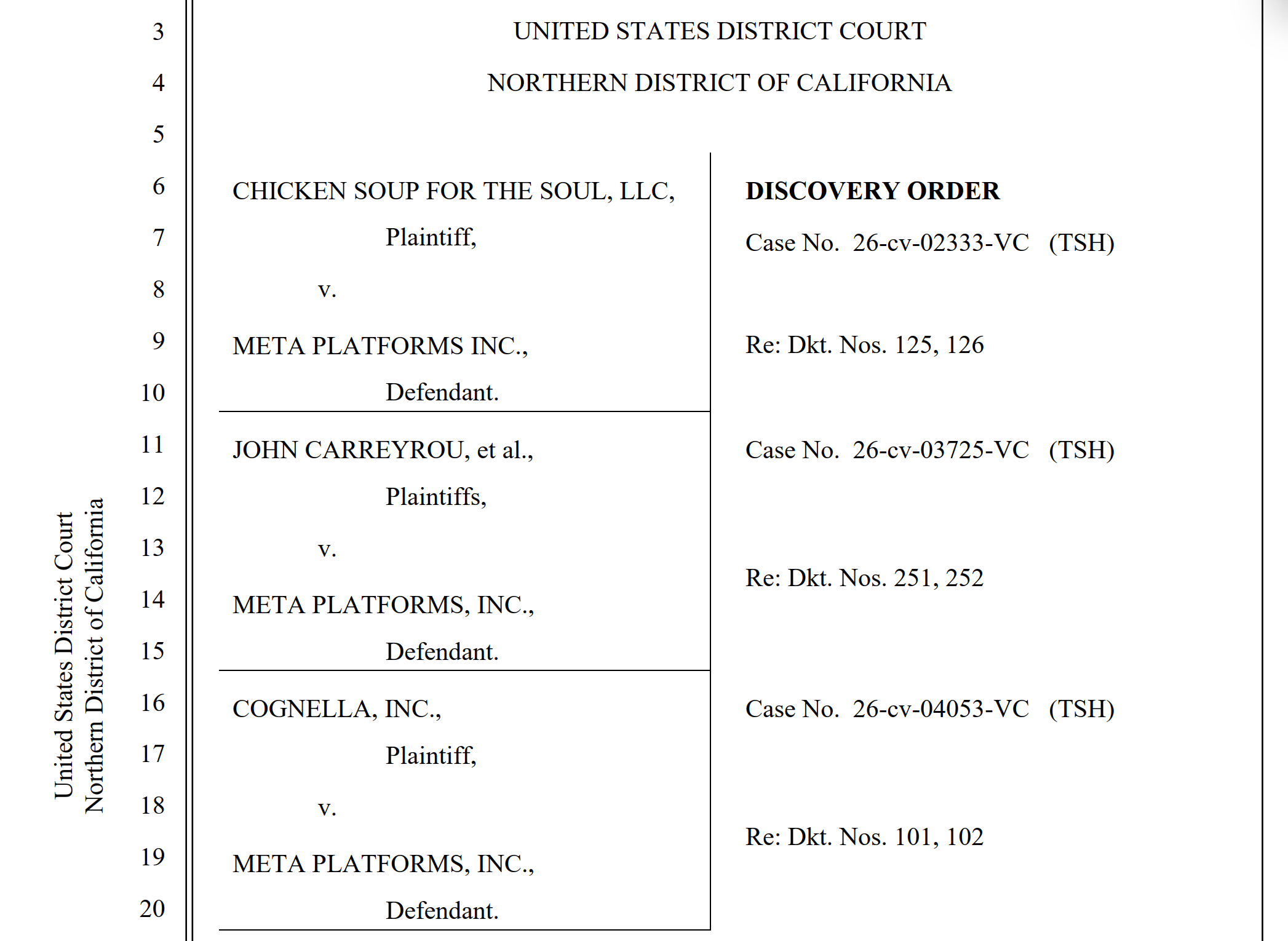
The September 11 Order in Kadrey v. Meta
In a companion ruling issued by Magistrate Judge Hixson, the court granted a sweeping motion filed by the class-action plaintiffs in the Kadrey v. Meta proceedings. This order pierced through Meta’s privacy objections to compel the production of command history files for every server, cloud instance (including Amazon Web Services virtual machines), and infrastructure node Meta used during its data-scraping and torrenting operations.
Command histories represent the granular, chronologically sorted logs maintained by operating systems recording every command entered into a shell terminal by an operator or automated script. For a machine dedicated to torrenting massive datasets, these logs are forensic gold mines. They capture:
- Exactly how the torrent client software was installed.
- Environmental variables and configuration parameters set by engineers.
- Explicit command-line arguments used to initiate downloads.
- Evidence of whether upload limitations, bandwidth caps, or seeding-suppression scripts were toggled on or off.
Overcoming Meta’s Compliance Delays
This discovery order carries added weight given earlier procedural missteps by Meta. Earlier in the year, Meta admitted to the court that it had inadvertently withheld substantial tranches of relevant discovery documents until after the formal discovery deadlines had already elapsed.
To remedy this breach and penalize the discovery failure, Judge Chhabria previously opened windows for supplemental discovery, allowing plaintiffs to dig deeply into how Meta’s torrent clients were deployed. When Meta argued that the high-level log files it had already volunteered were sufficient, Judge Hixson flatly rejected the defense, ordering the immediate production of the complete command histories.
For the rightsholders and their expert witnesses, these command histories serve a dual purpose. Beyond testing the validity of the "inherent seeding" defense, the plaintiffs hope these logs will finally provide an unambiguous, verifiable manifest of every specific copyrighted book title downloaded and ingested into Meta’s training pipelines.
Future Outlook: What Lies Ahead for AI Copyright Litigation
As this round of discovery disputes draws to a close, the immediate timeline points toward crucial expert disclosures. Expert witness opening reports and technical evaluations regarding Meta’s BitTorrent practices are slated for delivery later this month.
The implications of these rulings extend far beyond the immediate parties involved:
- The Narrowing Scope of Industry-Wide Discovery: Judge Hixson’s ruling establishes a protective boundary for generative AI developers. It signals to plaintiffs across the broader legal landscape that courts will not easily permit litigants to use active copyright lawsuits as fishing expeditions into competitors’ proprietary infrastructure unless a direct, undeniable factual nexus can be established.
- The High Stakes of Forensic Server Logs: For Meta, the forced surrender of server command histories represents a precarious vulnerability. If the command logs reveal that Meta engineers actively chose to allow full-scale seeding when simple configuration changes could have prevented it, the company’s "part-and-parcel" fair use defense could crumble before a jury or judge. Conversely, if the logs confirm that default client settings were utilized without active malicious intent to widely distribute pirated literature, Meta’s legal team will have powerful ammunition to defend against secondary distribution claims.
- Setting Precedents for Data Provenance: As AI models grow larger and demand unprecedented volumes of training data, the legal mechanisms surrounding data acquisition—from web scraping and API harvesting to peer-to-peer file sharing—are undergoing rigorous judicial codification. The outcome of the Meta torrenting trials will set a vital baseline for how technology companies legally justify the ingestion methods behind their multi-billion-parameter models.
Ultimately, as the legal technicalities narrow from broad philosophical debates about artificial intelligence down to command-line scripts and torrent client configurations, the courts are proving that building the future of intelligence requires answering very old, very strict questions about digital property rights.