Executive Overview
In an era dominated by rapid smartphone sensor development and computational photography, the market for dedicated compact cameras has undergone a dramatic transformation. Far from rendering the pocket camera obsolete, the smartphone revolution has instead distilled the compact camera market into a highly specialized niche of premium, purist imaging tools. At the absolute vanguard of this movement sits the Ricoh GR series—a line of cameras that has spent three decades resisting industry trends in favor of a singular, unwavering philosophy: to be the ultimate snapshot tool.
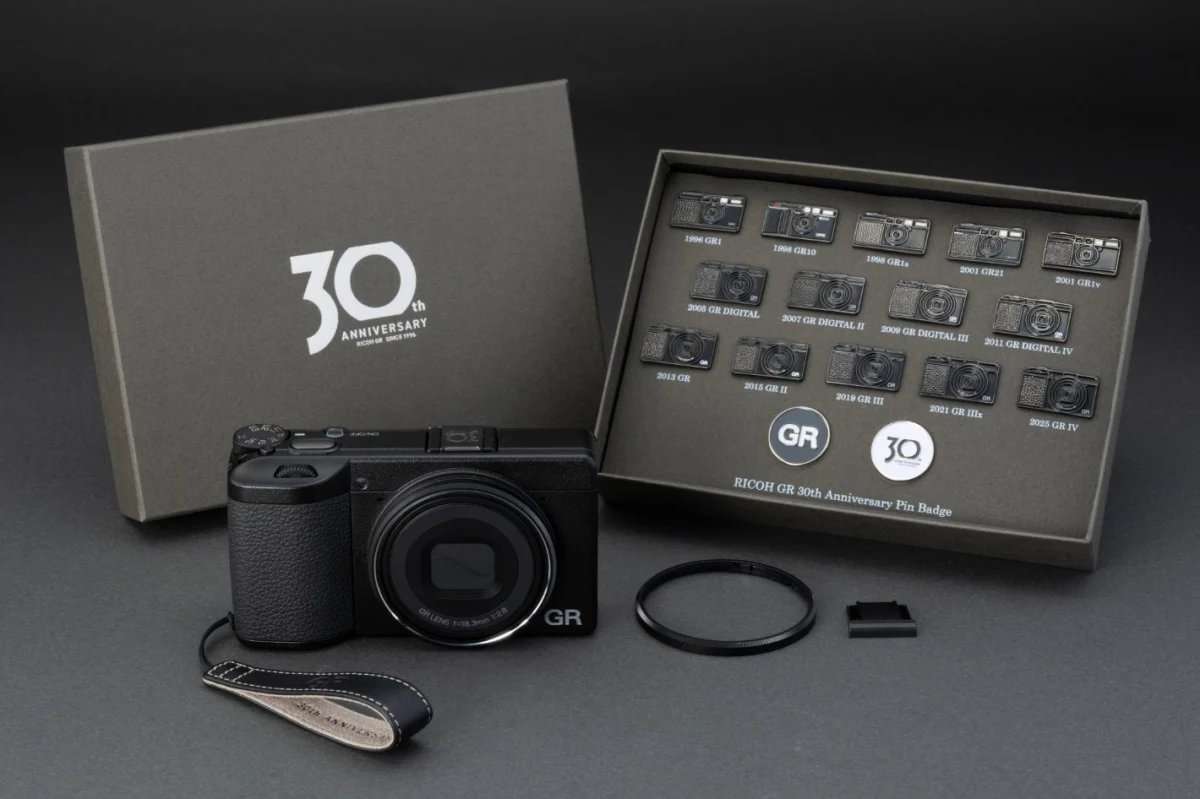
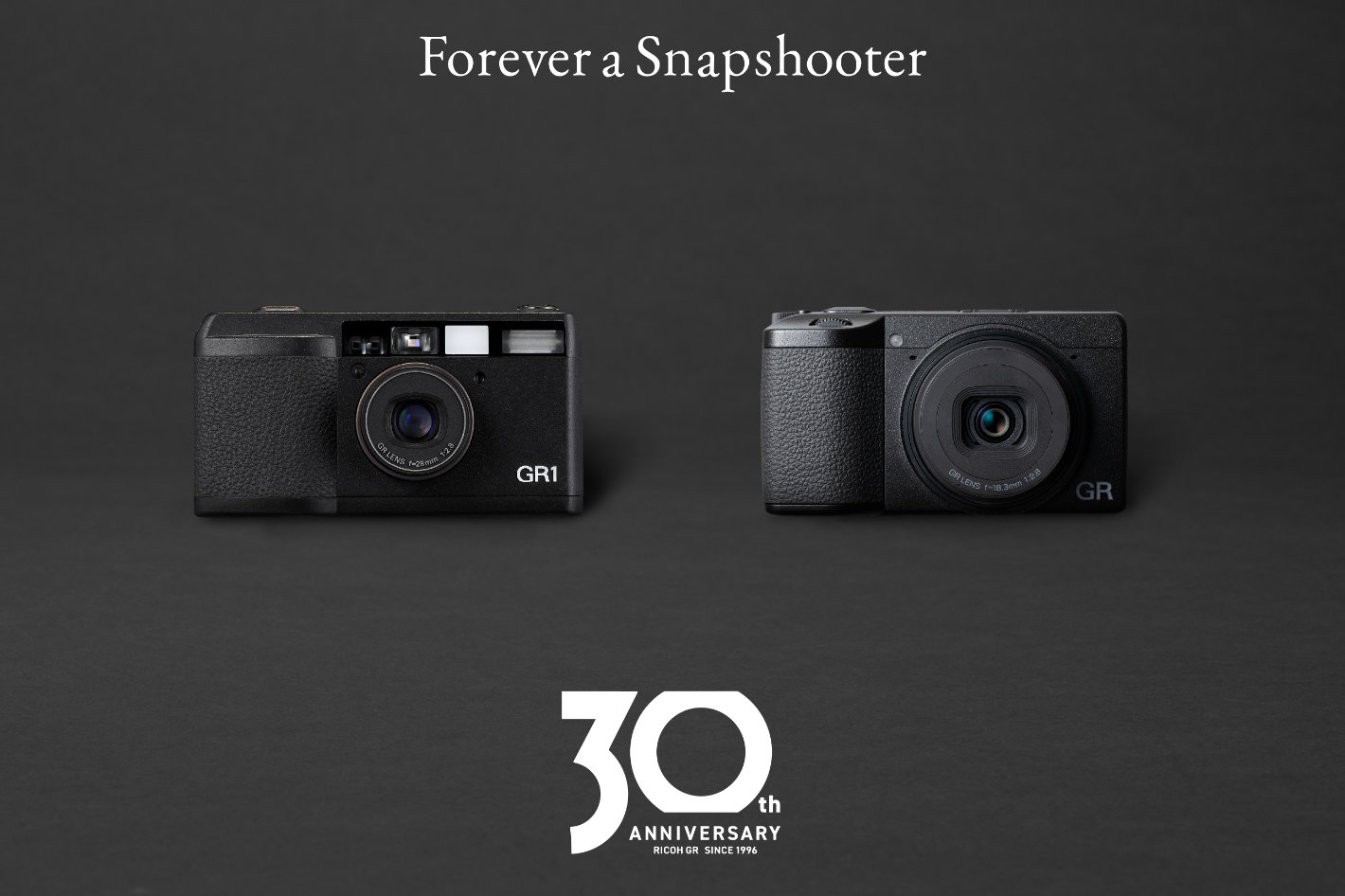
To commemorate this milestone, Ricoh Imaging has announced the release of the Ricoh GR IV 30th Anniversary Edition. Limited to just 6,000 units worldwide and scheduled to begin shipping in October 2026 with a recommended retail price of $1,799, this highly collectible kit merges the cutting-edge performance of the recently launched GR IV (released in September 2025) with exquisite physical and aesthetic homages to the camera that started it all: the 1996 Ricoh GR1 film camera.
This release is more than a simple exercise in retro-nostalgia. It is a celebration of a design philosophy that has remained remarkably unbroken for thirty years. While other manufacturers have abandoned the compact form factor or expanded their cameras to accommodate complex zoom lenses and electronic viewfinders, Ricoh has doubled down on its core tenets of pocketability, blistering speed, and uncompromising optical performance. This investigative look explores the historical trajectory of the GR series, analyzes the technical specifications of the new anniversary model, and examines the unique community-driven culture that has kept this minimalist camera platform alive.
Detailed Chronology: Three Decades of the "Ultimate Snapshot Camera"
[October 1996]  RICOH GR1 (Film) - The Legend Begins (28mm f/2.8 GR Lens)
      │
[1997]          GR 28mm f/2.8 L-Mount Lens (Limited run of 3,000 units)
      │
[Late 90s-00s]  Film Iterations: GR1s, GR10, GR1v, and the ultra-wide GR21 (21mm)
      │
[October 2005]  RICOH GR Digital - Transition to Digital (CCD Sensor)
      │
[May 2013]      RICOH GR (APS-C) - The Large-Sensor Revolution
      │
[September 2025]RICOH GR IV - Current Flagship Platform
      │
[October 2026]  RICOH GR IV 30th Anniversary Edition (6,000 units worldwide)
The Genesis: The RICOH GR1 (October 1996)
The story of the GR series begins in October 1996 with the release of the Ricoh GR1. At a time when high-end point-and-shoot film cameras were gaining traction among professionals—such as the Contax T2 and the Leica Minilux—Ricoh sought to build a tool that was distinctly more utilitarian and pocketable.
The GR1 stood out immediately due to its incredibly slim magnesium alloy chassis and its legendary optical formula. At its heart was a fixed 28mm f/2.8 GR lens, comprised of seven elements in four groups. This lens utilized aspherical elements to deliver pin-sharp resolution from corner to corner, virtually eliminating chromatic aberration and distortion. Despite its diminutive size, the GR1 offered advanced features:
- An intuitive aperture-priority exposure system.
- A precise, fast autofocus mechanism.
- A physical exposure compensation dial located on the shoulder of the camera.
- An incredibly thin profile that allowed it to slip unnoticed into a shirt pocket.
The camera quickly became a staple for street photographers and photojournalists, most notably Japanese master Daido Moriyama, who used the GR’s high-contrast, wide-angle aesthetic to redefine street photography. It was prized as the ultimate "second camera" for professionals who needed to capture spontaneous moments without the bulk of an SLR.
The Leica Screw Mount Experiment (1997)
By 1997, the reputation of the GR 28mm f/2.8 optical formula had grown so formidable that Ricoh took an unorthodox step. The company manufactured a limited run of 3,000 standalone GR 28mm f/2.8 lenses in the classic Leica L39 screw mount. This allowed rangefinder photographers to use Ricoh’s proprietary optical design on Leica and Voigtländer bodies. The success of this release cemented the "GR Lens" brand as an independent mark of optical excellence, proving that Ricoh’s engineering could go toe-to-toe with the finest glass manufacturers in Germany and Japan.
Refining the Analog Formula: From GR1s to the Ultra-Wide GR21
Ricoh spent the late 1990s and early 2000s refining the analog GR platform:
- GR1s (1998): Introduced an improved lens coating to combat flare and added a backlight for the LCD.
- GR10 (1998): A simplified, more consumer-friendly version of the GR1 with fully automatic operation.
- GR1v (2001): Designed for demanding professionals, adding manual ISO override and a manual focus distance selector (forerunner to the digital "Snap Focus" system).
- GR21 (2001): A monumental engineering achievement, housing a ultra-wide 21mm f/3.5 lens in a chassis barely larger than the original GR1. To this day, the GR21 remains highly sought after by film enthusiasts for its unique perspective and compact form.
The Digital Pivot: The GR Digital (2005)
As the photographic world shifted from silver halide to silicon, Ricoh faced the daunting task of translating the GR philosophy into a digital medium. In October 2005, the company launched the Ricoh GR Digital.
While the camera featured a small 1/1.8-inch CCD sensor rather than a large format sensor, it maintained the exact ergonomic footprint, magnesium alloy build quality, and dual-control-dial layout of its film ancestors. It introduced a fixed 28mm-equivalent f/2.4 lens and, crucially, kept the physical, tactile interface that street photographers demanded. Ricoh iterated on this digital platform with the GR Digital II, III, and IV, continuously refining sensor performance and autofocus speed.
The Large-Sensor Revolution: The APS-C Era (2013–Present)
The true spiritual successor to the original GR1 arrived in May 2013 with the release of the Ricoh GR. Ricoh engineers managed a remarkable feat: they shoehorned a massive DSLR-sized APS-C sensor into a body that was virtually identical in size to the small-sensor GR Digital models. This transition offered photographers unprecedented dynamic range, low-light performance, and shallow depth-of-field control in a pocket-sized package.
This APS-C blueprint laid the foundation for the GR II, the highly popular GR III (and its 40mm-equivalent sibling, the GR IIIx), and ultimately, the current flagship GR IV platform.
Technical Deep-Dive: The GR IV Baseline vs. The Anniversary Refinements
The Ricoh GR IV 30th Anniversary Edition is built directly upon the technological foundations of the standard GR IV, which debuted in September 2025. It inherits all of the internal hardware and performance capabilities of the current flagship, while introducing a suite of bespoke cosmetic enhancements and collector-grade accessories.
Hardware Comparison: GR IV Standard vs. 30th Anniversary Edition
| Specification | Ricoh GR IV (Standard) | GR IV 30th Anniversary Edition |
|---|---|---|
| Sensor Type | APS-C CMOS | APS-C CMOS |
| Effective Pixels | Approx. 25.74 Megapixels | Approx. 25.74 Megapixels |
| Image Processor | GR ENGINE 7 | GR ENGINE 7 |
| Lens Construction | 18.3mm F2.8 (28mm equivalent in 35mm format) | 18.3mm F2.8 (28mm equivalent in 35mm format) |
| Image Stabilization | 5-axis Shake Reduction (SR) | 5-axis Shake Reduction (SR) |
| Start-up Time | Approx. 0.6 seconds | Approx. 0.6 seconds |
| Shutter Button Finish | Standard Matte Black | Premium Dark Silver (GR1 Inspired) |
| Rear Buttons Finish | Standard Black | Premium Dark Silver (GR1 Inspired) |
| Lens Ring Cap | GN-3 Standard | GN-3 (30th) Diamond-Cut Design |
| Power-Off Screen | Standard GR Logo Graphic | Custom 30th Anniversary Graphic |
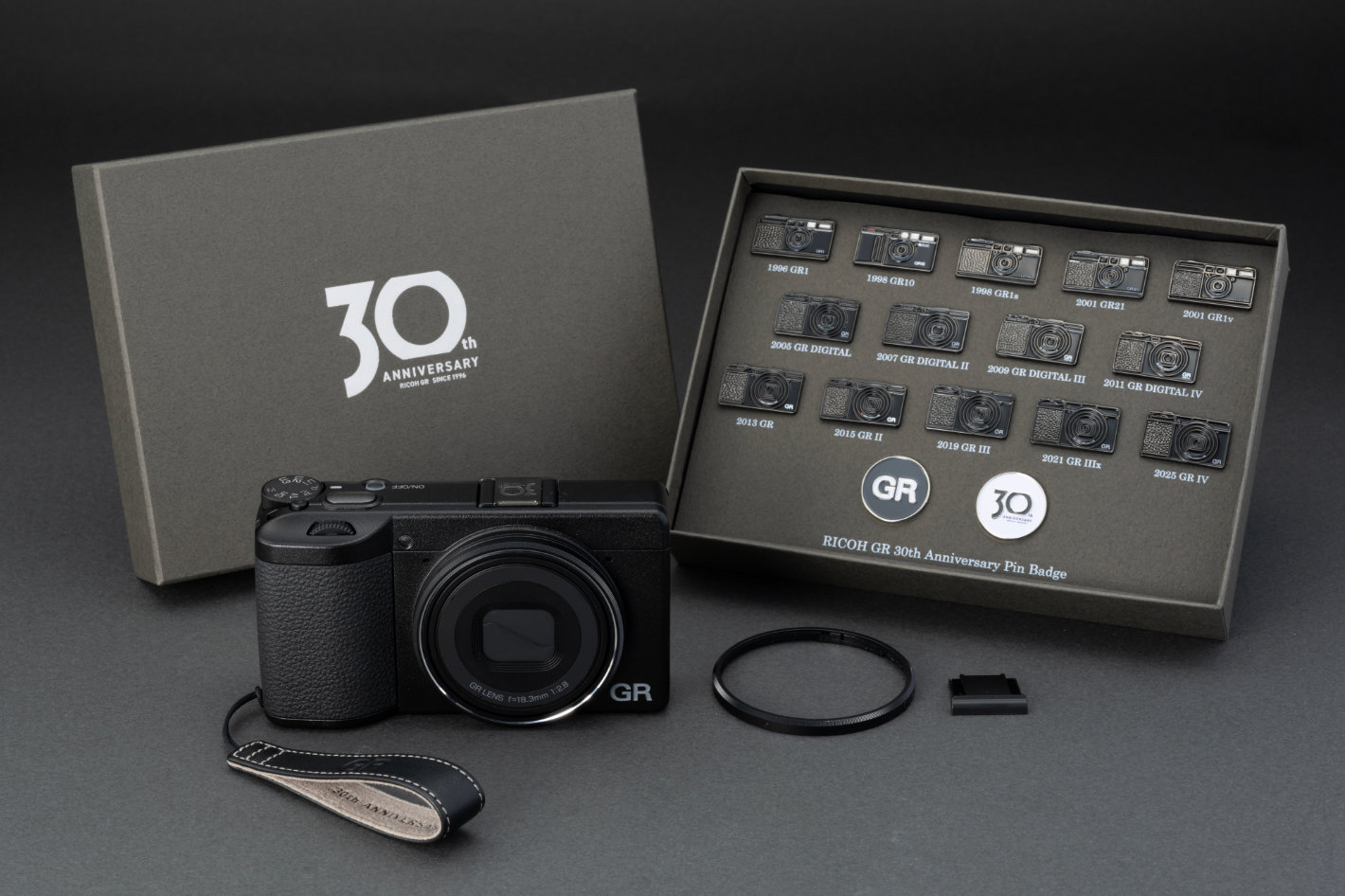
| Included Accessories | Standard Strap, Battery, USB Cable | GS-4 (30th) Leather Finger Strap, GK-2 (30th) Metal Hot Shoe Cover, 16-Piece Pin Badge Set |
| Production Run | Continuous | Limited to 6,000 units worldwide |
| MSRP | Market Standard | $1,799 USD |
Core Optical and Computational Performance
The technical prowess of the GR IV platform cannot be overstated. By utilizing the GR ENGINE 7 processor alongside a highly optimized 25.74-megapixel APS-C sensor, the camera delivers image quality that rivals professional interchangeable-lens cameras.
The fixed 18.3mm f/2.8 lens is designed specifically for this sensor, ensuring that light strikes the photodiodes at an optimal angle across the entire frame. This coplanar sensor-and-lens alignment minimizes the soft corners and chromatic aberrations common in zoom-lens compacts.
Furthermore, the integration of a 5-axis Shake Reduction system inside a body this compact is a triumph of optomechanical engineering. This system allows photographers to shoot handheld at shutter speeds far slower than previously possible, compensating for hand-shake in low-light environments and expanding the creative envelope for night-time street photography.
With a lightning-fast start-up time of just 0.6 seconds, the GR IV is engineered to capture fleeting moments. Photographers can draw the camera from a pocket and secure focus using the legendary "Snap Focus" system—which bypasses autofocus entirely by locking the lens to a user-defined preset distance—in a fraction of a second.
Bespoke Aesthetic Refinements
The 30th Anniversary Edition distinguishes itself through a series of subtle, sophisticated design changes that directly reference the original GR1 film camera:
- Dark Silver Controls: The shutter release button and the array of rear control buttons have been treated with a dark silver finish. This mirrors the metallic accents of the magnesium-bodied GR1 from 1996, breaking up the monochromatic stealth-black look of the standard model.
- GN-3 (30th) Ring Cap: Surrounding the lens barrel is a special edition ring cap featuring a diamond-cut textured surface. This pattern is inspired by the knurled metal bezel that surrounded the lens on the original GR1, adding a tactile point of contact and catching the light in a distinctive, premium manner.
- Custom Firmware Graphic: Upon powering down the camera, the rear LCD screen displays a dedicated 30th Anniversary graphic, serving as a subtle digital nod to the camera’s legacy.
[Collector's Box Set]
 ├── Ricoh GR IV 30th Anniversary Camera (Dark Silver Accents)
 ├── GS-4 (30th) Genuine Leather Finger Strap
 ├── GK-2 (30th) Engraved Metal Hot Shoe Cover
 └── Custom Presentation Case containing:
      └── 16 Collectible Pin Badges (14 historical GR models + 2 logos)
Collector’s Kit Accessories
The anniversary camera ships as part of a deluxe presentation kit. Included in the box is the GS-4 (30th) finger strap, crafted from genuine leather and designed for secure, minimal handling. The hot shoe is protected by the GK-2 (30th) metal cover, which features custom engraving.
Finally, the kit contains a unique piece of brand memorabilia: a set of 16 custom-designed pin badges. Fourteen of these badges depict every major GR camera model released over the past thirty years—from the 1996 GR1 through the digital era to the present day—alongside two exclusive badges featuring the GR and 30th Anniversary logos.
Supporting Context, Market Positioning & Metrics
The release of a $1,799 limited-edition compact camera occurs within a unique economic and cultural landscape. To understand the significance of this launch, one must analyze the market dynamics of the premium compact segment.
The Economics of Premium Compacts
In recent years, the secondary market for high-end compact cameras has surged. Vintage film cameras like the original Ricoh GR1 and GR21 have seen their prices double or triple on auction sites, driven by a younger generation of photographers seeking a tangible, analog aesthetic. Simultaneously, demand for premium digital compacts—such as the Fujifilm X100 series and the Ricoh GR III—has frequently outstripped global supply, leading to long backorders and inflated resale prices.
Global Production Cap: 6,000 Units
Estimated Regional Allocation:
┌───────────────────────────┬───────────────────────────┐
│ North America: ~2,000     │ Asia-Pacific: ~2,500      │
├───────────────────────────┼───────────────────────────┤
│ Europe: ~1,200            │ Rest of World: ~300       │
└───────────────────────────┴───────────────────────────┘
By limiting the GR IV 30th Anniversary Edition to 6,000 units worldwide, Ricoh is targeting a highly dedicated segment of collectors, brand loyalists, and professional street photographers. Given the global nature of the GR community, an allocation of 6,000 units is highly conservative. This guaranteed scarcity is expected to make the kit an instant collector’s item, likely appreciating in value on the secondary market immediately following its October 2026 release.
Community Integration: The Global Pop-Up Strategy
To support the launch and celebrate the three-decade milestone, Ricoh has bypassed traditional advertising channels in favor of grass-roots, community-focused engagement. A central pillar of this strategy is a series of immersive pop-up events worldwide.
A flagship four-day event is scheduled to take place in New York City from October 22 to October 25. Rather than acting as a simple retail showroom, this pop-up is designed as a cultural hub for street photographers. The schedule includes:
- Exclusive Presentations: Deep dives into the history of the GR series led by Ricoh engineers and optical designers.
- Live Shooting Sessions: Hands-on opportunities for attendees to test the GR IV and the Anniversary Edition in real-world environments.
- Creator Discussions: Panel talks featuring prominent contemporary street photographers discussing their techniques and philosophies.
- Guided Photo Walks: Peer-to-peer networking opportunities where photographers can explore the streets of New York together, capturing images that embody the GR spirit.
Similar experiential events are scheduled for Los Angeles, London, and a return engagement in New York, emphasizing Ricoh’s commitment to fostering a global community of visual storytellers.
Official Statements & Corporate Philosophy
The longevity of the GR series is directly attributable to Ricoh’s disciplined corporate philosophy. While other tech companies frequently pivot their product lines to chase short-term consumer trends, Ricoh has maintained a remarkably consistent set of development guidelines for the GR brand.
In press materials accompanying the announcement, Ricoh representatives expressed deep gratitude to their user base:
"Since the release of the RICOH GR1 film camera in October 1996, the GR Series has been committed to the essential GR values of high image quality, quick response, and portability, in pursuit of the ultimate snapshot camera. The current products in the series have continued that commitment without change. We are deeply grateful for the support we have received from both professionals and experienced amateurs alike."
This statement highlights a key aspect of the GR’s success: its appeal to both ends of the photographic spectrum. For the seasoned professional, the GR offers a zero-compromise sensor and lens combination that can be operated entirely with one hand. For the passionate amateur, it provides an unpretentious, highly educational shooting experience that strips away the distractions of zoom lenses and complex menus, forcing the photographer to focus entirely on composition, light, and timing.
This direct relationship between Ricoh’s engineering team and the photographic community has allowed the camera to evolve organically. Many of the software updates and ergonomic tweaks implemented over the years—such as the customizable "Fn" buttons, advanced crop modes, and unique film simulation profiles—were developed in direct response to feedback gathered at community events and user forums.
Future Outlook: The Legacy of Fixed-Lens Compacts in a Smartphone Era
As we look toward the late 2020s, the relevance of a dedicated, fixed-lens compact camera like the Ricoh GR IV might seem counterintuitive to mainstream tech analysts. Yet, the continued survival and growth of this niche suggest a deeper shift in consumer behavior and artistic expression.
[Modern Smartphone]
 ├── Computational Over-Processing (Artificial HDR, AI Face Smoothing)
 ├── Multi-Lens Compromises (Tiny Sensors, Digital Zoom Degradation)
 └── Continuous Digital Distractions (Notifications, Social Media)

         VS

[Ricoh GR IV Platform]
 ├── Pure Optical Capture (25.74MP APS-C Sensor, Raw Data)
 ├── Dedicated Physical Controls (Tactile Dials, Instant Muscular Memory)
 └── Single-Purpose Zen (Total Focus on the Decisive Moment)
The Pushback Against Computational Aesthetics
As smartphone cameras rely increasingly on artificial intelligence, machine learning, and aggressive HDR algorithms to construct images, a growing contingent of photographers is pushing back against this "computed" aesthetic. Smartphone images, while technically sharp and well-exposed, often suffer from a lack of character, possessing flat lighting and artificially smoothed textures.
The Ricoh GR IV, by contrast, offers pure optical capture. Its APS-C sensor records raw light data through a world-class prime lens, preserving natural micro-contrast, organic depth of field, and subtle gradations of shadow and light. For photographers who view image-making as a craft rather than a utility, the tactile feedback and optical honesty of a dedicated camera remain irreplaceable.
Ergonomics as an Antidote to Screen Fatigue
Furthermore, the physical act of shooting with a GR camera provides an ergonomic experience that a flat glass smartphone screen can never replicate. The GR’s grip is molded to fit the hand perfectly; its physical dials offer distinct, tactile detents that allow for blind adjustments. This physical interface fosters a state of flow, enabling the camera to disappear in the hand, leaving nothing between the photographer and the "decisive moment."
Conclusion
The Ricoh GR IV 30th Anniversary Edition is a fitting tribute to thirty years of uncompromising design. By marrying the cutting-edge imaging technology of 2026 with the tactile, soul-stirring DNA of the 1996 GR1, Ricoh has created more than just a collectible camera; they have reaffirmed their commitment to the art of street photography. As long as there are stories to be told on the sidewalks of the world’s cities, the quiet, unobtrusive click of a Ricoh GR will continue to be heard, capturing history one frame at a time.