Executive Overview
The intersection of international intellectual property enforcement, creative expression, and geopolitical posturing was brought into sharp focus earlier this month in the south of France. Leaders from the global film industry, governmental ministries, and regulatory bodies converged for the inaugural Lumière Summit—a high-profile, one-day gathering hosted jointly by French President Emmanuel Macron and South Korean President Lee Jae Myung. Designed to foster dialogue among studio executives, policymakers, and filmmakers, the event culminated in the signing of several sweeping thematic declarations, most notably a pact aimed at bolstering international cooperation against digital piracy.
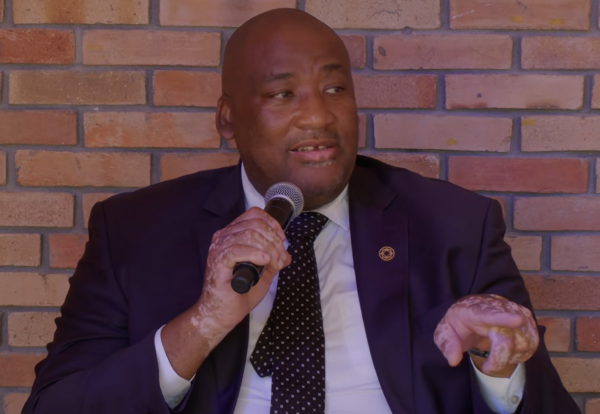
However, the event’s high-minded consensus on intellectual property enforcement hit a significant speed bump during a panel discussion titled “The Race Against Piracy.” While the session was ostensibly slated to feature a keynote address from Motion Picture Association (MPA) CEO Charles Rivkin—who was delayed due to a presidential meeting—the rhetorical spotlight was unexpectedly stolen by Gayton McKenzie, South Africa’s Minister of Sport, Arts and Culture.
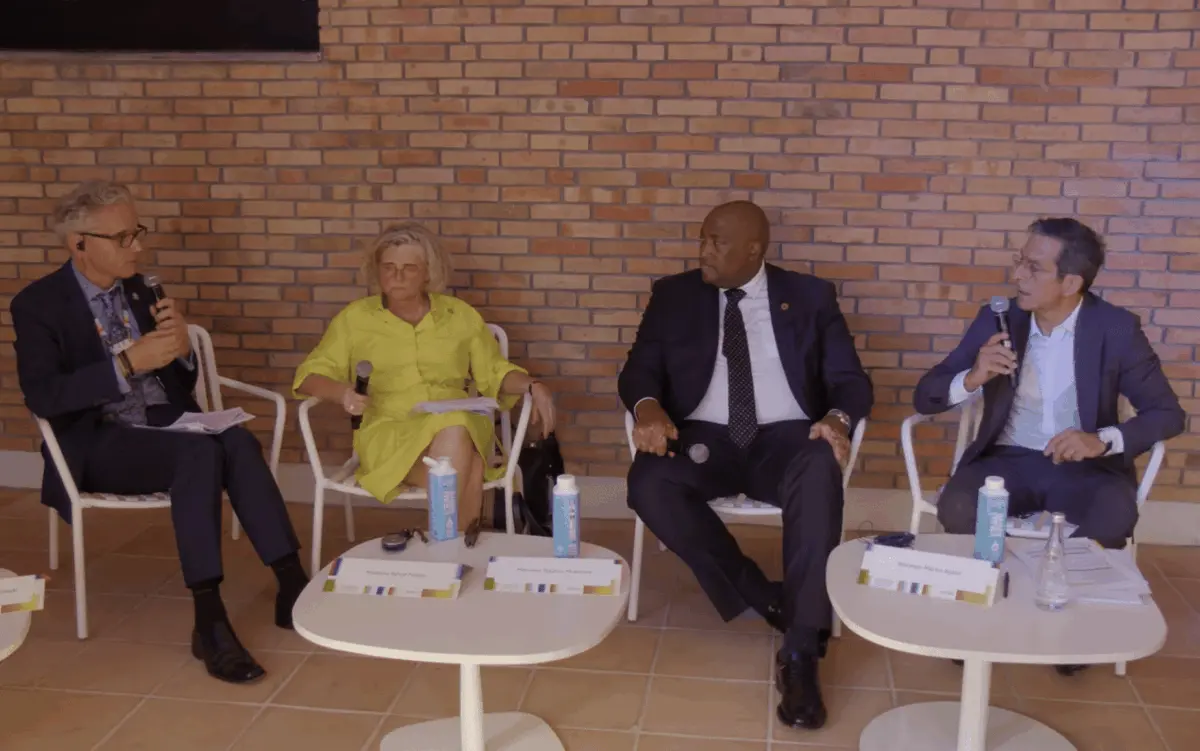
Sharing a stage with luminaries such as the chair of France’s independent media regulator, ARCOM, and a deputy director-general of the World Intellectual Property Organization (WIPO), Minister McKenzie delivered a blistering critique of what he characterized as a hypocritical, "schizophrenic" approach to digital piracy by Western-dominated entertainment conglomerates. Pointing to instances where unauthorized distribution is celebrated by creators when it subverts authoritarian censorship, contrasted with the heavy-handed legal penalties levied against everyday consumers in the developing world, McKenzie demanded intellectual honesty from global IP enforcers.
Furthermore, the South African minister used the international stage to push back against paternalistic enforcement models, trade-related coercion, and unilateral compliance pressures historically imposed by Western economies. Insisting that South Africa possesses both the financial resources and the political will to combat illegal streaming and downloading on its own terms, McKenzie’s fiery intervention underscored a growing schism between the Global North and Global South over copyright enforcement, sovereignty, and the true definition of cultural piracy.
Detailed Chronology: From Censorship to Confrontation
The Genesis of the Controversy
The ideological fault lines that would ultimately fracture the summit’s closing sessions were exposed early in the day during panel discussions addressing the complex realities of creative distribution under authoritarian regimes.
Swedish-Egyptian filmmaker Tarik Saleh—renowned for critically acclaimed, politically charged features such as The Nile Hilton Incident and Cairo Conspiracy—took to the stage during the opening plenary to recount his harrowing experiences with state censorship. Saleh revealed that during the pre-production phase of his debut feature film in Egypt, he was bluntly told to vacate the country.
"I was going to shoot my first film in Egypt and I was asked to leave. Uh, I’m putting it nicely. I mean, they said, ‘Get the fck out of here,’"* Saleh recounted to the audience, explaining that he ultimately relocated his productions to Morocco.
Despite these state-level bans, Saleh’s films continue to reach audiences within Egypt, a phenomenon made possible entirely through unauthorized peer-to-peer sharing and underground streaming networks. Far from condemning this illicit distribution, Saleh acknowledged it with a sense of ironic gratitude, noting with a laugh that Egyptians “love piracy, which is working very well for me.”
While Saleh’s remarks were met with amused silence rather than explicit applause—prompting the panel moderator to nervously steer the conversation toward institutional regulation—the ideological implications were not lost on everyone in the room.

Minister McKenzie Takes the Stage
The contradictions inherent in the entertainment industry’s selective outrage over copyright infringement were formally unpacked during the afternoon session, "The Race Against Piracy." Sitting alongside Martin Ajdari, Chair of France’s ARCOM, and Sylvie Forbin, Deputy Director-General of WIPO, Minister Gayton McKenzie seized the microphone to upend the standard enforcement narrative.
As a high-ranking representative of the South African government, McKenzie readily conceded that intellectual property theft poses a threat to sustainable creative industries. However, he sharply pivoted, asserting that the global copyright apparatus suffers from a catastrophic lack of definitional clarity.
"We need to define what is piracy," McKenzie declared. "There’s a failure by the people tasked to fight piracy not to define it definitively."
To illustrate his point, McKenzie highlighted the industry’s glaring double standards. He drew direct parallels between the warm reception given to Tarik Saleh’s comments earlier that morning—where an audience of industry elites implicitly condoned piracy because it subverted Egyptian state censorship—and a parallel situation involving a Canadian production about a gay hockey player, widely believed to be the series Heated Rivalry. According to McKenzie, this series is currently being widely pirated in nations where queer content is legally banned, once again drawing tacit approval and quiet celebration from industry insiders.
McKenzie expanded his critique by invoking historical context from his own nation’s past. During South Africa’s apartheid regime, he recalled, numerous politically subversive and anti-racist films were systematically banned from distribution by the state censor board. For the oppressed majority living under white minority rule, unauthorized distribution and underground copying were not merely forms of consumer convenience; they were vital, life-affirming acts of political resistance and cultural survival.
By contrasting these celebrated instances of "noble piracy" with the aggressive, automated legal actions taken against economically disadvantaged populations who pirate entertainment for sheer survival or leisure, McKenzie crystallized the hypocrisy at the heart of modern IP enforcement.
Supporting Context & Metrics: The Scale of the Global Enforcement Apparatus
To fully appreciate the gravity of Minister McKenzie’s pushback, it is necessary to examine the metrics and mechanisms driving contemporary anti-piracy operations in the Global North, particularly in Europe.
The European Enforcement Model
During the same panel session, ARCOM Chair Martin Ajdari presented an overview of France’s aggressive regulatory approach to digital infringement. According to Ajdari’s figures, French authorities have issued more than 22,000 blocking and delisting injunctions over a five-year period. The pace of enforcement has accelerated dramatically, with approximately 10,000 injunctions issued in the year 2026 alone.
French regulators attribute these sweeping administrative interventions to a measurable decline in domestic copyright infringement, claiming that the country’s piracy audience has been slashed in half since 2018. Through targeted site-blocking orders, search engine de-indexing, and cooperation with internet service providers (ISPs), ARCOM has established a blueprint for administrative copyright enforcement that European studio executives and MPA representatives are eager to export globally.
The "Leaking Boat" Analogy
Minister McKenzie acknowledged the impressive technical metrics presented by his French and international counterparts, conceding that such figures demonstrate significant capability. However, he forcefully rejected the notion that localized victories within wealthy Western nations could serve as a universal panacea for a borderless digital ecosystem.
Using a vivid maritime metaphor, McKenzie compared global anti-piracy efforts to two individuals sitting in a rowboat that is taking on water through a breach on only one side:
"We on the same boat. We both hate piracy. The boat is leaking on our side and you are praising, like, where we are sitting we’ve done this."
McKenzie’s critique pointed to a systemic flaw in globalization-driven enforcement models: aggressive site-blocking in Paris or London merely pushes pirate infrastructure into less-regulated jurisdictions across the Global South. Without addressing the socio-economic realities, digital infrastructure deficits, and distinct legal frameworks of developing nations, Western-led enforcement initiatives remain inherently fragile and exclusionary.
Official Statements & Geopolitical Tensions
The ideological friction at the Lumière Summit was not merely academic; it reflected decades of simmering trade tensions between developing nations and Western intellectual property lobbies.
Resisting Paternalism and Trade Coercion
The tension reached a boiling point when WIPO Deputy Director-General Sylvie Forbin outlined the historical conditions and compliance frameworks tied to developing nations joining the World Trade Organization (WTO) during the structural adjustments of the 1990s. The implication—that developing economies must perpetually align their domestic legal codes with Western enforcement standards to maintain global trade standing—visibly provoked the South African minister.
Without directly naming individual panelists, McKenzie delivered an impassioned rebuke against institutional condescension:
"Don’t try to punish us like we are children, because we are not children."
This sentiment resonates deeply within South Africa’s recent political and legislative history. In recent years, South Africa has found itself in the crosshairs of aggressive U.S. trade lobbying groups. Most notably, in 2020, American copyright advocacy organizations petitioned the United States government to review South Africa’s preferential trade status under the African Growth and Opportunity Act (AGOA). The flashpoint of that dispute was South Africa’s proposed Copyright Amendment Bill, which sought to enshrine broad, U.S.-style "fair use" exceptions into domestic law—provisions that major U.S. content industries argued would weaken IP protections and encourage infringement.
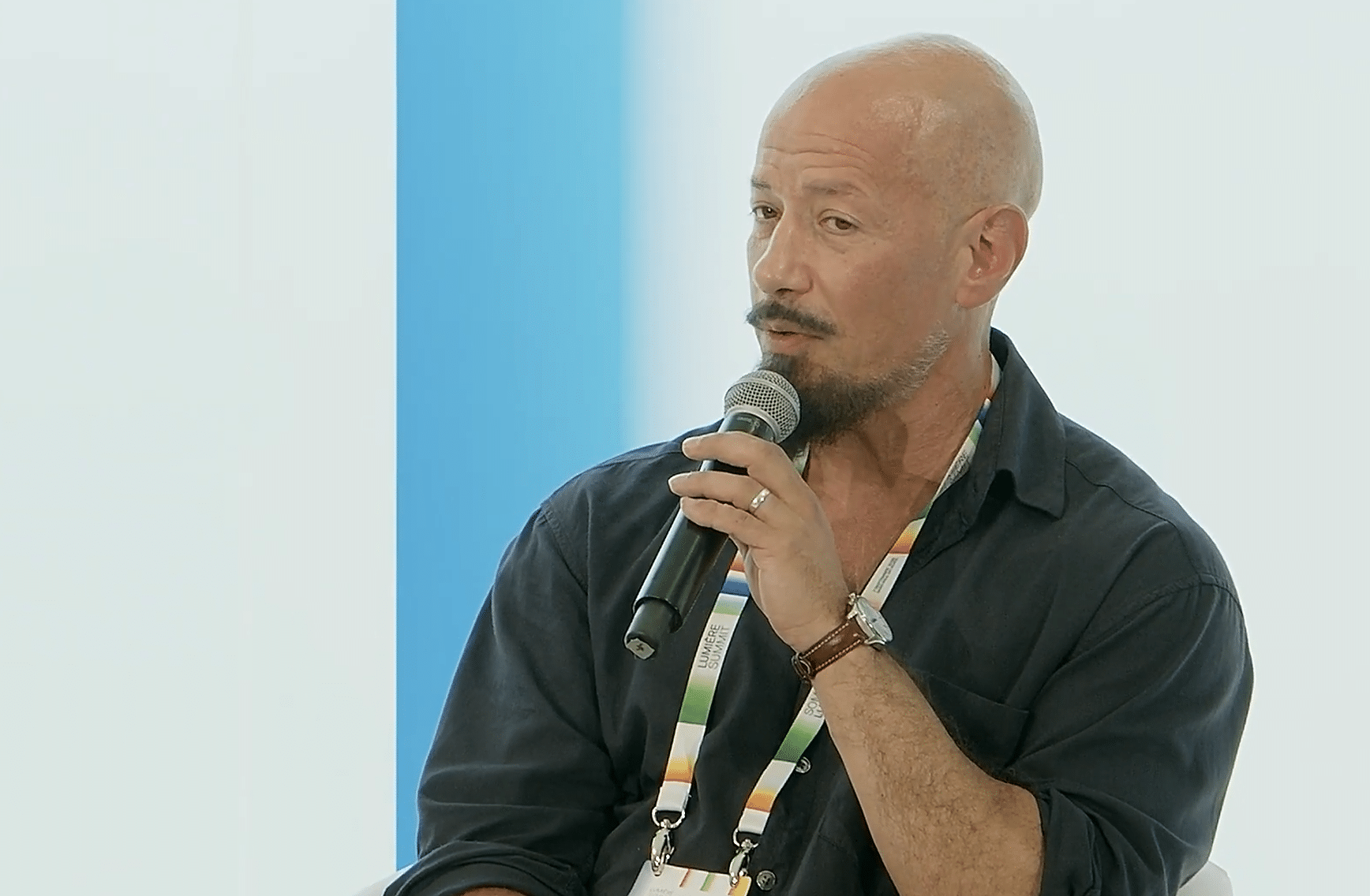
"We Are Not Beggars"
Moving past the contentious debates over trade and compliance, McKenzie used the closing moments of his address to articulate a vision of international cooperation built on mutual respect rather than donor-recipient power dynamics.
Addressing the financial aspect of anti-piracy initiatives, McKenzie made it abundantly clear that South Africa is not seeking foreign aid or financial bailouts to police its digital networks:
"We don’t lack the money. There are countries that lack the money. But we don’t want to be treated like, here’s money for you, do one, two, three. We want you also to listen to our ideas. We are not beggars. We want a partnership of equals."
To demonstrate his administration’s practical commitment to combating illicit distribution, McKenzie pointed to ongoing, proactive domestic initiatives. The South African government has already established direct collaborative channels with multinational pay-TV giant Canal+ to tackle illegal sports streaming and the unauthorized retransmission of live football matches. As a testament to this cooperation, anti-piracy warning campaigns and educational spots are now routinely broadcast prior to every major televised football match across South Africa.
Despite these tangible domestic measures, South Africa noticeably declined to sign the summit’s closing voluntary agreement—the Declaration on Strengthened International Cooperation in the Fight Against Film and Audiovisual Piracy. Because the declaration carried no hard legal commitments and was drafted primarily through Western-led frameworks without incorporating the systemic reforms demanded by developing nations, South African representatives withheld their endorsement.
Future Outlook: A Fractured Global IP Landscape
The inaugural Lumière Summit was envisioned as a triumphant display of international solidarity among the world’s premier creative powerhouses. By gathering French President Emmanuel Macron, South Korean President Lee Jae Myung, studio chiefs, and international regulators under one roof, organizers hoped to project a unified front in the perpetual "race against piracy."
Instead, Minister Gayton McKenzie’s intervention exposed the deep structural fissures fracturing the global intellectual property regime. The summit laid bare a profound philosophical contradiction:
- On one hand, Western creative industries and regulatory bodies champion uncompromising, automated enforcement mechanisms—such as ARCOM’s tens of thousands of site-blocking injunctions—while privately celebrating copyright infringement when it serves geopolitical narratives of anti-censorship and dissidence.
- On the other hand, sovereign developing nations like South Africa are increasingly unwilling to accept paternalistic compliance mandates, trade-related coercion, and double standards that penalize impoverished consumers while lionizing elite political subversion.
As the international community moves toward an increasingly digitized, cross-border media landscape, the path forward cannot rely on unilateral dictates from Geneva, Paris, or Washington. Minister McKenzie’s uncompromising stance at the Lumière Summit serves as an urgent wake-up call to global policymakers: effective, sustainable international cooperation in the fight against digital piracy will require true partnerships of equals, where the legal, historical, and socio-economic realities of the Global South are not merely accommodated, but fundamentally respected.