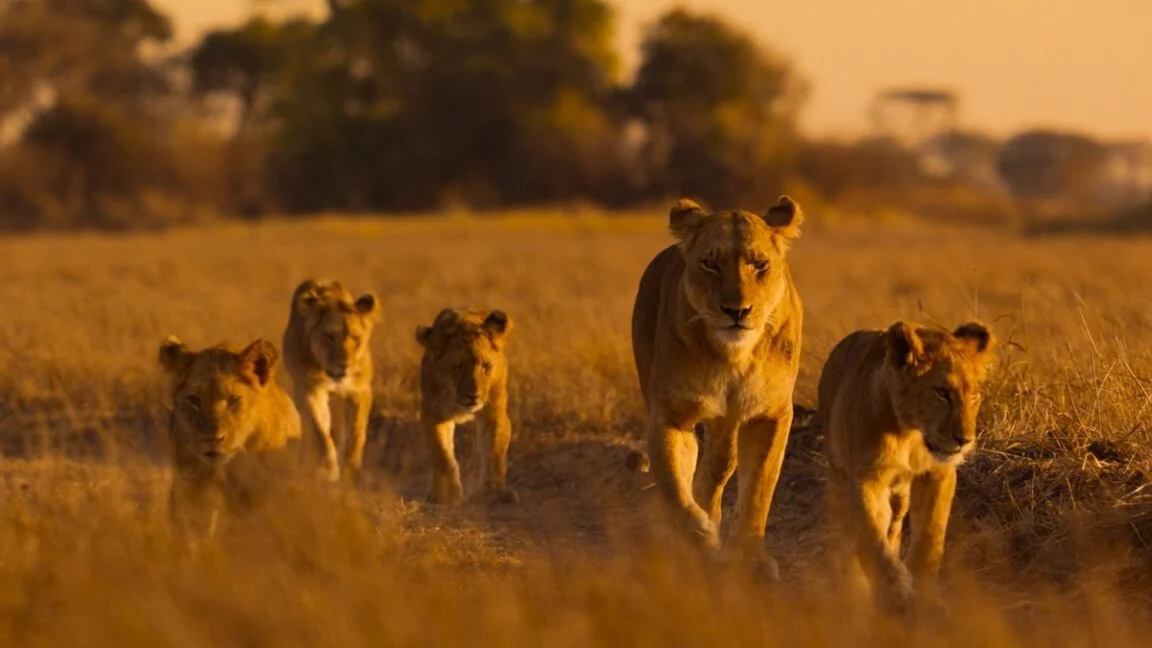
National Geographic has officially launched its most ambitious wildlife documentary franchise to date with the premiere of Africa: Earth’s Wild Home. Narrated by acclaimed stage and screen actor Wunmi Mosaku (Sinners, Loki, Lovecraft Country), the seven-part docuseries represents a monumental milestone in natural history filmmaking. Spanning four years of rigorous production across nearly 30 distinct African nations, the series goes beyond traditional wildlife programming to offer an intimate, ecosystem-by-ecosystem exploration of the world’s most dynamic continent.
From the searing dunes of ancient deserts and dense, uncharted jungles to towering Afro-alpine mountain ranges and isolated coastal islands, Africa: Earth’s Wild Home captures the staggering breadth of biodiversity found across the continent. More than just a visual spectacle, the production serves as the foundational pillar for a new global NatGeo franchise dedicated to systematically documenting the environmental ecosystems and wildlife of all seven continents in turn.
By marrying cutting-edge cinematography—including custom-built robotic camera rigs, infrared cave-hunting arrays, and high-altitude drone maneuvers—with deeply personal narratives, the series explores the universal themes of survival, adaptation, and familial protection. Furthermore, the overarching narrative framework of the project deliberately shifts focus in its concluding installment to spotlight the local conservation leaders, indigenous researchers, and field scientists who are actively working on the front lines to safeguard Africa’s ecological future for generations to come.
Detailed Chronology: Production, Innovation, and Field Breakthroughs
The genesis of Africa: Earth’s Wild Home required an unprecedented allocation of time, technology, and logistical planning. Initiated four years prior to its broadcast release, the production footprint eventually expanded to encompass close to 30 countries. The overarching structural design of the project demanded that each of the seven episodes dedicate itself to a singular, cohesive biome—delving deeply into jungles, deserts, expansive open plains, vertical mountain chains, and isolated island habitats.
Technological Marvels in the Field
Capturing behaviors and species never before witnessed on television required the engineering and deployment of pioneering camera technology. Traditional wildlife setups often struggle in extreme environments, prompting NatGeo’s technical teams to innovate:
Programmable Robotic Studio Arms: Originally engineered strictly for sterile, controlled soundstage environments, robotic camera arms were heavily modified and deployed into the field for the first time. These pre-programmed rigs allowed camera operators to execute complex, millimeter-precise, long-duration camera takes in rugged terrain, tracking animal movements with mechanical fluidity.
Underwater "Hippo Cam": To document aquatic behaviors below the surface, engineers designed a specialized underwater camera housing equipped with dynamic pan-and-tilt heads. This rig captured intimate footage of hippopotamuses receiving natural "spa treatments," wherein small barbel fish meticulously nibble away dead skin cells from the massive mammals.
Bat-Proofed Guano Cave Rigs: Filming dwarf crocodiles hunting bats inside pitch-black, guano-coated subterranean caves required a remotely operated fixed rig outfitted with advanced low-light and infrared capabilities, alongside a remotely controlled zoom mechanism. To protect the delicate electronics from the corrosive, organic-heavy environment and swarms of flying inhabitants, technicians mounted miniature umbrellas directly over the equipment housings.
First-Person Drone Arrays: Throughout the production, agile drones served as the eyes in the sky, providing sweeping, first-person points of view that contextualized animal migrations and predatory strategies within the vastness of the African landscape.
Groundbreaking Behavioral Captures
The marriage of advanced remote-sensing technology and patient field observation yielded a series of historic scientific and cinematic discoveries:
The Reclusive Black Rain Frog: For the first time in television history, the elusive black rain frog (Breviceps fuscus) was captured on film as a male emerged for his inaugural breeding season. Despite physical descriptions likening the amphibian to a "grumpy avocado," the species utilizes a surprisingly distinctive, high-pitched "squeaky soprano" mating call to attract prospective mates across the damp soil.
Chimpanzee Algae Fishing: In a rare and striking documentation of primate tool use, remote cameras recorded chimpanzees fashioning rudimentary tools out of twigs and branches. They used these implements to carefully fish for algae resting at the bottom of forest ponds—a culturally transmitted behavior passed down through generations.
The Bachelor Hyena’s Adaptive Strategy: The documentary captures the desperate measures of a lone, starving male hyena that has gone days without a meal. Realizing that hunting flamingos in open water drastically reduces his speed, the hyena devises an entirely novel tactical approach: systematically herding the massive flock toward the shoreline. By compressing the birds into a denser formation, he successfully mitigates his hydrodynamic disadvantage and secures a meal—displaying a high degree of problem-solving adaptability.
Supporting Context & Metrics: Biodiversity, Adaptation, and Ecology
Africa: Earth’s Wild Home is structurally engineered around the principle of biological adaptation. The series avoids sweeping, generalized overviews in favor of localized, character-driven mini-narratives that illustrate how distinct species overcome extreme ecological hurdles.
Ecosystem Breakdown and Biome Pressures
Episode Focus
Primary Biome
Key Environmental Challenges
Notable Species Featured
Episode 1
Arid Deserts & Dunes
Extreme heat, resource scarcity
African black panther, desert-adapted reptiles
Episode 2
Dense Jungles & Swamps
Verticality, low light, humidity
Chimpanzees, dwarf crocodiles, forest bats
Episode 3
Open Plains & Savannahs
Predatory competition, seasonal drought
Spotted hyenas, cheetahs, elephants
Episode 4
Afro-Alpine Mountains
Sub-zero temperatures, rocky terrain
Snow-dwelling monkeys, mountain leopards
Episode 5
Coastal Islands & Reefs
Nesting vulnerabilities, tidal currents
Green sea turtles, endemic island birds
Episode 6
Freshwater Systems
Aquatic turbulence, parasitic pressures
Hippopotamuses, barbel fish, aquatic avians
Episode 7
Conservation Frontlines
Anthropogenic pressures, habitat fragmentation
Local researchers, indigenous conservationists
The Dual Nature of Survival
The documentary deliberately avoids romanticizing nature, presenting the brutal realities of the food web with stark transparency. This is most vividly demonstrated in contrasting sequences involving spotted hyenas. While viewers may experience a surge of empathy for the young, food-deprived bachelor hyena struggling to catch a flamingo, that sentiment is abruptly challenged during a harrowing night-vision sequence.
In this segment, a coordinated pack of hyenas launches a vicious assault on a mother elephant and her vulnerable calf, coming perilously close to a successful kill. This unvarnished portrayal underscores the core thesis of the series: the natural world operates not on moral binaries, but on the relentless, uncompromising imperative of survival.
Similarly, the series follows a mother cheetah attempting to feed her three hungry cubs across a treacherous, mountainous landscape. Because the jagged, rocky terrain completely neutralizes the cheetah’s evolutionary superpower—explosive, high-speed sprinting—the mother is forced to completely reinvent her hunting tactics to secure sustenance in an alien vertical environment.
Official Statements and Perspectives
The artistic and emotional core of Africa: Earth’s Wild Home is anchored by the narration of Wunmi Mosaku. Speaking extensively about her personal connection to the project, Mosaku emphasized how her own heritage shaped her approach to the material.
"I was incredibly honored that they even know my name at Nat Geo," Mosaku shared in an interview. "It was wonderful to be asked to narrate the series, it means so much to me. As someone who was born in Nigeria and raised in England, I’ll take any opportunity I can to reconnect and celebrate this incredible continent where life is so diverse and so extreme and beautiful and relentless and peaceful. I wanted to be a part of that because it’s a part of me."
Despite her professional travels across Nigeria, Ghana, Kenya, and South Africa, Mosaku noted that the sheer scale and variety of the continent’s biomes offered continuous revelations during the voiceover recording process:
"There was so much I didn’t know," Mosaku reflected. "I have been to Nigeria, obviously, and Ghana. I’ve worked in Kenya and South Africa. But there’s so much to see. I don’t think you could even explore it in a lifetime. So many things were shocking to me. Seeing snow and monkeys living in the snow in Africa, I had never seen that before."
Reflecting on the emotional resonance of the animal narratives, Mosaku drew direct parallels between the maternal struggles witnessed in the wild and the universal human experience:
"I felt like I could see so much of humanity within these stories," she explained. "The cheetah and her three cubs on a terrain where her superpower [speed] is now null and void because they’re on cliffs—I see that cheetah and I see my mother with her three cubs in terrain where her superpowers weren’t able to power up. I just see so much of how we’re connected and how we ultimately want the same things: to survive, to thrive, that our loved ones are safe."
Discussing her stylistic approach in the recording booth, Mosaku stressed authenticity over traditional, detached documentary narration:
"We really wanted it to feel personable," Mosaku noted. "I wasn’t putting on a voice, it was very much Wunmi and how do I feel in this moment? So it felt very authentic. It very much was about character and drive and empathy and figuring out what this character wants and needs. It’s interesting because [as the narrator] you are the audience too. You’re seeing it for the first time technically, but also you’re guiding people who are seeing it for the first time without talking down to them."
Future Outlook and Conservation Legacy
As the inaugural entry in National Geographic’s planned seven-continent documentary initiative, 2Africa: Earth’s Wild Home sets a remarkably high benchmark for the franchise moving forward. By establishing a narrative template that fuses advanced technical innovation with character-driven behavioral storytelling, the series successfully redefines what modern audiences expect from natural history programming.
However, the ultimate objective of the project extends far beyond entertainment or technological showcase. True to National Geographic’s journalistic ethos, the final episode of the series pivots away from wild animal behavior to direct its lens squarely at the human element of ecology. By highlighting the tireless efforts of local conservation leaders, indigenous field researchers, and regional scientists, the documentary anchors its grand cinematic scale in urgent, real-world action.
Wunmi Mosaku summarized the ultimate message she hopes viewers will internalize long after the credits roll:
"I hope the audience feels that we are in communication with the natural world and that what we do matters and what happens in the natural world matters to us. Take away all the lights and the cameras and the social media and everything in the world that we live in right now, and you get down to the pure crux of humanity. It’s the same for that cheetah, it’s the same for that frog, it’s the same for that chimpanzee. It’s about survival and protection. I hope people feel that and do more so that we can continue to try and create more harmony, more ease between the different species of this planet."
Africa: Earth’s Wild Home is currently streaming globally on Disney+ and Hulu, inviting audiences worldwide to witness the raw, unfiltered majesty of a continent fighting to preserve its wild heart.