Executive Overview
For nearly a decade, Vietnamese football enthusiasts seeking free, high-definition Premier League broadcasts paired with lively, localized commentary faced a simple choice: navigate to "Xoi Lac TV" and its sprawling web of sister domains. Operating in defiance of international copyright frameworks, Xoi Lac TV and its affiliated networks—including 90PhutTV, VeboTV, ThapcamTV, BanhkhucTV, and CakeoTV—became synonymous with unauthorized sports streaming in Southeast Asia.
However, what began as an open secret in the digital shadows has culminated in a landmark legal reckoning. Police in Vietnam’s Hung Yen province officially concluded a sweeping multi-jurisdictional investigation, forwarding a formal recommendation to prosecutors to charge an astounding 74 individuals connected to the operation.
While the mass distribution of unauthorized sports streams captured the public imagination, the true vulnerability of the Xoi Lac enterprise lay in its monetization model. By leveraging pirated streams to display lucrative online gambling advertisements, the platform’s operators inadvertently transformed a localized copyright infringement scheme into a high-stakes, multi-million-dollar organized gambling ring. Under Vietnam’s strict penal code, this pivot exposes the primary defendants to potential prison sentences of up to a decade—vastly eclipsing the statutory caps associated solely with intellectual property theft.
Beyond domestic borders, the crackdown has triggered international reverberations. The massive bust serves as a centerpiece in Vietnam’s ongoing diplomatic and trade defense strategy, particularly as the nation navigates intense scrutiny from Western trade regulators over digital piracy. From congratulatory diplomatic dispatches out of London to high-stakes Section 301 investigations originating in Washington, D.C., the dismantling of Xoi Lac TV has evolved from a local police action into a critical geopolitical chessboard.
Detailed Chronology: From Garage Startup to 74-Defendant Indictment
The genesis of Vietnam’s most notorious sports piracy empire dates back to late 2018. According to investigative findings released by law enforcement agencies and detailed by Vietnamese media outlets Dan Tri and VnExpress, the operation was meticulously structured by two central figures: Hanoi technology entrepreneur Pham Nguyen Dung, who provided the foundational capital, and programmer Nguyen Cong Dinh, who engineered the technical infrastructure. The pair established "90 Phut" and forged a profit-sharing partnership that would eventually balloon into a multi-tiered enterprise.
The Network Expands
As domain-blocking orders and local ISP restrictions began targeting their initial URLs, the operators demonstrated remarkable technical agility. Rather than folding, they multiplied. By the time law enforcement authorities executed coordinated raids in February 2025, the collective infrastructure had expanded to encompass a formidable portfolio of high-traffic piracy portals:
- XoilacTV
- 90PhutTV
- VeboTV
- ThapcamTV
- BanhkhucTV
- CakeoTV
Simultaneously, co-founder Nguyen Cong Dinh managed a parallel network dubbed "Cakhia" in collaboration with another defendant. To the average viewer, these sites offered a seamless, community-driven alternative to legitimate, paywalled subscription services. Behind the scenes, however, the enterprise operated with the hierarchical precision of a traditional media corporation.
The Anatomy of the Workforce
The Hung Yen provincial police’s final investigative conclusion targets 74 individuals who served vital functions within the enterprise. The roster of suspects includes:

- Server and Technical Administrators: Personnel tasked with maintaining server uptime, mitigating DDoS attacks, and ensuring uninterrupted stream delivery across volatile domain spaces.
- Financial Operators: Handlers responsible for routing digital transactions, managing offshore ad-revenue payouts, and laundering illicit proceeds.
- On-Air Commentators: More than 30 professional and semi-professional Vietnamese commentators recruited to provide engaging, vernacular play-by-play analysis.
Among the commentators, personas such as "Batman" and "Scarecrow" achieved a form of cult celebrity among regional football fans. Investigators later unmasked "Batman" as co-founder Nguyen Cong Dinh himself, who allegedly amassed over 12 billion Vietnamese Dong (approximately $470,000 USD) directly from his involvement in the network. Meanwhile, supporting commentators were typically compensated between 200,000 and 500,000 Dong (roughly $8 to $20 USD) per match—a modest stipend that fueled a massive, industrialized content machine.
The Legal Timeline
- February 2025: Vietnamese cybercrime police execute synchronized raids across multiple provinces, disrupting server installations and detaining core operational figures.
- March 2025: Initial criminal charges are formally brought against 30 primary suspects.
- April 2025 – January 2026: Investigative bodies continue auditing financial records, uncovering that the network managed to sustain and partially reconstitute certain operations while core leadership was under scrutiny.
- September 2026: Hung Yen police officially close the comprehensive investigation, recommending that prosecutors press formal charges against all 74 identified suspects. The case file now sits with prosecutors, who have a statutory window of up to 30 days to issue indictments, request supplementary investigations, or dismiss specific counts.
Supporting Context & Metrics: Financial Scope and Legal Realities
To understand the severity of the Xoi Lac TV prosecution, one must examine the staggering financial figures and the unique constraints of Vietnam’s legal code regarding digital offenses.
A Multi-Million-Dollar Advertising Machine
Investigators established that across its various domains, the network unlawfully broadcast 1,529 individual sports matches without authorization, directly infringing upon the exclusive licensing rights held by the English Premier League and domestic broadcast partners.
Rather than charging subscription fees to end-users—which would have created friction and reduced user acquisition—the operators relied entirely on an ad-supported model. Prominent online betting brands, including 8XBET, LU88, Man88, and HBET, paid substantial sums for prime advertising placement on the streaming interfaces and across live-stream overlays.
Financial audits indicate that between April 2025 and January 2026 alone, these betting advertisements injected more than 130 billion Vietnamese Dong (approximately $5 million USD) into the coffers of the syndicate.
The Rights-Holders’ Toll
While the operators reaped millions in illicit advertising revenue, legitimate stakeholders claim catastrophic financial damage:
- K+ (Vietnam Pay-TV Service): Preliminary financial impact assessments place the local broadcaster’s losses in excess of $83 million USD, driven by subscriber churn and devalued broadcast rights.
- The English Premier League: The international football body, which licenses its broadcast rights to regional intermediaries like K+, estimates its direct brand and licensing devaluation in Vietnam at more than $4.6 million USD.
These figures, while substantial, remain subject to formal judicial validation during the upcoming trial proceedings.
The Legal Trap: Copyright vs. Organized Gambling
The 74 defendants face a complex slate of charges, encompassing copyright infringement, organizing gambling, direct participation in gambling, and the distribution of obscene material. Out of the 74, fifty-one individuals—including ringleaders Dung and Dinh—face recommended prosecution on both copyright infringement and organizing gambling charges.

In the calculus of Vietnamese criminal law, this dual-charge strategy is crucial:
- Copyright Infringement: Under Vietnam’s Penal Code, copyright infringement is subject to a strict statutory ceiling. Regardless of how many millions of dollars a piracy ring generates, the maximum sentence for intellectual property theft is capped at three years imprisonment.
- Organizing Gambling: Conversely, operating or facilitating unauthorized commercial gambling structures is classified as a severe felony. Operating a professional gambling network carries a maximum sentence of up to ten years in prison.
Consequently, while the platforms are globally infamous as copyright pirates, it is the integration of illegal betting advertisements that transforms the case from a minor regulatory infraction into a major federal criminal trial carrying severe custodial sentences.
Official Statements and International Geopolitics
The crackdown on Xoi Lac TV has transcended domestic law enforcement, becoming a central talking point in international intellectual property diplomacy and trade negotiations.
London’s Gratitude
In May 2025, the British Embassy in Hanoi took the unusual step of formally communicating its appreciation to the Vietnamese Ministry of Public Security. Through an official letter publicized by state media, the UK government lauded the decisive enforcement actions taken against Xoi Lac TV, praising local authorities for safeguarding the commercial interests of British creative industries and the Premier League. For London, the dismantling of the network represented a long-overdue victory in curbing the global hemorrhage of UK sports property rights.
Washington’s Pressure and the "Priority Foreign Country" Designation
While the United Kingdom expressed diplomatic gratitude, the United States maintained a more skeptical stance, driven by mounting pressure from American copyright industries.
At the end of April 2025, the Office of the United States Trade Representative (USTR) dropped a diplomatic bombshell by designating Vietnam as a "Priority Foreign Country" over its persistent failures to combat online piracy—marking the first time any nation had received this stigmatized label in 13 billion trade cycles.
Shortly thereafter, the USTR initiated a formal Section 301 investigation into Vietnam’s intellectual property enforcement practices, placing the threat of punitive economic tariffs squarely on the table. The USTR argued that despite nominal enforcement efforts, widespread digital piracy in Vietnam continued to systematically impair the competitive positioning of U.S. software, entertainment, and creative sectors.
Vietnam’s Defensive Pivot: Leveraging Takedowns
Caught in the crosshairs of potential U.S. trade sanctions, Hanoi has rapidly mobilized recent law enforcement successes as diplomatic shields. In its formal rebuttal submitted to Washington in July 2025, the Vietnamese government pointed directly to high-profile digital enforcement actions—specifically citing the takedowns of major streaming portals like Rophim and Y2Mate, alongside the sweeping criminal proceedings initiated against seven suspects linked to the HiAnime platform on July 2.
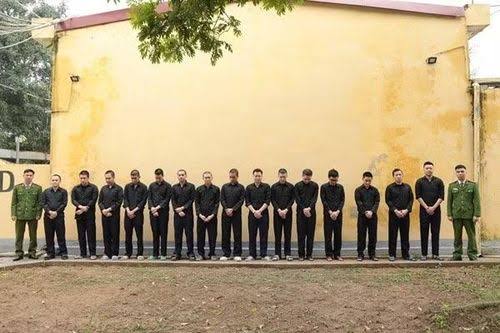
By spotlighting these cybercrime sweeps—and positioning the relentless prosecution of digital syndicates like Xoi Lac TV as proof of systemic reform—Vietnam aims to persuade U.S. trade regulators to remove it from the precarious "Priority Foreign Country" list before Section 301 tariffs are officially enacted. Whether the timing of the Hung Yen police’s 74-defendant prosecution recommendation was influenced by these international trade pressures remains unconfirmed, but the alignment of domestic enforcement narratives with foreign trade defense is unmistakable.
Future Outlook
As the Xoi Lac TV case file transitions from investigative police bureaus to provincial prosecutors, the immediate future centers on the forthcoming indictment and trial phases. Prosecutors now possess a 30-day window to evaluate the evidence, formalize indictments against the 74 defendants, or demand further fact-finding.
When the case eventually reaches the courtroom, it is expected to serve as a watershed moment for digital law enforcement in Southeast Asia. A stern judicial outcome—particularly heavy sentencing anchored by the organized gambling charges—will signal that Vietnam is willing to impose severe penalties to appease international trade partners and protect commercial rights-holders.
However, the enduring persistence of internet piracy points to an ongoing game of digital whack-a-mole. Even as state authorities boast about dismantling the core infrastructure of Xoi Lac, digital monitors report that a cursory online search for "xoi lac" and its historical brand variations continues to return numerous mirror sites and unverified copycats operated by anonymous successors.
For international sports leagues, broadcasters, and trade representatives, the fall of Xoi Lac TV is an undeniable milestone, yet it serves as a stark reminder that in the borderless realm of digital streaming, eliminating one hydra often leaves room for new heads to emerge.