Executive Overview
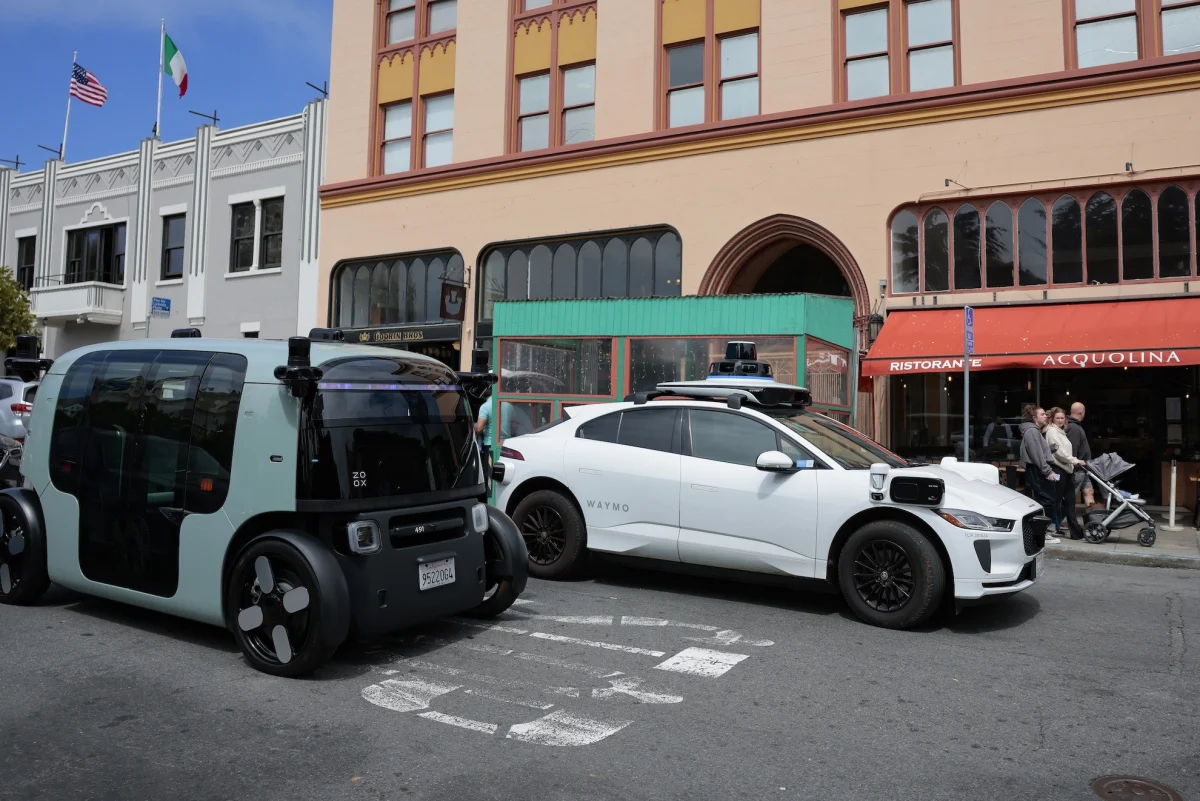
The landscape of modern mobility is undergoing a profound structural transformation, defined by the rapid convergence of artificial intelligence, automated driving systems (ADS), and aggressive electrification. As autonomous robotaxis become a standard fixture of the urban landscape in key tech hubs like San Francisco, the friction between emerging technologies and established municipal infrastructure has reached a boiling point.
Nowhere is this tension more visible than in California, where state regulators and lawmakers are aggressively stepping in to manage the teething problems of the autonomous vehicle (AV) era. Following a series of highly publicized incidents where robotaxis blocked active emergency lanes, impeded first responders, and inadvertently drove into active crime scenes, California Governor Gavin Newsom signed Senate Bill 1246 into law. This landmark legislation introduces rigorous accountability frameworks, hefty penalties for obstructive AV behavior, and stringent operational mandates for companies deploying driverless technology.
Simultaneously, the broader mobility and clean-energy sectors are experiencing a flurry of macroeconomic activity. From massive venture capital injections and multi-million-dollar commercial fleet acquisitions—such as FedEx’s landmark $300 million electric truck order with Harbinger—to critical regulatory and legal settlements facing ride-hailing giants like Lyft, the transport ecosystem is evolving at a breakneck pace. This report delivers an in-depth examination of the regulatory shifts, financial maneuvers, and technological milestones shaping the future of global transportation.
Detailed Chronology: Regulatory Interventions and Legal Milestones
The escalating integration of autonomous vehicles into public spaces has forced lawmakers to transition from a permissive, developmental regulatory stance to a stringent, accountability-driven framework.
The Road to Senate Bill 1246
For years, cities like San Francisco, Austin, and Phoenix served as real-world testing grounds for autonomous ride-hailing companies such as Waymo, Cruise, and Zoox. While proponents touted the safety advantages of algorithmic driving systems over fatigued or distracted human drivers, municipal agencies routinely flagged operational vulnerabilities. TechCrunch and other industry monitors documented numerous instances where autonomous vehicles stalled in intersections, ignored police hand signals, or obstructed fire trucks responding to life-threatening emergencies. In extreme cases, AV operators were forced to rely on on-site first responders just to manually move disabled vehicles out of harm’s way.
Recognizing that these localized disruptions would only compound as autonomous fleets expand, California lawmakers introduced Senate Bill 1246 to establish strict operational boundaries. Passed by the legislature and signed by Governor Newsom, the new law is explicitly designed to preemptively address safety bottlenecks ahead of the next major wave of commercial AV deployments.

Lyft’s Historical Classification Settlement
Parallel to the hardware and software debates in autonomy, the traditional ride-hailing sector continues to reckon with labor and legal compliance. Lyft recently agreed to a $272.5 million settlement to resolve a long-running class-action lawsuit. The litigation accused the company of violating California labor laws by misclassifying its drivers as independent contractors rather than traditional employees.
Though the settlement primarily covers historical violations occurring prior to the passage of voter-approved Proposition 22—which explicitly carved out a hybrid contractor status for app-based drivers in the state—the massive financial payout underscores the ongoing regulatory and financial liabilities facing gig-economy pioneers as they scale operations.
Supporting Context & Metrics: Capital Infusions and Market Realities
While legislative bodies tighten the screws on operational compliance, private markets remain aggressively bullish on vehicle electrification, marine autonomy, and fleet-management software. The recent capital deployment data highlights distinct sectoral trends across global markets.
Key Financial Rounds and Commercial Contracts
- Harbinger’s $300 Million Fleet Deal: Commercial EV startup Harbinger secured a major validation milestone by landing a $300 million contract to supply logistics giant FedEx with 2,000 custom-built electric trucks. This partnership signals an accelerating appetite among legacy logistics operators to transition mid-mile fleets away from internal combustion engines.
- Quartermaster’s $140 Million Series B: Arlington, Virginia-based maritime intelligence startup Quartermaster successfully closed a $140 million Series B funding round. The financing structure featured $100 million in equity backed by prominent investors, including Insight Partners, defense-focused Overmatch Ventures, and First Round Capital, alongside a $40 million debt facility provided by Stifel.
- HyperGuest’s $25 Million Growth Round: Israeli travel-tech innovator HyperGuest secured $25 million in funding led by AMI, the investment arm of Apax Partners, aiming to optimize hotel distribution networks across international markets.
- REGENT Craft’s Marine Expansion: The U.S. Marine Corps Warfighting Lab deepened its commitment to coastal mobility by expanding its contract with REGENT Craft, the developer of the all-electric Seaglider, pushing the total contract value to $19.25 million.
- Voltaback’s €2.8 Million Seed Funding: French fleet-management software startup Voltaback raised €2.8 million from European investment fund Serena to scale its EV charging reimbursement solutions across the European Union.
Infrastructure and Consumer Data Privacy Concerns
Beyond financial investments, infrastructural research continues to expose hidden friction points in modern vehicle design. A comprehensive study released by Northeastern University tested 21 late-model vehicles across 17 distinct automakers alongside 30 companion mobile applications. The findings revealed that modern connected vehicles function effectively as rolling data-harvesting units, systematically collecting expansive logs of personal telemetry and behavioral data and routing those insights to major technology conglomerates, including Adobe, Contentsquare, Google, Microsoft, Meta, Snap, and Yahoo. This ongoing data monetization trend is expected to face heightened scrutiny from federal privacy regulators.
Official Statements and Legislative Breakdown
Senate Bill 1246 fundamentally alters the legal landscape for autonomous vehicle operators in California, shifting the burden of system failures squarely onto the shoulders of AV developers.
+-----------------------------------------------------------------------------------+
|                        CORE MANDATES OF CALIFORNIA SB 1246                        |
+--------------------------+--------------------------------------------------------+
| Accountability Metric    | Regulatory Requirement                                 |
+--------------------------+--------------------------------------------------------+
| Emergency Obstruction    | Mandatory financial penalties if an AV blocks police   |
|                          | or firefighters for longer than 30 minutes.            |
+--------------------------+--------------------------------------------------------+
| Remote Operator Profile  | Remote safety drivers must be based in the U.S. and    |
|                          | hold a valid U.S. driver's license.                    |
+--------------------------+--------------------------------------------------------+
| Local Incident Response  | Developers must provide on-the-ground "local incident  |
|                          | technicians" to assist with accidents and blockages.   |
+--------------------------+--------------------------------------------------------+
| Municipal Notifications  | Mandatory real-time alerts to local jurisdictions      |
|                          | regarding vehicle locations during system outages.     |
+--------------------------+--------------------------------------------------------+
The Enforcement Mechanism
Under the provisions of SB 1246, prominent autonomous vehicle companies—including Tesla, Waymo, and Zoox—will face stringent accountability protocols:

- First Responder Interference Penalties: Companies face mandatory financial penalties if any of their autonomous units obstruct police, fire, or medical emergency personnel for a cumulative duration exceeding 30 minutes.
- Domestic Remote Operations: To eliminate cross-border communication latency and regulatory grey areas, the law mandates that any remote-assistance drivers employed by AV developers must reside within the United States and possess a valid U.S. driver’s license.
- On-the-Ground Technical Support: Developers are required to deploy localized "incident technicians" capable of rapidly physically interfacing with disabled or erratic vehicles to clear roadways during system-wide outages or accidents.
- Jurisdictional Transparency: AV operators must immediately notify local municipal authorities regarding the exact geographical status and system-wide failure states of vehicles experiencing navigational drop-outs.
The implementation details of these mandates have been delegated to the California Department of Motor Vehicles (DMV), which serves as the primary regulatory body for autonomous systems in the state. The law is scheduled to officially go into effect in July 2028.
Future Outlook: Commercial Scaling Versus Municipal Reality
As the mobility sector looks toward the horizon, two distinct narratives are colliding: the aggressive push by technology conglomerates to commercialize AI-driven autonomy at scale, and the pragmatic constraints imposed by municipal governments and infrastructure limitations.
Tesla, Aurora, and Kodiak Push Boundaries
Despite regulatory headwinds, commercial autonomy developers are doubling down on long-term deployment schedules.
- Aurora Innovation has doubled down on its target to scale up to 30,000 commercial autonomous trucks on public highways by the end of 2030. In interviews with automotive analysts, company executives maintain that redundancy in sensor suites and simulation-heavy software validation make this aggressive scaling timeline achievable.
- Kodiak Robotics announced a major commercial milestone, securing home goods retail giant Ikea as a core customer. Kodiak will initiate driverless freight deliveries on a grueling 219-mile stretch of Interstate 45 between Houston and Dallas later this year, operating completely unmanned Class 8 trucks in mixed public traffic.
- Tesla, meanwhile, continues to rebrand its corporate identity around artificial intelligence and robotics. Having secured a massive $30 billion credit line, Elon Musk’s enterprise aims to aggressively fund the rollout of its long-promised Cybercab robotaxi platform and Optimus humanoid robotics program. However, industry analysts continue to question the commercial viability and timeline of these ambitious initiatives, pointing to repeated delays—such as the recent weather-related postponement of the Roadster 2 unveiling event—and ongoing debates over the precise definition of Musk’s stated goal of "amazing abundance."
The Road Ahead
Will California’s Senate Bill 1246 completely eliminate the chaos caused by errant robotaxis? Industry experts suggest it is unlikely to prevent every roadside malfunction. However, the legislation establishes an essential legal baseline: it drastically minimizes urban disruption, protects emergency response corridors, and ensures that multi-billion-dollar tech enterprises bear financial and operational responsibility when their algorithms fail in the physical world.
As other states monitor California’s regulatory experiment, the broader question remains whether a patchwork of state-level statutes will define the future of American autonomy, or if the federal government will eventually step in to establish a unified national framework for artificial intelligence in transportation.