




Executive Overview
For the past two years, enterprise technology executives have faced a frustrating paradox: while frontier artificial intelligence models demonstrate astonishing cognitive and technical capabilities in controlled demonstrations, translating these models into scaled production environments remains exceptionally difficult. The vast majority of enterprise AI projects do not fail because of model reasoning deficits; rather, they stall in the "proof-of-concept graveyard," paralyzed by compliance hurdles, complex procurement, network isolation requirements, and identity governance challenges.
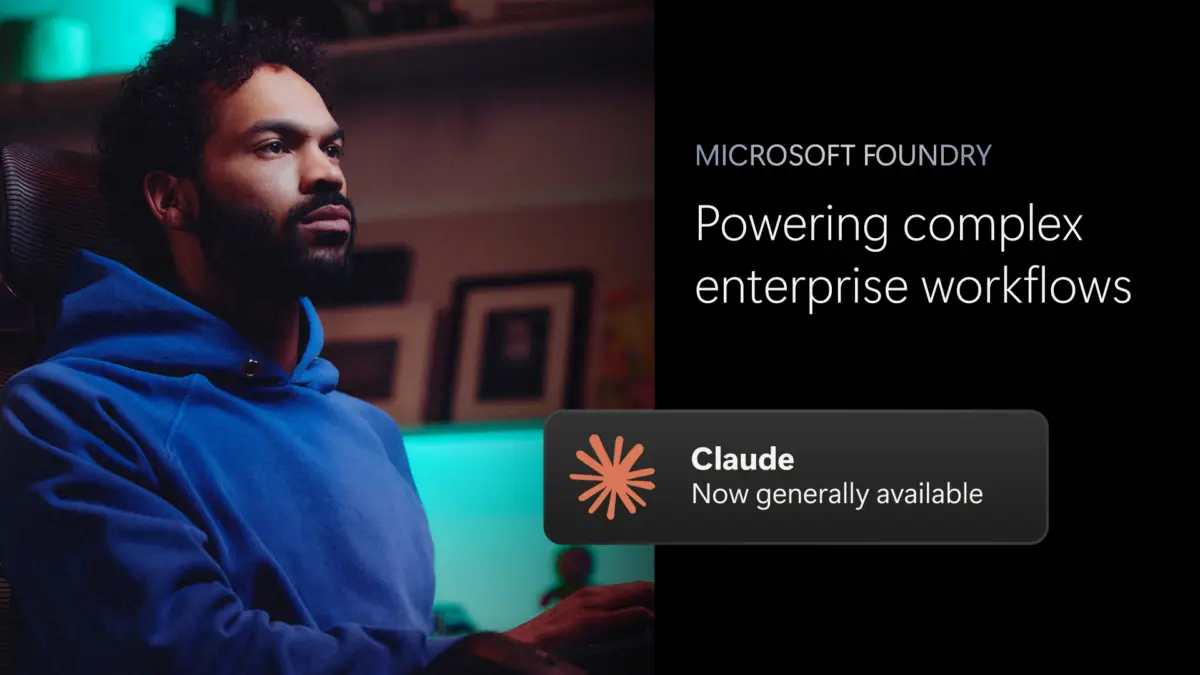
In a move designed to resolve these deployment bottlenecks, Anthropic’s flagship Claude model family has officially reached General Availability (GA) on Microsoft AI Foundry. Fully hosted within Microsoft Azure and powered by cutting-edge hardware infrastructure, this deployment path offers large-scale organizations a streamlined route from experimental agent design to enterprise-grade production.
By making Claude available directly within Microsoft Azure, enterprise development teams can bypass months of security reviews and custom infrastructure engineering. Organizations can now deploy Claude using their existing Azure subscription, leveraging trusted identity mechanisms like Microsoft Entra ID, localized data residency zones, zero data retention policies, and consolidated billing drawn down against existing enterprise cloud commitments. Coupled with orchestration frameworks like Foundry Agent Service and hardware infrastructure featuring NVIDIA Blackwell Ultra architectures, this launch marks a crucial pivot point: enterprise AI is moving decisively out of sandbox testing and into mission-critical, agent-driven operational environments.
Detailed Chronology: The Journey to Enterprise-Grade Agentic Infrastructure
The general availability of Claude on Microsoft Foundry represents the culmination of a multi-phase strategic alignment between cloud hyperscalers, silicon manufacturers, and frontier AI research labs.
+-----------------------------------------------------------------------------------+
| CHRONOLOGY OF THE ENTERPRISE AI TRANSITION                                        |
+-----------------------------------------------------------------------------------+
| Phase 1: Isolated Model Access                                                    |
|   • AI models accessible via standalone API endpoints                             |
|   • High governance friction, isolated data pipelines, procurement hurdles        |
+-----------------------------------------------------------------------------------+
| Phase 2: November 2025 Strategic Alliance                                         |
|   • Strategic partnership formed between Microsoft, NVIDIA, and Anthropic         |
|   • Hardware optimizations mapped to NVIDIA Blackwell Ultra / GB300 systems       |
+-----------------------------------------------------------------------------------+
| Phase 3: General Availability on Microsoft Foundry (Current)                      |
|   • Claude reaches native GA in Azure environment                                 |
|   • Full integration with Azure security, Entra ID, MACC billing, and IQ context  |
+-----------------------------------------------------------------------------------+
Phase 1: Isolated Model Access and Operational Friction
During the initial wave of generative AI adoption, enterprises evaluated models via standalone API endpoints provided directly by vendor labs. While effective for lightweight prototyping, this paradigm forced corporate IT and InfoSec departments to navigate distinct procurement agreements, non-standard SLA guarantees, isolated billing streams, and external data transit paths. These friction points significantly delayed production rollouts.
Phase 2: The Strategic Alliance
Recognizing that model capabilities alone were insufficient without enterprise-grade deployment pipes, Microsoft, NVIDIA, and Anthropic announced a major strategic partnership. The collaboration focused on co-engineering an infrastructure layer optimized specifically for high-throughput inference, utilizing NVIDIA’s latest hardware architecture within Azure’s global data centers to support Anthropic’s heavy-reasoning architectures.
Phase 3: Native Azure Integration and General Availability
With the current general availability release, Claude is no longer an external add-on integrated via third-party bridges; it operates natively within Microsoft Foundry. Developers can invoke Claude models through native Azure SDKs, utilize Azure’s existing governance layers, and deploy multi-step agents directly into production environments without exposing sensitive corporate data to unverified external pipelines.
Supporting Context & Technical Architecture
+-----------------------------------------------------------------------------------+
| AZURE FOUNDRY INTEGRATION ARCHITECTURE                                            |
+-----------------------------------------------------------------------------------+
|  ENTERPRISE GOVERNANCE & CONTROL PLANE                                            |
|  - Microsoft Entra ID (Auth)  - Azure RBAC  - MACC Billing  - Zero Data Retention |
+-----------------------------------------------------------------------------------+
|  ORCHESTRATION & AGENTIC SERVICES                                                 |
|  - Foundry Agent Service  - Model Router (50% Cost Reduction)  - Microsoft IQ   |
+-----------------------------------------------------------------------------------+
|  HARDWARE & INFERENCE ENGINE                                                      |
|  - Anthropic Claude Engine  - NVIDIA Blackwell Ultra (GB300)  - InfiniBand        |
+-----------------------------------------------------------------------------------+
Overcoming the Enterprise Infrastructure Wall
The primary barrier to scaling enterprise AI lies in managing governance, access control, and finance operations. By embedding Claude directly inside Microsoft Foundry, Microsoft and Anthropic address these foundational challenges:
- Identity and Access Governance: Developers and automated systems authenticate using Microsoft Entra ID (formerly Azure Active Directory). Enterprise administrators can enforce granular Azure Role-Based Access Controls (RBAC), ensuring that model access follows strict security principles.
- Data Residency and Privacy Controls: To accommodate rigid industry regulations, inference processing occurs inside dedicated Azure regional environments, offering choices between Global and US data zones. For high-sensitivity workloads—such as defense, healthcare, and financial transactions—a Zero Data Retention (ZDR) policy ensures prompts and completions are discarded from memory immediately after API call execution.
- Streamlined Procurement and Financial Management: Instead of managing separate enterprise vendors, organizations consume Claude through a unified metric called Claude Consumption Units (CCU). Usage appears as a consolidated line item on the customer’s standard Azure invoice and directly contributes to fulfilling Microsoft Azure Consumption Commitment (MACC) agreements.
The Hardware Core: Blackwell Ultra, GB300, and InfiniBand Synergy
Agentic workloads require significantly higher inference capability than simple chatbot interactions. Multi-step reasoning loops, massive context windows, and extended reasoning paths place extreme compute demands on hardware infrastructure.
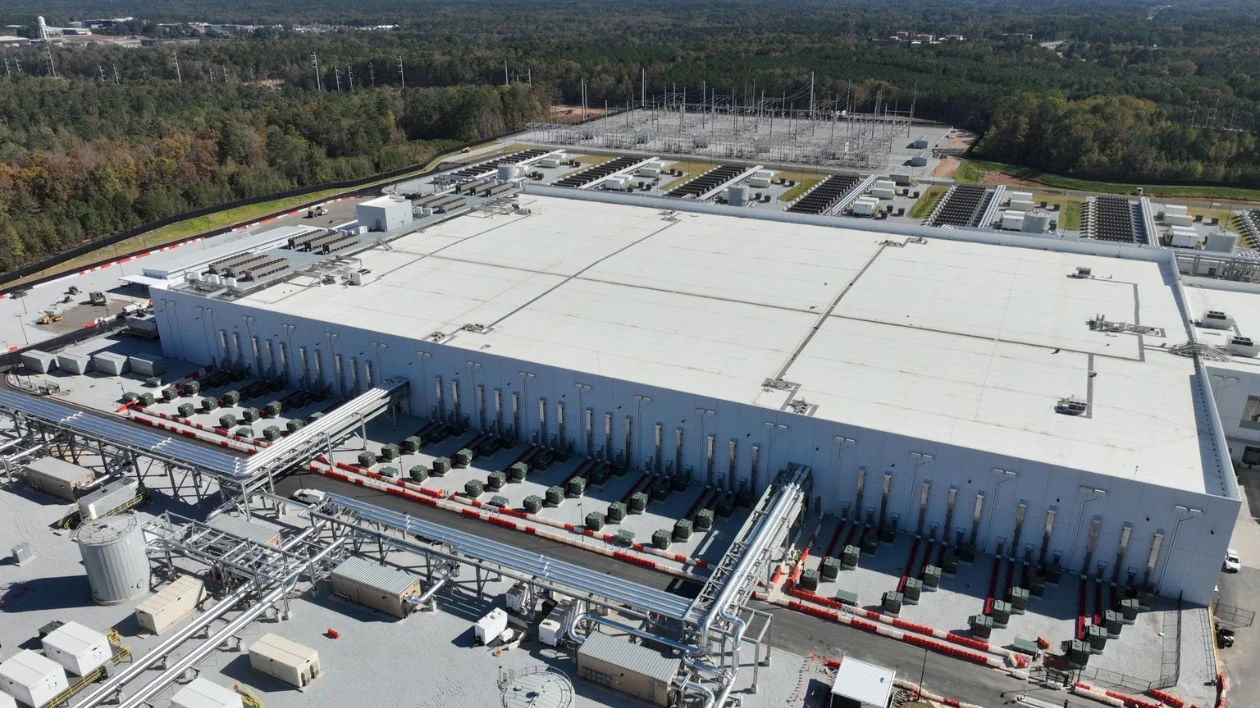
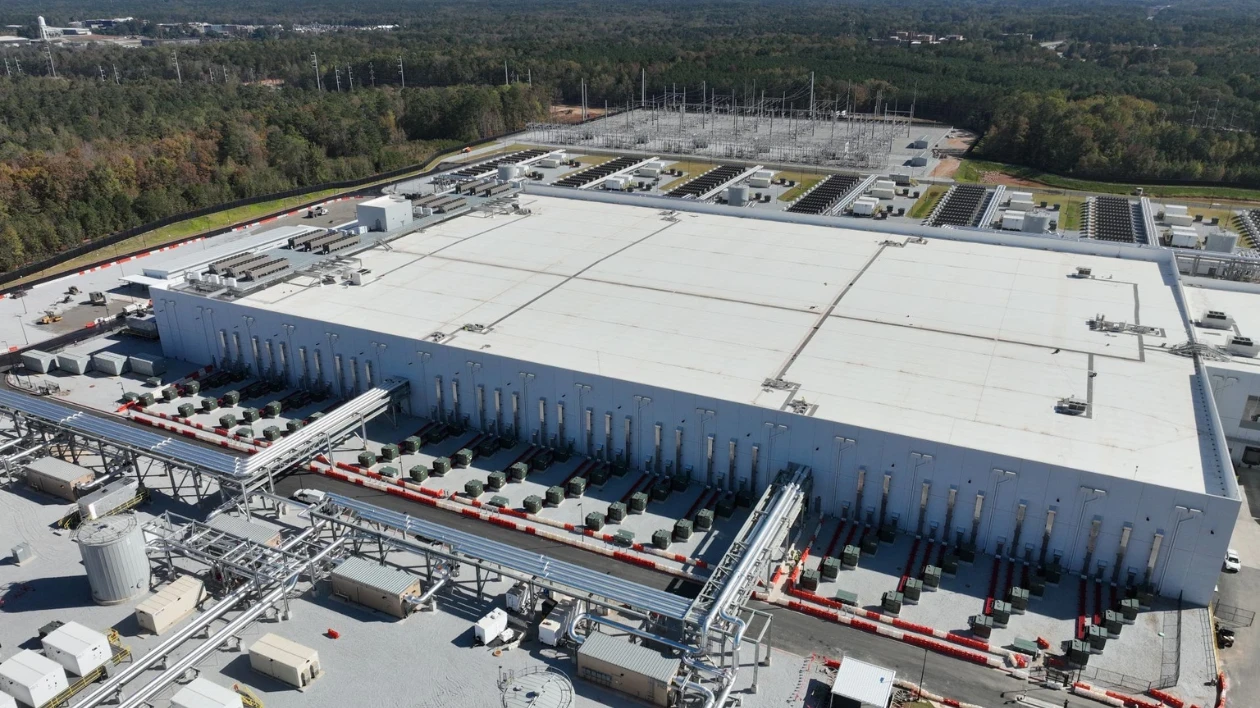
To meet these requirements, Claude in Microsoft Foundry runs on NVIDIA Blackwell Ultra systems, specifically featuring NVIDIA GB300 GPUs. These server nodes are interconnected using high-bandwidth InfiniBand networking, creating a rack-scale AI computing architecture designed to minimize latency and eliminate networking bottlenecks during heavy agent processing. This infrastructure allows Anthropic—acting as the official data processor and SLA provider—to deliver consistent, low-latency performance during peak enterprise usage.
Agentic Orchestration, Model Routers, and Contextual Intelligence
Integrating a frontier model into an enterprise environment requires sophisticated developer tooling to manage cost, context, and quality. Claude on Microsoft Foundry includes several developer features designed specifically for advanced software workloads:
                          +-------------------------+
                          |   Incoming Enterprise   |
                          |      User Query         |
                          +------------+------------+
                                       |
                                       v
                          +-------------------------+
                          |  Foundry Model Router   |
                          +------------+------------+
                                       |
                   +-------------------+-------------------+
                   |                                       |
                   v                                       v
     [ Complex Reasoning Task ]             [ Routine Execution Task ]
                   |                                       |
                   v                                       v
       +-----------------------+               +-----------------------+
       |   Claude Opus / Sonnet|               |  Lower-Cost Model     |
       |   (Extended Thinking) |               |  (Cost-Optimized)     |
       +-----------+-----------+               +-----------+-----------+
                   |                                       |
                   +-------------------+-------------------+
                                       |
                                       v
                          +-------------------------+
                          |  Foundry Control Plane  |
                          | (Guardrails & Evals)    |
                          +------------+------------+
                                       |
                                       v
                          +-------------------------+
                          |    Verified Response    |
+-------------------------+- Advanced Developer APIs: Developers gain native access to the Messages API, supporting prompt caching (reducing operational costs on repetitive context), extended thinking (enabling long-chain reasoning before generation), and tool streaming (allowing real-time execution of agent actions).
- Foundry Agent Service: Serving as the orchestration framework, the Agent Service uses Claude as its underlying reasoning engine. It enables multi-step planning, dynamic tool usage, and systemic task execution across legacy corporate software and enterprise databases.
- Dynamic Model Routing: To balance operational expense with reasoning quality, Microsoft Foundry features an automated Model Router. This mechanism analyzes incoming queries in real time and directs them to the optimal Claude model variant. By routing routine queries to lower-cost endpoints while reserving complex tasks for heavy-reasoning tiers, enterprises can achieve up to a 50% reduction in token costs while maintaining high task accuracy.
- Microsoft IQ and Context Grounding: The integration taps into Microsoft IQ, grounding autonomous agents in live enterprise data to maximize token efficiency. Additionally, an integrated Agent Optimizer continuously tunes systemic prompts to maintain peak performance across changing model generations.
- Foundry Control Plane: Acting as an automated supervisor, the Control Plane executes continuous evaluation loops to confirm that model responses adhere to corporate safety standards, blocking non-compliant outputs before they reach end users.
Official Statements & Field Analysis
The availability of Claude in Microsoft Foundry has drawn widespread support from software platforms, hardware partners, and high-consequence enterprise deployment teams.
Operational Scale in Automated Systems
High-throughput development environments rely heavily on model availability to maintain continuous operations. Gary Ballabio, Vice President of Partnerships at Bolt, emphasized the importance of cloud stability for software platforms operating at enterprise scale:
"Running Anthropic’s models on Azure has given us the sustained throughput and reliability our enterprise customers expect. The combination of frontier model quality and enterprise-grade infrastructure is what makes Bolt viable for the Fortune 500."
Hardware Optimization and Specialized Computing
From a hardware and execution perspective, powering autonomous systems requires tight integration between inference models and compute fabrics. Justin Boitano, Vice President and General Manager of Enterprise Computing at NVIDIA, highlighted the operational impact of running specialized agents on next-generation hardware architectures:
"At NVIDIA, we use autonomous AI agents every day to help our teams move faster and think bigger. Anthropic’s Claude models bring strong reasoning, coding, and enterprise capabilities that are valuable for complex technical work. With Claude now available in Microsoft Foundry running on NVIDIA GB300 GPUs, more organizations can run advanced, specialized AI agents with the performance, scale, and security needed for production."
Enterprise Software Quality Assurance
For platforms handling real-time software validation, high throughput and reliable context execution are essential. Jeff An, Co-Founder and CEO of Momentic, outlined how running advanced models within structured cloud boundaries directly impacts enterprise capabilities:
"Our customers describe their tests in plain English, and Momentic runs through the interface to verify everything works before a release ships. We found Claude’s Opus models especially suited to this, and running them on Microsoft Foundry we now serve millions of tokens per minute with the reliability our customers depend on."
Mission-Critical Applications in Regulated Industries
The impact of enterprise-grade AI is particularly apparent in highly regulated sectors like nuclear energy, where regulatory compliance and extreme accuracy are mandatory. Matt Huang, Founding Product Lead at Everstar, shared a case study on drastically reducing safety analysis timelines without sacrificing compliance rigors:
"Between Anthropic and Azure, we get the best capabilities in the world and we get the best security in the world. And that’s exactly what nuclear needs. It’s how we compressed a safety analysis that would have taken 200 human days into a single day."
Comparative Architectural Overview
To highlight how this integration changes enterprise AI deployments, the following table compares native Microsoft Foundry deployment with traditional external API integrations:
| Technical & Operational Layer | Traditional External API Access | Claude in Microsoft Foundry (Azure Native) |
|---|---|---|
| Identity Management | API Keys, custom token rotation | Microsoft Entra ID with native Azure RBAC |
| Hardware Backbone | Undisclosed vendor infrastructure | NVIDIA Blackwell Ultra (GB300) with InfiniBand |
| Billing Mechanism | Separate vendor invoices, credit cards | Unified Azure invoice, CCUs, MACC drawdown |
| Data Governance | Custom data processing addendums | Azure Regional Zones, Zero Data Retention (ZDR) |
| Agentic Frameworks | Custom-built external orchestration | Foundry Agent Service, Microsoft IQ grounding |
| Cost Management | Manual endpoint switching | Automated Model Routing (up to 50% cost savings) |
| Safety Supervision | Custom output validation logic | Continuous evaluation via Foundry Control Plane |
Future Outlook & Strategic Implications
The integration of Claude into Microsoft Foundry points toward a broader strategic shift in the enterprise software ecosystem: the unbundling of basic AI capabilities in favor of fully integrated agentic orchestration engines.
+-----------------------------------------------------------------------------------+
| THE NEXT EVOLUTION OF ENTERPRISE AI IT ARCHITECTURE                               |
+-----------------------------------------------------------------------------------+
| 1. Heterogeneous Model Strategies                                                 |
|    • Enterprises deploy multiple frontier models side-by-side                     |
|    • Single management, security, and billing plane (Microsoft Foundry)           |
+-----------------------------------------------------------------------------------+
| 2. Autonomous Multi-Agent Orchestration                                           |
|    • AI transitions from simple query-response to continuous background workflows |
|    • Deeply integrated with internal software tools and legacy databases          |
+-----------------------------------------------------------------------------------+
| 3. High-Throughput Dedicated Hardware                                             |
|    • Compute shifts to rack-scale infrastructure (GB300 GPUs)                     |
|    • High-speed fabrics (InfiniBand) designed specifically for enterprise scale  |
+-----------------------------------------------------------------------------------+
The Shift Toward Multi-Model Enterprise Standardizations
Historically, cloud providers sought to lock enterprise customers into their own proprietary model families. However, enterprise software demands flexibility. By hosting Anthropic’s Claude alongside existing offerings in Foundry, Microsoft acknowledges that modern IT departments require access to diverse frontier models. Future enterprise IT strategies will not focus on selecting a single AI model, but rather on selecting an operational platform capable of hosting multiple top-tier models under a unified security umbrella.
The Rise of Autonomous Business Operations
As software infrastructure shifts from basic chat interfaces to dynamic agentic workflows, complex processes—such as automated code refactoring, continuous regulatory monitoring, and multi-step supply chain planning—will increasingly run autonomously in the background. The combination of Claude’s reasoning capabilities, Microsoft IQ’s context integration, and Azure’s enterprise infrastructure provides a scalable foundation for this agentic future.
Ultimately, the general availability of Claude on Microsoft Foundry resolves a central enterprise friction point. By bringing Anthropic’s frontier AI models directly to the secure enterprise cloud infrastructure where businesses already operate, organizations can finally push past experimental pilots and scale production-grade AI across the enterprise landscape.