In the highly specialized domain of extreme macro photography and cinematography, capturing details beyond life-size ($1times$ magnification) has historically been a technical bottleneck. Practitioners have long been forced to choose between rigid, single-magnification prime lenses or complex, custom-engineered industrial microscope setups.
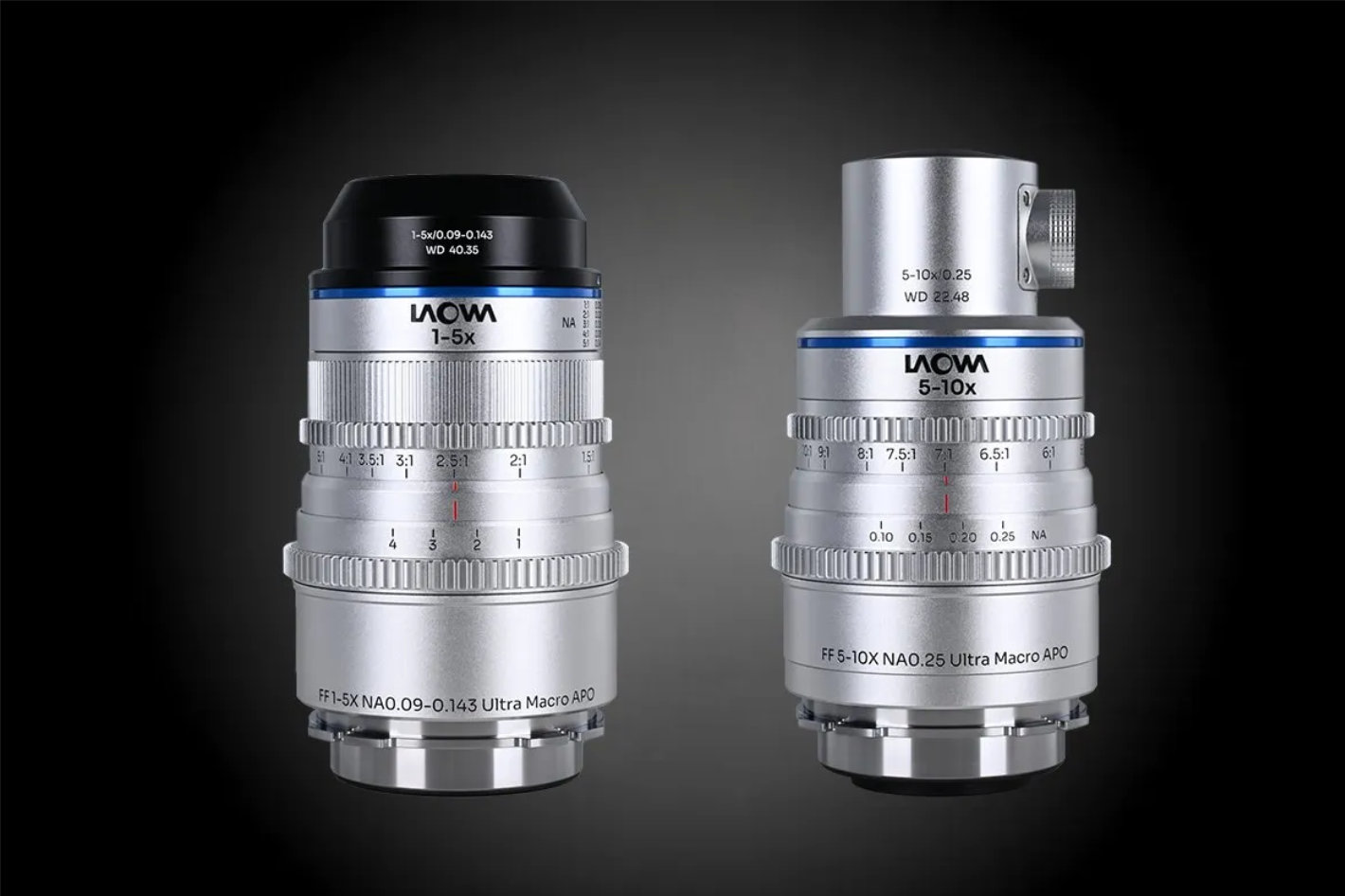
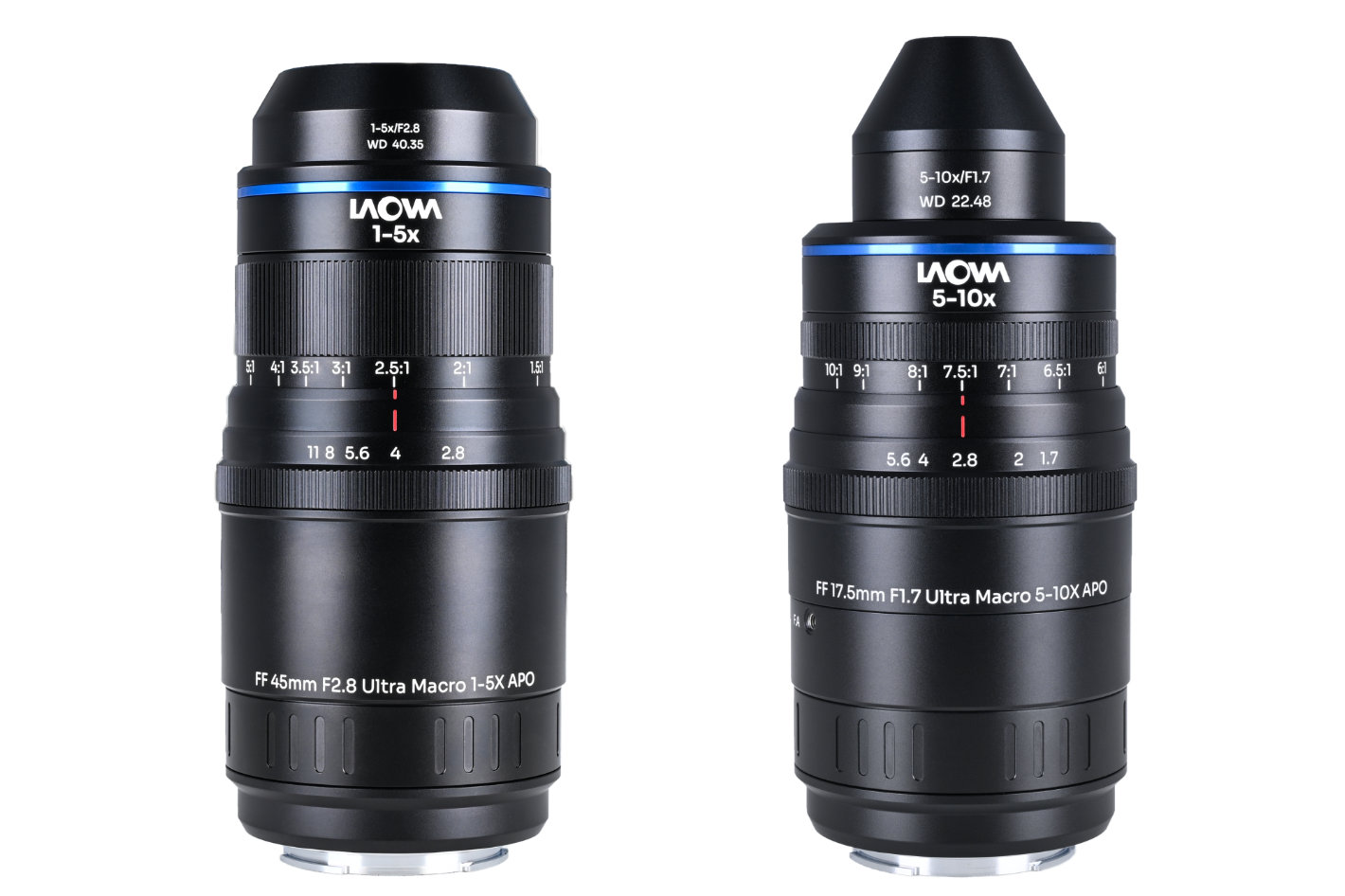
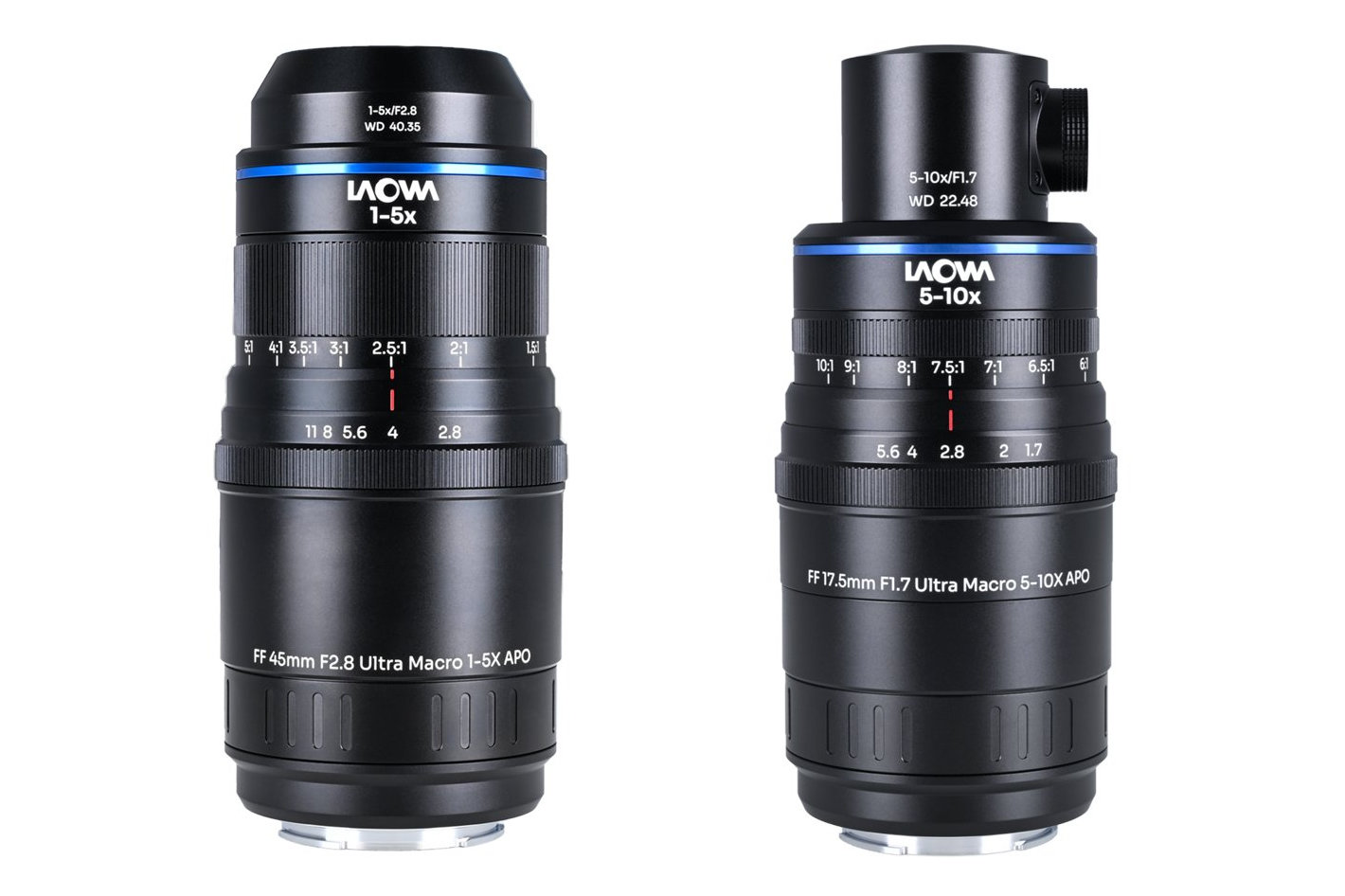
The announcement of the Laowa Aksen series by Venus Optics marks a paradigm shift in this space. Comprising the Aksen 45mm f/2.8 1–5x Ultra Macro APO and the Aksen 17.5mm f/1.7 5–10x Ultra Macro APO, this new lineup represents the world’s first commercially available $5times$ to $10times$ parfocal zoom ultra-macro lens system.
By delivering true parfocal zoom performance, apochromatic (APO) optical correction, and integrated coaxial illumination capabilities across full-frame sensors, the Aksen series bridges a long-standing gap. It transitions high-magnification imaging from a tedious, laboratory-bound process into an accessible, highly efficient workflow for commercial cinematographers, scientific researchers, and industrial quality-assurance specialists.
Detailed Chronology: The Evolution of High-Magnification Imaging
To appreciate the disruptive nature of the Laowa Aksen series, one must understand the historical difficulties of high-magnification imaging. For decades, photographers and cinematographers aiming to capture subjects at magnifications greater than $1times$ had to rely on a patchwork of non-optimized tools:
The Extension Tube and Bellows Era (Pre-2010s): Early macro enthusiasts stacked extension tubes or adjusted accordion-style bellows behind standard prime lenses. While cost-effective, this approach introduced massive light loss, mechanical instability, and severe optical aberrations, particularly chromatic fringing.
The Industrial Microscope Adaptation (2010s–Present): For magnifications approaching $5times$ to $10times$, professionals adapted infinite-conjugate microscope objectives (such as Mitutoyo lenses) to camera bodies via custom tube lenses. This "DIY" method yielded sharp center-frame results but suffered from a fragile physical footprint, an incredibly narrow field of view, no variable aperture control, and a total lack of zoom flexibility.
The Prime Lens Era (2016–Present): Venus Optics (Laowa) disrupted the market with the release of specialized ultra-macro manual primes, such as the widely praised Laowa 25mm f/2.8 2.5-5x Ultra Macro. While highly capable, these lenses remained fixed-magnification or stepped-magnification primes. Adjusting magnification required physically moving the camera closer to or further from the subject, completely dismantling the lighting setup and focal plane in the process.
The development of the Aksen series, scheduled for commercial release on July 31, 2026, represents the culmination of years of optical R&D. By resolving the mechanical and physical constraints of extreme macro imaging, Laowa has engineered a turnkey solution that replaces unstable DIY rigs with a robust, commercially supported optical platform.
Supporting Context & Technical Metrics: Overcoming the Laws of Physics
Designing a zoom lens that operates between $1times$ and $10times$ magnification requires confronting severe optical and physical challenges. Chief among these are focus shift during zooming, diffraction limits, chromatic aberration, and changes in working distance. The Aksen series addresses these challenges through three key engineering innovations:
1. Parfocal Zoom Design & Internal Mechanics
In standard zoom lenses, changing the focal length shifts the focus point, requiring immediate correction. In extreme macro photography, where the depth of field is measured in fractions of a millimeter (microns), even a micro-shift in focus can completely lose the subject.
The Aksen series utilizes a true parfocal design. Once focus is locked on a subject, the user can zoom from $1times$ to $5times$ (on the 45mm) or $5times$ to $10times$ (on the 17.5mm) without losing focus.
Furthermore, the lenses feature an internal zoom and focus mechanism. Traditional macro lenses extend their outer barrels as magnification increases, which often results in:
Colliding with and damaging delicate subjects (such as insects or chemical reactions).
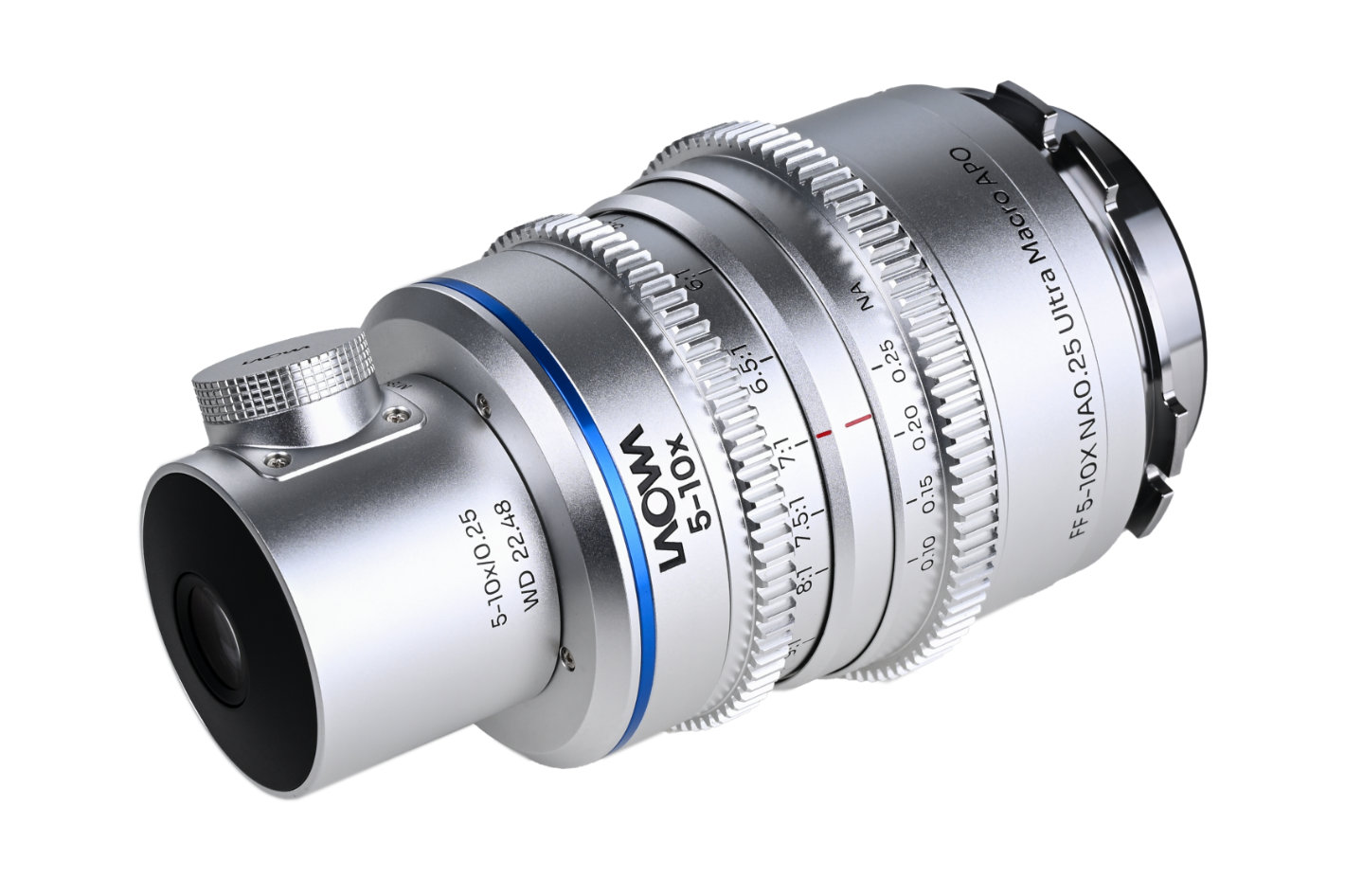
By maintaining a completely stationary lens barrel, the Aksen lenses maintain a fixed working distance of 40.35mm for the 1–5x lens and 22.48mm for the 5–10x lens, regardless of the selected magnification.
Traditional Macro Lens (External Zoom):
[ Camera Body ] ====[ Lens Barrel ]----> (Extends closer to subject, blocking light) ---> [Subject]

Laowa Aksen Lens (Internal Zoom):
[ Camera Body ] ===================[ Fixed Lens Barrel ]===================> | Fixed Gap | [Subject]
                                                                             (40.35mm or 22.48mm)
2. Apochromatic (APO) Optical Correction
As magnification scales upward, optical defects scale exponentially. Chromatic aberration—specifically lateral and longitudinal chromatic aberration (color fringing at high-contrast edges)—is the bane of high-magnification imaging.
The Aksen lenses feature a sophisticated Apochromatic (APO) design. By incorporating extra-low dispersion (ED) glass elements, the optical path aligns three wavelengths of light (red, green, and blue) onto the exact same focal plane. This eliminates color fringing, resulting in clinical-grade edge-to-edge sharpness and high contrast, which are vital for scientific measurements and high-resolution commercial cinematography.
3. The Math Behind the Glass: The Speed of the 17.5mm f/1.7
To understand the significance of the Aksen 17.5mm’s maximum aperture of $f/1.7$, one must look at the physics of effective aperture. The actual light reaching the camera sensor during macro photography is governed by the formula:
$$textEffective Aperture = textNominal Aperture times (1 + textMagnification)$$
At $10times$ magnification, a lens set to a nominal aperture of $f/2.8$ yields an effective aperture of:
$$textEffective Aperture = 2.8 times (1 + 10) = f/30.8$$
At $f/30.8$, diffraction severely degrades image sharpness, rendering the image soft and muddy.
By engineering the 17.5mm lens with a fast nominal aperture of $f/1.7$, Laowa ensures that even at $10times$ magnification, the effective aperture remains a usable $f/18.7$:
$$textEffective Aperture = 1.7 times (1 + 10) = f/18.7$$
This engineering choice keeps diffraction at bay, allowing the sensor to capture crisp details while maximizing light transmission.
Coaxial Illumination and Cinema-Grade Integration
Beyond its optical design, the Aksen series integrates features specifically tailored for industrial inspection and high-end cinema production.
Coaxial Illumination Block (5–10x Model)
At a working distance of just 22.48mm, positioning external light sources around a subject is incredibly difficult. Standard ring lights or off-axis hot shoe flashes create harsh shadows or fail to illuminate deep recesses.
To solve this, the Aksen 5–10x features an integrated coaxial illumination block. This technology, adapted from industrial machine-vision systems, routes light directly through the lens’s internal optical path.
By utilizing an internal beam splitter, the light exits the front element completely parallel to the optical axis. This provides:
Completely shadowless illumination inside deep cavities, micro-crevices, and reflective surfaces.
Exceptional edge contrast, which is highly valued in metallurgy, semiconductor inspection, and forensic analysis.
Seamless integration via an included Ø8mm Coaxial Light Adapter for secure fiber-optic or LED light guide attachment.
Cine vs. Photo Mechanical Architecture
Recognizing the distinct needs of motion-picture crews and still photographers, Laowa offers the Aksen series in two distinct mechanical configurations:
Photo Version: Optimized for weight saving and manual precision, featuring standard ribbed focus and zoom rings.
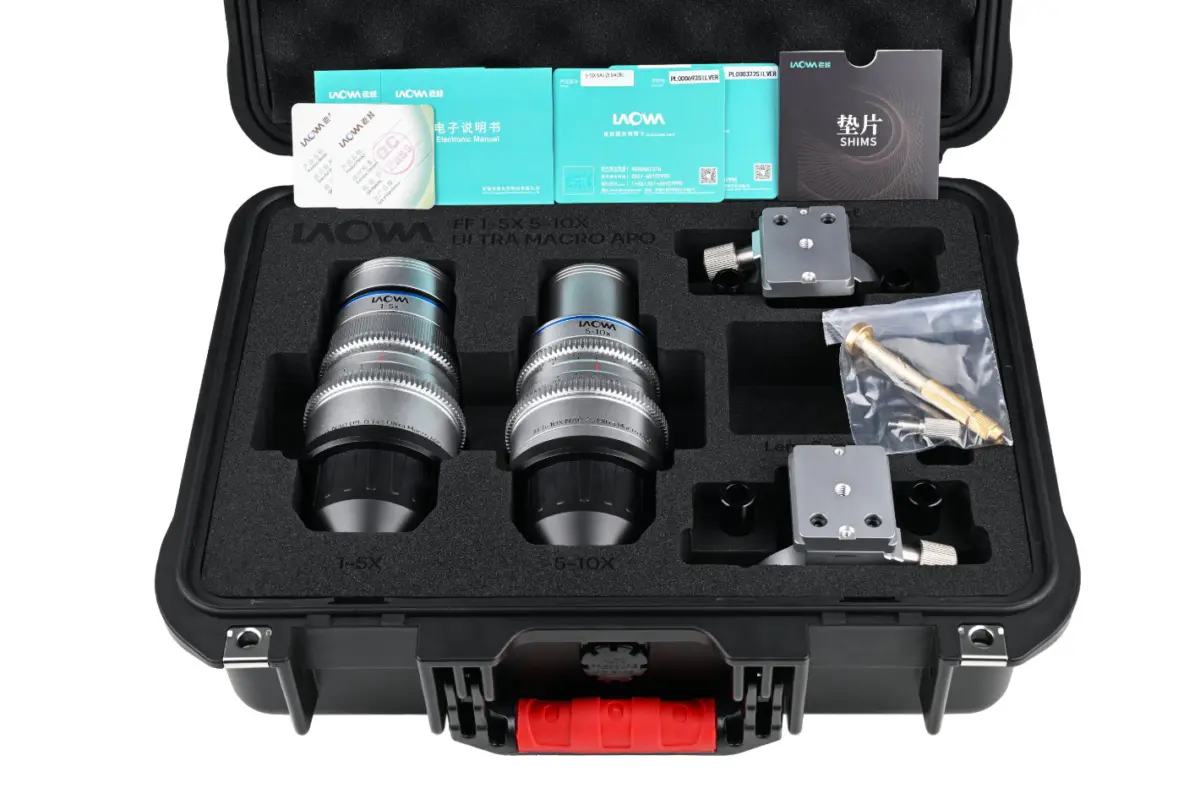
Cine Version: Features industry-standard 0.8 MOD gears on the focus, zoom, and iris rings. It comes standard with a robust tripod collar that connects directly to Arca-Swiss plates and supports standard 15mm rods. This allows operators to mount heavy-duty follow-focus motors, wireless lens control systems, and matte boxes without stressing the camera’s lens mount.
Configuration Matrix and Pricing Structure
The Aksen series is positioned as a premium but highly cost-effective alternative to custom industrial microscopes. Below is a detailed breakdown of the pricing tiers and bundle options available at launch:
Lens Model & Kit Type
Target Audience
Key Inclusions
Price (USD)
Aksen 1-5x Photo
Still Photographers, Hobbyists
Standard lens, manual rings
$749
Aksen 5-10x Photo
Micro-photographers, Researchers
Standard lens, manual rings
$749
Aksen 5-10x Photo (Coaxial)
Industrial Inspectors, Material Scientists
Lens with integrated coaxial port, Ø8mm adapter
$849
Aksen 1-5x Cine
Commercial DP, VFX Studios
0.8 MOD gears, 15mm rod support, Arca collar
$1,499
Aksen 5-10x Cine
VFX, Scientific Filmmakers
0.8 MOD gears, 15mm rod support, Arca collar
$1,499
Aksen 5-10x Cine (Coaxial)
Advanced Industrial Cinematography
Cine housing, coaxial port, Ø8mm adapter
$1,599
Photo Bundle (Standard)
General High-Magnification Photographers
Both 1-5x and 5-10x Photo Lenses
$1,399
Photo Bundle (Coaxial)
Specialized Scientific Photographers
1-5x Photo + 5-10x Coaxial Photo Lenses
$1,499
Cine Bundle (Standard)
Production Houses, VFX Units
Both 1-5x and 5-10x Cine Lenses
$2,899
Cine Bundle (Coaxial)
Elite Biological & Industrial VFX Units
1-5x Cine + 5-10x Coaxial Cine Lenses
$2,999
Official Statements & Industry Reception
In their launch documentation, Laowa emphasized the transformative nature of the Aksen series’ optical design:
"The sophisticated APO design delivers exceptional optical performance. Since chromatic issues typically escalate at extreme magnification levels, the Aksen effectively eliminates fringing, providing the unmatched clarity and sharpness that the creative community demands from their optical solutions."
Industry analysts have noted that by bringing a commercial 5–10x zoom to market, Laowa is dismantling the barrier to entry for high-magnification cinema.
"Historically, if a commercial production needed to zoom from a wide shot of an insect’s eye to a microscopic view of its compound structures, it required multiple takes on different camera systems, followed by complex morph cuts in post-production," says Marcus Vance, an independent cinematography consultant. "A true parfocal zoom operating up to 10x magnification allows this to be executed in a single, continuous camera movement. This is a game-changer for natural history documentaries and medical VFX."
Future Outlook: The New Standard for Micro-Imaging
The introduction of the Laowa Aksen series is poised to reshape several key industries:
1. Natural History and Science Documentary Production
With the rise of 8K delivery standards, broadcasters like the BBC, National Geographic, and Netflix demand pristine image quality free of chromatic aberrations. The Aksen series allows cinematographers to capture dynamic, high-resolution footage of microscopic organisms, crystal formations, and chemical reactions with cinema-grade camera rigs.
2. Semiconductor and Materials Science Research
As microchips continue to shrink, visual quality control requires ever-higher magnification. The Aksen 5–10x, equipped with coaxial lighting, offers quality-assurance labs a flexible, high-fidelity alternative to traditional benchtop microscopes. Researchers can now record high-speed video of mechanical failures, thermal expansion, or wear patterns in real-time on full-frame sensors.
3. Forensic Science and Medical Education
The ability to document ballistic markings, fiber structures, and organic tissues with consistent lighting and edge-to-edge sharpness makes the Aksen series an invaluable tool for forensic labs and medical educators.
By combining parfocal zoom capabilities, an internal focus mechanism, and an innovative coaxial lighting system, the Laowa Aksen series moves beyond the limits of traditional macro photography. It establishes a new benchmark for optical engineering, showing that even the smallest subjects can be captured with grand, cinematic scale.