






Executive Overview
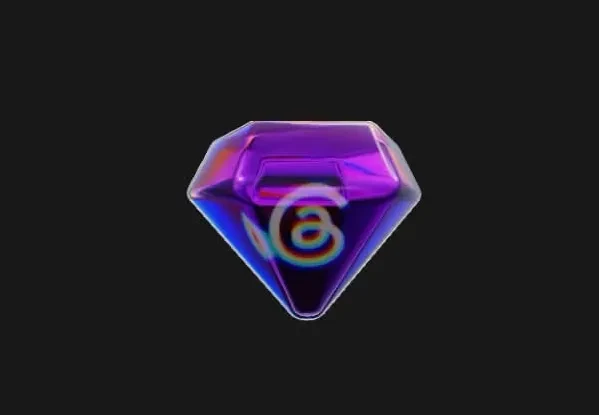
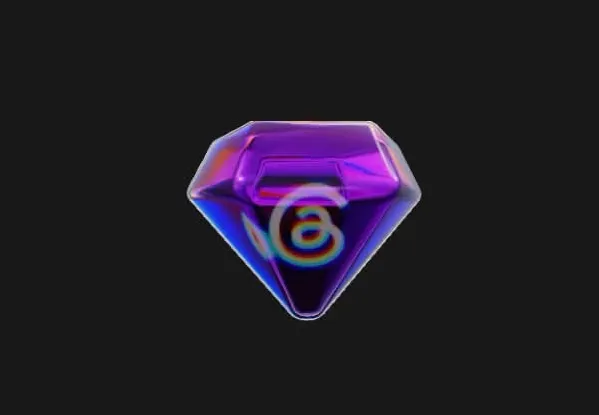
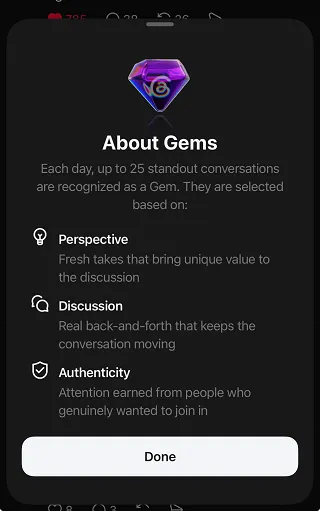
In an ongoing effort to cultivate a healthier, more engaging, and conversational digital public square, Meta’s text-based social media platform, Threads, has officially rolled out a brand-new feature designed to spotlight top-tier content. Dubbed "Gems," this newly launched system automatically identifies and rewards original posts and direct replies that successfully spark vibrant community discussions and add genuine value to the platform’s ecosystem.
First spotted in early development by independent app researchers in August, Gems represent a strategic pivot for Threads. As competition among microblogging platforms intensifies—with rivals like X (formerly Twitter) testing similar recognition frameworks—Meta is doubling down on rewarding substantive engagement over mere vanity metrics. Rather than relying on simple follower counts or sheer view volume, Gems are algorithmically curated to isolate content that acts as a catalyst for dialogue.
Initially rolling out exclusively to users in the United States, Gems notify creators when their content hits the mark, offering them a dedicated sharing format to celebrate the milestone. While the feature holds immense potential to gamify positive participation and drive platform retention, it also introduces intriguing questions regarding algorithmic governance, content moderation, and the delicate balance between provocative discourse and community standards.
Detailed Chronology: From Concept to Launch
The journey toward the realization of Threads Gems reflects Meta’s methodical, iterative approach to product development, moving from early back-end testing to public release.
August: The First Sightings
The genesis of Gems can be traced back to late summer, when prominent app researcher Alessandro Paluzzi uncovered preliminary code and interface designs hidden within the Threads application package. Paluzzi’s leaks offered the public its first glimpse of the "Gems notification screen," revealing an experimental feature engineered to recognize post-performance excellence. At the time, industry analysts speculated that Meta was exploring gamification strategies to rival the community-voted or manually curated accolades seen on competing platforms.
Late 2025: Expanding the Testing Phase
Following the initial leaks, Meta quietly expanded internal testing of the system. Engineers fine-tuned the parameters governing what constitutes a "meaningful conversation." During this period, the platform established foundational rules for the feature: Gems would be restricted exclusively to public profiles, and within threaded conversations, they would apply only to direct replies to a main post rather than secondary, nested replies (replies to replies).
Official Rollout
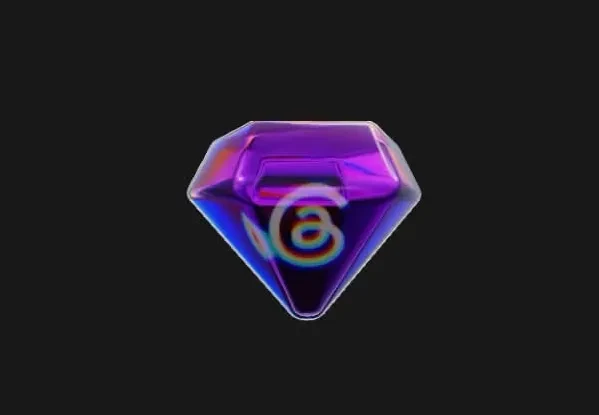
Fast forward to the official announcement, and Threads has brought Gems out of the shadows. The platform formally defined Gems as a recognition system awarded to posts and replies that "drive meaningful conversations." When a user’s content is designated as a Threads Gem, they receive an in-app notification detailing the achievement alongside a custom interface option allowing them to broadcast the milestone to their followers. Furthermore, a distinct, recognizable icon is appended to the post within the main information stream, signaling to all viewers that the content is a primary engine of community interaction. Importantly, Meta has built-in user agency: creators retain the option to decline the recognition if they prefer not to spotlight the award.
Supporting Context & Metrics: How the Algorithm Works
One of the most defining characteristics of the Threads Gems initiative is its reliance on automation. Unlike traditional platform awards or human-curated staff picks, Gems are selected entirely through automated detection processes managed by Meta’s proprietary algorithms.
The Mechanics of Algorithmic Selection
Meta has confirmed that Gems are not distributed via human evaluation. Instead, a sophisticated system evaluates a wide array of contextual signals to determine a post’s conversational value. While Meta has kept the exact proprietary weights under wraps, the system analyzes behavioral cues such as:
- The depth and continuity of comment threads: Does the post inspire multi-layered, articulate discussions, or does it flatline after a few superficial reactions?
- Unique participant diversity: Are multiple distinct users engaging in healthy back-and-forth dialogue, or is the activity dominated by a single echo chamber?
- Positive sentiment and engagement retention: Do users spend extended time reading and responding to the content?
By leaning entirely on systematic detection, Meta can scale the program globally without being bottlenecked by human review boards. However, this architectural choice brings distinct operational challenges, particularly when balancing algorithmic edge with platform safety.
Parallels Across the Social Media Landscape
Threads is not operating in a vacuum. The race to define and reward top-tier digital content has occupied several major players in the social media space over the past year.
Most notably, X introduced its short-lived "Bangers" promotion in late 2025, through which the platform created a dedicated official account to spotlight the most engaging posts month by month. However, X’s implementation proved ephemeral; after highlighting top posts for a single month, the initiative seemingly stalled out without sustained institutional backing.
Threads appears positioned to outlast and outperform X’s short-lived experiment. Because Threads Gems are fully automated, the platform avoids the manual labor overhead that likely bogged down X’s "Bangers" team. Nevertheless, comparison highlights a broader industry trend: social media companies are increasingly moving away from purely passive consumption models toward active, gamified community curation.
Official Statements and Platform Philosophy
Meta executives have long emphasized Threads’ core mission: to build an open, positive space for ideas and text-based updates. The introduction of Gems aligns seamlessly with this corporate philosophy.

In official help documentation and announcement posts, representatives from Threads highlighted the user-centric nature of the feature:
“If your post or reply is marked as a ‘Threads Gem,’ you’ll be notified and see the option to share a special post about it.”
By framing Gems as an opt-in celebration rather than a mandatory ranking, Meta is attempting to sidestep the anxieties often associated with algorithmic visibility. Creators who thrive on deep, thoughtful debates now have a tangible badge of honor, while those who prefer a more low-profile experience can simply decline the spotlight.
Furthermore, Meta has underscored that Gems are intentionally designed to elevate quality over virality. In an era where outrage culture often dominates algorithmic feeds—driving massive engagement through anger and controversy—Gems are theoretically calibrated to filter out superficial outrage bait in favor of constructive, valuable exchanges.
Future Outlook: Challenges, Risks, and Opportunities
As Threads rolls out Gems to its initial U.S. user base, the feature faces a complex future defined by high potential rewards and notable operational risks.
The Moderation Tightrope
The most pressing concern surrounding an automated recognition system like Gems is the classic paradox of internet engagement: controversy drives conversation.
Human psychology often compels users to engage heavily with controversial, divisive, or outright offensive remarks. If an automated algorithm is programmed purely to chase high reply volumes and sustained back-and-forth arguments, there is a distinct risk that inflammatory, toxic, or polarizing content could accidentally trigger a "Gem" classification.
Industry analysts point out that Meta will undoubtedly need to layer robust safety filters over its automated detection engine. If a post that violates community norms—or dances dangerously close to the line—is publicly celebrated with a special "Gem" icon, it could spark a severe public relations backlash, undermining the platform’s brand safety initiatives. It remains to be seen whether Meta has incorporated a secondary human-vetting layer to audit top-performing Gems before they receive public badges, or if the system runs entirely unmonitored.
Impact on Creator Economy and Platform Culture
For creators, marketers, and everyday users, Gems could fundamentally shift how content is strategized on Threads. Rather than optimizing posts purely for algorithmic reach or simple "likes," creators may begin tailoring their content to ask open-ended questions, solicit diverse viewpoints, and intentionally foster community dialogue.
If successful, Gems could establish a healthier baseline culture on Threads, distinguishing it from platforms where clickbait and sensationalism reign supreme. Moreover, as the feature matures and expands beyond the United States to international markets, it could become a vital metric for brands looking to partner with creators who truly command engaged, active audiences rather than passive follower bases.
What Lies Ahead
For now, Threads Gems remain an exclusive U.S. experiment—a digital testing ground where Meta will monitor user reception, algorithmic accuracy, and safety outcomes. If the system succeeds in rewarding genuine intellectual curiosity and community bonding without amplifying toxic discourse, Gems could easily become an industry-standard feature across the social media landscape.
As the digital world watches closely, the ultimate test for Threads Gems will not be how many users choose to share their badges, but whether the algorithm can reliably distinguish between a truly brilliant conversation and a runaway digital dumpster fire.