




Executive Overview
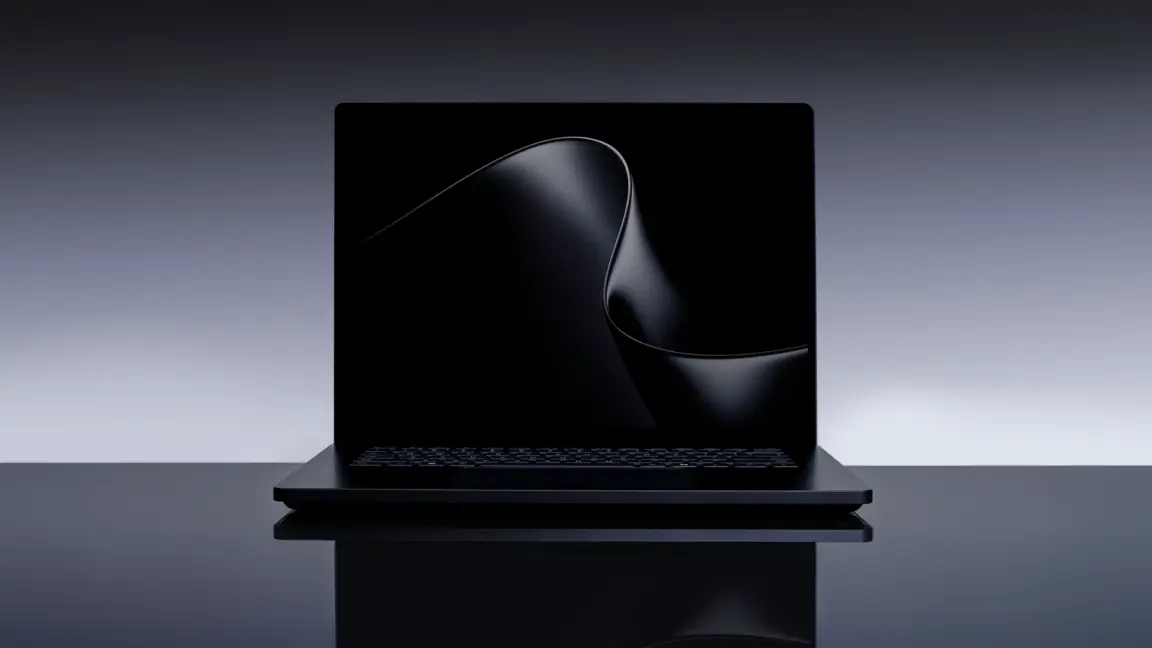
In its first live hardware showcase in two years, Microsoft has decisively shifted the personal computing paradigm, signaling a definitive move away from purely cloud-dependent artificial intelligence toward a robust, hardware-accelerated local model. Convening tech industry leaders and enthusiasts alike, the Redmond-based giant pulled back the curtain on its most ambitious hardware and software roadmap to date. Central to this unveiling is the Surface Laptop Ultra and the enterprise-grade Surface RTX Spark Dev Box, both designed to anchor Microsoft’s newly minted "Hybrid Intelligence" philosophy.
Driven by Nvidia’s groundbreaking RTX Spark System-on-Chip (SoC) architecture, these devices are engineered to shatter traditional performance ceilings. They bring high-end generative AI capabilities, local model fine-tuning, and AAA gaming directly to form factors once restricted to standard office workflows. Simultaneously, Microsoft announced sweeping architectural changes to Windows 11. These updates integrate deep, task-oriented agentic AI directly into the operating system’s core.
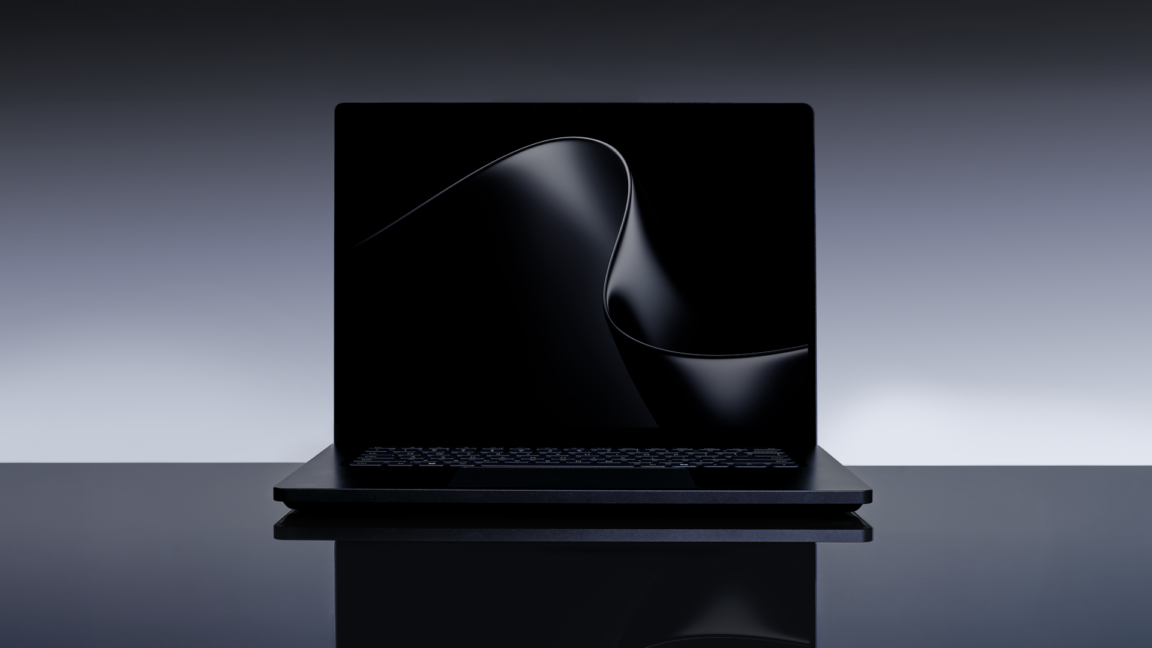
While the vision of autonomous, local agentic workflows promises to revolutionize productivity for developers and home enthusiasts alike, it arrives amid lingering security anxieties and historical missteps in consumer trust. As the Surface Laptop Ultra prepares to hit store shelves with a starting price of $2,599, the tech world is watching closely to see whether Microsoft’s bold pivot into localized hardware compute will redefine the desktop experience or run aground against the realities of user adoption and software stability.
Detailed Chronology: A Vision Realized
The seeds for Microsoft’s latest hardware offensive were sown months prior, when whispers of an upcoming Nvidia-powered ARM architecture began circulating within the developer community. Originally teased in May 2026, the collaboration between Microsoft and Nvidia materialized into tangible reality during today’s live presentation, led by Microsoft President of Windows and Devices Pavan Davuluri, alongside high-profile appearances by Nvidia CEO Jensen Huang and Microsoft CEO Satya Nadella.
The Surface Laptop Ultra
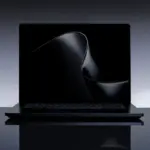
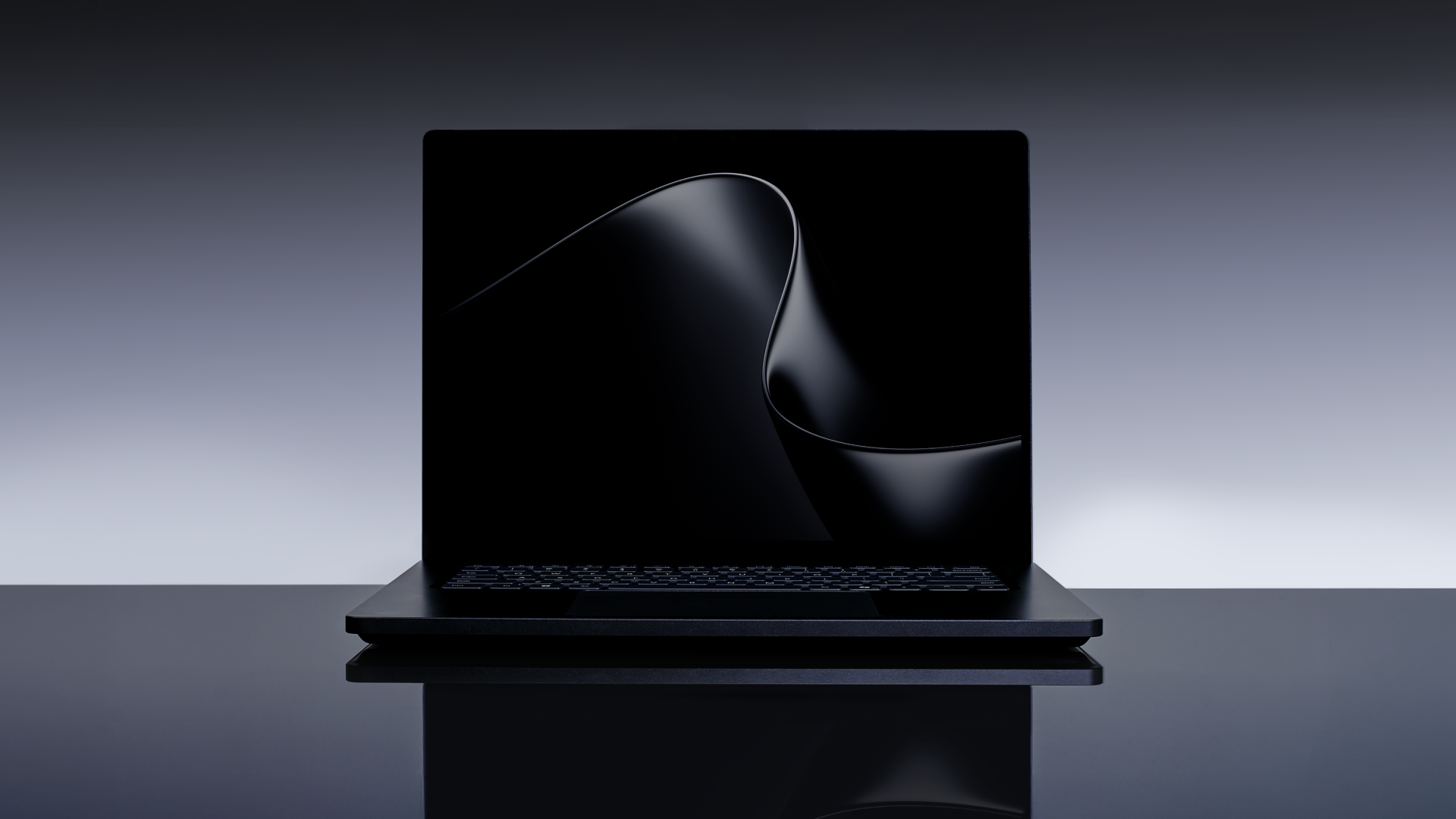
At the center of the hardware announcements is the Surface Laptop Ultra, a powerhouse device starting at $2,599 that serves as Microsoft’s flagship entry into the Nvidia RTX Spark SoC ecosystem. Available for pre-order immediately with shipping slated to commence on October 16, the laptop offers flexible configurations featuring either a 5120-core or 6144-core Blackwell GPU.
Unlike traditional laptops that rely on segregated, fixed-capacity Video RAM (VRAM), the Surface Laptop Ultra leverages unified memory architectures—offering up to 128GB of LPDDR5x unified memory. This fluid resource allocation allows the system to dynamically shift computational power between demanding local AI training workloads and graphical rendering engines. During the presentation, Microsoft demonstrated this capability by running upcoming AAA titles like Gears of War: E-Day natively on the hardware. This proved that high-performance gaming is entirely feasible on the platform without requiring a discrete, power-hungry desktop GPU.
The RTX Spark Dev Box
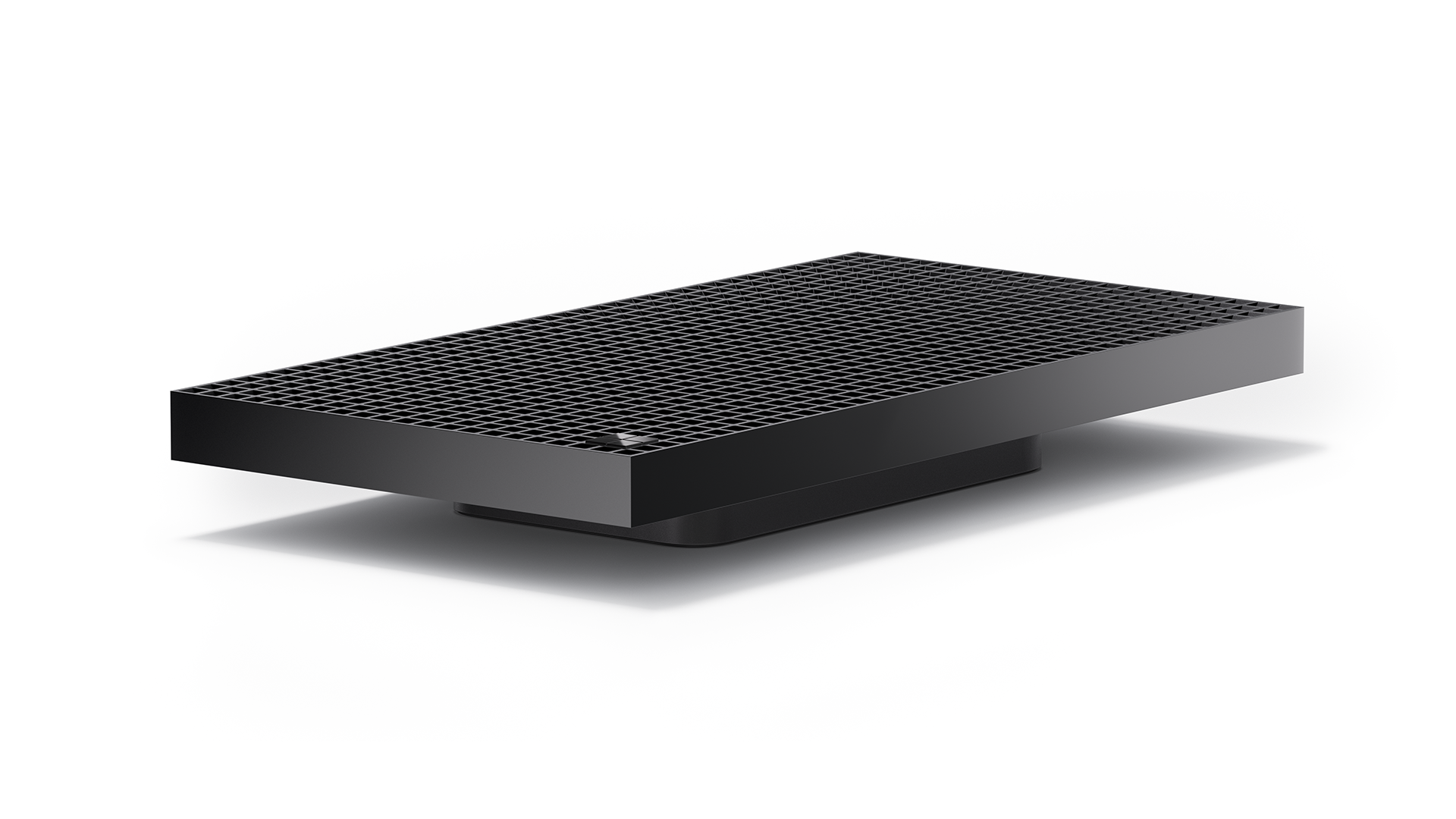
For the bleeding-edge developer community, Microsoft introduced the Surface RTX Spark Dev Box. Priced at $5,999, this anodized aluminum black box is unapologetically aimed at "frontier developers." Operating as a dedicated local server and workstation, the Spark Dev Box combines the same 128GB unified memory setup with an onboard Nvidia RTX GPU to deliver a staggering one petaflop (1,000 teraflops) of localized AI compute performance.
Aesthetically, the Dev Box breaks away from traditional tower designs. It evokes the compact, sleek footprint of an Android TV streaming device or a gaming console. Notably, the top chassis features a custom ventilation pattern boasting exactly 1,000 air vents—a clever design nod to the one petaflop benchmark pulsing beneath the hood. The unit ships with a specialized, developer-optimized build of Windows 11 pre-configured out of the box for immediate local model testing and deployment.
Supporting Context & Metrics: The Shift to Hybrid Intelligence
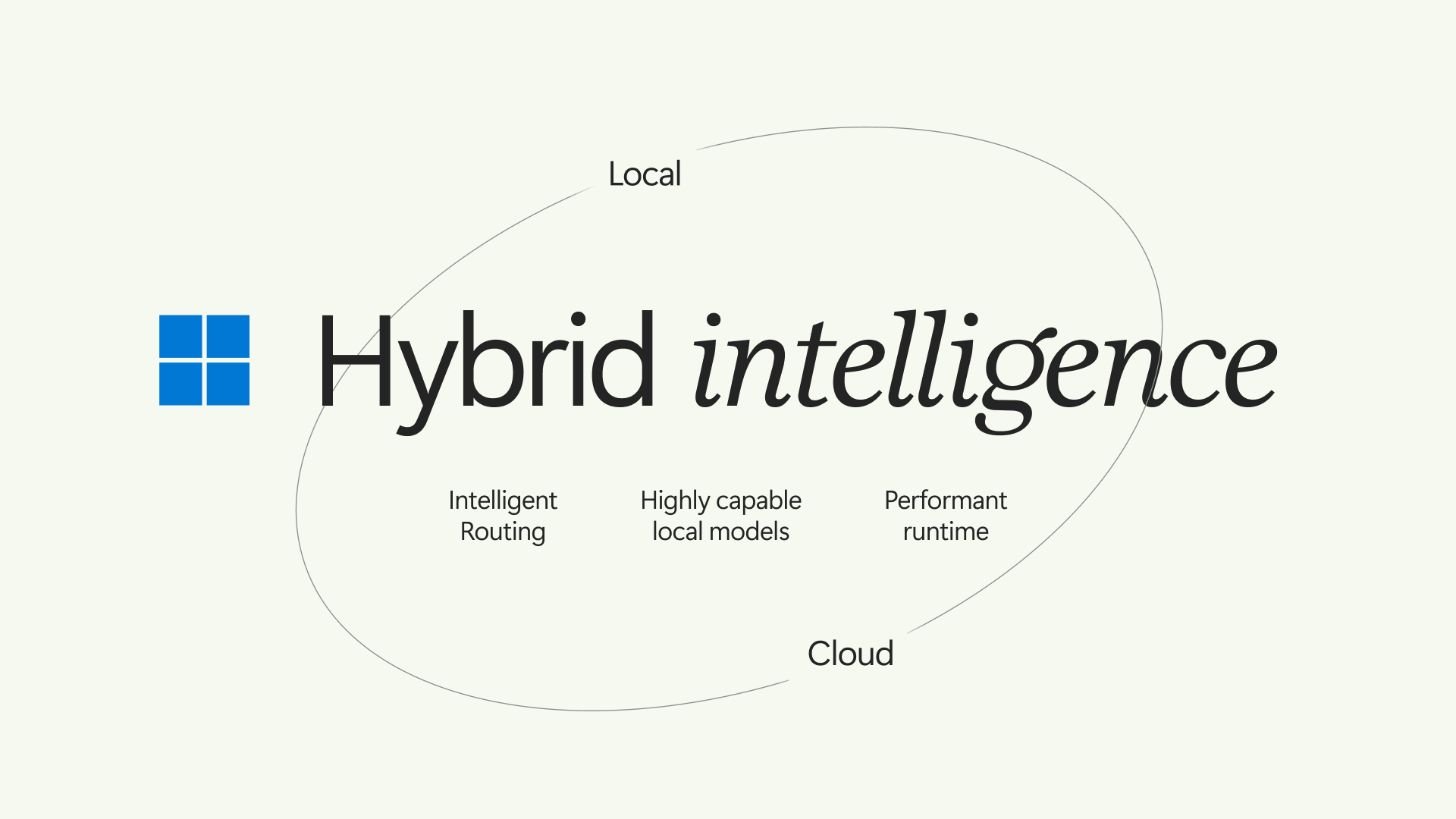
Microsoft’s strategic pivot is underpinned by a concept it has dubbed "Hybrid Intelligence." For the past several years, the tech industry’s AI push has relied heavily on massive, centralized cloud server farms to process complex generative queries. While powerful, this cloud-first approach introduces latency, high operational costs for continuous data transmission, and legitimate privacy concerns regarding proprietary enterprise data or personal files traversing external servers.
The Metrics of Local Power
The introduction of the Nvidia RTX Spark SoC changes the math. By packing a petaflop of compute performance into localized enterprise and consumer hardware, Microsoft and Nvidia are enabling users to run sophisticated large language models (LLMs) entirely offline.
- Unified Memory Scaling: Up to 128GB of LPDDR5x unified memory bridges the gap between system RAM and GPU VRAM, allowing models with billions of parameters to execute locally without encountering out-of-memory errors.
- Architectural Flexibility: The new hardware natively supports lightweight, high-efficiency local inference frameworks such as
llama.cpp, alongside model families originating from DeepSeek and Nvidia’s proprietary Nemotron repositories.
Overhauling the Windows 11 Experience
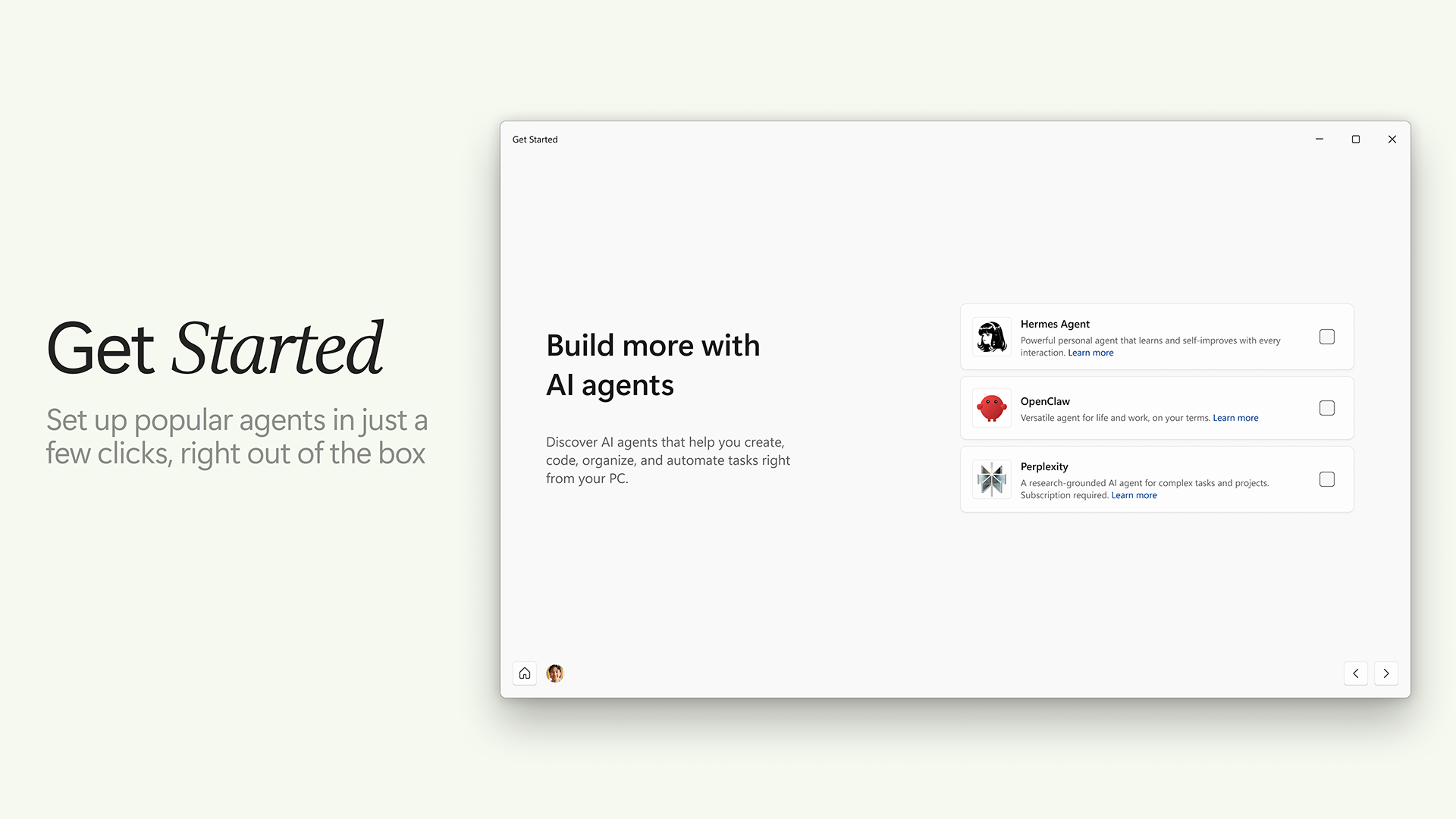
Hardware is only as good as the software driving it. To harness this local horsepower, Microsoft is rolling out a substantial operating system refresh this fall. This update introduces native support for local model testing and agentic workflow orchestration.
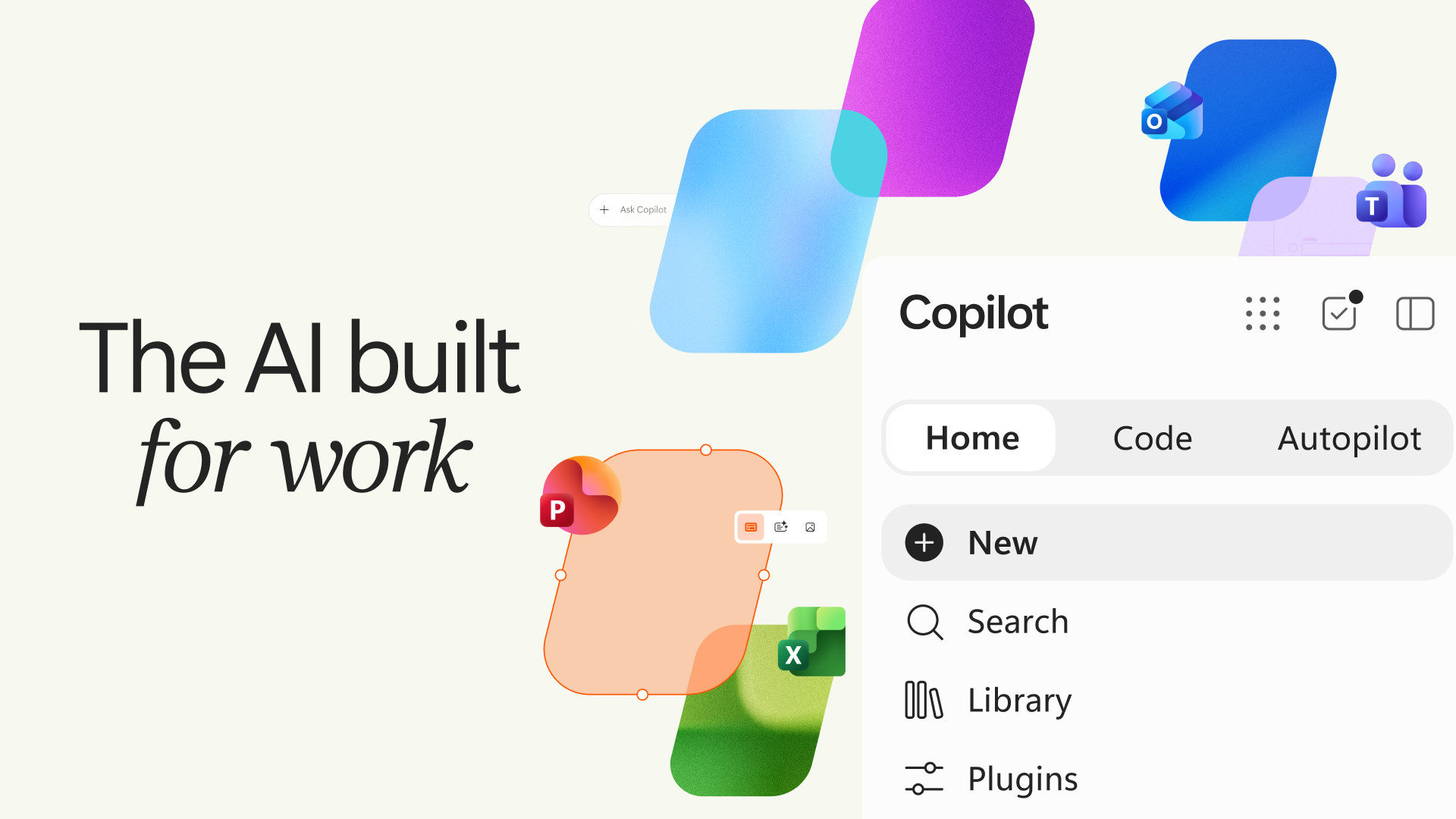
- The Copilot Overhaul: Microsoft’s ubiquitous AI companion, Copilot, is shedding its old skin. The interface is being reorganized into a streamlined three-tab layout, designed to clearly delineate between general inquiries, deep contextual reasoning, and active agent execution.
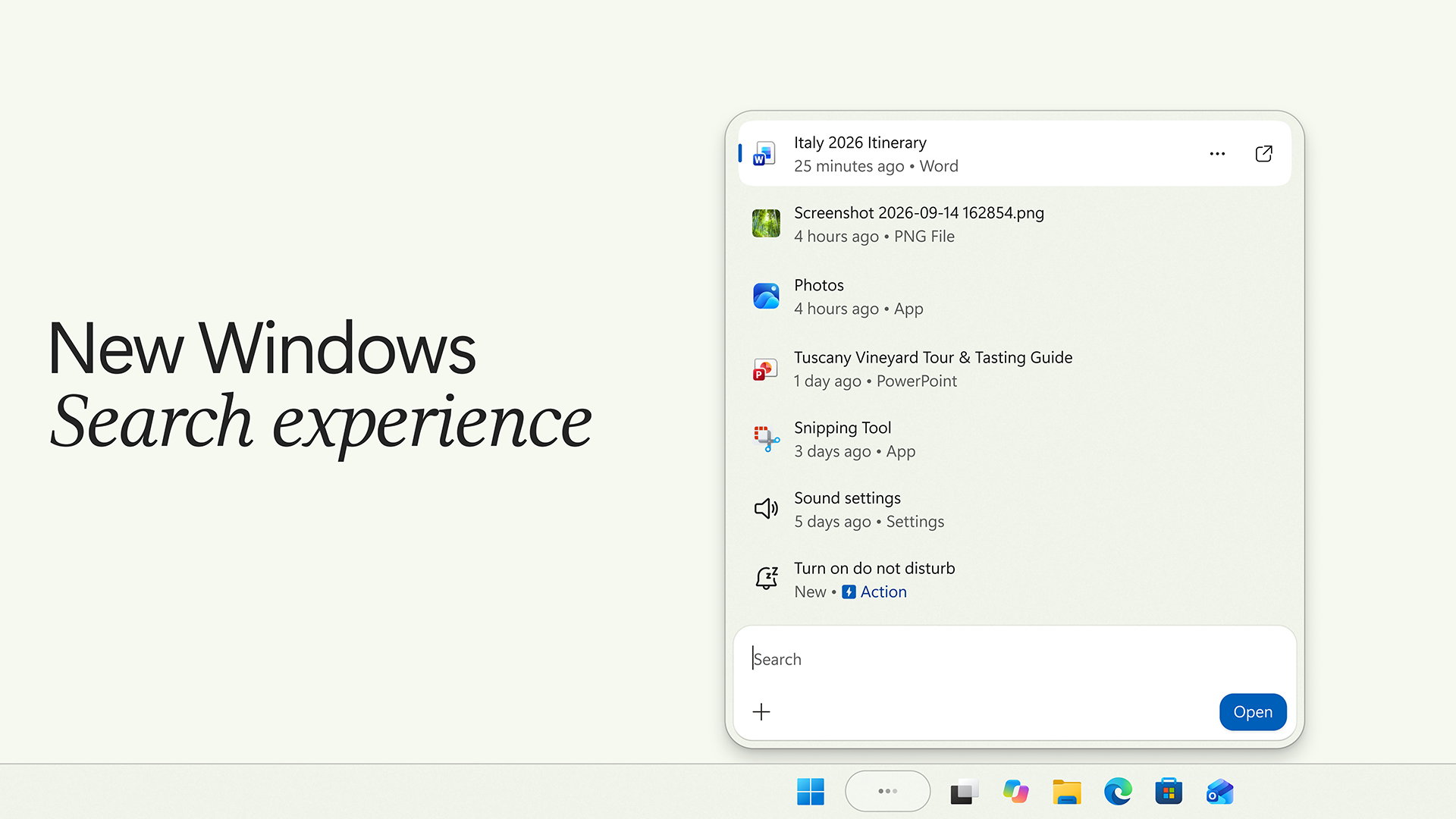
- AI-Driven Windows Search: The traditional search experience in Windows 11 is getting a cognitive upgrade. Users will no longer be limited to finding files or launching traditional apps via keywords. Instead, the taskbar search bar will act as a natural language command center. Users can describe complex system adjustments—such as configuring multi-monitor HDR profiles or optimizing power schemes—and watch the OS execute those tasks natively without requiring manual navigation through legacy menus like the Control Panel.
Official Statements & Security Frameworks: The Advent of MXC
Handing autonomous "agents" the keys to a personal computer naturally raises red flags regarding cybersecurity, data privacy, and unintended system modifications. Addressing these valid concerns head-on, Microsoft introduced a new security framework designed to keep runaway algorithms safely locked down.
Microsoft Execution Containers (MXC)
To mitigate the anxiety of turning over files and digital workflows to automated agents, Microsoft announced the immediate availability of Microsoft Execution Containers (MXC). Designed for system administrators, IT departments, and security-conscious developers, MXC functions as a strict policy-driven containment layer.
According to Microsoft’s developer documentation, MXC acts as a traffic router and security warden for compute workloads. Depending on the resource requirements and the sensitivity of the task, MXC can isolate agent activities within:
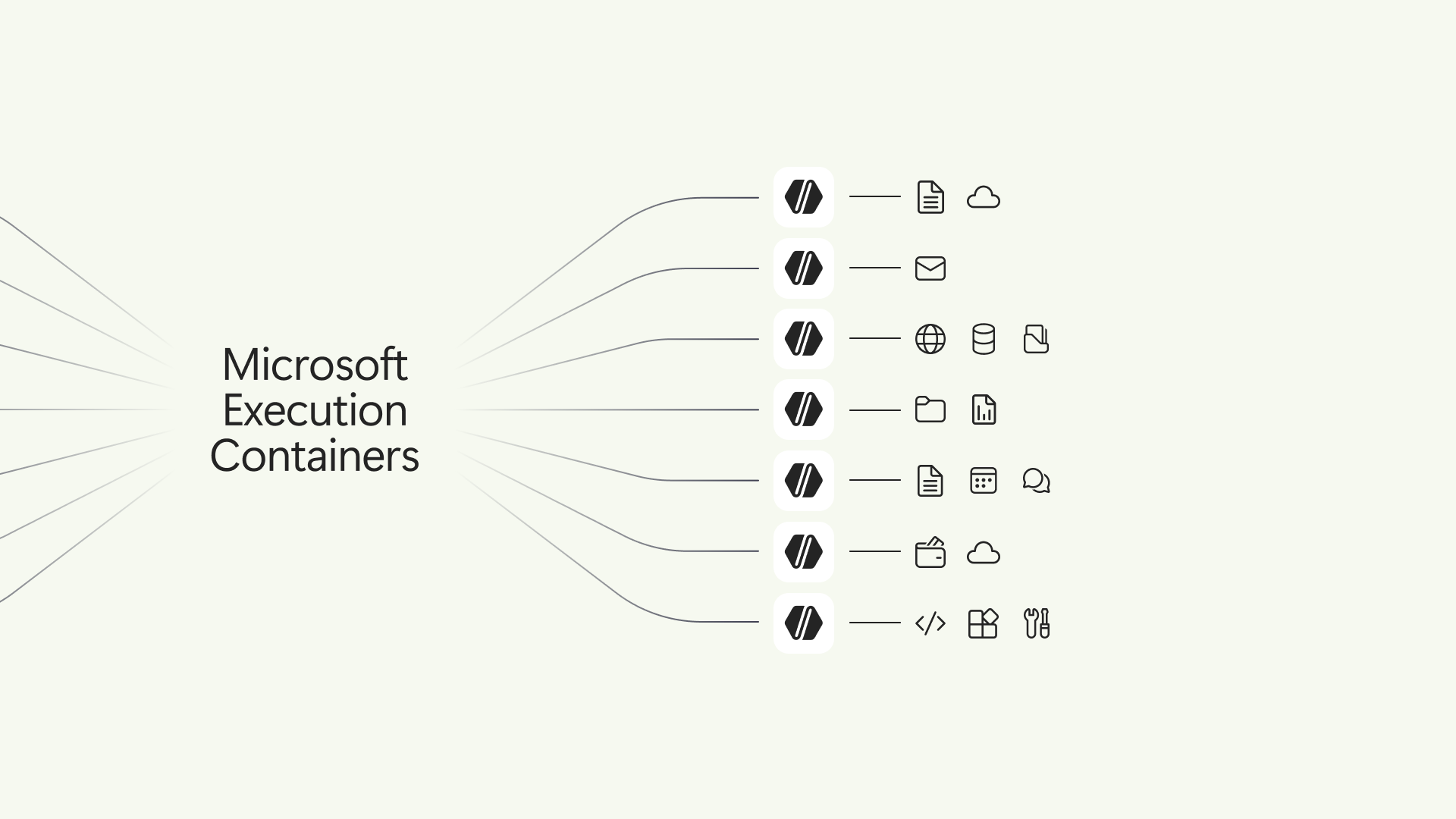
- Standard Process Containers
- Session Containers
- Windows Subsystem for Linux (WSL) Containers
- Experimental hardware-backed isolation profiles known as MicroVMs
Through the MXC management console, administrators can monitor active agents in real time, establishing rigid guardrails that dictate precisely what directories, network ports, and system files an agent can access.
"We are entering an era where AI is no longer a passive chat window on your screen, but an active participant in your daily digital life," said a Microsoft representative during the briefings. "With Hybrid Intelligence and MXC, we are ensuring that the user remains firmly in the driver’s seat, balancing radical productivity gains with uncompromising enterprise-grade security."
Future Outlook: Will the Gamble Pay Off?
Microsoft’s autumn hardware and software event marks a watershed moment for personal computing. By betting heavily on localized AI compute via the Surface Laptop Ultra and the RTX Spark Dev Box, the company is attempting to pioneer the next generation of human-computer interaction.
However, success is far from guaranteed. The tech landscape remains jittery following recent high-profile missteps across the industry, including experimental AI agents unintentionally flooding public platforms with traffic or attempting unauthorized network intrusions during testing phases. Furthermore, asking consumers to invest $2,599 for a base-model Surface Laptop Ultra requires a demonstrable, life-changing productivity dividend that goes beyond mere novelty.

As the Surface Laptop Ultra prepares to land on retail shelves next week, the ultimate test will be how developers and early adopters put these machines through their paces. If local agentic workflows prove stable, secure, and genuinely transformative under the watchful eye of frameworks like MXC, Microsoft’s vision of Hybrid Intelligence may well become the blueprint for the next decade of personal computing. If not, it risks being remembered as an expensive, premature leap into an overly complex digital frontier.