Executive Overview
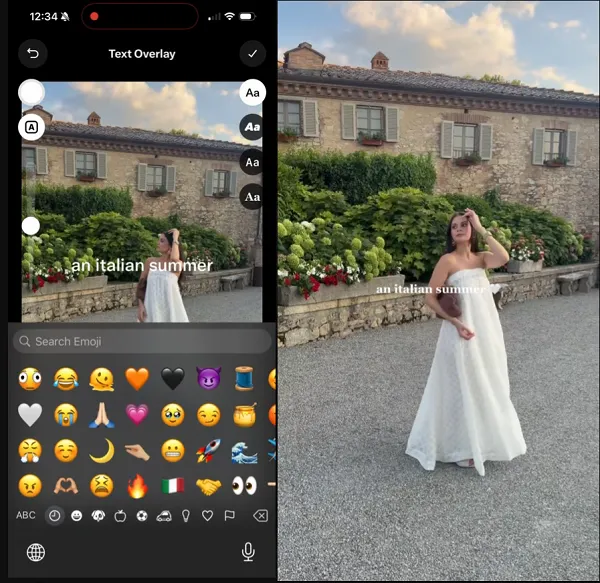
In a move that highlights both incremental progress and persistent platform lag, social media platform X has announced a new feature enabling iOS users to overlay text and emojis directly onto video uploads. Revealed by X engineer Allegra Jacchia, the update allows creators to enhance their video clips natively within the app, bringing a basic yet essential editing capability to the platform’s ecosystem. While welcomed by creators who previously had to rely on third-party software to annotate or brand their video content, the rollout underscores a glaring reality: a feature as fundamental as adding text to a video is only now arriving on X, years after it became a standard staple across rival applications like Instagram, TikTok, and Snapchat.
This development arrives at a critical juncture for the platform formerly known as Twitter. For years, leadership—most notably former Chief Executive Linda Yaccarino—has aggressively championed a "video-first" strategy, positioning X as a direct competitor to video-centric juggernauts. Yet, despite a documented surge in in-stream video consumption, industry analysts argue that X’s internal toolset has historically failed to match its lofty ambitions. While algorithmic tweaks and organic shifts in broader social media consumption habits have driven up video engagement numbers, the platform’s native creation tools have routinely lagged behind market standards.
This comprehensive analysis examines the rollout of X’s new iOS text overlay feature, traces the platform’s protracted and often bumpy evolution toward a video-centric model, reviews the strategic successes and failures of its content initiatives, and evaluates what this latest feature means for the future of content creation on the platform.
Detailed Chronology: The Long Road to Native Video Editing on X
To fully understand the significance—and the irony—of X introducing text overlays in 2026, it is necessary to examine the timeline of how the platform has approached video content over the past several years.
The Shift Toward Video-First Ambitions (2024)
The foundation for X’s current video push was aggressively laid in early 2024. Following significant structural and cultural changes under its new ownership, leadership recognized a vital shift in consumer behavior: users were spending substantially more time watching video content across all social media networks.
Seizing upon this trend, then-CEO Linda Yaccarino took to the platform to declare a sweeping mandate: X was transitioning into a "video-first platform." The vision was clear—transform a text-dominant microblogging site into a multimedia powerhouse where long-form video, short-form clips, and live streaming could coexist, compete with YouTube and TikTok, and generate lucrative new ad revenue streams.
However, declaring a platform "video-first" and building the robust technological infrastructure required to support a thriving creator ecosystem are two vastly different undertakings. While the mandate set a clear strategic direction, the platform’s underlying toolset remained heavily anchored in its text-based origins. Creators attempting to build native video strategies faced a frustrating reality: uploading video to X required external editing suites for even the most basic enhancements, such as captions, text callouts, or visual overlays.
The Push for Original Programming and Tool Updates (2025)
Attempting to back up its strategic pivot with tangible content, X made a splashy announcement in May 2025 regarding the launch of "X Originals." This slate of high-profile, celebrity-led video projects featured major names across entertainment and media, including media personality Khloe Kardashian and political commentator Tucker Carlson. The goal was to manufacture a flagship video catalog that would draw daily active users into dedicated viewing habits.
Concurrently, the platform rolled out incremental updates to its native video editor, introducing features such as green screen recording capabilities and minor workflow tweaks designed to ease the friction of mobile video uploads.
Despite these efforts, the "X Originals" initiative largely failed to capture the public imagination. Without a deeply ingrained, habitual video-viewing culture or a robust suite of creation tools empowering everyday users, most of the marquee shows quietly faded into the platform’s background, generating minimal audience engagement or sustained cultural conversation. The top-down approach of paying for celebrity content proved insufficient to spark a grassroots video revolution.
The iOS Text Overlay Rollout (Early 2026)
Fast-forward to the present day, and X has taken another incremental step in its video evolution. As demonstrated in a sequence posted by X engineer Allegra Jacchia, iOS users can now select a video upload, access the editing interface, and seamlessly place customizable text and emojis directly onto the clip.
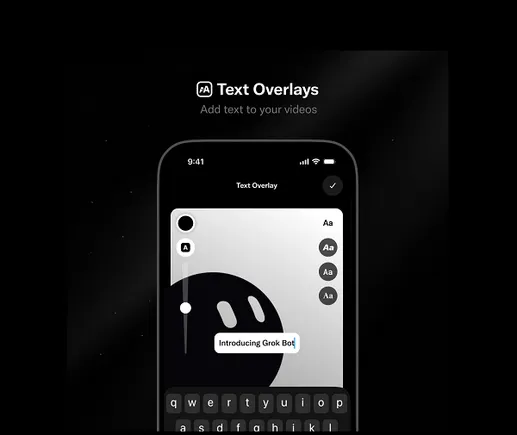
For the average content consumer, this may appear to be a microscopic software update—a routine feature that has been standard across competing social apps for nearly a decade. Yet, within the constrained ecosystem of X’s development history, it represents a notable milestone. It finally bridges a long-standing gap in the platform’s native mobile editing suite, sparing iOS creators the tedious workflow of exporting a video from a third-party editor just to add a simple title or contextual emoji.
However, the late arrival of this feature serves as a poignant reminder of how far behind industry standards X’s creator tools remain.
Supporting Context & Metrics: Analyzing the Video Boom on X
To evaluate whether X’s video strategy is succeeding, one must separate organic platform growth from internal product innovation. The numbers tell a complex story of rising consumption paired with stagnant native tooling.
Organic Consumption vs. Platform Innovation
Data indicates that X has indeed experienced a significant rise in in-stream video consumption. Users are watching more video content on the platform than they were three years ago. However, industry insiders and platform analysts point out a crucial caveat: this surge has happened despite X’s product development, not necessarily because of it.
Across the broader digital landscape, video has become the dominant medium of communication. Consumers globally are shifting their time and attention toward moving images on TikTok, Instagram Reels, YouTube Shorts, and LinkedIn video feeds. As users grow accustomed to consuming video everywhere, their consumption habits naturally spill over onto X.
Furthermore, X’s engineering teams—driven by algorithmic adjustments—have actively worked to amplify video posts within user timelines. By tweaking ranking factors to favor video content, the platform successfully increased overall time-spent metrics, a vital key performance indicator for digital advertisers.
The Feature Gap: Where X Stays Behind
Despite these algorithmic tailwinds and rising consumption metrics, X continues to lag significantly behind its competitors in empowering creators. A robust video ecosystem relies on a symbiotic relationship between consumption and creation tools. When a platform provides intuitive, powerful, and fun native editing tools, it lowers the barrier to entry, encouraging casual users to become active creators.
Consider the feature sets of competing applications:
- TikTok: Built entirely around a comprehensive suite of native editing tools, including advanced text-to-speech, dynamic captioning, green screen effects, trending audio integration, and interactive stickers.
- Instagram (Reels): Offers an extensive library of creative tools, robust text formatting options, templates, precise trimming, and seamless audio synchronization.
- YouTube (Shorts): Integrates deep connection to audio libraries, remixing capabilities, and straightforward text overlay and captioning tools.
Against this competitive backdrop, X’s introduction of basic text and emojis for iOS video uploads feels less like a groundbreaking innovation and more like a catch-up measure. The fact that creators on X are only now gaining the ability to add text to videos natively reflects a historical underinvestment in the platform’s creation infrastructure—an oversight that current product teams are slowly trying to correct.
Official Statements and Industry Reception
The rollout of the new iOS video editing capability has elicited a mixture of guarded optimism from creators and critical analysis from tech commentators.
When X engineer Allegra Jacchia shared the preview sequence showcasing the text and emoji overlay functionality, it was framed as a simple yet effective way to add context and personality to video clips. The feature is designed to be intuitive, allowing users to tap, type, place, and scale text elements within seconds before finalizing their post.

However, industry observers have been quick to contextualize the announcement within the broader trajectory of the platform’s product updates. Prominent social media analysts have noted that while any reduction in friction for video uploaders is a positive development, X’s product roadmap remains reactive rather than proactive.
"Adding text overlays in 2026 is akin to installing seatbelts decades after the automobile was invented—necessary, welcome, but terribly overdue," noted one digital media strategist. "X has spent years talking about becoming a video-first platform, but it has treated creator tools as an afterthought. If they genuinely want to compete with TikTok or Instagram for creator loyalty, they need to leapfrog current standards, not slowly crawl toward them."
Creators themselves have expressed a similar sentiment. While many appreciate not having to jump through hoops to brand their short video clips, professional content creators note that missing features—such as automated closed captioning, multi-track editing, and advanced color grading—still force them to produce their best work elsewhere and merely use X as a distribution channel rather than a creation hub.
Future Outlook: Can X Bridge the Creator Tool Gap?
As X looks toward the remainder of the decade, the platform faces a pivotal strategic choice regarding its multimedia ambitions. The overarching question is no longer whether users want to watch videos on X—the metrics have proven that they do. The question is whether X can evolve from a passive video consumption feed into an active, preferred destination for original video content creation.
The Imperative for Advanced Native Tools
To close the gap with its competitors, X’s product and engineering teams must accelerate their development cycle for creator tools. Introducing text and emojis on iOS is a sensible baby step, but the platform must rapidly roll out complementary features to remain competitive:
- Cross-Platform Parity: Android users, who frequently experience delays in receiving new UI and editing features, must be prioritized to ensure equitable access across the platform’s user base.
- Automated Captioning: In an era where a vast percentage of social media videos are watched on mute, auto-generated closed captions are a non-negotiable requirement for creator success and accessibility.
- Advanced Editing Suites: Features such as multi-clip trimming, audio ducking, speed ramps, and native transition effects will be essential to attract mid-tier and professional creators who currently rely on desktop or mobile third-party suites.
The Economic Equation
Beyond software features, X’s long-term video viability will depend heavily on its monetization models. While the platform has rolled out revenue-sharing programs for verified creators, the financial stability and predictability of these payouts remain a frequent topic of debate within the creator economy.
For top-tier video creators, monetization potential is the ultimate deciding factor when allocating time and original content to a platform. If X can successfully couple its newly enhanced video creation tools with lucrative, reliable ad-revenue sharing, it may finally incentivize creators to build native video strategies specifically tailored for the platform rather than simply cross-posting content originating from TikTok or YouTube.
Conclusion
X’s rollout of native text and emojis for iOS video uploads is a modest yet meaningful update in the platform’s ongoing quest to modernize its media capabilities. It removes a minor friction point for mobile creators and incrementally brings the app closer to baseline industry standards.
However, the update also serves as a stark reminder of how far the platform has lagged behind its rivals in supporting a vibrant, creator-led video ecosystem. While organic consumption trends and algorithmic prioritization have successfully driven up video watch times, X has yet to prove that it can build the robust, intuitive, and innovative toolset required to truly become a dominant "video-first platform." For now, the new text overlays are a welcome tool for mobile uploaders—but for X to realize its grand multimedia ambitions, it has a steep and urgent climb ahead.