Executive Overview
In the rapidly evolving landscape of digital marketing and social commerce, platforms continually seek to diversify and expand their user base to offer brands maximum return on investment. Pinterest, long celebrated as a visual search engine and a digital mood board primarily associated with fashion, interior design, and lifestyle inspiration, is undergoing a significant demographic evolution. Recent data reveals that male users now comprise approximately one-third of the platform’s staggering 640 million monthly active users. This massive influx and active engagement of male consumers has prompted Pinterest leadership to release a comprehensive trend report outlining the rising search behaviors, hobbies, and consumer interests among men for the year 2026.
This newly published intelligence offers critical guidance for digital marketers, content creators, and brand strategists who have traditionally overlooked Pinterest as a female-dominated space. According to the platform’s insights, male users are increasingly turning to Pinterest not just for passive browsing, but for active planning and purchasing inspiration across several key verticals. Among the most prominent areas experiencing a surge in search interest are recreational and hobby-related pins, specialized grooming tips, outdoor adventure activities, and communal gaming concepts.
As brands navigate an increasingly fragmented digital advertising ecosystem, understanding these emerging patterns provides a strategic roadmap for tapping into a high-intent male audience. Pinterest’s sophisticated visual search capabilities and AI-driven performance enhancements mean that brands utilizing targeted Pin ads can now capture the attention of a highly engaged demographic that uses the platform specifically to plan future purchases. This comprehensive report explores the nuances of Pinterest’s 2026 men’s trend data, analyzes the broader platform metrics, evaluates official statements regarding the shift, and projects the future outlook for gender diversity and advertising efficacy on the platform.
Detailed Chronology of Pinterest’s Demographic Shift
To fully comprehend the significance of the 2026 men’s trends report, it is essential to examine the chronological progression of Pinterest’s audience development over the past decade.
The Early Era: A Niche Visual Scrapbook (2010–2015)
When Pinterest was first introduced, it was widely characterized—often unfairly stereotyped—as a digital corkboard primarily utilized by women for wedding planning, recipes, and home decor. During its formative years, the platform’s architecture, recommendation algorithms, and early adopter base heavily skewed toward female demographics. While male users did exist on the platform, their presence was largely peripheral, and brands targeting men rarely considered Pinterest a viable channel for customer acquisition or brand awareness campaigns.
The Pivot Toward Visual Search and Inclusivity (2016–2020)
Recognizing the limitations of being boxed into a single demographic corner, Pinterest’s executive leadership initiated a multi-year pivot. The company invested heavily in machine learning, computer vision, and advanced recommendation systems. By transforming the platform from a simple social network into a powerful visual search engine, Pinterest began attracting a broader spectrum of users. Search queries related to men’s fashion, automotive restoration, woodworking, and fitness began to tick upward organically. The platform responded by refining its content categorization, ensuring that its algorithmic recommendations became more personalized and less bound by traditional demographic silos.
The AI-Powered Scale and Mainstream Recognition (2021–2025)
Entering the post-pandemic digital era, Pinterest scaled exponentially, crossing major milestones in global monthly active users. A crucial catalyst in this growth was the integration of sophisticated artificial intelligence tools designed to improve ad performance, personalize feeds, and streamline the user journey from inspiration to transaction. By 2025, Pinterest’s global audience reached an impressive 640 million monthly active users. Crucially, internal analytics revealed a profound structural shift: male users had grown to represent approximately one-third of the entire active user base. This growth was not accidental; it was the direct result of men increasingly utilizing the platform as a utility tool for planning projects, discovering products, and researching high-involvement purchases.
The Release of the 2026 Men’s Trend Report (Present)
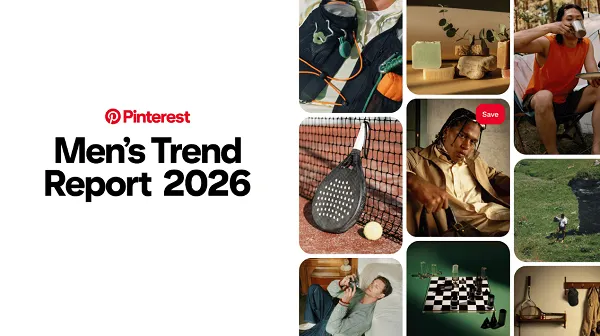
Culminating years of steady demographic evolution, Pinterest officially published its targeted overview of rising trends among male users leading into 2026. By isolating specific search behaviors and categorizing them into actionable insights, Pinterest provided the marketing industry with a clear directive: the modern male consumer uses the platform with specific intent, high purchasing power, and a distinct appetite for hobbies, self-care, and experiential activities.
Supporting Context & Metrics: Decoding the Modern Male Pinner
To appreciate the weight of Pinterest’s 2026 trend data, one must examine the underlying metrics that define the platform’s current ecosystem.
Scale and Engagement Metrics
- Total Monthly Active Users (MAUs): Pinterest boasts an immense global audience of approximately 640 million monthly active users.
- Male Demographic Share: Men currently account for roughly one-third of this total audience, translating to more than 200 million monthly active male users.
- Intent-Driven Behavior: Unlike traditional social media platforms where users engage in passive, endless scrolling driven by social validation, Pinterest users exhibit high commercial intent. Men on Pinterest are actively searching for "how-to" guides, product recommendations, and project blueprints.
Key Vertical Growth Areas for Male Users
Pinterest’s data analytics team identified several distinct categories experiencing accelerated search growth among male demographics:
- Recreational and Hobby Pins: There has been a notable surge in searches related to hands-on crafts, DIY home improvements, automotive customization, and specialized hobbies. Men are utilizing Pinterest as a digital workshop companion, saving step-by-step visual guides for complex projects.
- Grooming and Self-Care Tips: The modern male consumer’s approach to personal care has shifted dramatically. Pinterest has recorded increased search volumes for specialized grooming routines, skin-care regimens, beard maintenance, and wellness practices, signaling a departure from basic hygiene toward intentional self-care routines.
- Outdoor Activities and Adventure: From camping gear and hiking trail guides to survival skills and outdoor cooking setups, adventure-seeking men are leveraging the platform to plan their next excursions. The visual nature of Pinterest makes it an ideal medium for mapping out scenic routes and evaluating gear before making financial investments.
- Communal Gaming Ideas: As gaming continues to permeate mainstream culture, male users are turning to Pinterest for interior design inspiration related to custom gaming setups, streaming room layouts, and tabletop gaming organization ideas.
The Advertising Advantage
For digital marketers, these metrics translate to a unique opportunity. Because Pinterest users are in a planning mindset—often referred to in the industry as "early-stage decision-making"—brands that deploy targeted Pin ads can intercept consumers before they have finalized their purchasing decisions. For male-focused brands in automotive, grooming, outdoor recreation, and gaming hardware, this represents a golden window of influence that is rarely matched by text-based search engines or purely entertainment-driven social feeds.
Official Statements and Industry Insights
The release of the 2026 men’s trend report has elicited significant commentary from digital marketing analysts, e-commerce experts, and Pinterest executives alike.
Industry analysts emphasize that platforms must constantly evolve to survive the hyper-competitive digital advertising market. For years, Pinterest battled the persistent misconception that its monetization potential was restricted to bridal boutiques, interior decorators, and fashion brands. By highlighting the robust engagement of its male users, Pinterest is actively reshaping its corporate narrative from a niche lifestyle app to a universal search and commerce utility.
Digital marketing leaders have praised the platform’s transparent approach to trend forecasting. In statements accompanying the data release, Pinterest representatives noted that understanding the intersection of male search behavior and commercial intent is essential for modern brands. A spokesperson for the platform highlighted that men are increasingly using Pinterest as a personal planning tool for major life moments, home renovations, and hobbyist pursuits.

Furthermore, marketing experts point out that the integration of advanced AI tools has drastically improved ad relevance. By utilizing machine learning to pair relevant hobby, grooming, and outdoor pins with high-intent male users, Pinterest has created a frictionless environment where advertising feels less like an intrusion and more like a helpful recommendation. This high level of relevance yields superior engagement rates, lower customer acquisition costs, and higher overall return on ad spend (ROAS) for brands astute enough to pivot their media buying strategies accordingly.
Future Outlook: The Road Ahead for Pinterest and Brand Strategy
As we look toward 2026 and beyond, the implications of Pinterest’s demographic shift extend far beyond quarterly earnings reports. They signal a fundamental realignment in how digital platforms cater to diverse consumer segments and how brands allocate their digital marketing budgets.
1. The Mainstreaming of Niche Verticals
The rising traction of hobbyist pins, grooming tips, and outdoor activities among men indicates that future platform development will likely focus heavily on these niche communities. Pinterest may introduce specialized creator monetization tools, dedicated shopping features for outdoor gear and gaming hardware, and enhanced video formats tailored to step-by-step project tutorials. Brands operating within these spaces will need to transition from traditional static image ads to immersive, multi-frame idea pins and shoppable video content.
2. AI-Driven Personalization and Predictive Marketing
With Pinterest leaning heavily on artificial intelligence to drive performance, the future of user engagement will be defined by hyper-personalization. As the platform’s algorithms become more adept at predicting what a male user wants to build, groom, or explore next, the window between initial inspiration and transactional checkout will shrink. Advertisers who integrate their product catalogs directly with Pinterest’s shopping infrastructure will be best positioned to capture this frictionless demand.
3. Redefining Platform Identity
Ultimately, the success of Pinterest’s male-targeted initiatives challenges the industry-wide habit of categorizing social and visual platforms strictly by traditional demographic binaries. Pinterest is proving that a platform with a diverse, intent-driven audience can successfully expand its appeal without alienating its core user base. For brand strategists, the message is unequivocal: ignoring the male demographic on Pinterest is no longer a viable option. As the platform marches toward the latter half of the decade, brands that embrace these emerging trends will unlock unprecedented growth, capturing the loyalty of millions of active, planning-focused consumers.