Executive Overview
In the high-stakes theater of modern enterprise cybersecurity, organizations spend millions of dollars constructing virtual fortresses. Security engineering teams deploy Web Application Firewalls (WAFs), configure complex rate-limiting rules, enforce strict input validation schemas, and mandate rigorous, recurring penetration testing. They obsess over the OWASP Top Ten, patch operating systems within hours of zero-day disclosures, and subject every line of user-facing application code to static and dynamic analysis.
Yet, after all these rigorous precautions, that same impeccably secured code is routinely fed into a Continuous Integration and Continuous Delivery (CI/CD) pipeline that operates with sweeping, unmonitored administrative privileges, executes arbitrary code sourced from unverified third-party actions, enjoys broad network access to sensitive internal systems, and occasionally leaks high-value production secrets in plain text because of a single misplaced environment variable.
The pipeline that builds, packages, and deploys your secure application is frequently the least secure system in your entire infrastructure.
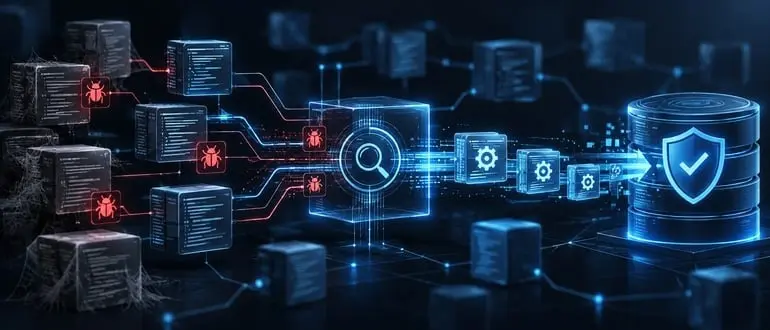
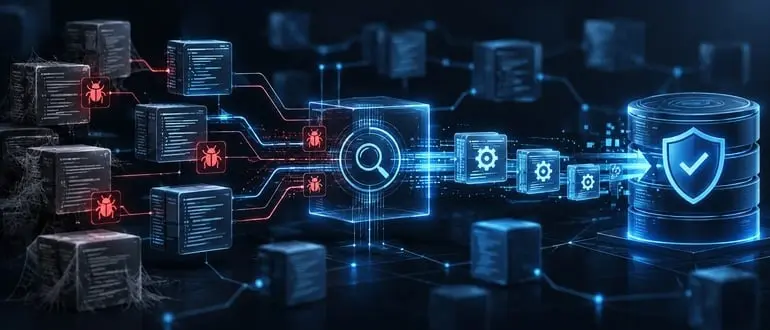
From an attacker’s perspective, a modern CI/CD pipeline is the ultimate jackpot. It is an automated execution engine intentionally designed to run code, equipped with god-mode credentials to cloud environments, container registries, artifact repositories, and production databases. It vacuums up dependencies from the public internet, executes plugins authored by anonymous strangers, and holds the cryptographic keys to the kingdom. If a malicious actor were tasked with designing a system custom-built to facilitate sophisticated software supply chain attacks, they would simply replicate the architecture of a standard, out-of-the-box corporate CI/CD server.
This deep structural dissonance—the chasm between how seriously organizations treat application security and how casually they approach pipeline hygiene—represents the single largest unaddressed risk in contemporary DevOps. As threat actors shift their focus from direct perimeter breaches to supply chain infiltration, the CI/CD pipeline has emerged as the most dangerous soft underbelly of the modern enterprise.
Detailed Chronology: The Evolution of Pipeline Exploitation
The vulnerability of software build and deployment systems is not a theoretical abstraction born in a threat-modeling whiteboard session; it is a battle-tested vector backed by a history of increasingly sophisticated attacks. Understanding how the industry arrived at this precarious juncture requires tracing the evolution of pipeline exploitation over the past decade.
1. The Era of Stolen Credentials (2015–2018)
In the early days of widespread CI/CD adoption—when Jenkins servers were routinely exposed directly to the public internet with default administrative credentials—attacks were crude and opportunistic. Threat actors scanned IPv4 spaces for exposed build servers, logged in with admin/admin credentials, and utilized the native script console to execute arbitrary operating system commands. Once inside, attackers mined build logs for hardcoded AWS access keys, SSH private keys, and database passwords. These early breaches were characterized by brute-force access and opportunistic credential harvesting rather than targeted supply chain manipulation.
2. The Rise of Dependency Poisoning (2018–2021)
As organizations began hardening their infrastructure perimeter and locking down build servers, attackers shifted upstream into the software supply chain. Rather than attacking the pipeline directly from the outside, malicious actors targeted the repositories and package registries that pipelines consumed. Incidents involving typosquatting on npm, PyPI, and RubyGems demonstrated that pipelines would unquestioningly ingest and execute malicious code during the npm install or pip install phases of a build. The pipeline became an automated distributor of malware, executing malicious installation scripts with the full permissions of the build agent.
3. The Weaponization of Native CI/CD Features (2021–Present)
Modern pipeline platforms such as GitHub Actions, GitLab CI, and CircleCI introduced powerful ecosystem features designed for developer velocity, including community marketplaces, reusable workflows, and caching mechanisms. Attackers quickly realized these features could be weaponized.
The compromise of Codecov in April 2021 remains a watershed moment for modern pipeline security. Attackers gained access to a restricted Docker image creation script within Codecov’s development environment by exploiting a misconfigured container. They modified the Codecov Bash Uploader script—a utility pulled by thousands of enterprise CI/CD pipelines daily—to silently exfiltrate environment variables, including credentials, tokens, and keys sent to their build environments. For months, the script dutifully ran inside customer pipelines, stealing secrets and transmitting them to an external server without triggering a single application-level security alert.
The near-miss of the XZ Utils backdoor in early 2024 further exposed the existential threat facing build systems. A patient, state-sponsored actor spent years building social trust within an open-source project, ultimately engineering a mechanism that would inject a subtle backdoor into the build and packaging systems of Linux distributions worldwide. The attack was caught purely by accident through micro-benchmark anomaly detection. Had the build systems not implicitly trusted the upstream source tarballs and maintainer scripts during compilation, the malicious code would have propagated silently to millions of production servers.
Supporting Context & Metrics: The Anatomy of Pipeline Vulnerability
To quantify the scale of the CI/CD security crisis, industry researchers and security analysts have repeatedly audited enterprise build environments, consistently uncovering systemic architectural flaws.
The Proliferation of Over-Privileged Service Accounts
In a typical cloud-native development lifecycle, a CI/CD pipeline requires permissions to build container images, push them to registries, and update cloud infrastructure via Infrastructure as Code (IaC) tools like Terraform. However, organizational friction and architectural laziness frequently lead to the creation of God-mode service accounts.
Security audits of enterprise cloud environments frequently reveal that:

- Over 70% of CI/CD pipeline service accounts possess broad, persistent wildcard permissions (e.g.,
AdministratorAccessor broadiam:*ands3:*policies) rather than narrowly scoped, task-specific roles. - Over 55% of teams store long-lived cloud credentials, API tokens, and SSH keys as plain-text secrets within repository settings or environment variables, where any script injected via a pull request can read and exfiltrate them.
- Nearly 40% of organizations utilize shared CI/CD runners that lack workload isolation, meaning that a compromised build job can potentially read the memory, disk state, or environment variables of concurrent builds executed on the same agent.
The Third-Party Action Risk Vector
The modern developer ecosystem relies heavily on code reuse. In platforms like GitHub Actions, workflows routinely ingest third-party actions from the public marketplace. An analysis of public repositories reveals alarming practices regarding supply chain dependency hygiene:
- Eighty-five percent (85%) of workflows pin third-party actions to mutable git tags or branches (e.g.,
@v1or@main) rather than immutable, cryptographic commit SHAs. If an attacker compromises the repository of a popular third-party action, they can silently rewrite the tag to point to malicious code, instantly compromising every downstream pipeline that references it. - Over 60% of projects incorporate actions authored by individual maintainers with no corporate backing, audit history, or security oversight.
Official Statements and Industry Consensus
Security standards bodies and cloud infrastructure leaders have increasingly sounded the alarm regarding the systemic vulnerability of build pipelines.
The Cloud Native Computing Foundation (CNCF) and the Open Source Security Foundation (OpenSSF) have formalized frameworks aimed at addressing these risks, notably through the Supply-chain Levels for Software Artifacts (SLSA) framework.
"Software supply chain security cannot be solved by simply scanning code for vulnerabilities," notes the OpenSSF in its foundational pipeline security guidelines. "If the system that packages and distributes the software is compromised, even pristine, formally verified source code can be weaponized before it reaches production. Securing the CI/CD pipeline is no longer an auxiliary DevOps task; it is a core pillar of enterprise defense."
Industry leaders echo this sentiment. Security architects point out that traditional perimeter defense models disintegrate the moment a pipeline runner fetches an unverified script from the public internet and executes it with administrative cloud privileges.
"We have spent decades building impenetrable walls around our production servers while leaving the factory gates wide open," states a leading DevOps security researcher. "When a pipeline runs with unrestricted network access, pulls mutable dependencies, and holds administrative production keys, an attacker doesn’t need to break into your production environment. They just need to convince your build server to do it for them."
Future Outlook & Remediation: What a Hardened Pipeline Looks Like
Closing the gap between application security and pipeline security requires a fundamental paradigm shift. Organizations must treat their CI/CD infrastructure with the exact same—if not greater—level of paranoia, monitoring, and engineering discipline traditionally reserved for production systems.
Transforming an insecure, sprawling build architecture into a hardened enterprise pipeline requires adherence to four core pillars:
1. Principle of Least Privilege and Ephemeral Credentials
Pipeline credentials must be ruthlessly scoped to the absolute minimum required for each specific stage of the build process. A staging deployment job should never have access to production secrets. Furthermore, long-lived API keys and persistent environment variables must be eliminated entirely. Modern pipelines should leverage short-lived, workload-identity-federated tokens (such as OpenID Connect tokens provided by cloud vendors) that exist only for the duration of a specific, authorized build step.
2. Immutable Dependencies and Action Pinning
Never trust mutable references in a build pipeline. Third-party actions, plugins, and container base images must be pinned to explicit, cryptographic commit SHAs or immutable digest hashes rather than generic tags or branch names. Automated dependency-update bots can be employed to safely review, test, and merge SHA updates, ensuring that developers retain the velocity of open-source ecosystems without exposing themselves to silent tag-hijacking attacks.
3. Ephemeral, Isolated Execution Environments
Build agents should never be persistent, cattle-of-many-runs infrastructure that accumulates state over time. Every pipeline run should execute within an ephemeral, freshly provisioned sandbox environment that is completely destroyed immediately following the completion of the build. Network access from the build runner should be strictly firewalled and restricted to explicit destinations required for the build (such as specific package registries), blocking unauthorized lateral movement or data exfiltration.
4. Cryptographic Provenance and Attestation
To guarantee that the software running in production is precisely what was reviewed in source control, every pipeline run must produce a cryptographically signed provenance attestation (utilizing frameworks like SLSA or in-toto). This attestation records the exact source code commit, the build environment, the build steps executed, and the cryptographic hash of the resulting artifact. Downstream deployment gates can then independently verify these signatures, rejecting any artifact that lacks a valid, trusted chain of custody.
Conclusion
The modern enterprise can no longer afford to treat the CI/CD pipeline as a mere productivity utility. It is an active, high-value attack surface that bridges the gap between external code repositories and internal production environments.
Organizations that fail to secure their build pipelines are leaving the master keys to their infrastructure under the doormat. Bridging the DevOps security gap requires recognizing that the pipeline is the application. Until organizations apply the same rigor to their build systems as they do to their production databases, pipeline exploitation will remain the path of least resistance for tomorrow’s most devastating cyber attacks.