Executive Overview
The global data center landscape is undergoing a silent, high-stakes electrical revolution. For decades, the invisible backbone of enterprise computing infrastructure has run entirely on alternating current (AC). From the utility substation down to the rack level, AC has reigned supreme due to historical precedent, standardized distribution hardware, and deeply entrenched engineering habits.
However, the explosive rise of high-density artificial intelligence (AI) workloads—driven by power-hungry graphics processing units (GPUs) and specialized accelerators—has thrust traditional electrical architectures to their absolute breaking points. To feed rack densities that now routinely exceed what legacy facilities were designed to handle, engineers are looking past incremental fixes. They are targeting a foundational shift: moving key power conversion stages from AC to High-Voltage Direct Current (HVDC).
At the center of this paradigm shift is an emerging piece of hardware: the solid-state transformer (SST). By seamlessly bridging medium-voltage (MV) grid distribution with an internal 800 V DC bus, SSTs promise to shrink equipment footprints, minimize conversion losses, drastically improve energy efficiency, and simplify the integration of renewable generation and onsite battery storage.
Yet, this transition is not without friction. While pioneering technology providers and hyperscalers are racing to prototype and pilot SST platforms, conservative voices in the power systems industry urge caution, citing supply-chain immaturity, rigorous manufacturing hurdles, and viable interim alternatives. As the industry charts a course toward 2035, the race to reinvent data center electrification is redefining the boundaries of power electronics, hardware engineering, and operational resilience.
Detailed Chronology of the MV-to-DC Transformation
The evolution from low-frequency AC transformers to software-defined, solid-state DC architecture did not happen overnight. It represents a convergence of semiconductor breakthroughs, shifting computing demands, and urgent energy constraints.
- The Pre-AI Era (Pre-2020): Traditional data centers relied on standard medium-voltage AC feeds stepped down via bulky, low-frequency iron-core transformers to 480V or 415V AC. Power was converted multiple times—from AC to DC for uninterruptible power supplies (UPS) and back to AC, only to be converted again to low-voltage DC at the server power supply unit (PSU). Each conversion step introduced thermal losses and wasted precious energy.
- The AI Density Boom (2022–2023): The deployment of dense server clusters loaded with power-guzzling GPUs created unprecedented thermal and electrical challenges. Power delivery rapidly emerged as a performance bottleneck. Facilities strained under the weight of massive copper cabling requirements and complex multi-stage conversion loops.
- The Open Compute Project and 800V DC Alignment (2024–2025): Recognizing that traditional architectures could no longer scale efficiently, industry bodies like the Open Compute Project (OCP), alongside hardware pioneers like Nvidia, began championing 800 V DC specifications. Innovators leveraged advancements in Wide Bandgap (WBG) semiconductors—specifically Silicon Carbide (SiC)—to design next-generation power blocks.
- The First Waves of Commercial Pilots (Late 2025–Present): Power electronics manufacturers and specialized energy startups began showcasing operational SST platforms. Delta debuted its MV-to-800V DC platform at the OCP Global Summit, reporting extensive rollouts across Asia and active U.S. customer pilots. Concurrently, firms like Alderbuck Energy launched software-defined power units, highlighted by pilot programs at institutions like the San Diego Supercomputer Center.
Supporting Context & Metrics: Decoding the Solid-State Transformer
To understand why the industry is betting heavily on SSTs, one must examine how they function relative to legacy equipment.
What is a Solid-State Transformer?
Unlike traditional iron-core transformers that rely on massive copper coils and operate strictly at grid frequency (50 or 60 Hz), an SST is a sophisticated power electronics-based system. It employs high-frequency magnetics—featuring dramatically smaller, lighter cores—coupled with rapid semiconductor switching stages.
An SST performs several vital functions simultaneously:
- Direct Conversion: It takes medium-voltage AC grid power (typically ranging from 15 kV to 35 kV) and converts it directly into a steady 800 V DC bus for facility distribution, or back to AC if operating in a hybrid environment.
- Power Conditioning: SSTs act as active filters. They scrub electrical noise, smooth out voltage and current oscillations, and protect sensitive AI hardware from dangerous transients.
- Bidirectional Power Flow: Because they are software-controlled and semiconductor-based, SSTs allow power to flow seamlessly in both directions. This capability drastically simplifies the integration of onsite solar installations, wind turbines, and massive battery energy storage systems (BESS).
- Galvanic Isolation: Most enterprise designs retain galvanic isolation through their high-frequency transformer stages, ensuring safety and compliance with stringent electrical codes.
Why Silicon Carbide (SiC) Matters
The viability of high-voltage SSTs is anchored in advancements in material science—specifically Silicon Carbide (SiC) semiconductors. Compared to traditional silicon-based devices, SiC transistors can tolerate significantly higher voltages and operating temperatures while switching at blindingly fast speeds.
For data center operators, this translates directly to:
- Higher Efficiency: Reduced switching and conduction losses, with platforms like Delta’s achieving up to 98.5% grid-to-bus efficiency.
- Compact Form Factors: Smaller magnetic components drastically reduce the physical footprint of electrical rooms, freeing up valuable white space for more revenue-generating IT racks.
- Mitigated Supply Chain Delays: While traditional, custom-built large iron-core utility transformers can carry delivery lead times stretching multiple years, modular SiC-based power electronics offer streamlined manufacturing and scaling pathways.
Official Industry Perspectives and Expert Statements
The data center ecosystem is divided on how quickly the industry should abandon legacy AC architectures in favor of direct solid-state MV-to-DC solutions. Industry leaders offer varying perspectives on the timeline, technical hurdles, and strategic necessity of the shift.
The Proponents of Immediate Adoption
Advocates for rapid SST deployment emphasize that artificial intelligence workloads have fundamentally altered the economics of power management.
"The move from AC to DC can be hastened by the introduction of solid-state transformers that act as a higher-voltage foundation," notes Shen Wang, partner at Fortune Virtue Capital and former practice lead for global data center infrastructure research at Omdia.
This sentiment is echoed by manufacturers pushing the technological envelope. Waqas Arshad, vice president of product and technology, microgrid solutions at Delta, underscores the severity of legacy bottlenecks:
"Power delivery has become a performance bottleneck… fueling conversion to 800 V DC distribution, along with the chips (SiC) and control software finally catching up enough to make this kind of MV-to-DC conversion practical at scale and at the needed reliability."
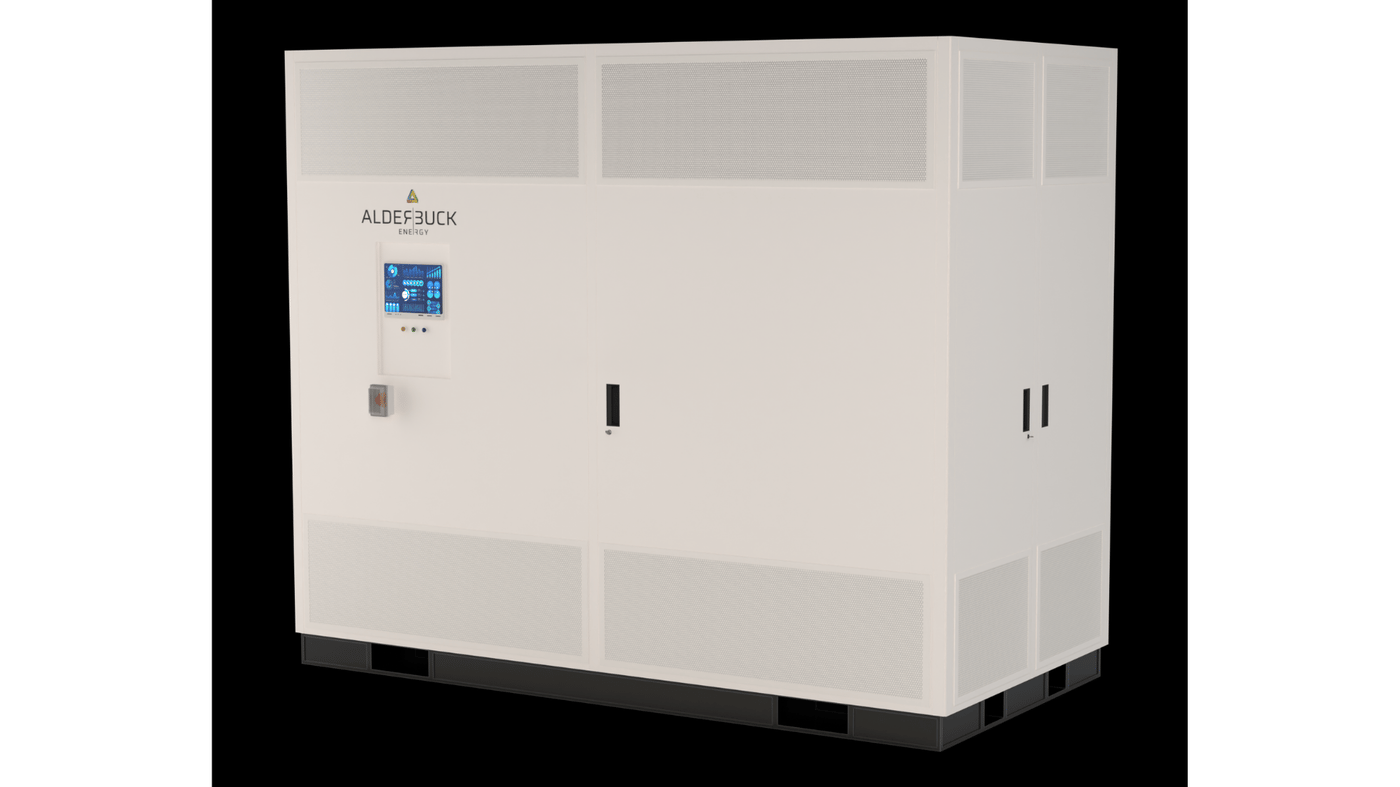
Similarly, Rick Sander, CEO of electrical infrastructure and SST supplier Alderbuck Energy, champions software-defined units like the Nexus Power Unit. Designed to replace traditional racks of discrete equipment—transformers, rectifiers, and inverters—the system uses AI-driven software (PowerVectorAI) to manage power flows in real time. Sander recommends SSTs for all new greenfield builds and high-density AI retrofits, predicting that by 2028, most new installations will utilize SSTs, with near-total industry conversion by 2035.
Voices of Caution and Alternative Paths
Despite the enthusiasm surrounding SSTs, established power system engineers urge a measured, pragmatic approach.
Clayton Gibbons, head of power systems at power-conversion system manufacturer SPOC Energy, argues that true solid-state MV-to-DC backbones still suffer from immature supply chains and unproven long-term reliability at scale. As an immediate alternative, Gibbons advocates for a transformer-plus-rectifier approach. This methodology achieves approximately 97.3% grid-to-rack efficiency while safely leveraging existing, dependable medium-voltage transformer supply chains and intelligent, fast-response power electronics. It delivers the operational benefits of DC power today without forcing operators onto a completely unproven electronics platform.
Heavy electrical equipment manufacturers share these concerns regarding field durability. Vishak Gopinath, a spokesperson for Hitachi Energy, points out the extreme engineering challenges involved:
"Operating at 34.5 kV while keeping designs compact introduces significant design and manufacturing challenges. Compact SSTs demand stringent insulation systems and high manufacturing quality to ensure a 20-year service life."
While Hitachi Energy continues to invest heavily in MV converters, transformer design, and MV SiC semiconductors, the firm maintains that the technology is still maturing and requires careful case-by-case evaluation.
Future Outlook: A Phased Transition to 2030 and Beyond
Traditional AC distribution architectures will not vanish overnight. Because mission-critical data centers prioritize uptime and risk aversion above all else, an immediate, wholesale industry-wide replacement of legacy infrastructure is practically impossible.
Instead, industry analysts project a phased, evolutionary migration path:
- Phase 1: Hybrid and Stepped Adoption (2026–2027): Hyperscalers and cloud service providers will lead the charge, deploying targeted HVDC prototypes and initial pilots. Facilities will experiment with localized 400 V DC and 800 V DC configurations alongside traditional AC backbones.
- Phase 2: Scaled Hyperscale Deployments (2027–2030): As supply chains mature, SiC component costs decline, and field reliability data accumulates, scaled deployments of solid-state transformers will become common among tier-one operators building out dedicated AI "factories."
- Phase 3: Ubiquitous Modernization (2030–2035): Driven by mounting grid constraints, tightening energy efficiency mandates, and the insatiable power demands of next-generation computing hardware, solid-state transformers and 800 V DC buses are expected to transition from cutting-edge novelties to the baseline industry standard.
Ultimately, the high-voltage direct current pivot represents more than a mere engineering upgrade. It is an existential adaptation. As artificial intelligence pushes the limits of modern physics and grid capacity, the solid-state transformer stands ready to bridge the gap between an aging electrical grid and the hyper-efficient digital future.