Executive Overview
For decades, the mechanics of search engine results pages (SERPs) operated on a relatively transparent ecosystem. When a user—human or automated—queried Google, the resulting URLs pointed directly to the destination websites. However, the proliferation of automated web scraping, aggressive rank-tracking infrastructure, and resource-intensive generative artificial intelligence (GenAI) agents has fundamentally destabilized this equilibrium.
Faced with an unprecedented surge in bot-initiated search sessions that consume vast computational resources and bypass traditional user experiences, Google is fundamentally altering how it exposes destination links.
The introduction of google.com/goto redirects represents a major tactical escalation in Google’s ongoing defense of its infrastructure. By replacing direct destination URLs with intermediate redirect links for logged-out users, Google is purposefully throwing sand into the gears of third-party rank-tracking applications, enterprise-level web scrapers, and conversational AI crawlers. While major SEO software providers like Ahrefs, Moz, and Semrush have moved quickly to adapt their infrastructure to these changes, the ripple effects across digital marketing data integrity, Google Search Console metrics, and generative AI citation reporting are only beginning to unfold.
This report provides an in-depth investigation into Google’s new redirect architecture, examining its technical implications, the broader legal battles over data scraping, and what webmasters, SEO professionals, and digital marketers must do to navigate an era of increasing data opacity.
Detailed Chronology: The Escalation of Anti-Bot Measures
Google’s struggle against automated traffic is not new, but the velocity and scale of bot activity have accelerated dramatically with the rise of Large Language Models (LLMs) and automated retrieval-augmented generation (RAG) systems. To understand the current implementation of the /goto redirect, it is necessary to examine the sequence of technical and legal hurdles Google has erected over the past several years.
The War on Resource-Heavy Scraping
Automated bots have long targeted Google to harvest organic search results for price monitoring, keyword tracking, competitor analysis, and AI model training. These automated sessions place an enormous strain on Google’s server infrastructure.
In an effort to mitigate this load, Google deployed a significant architectural change last year by deprecating and canceling the &num=100 URL parameter. Historically, this parameter allowed power users, researchers, and rank trackers to request up to 100 organic search listings in a single HTML response. By removing this option, Google forced bots to paginate through multiple search results pages, drastically increasing the computational cost, network bandwidth, and time required to scrape comprehensive SERP data.
Testing and Rolling Out google.com/goto
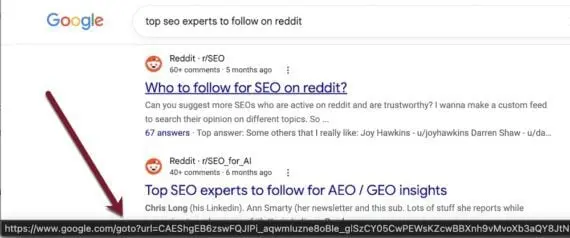
Despite the elimination of the 100-result parameter, automated scrapers and rank trackers adapted, prompting Google to develop more disruptive countermeasures. In July, the search giant began quietly testing a new URL architecture: replacing direct destination links in the SERP HTML with google.com/goto redirects.
Following a successful test phase, Google announced plans to deploy these redirects globally to the vast majority of logged-out users within a month. Because the vast majority of rank trackers, automated crawlers, and unauthenticated AI search agents operate in a logged-out state, this rollout effectively blinds standard scraping setups that rely on extracting clean, unadulterated anchor href attributes directly from the source code.

The Legal Front: Google vs. SerpAPI
The technical cat-and-mouse game between Google and data aggregators has also spilled over into the federal court system. In December 2025, Google escalated its campaign by filing a lawsuit in a U.S. District Court against SerpAPI, a prominent commercial scraping service widely utilized by conversational platforms—including OpenAI’s ChatGPT—to programmatically retrieve real-time search results.
Google’s legal argument centered on alleged violations of the Digital Millennium Copyright Act (DMCA) of 1998, specifically targeting the circumvention of access controls. Although the presiding court dismissed the initial lawsuit last month, Google responded swiftly by filing an amended complaint, signaling that the company is fully prepared to use both code and courtroom litigation to restrict unauthorized data harvesting.
Supporting Context & Metrics: Operational Impact on the SEO Ecosystem
The implementation of google.com/goto is far more than a minor cosmetic update; it fundamentally alters how data flows between Google, third-party software, and the end user. To evaluate the impact, we must analyze how different sectors of the digital ecosystem are experiencing these changes.
1. Inaccurate Rank Tracking and the Need for Clicks
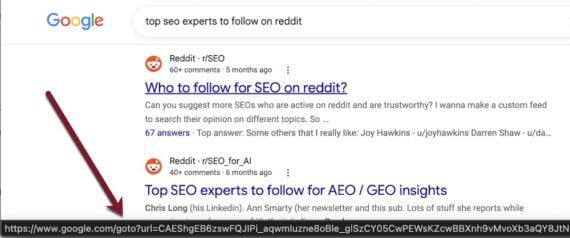
Traditional rank-tracking tools rely on parsing SERP HTML to determine precisely where a given domain ranks for targeted keywords. With the introduction of intermediate google.com/goto URLs, the raw anchor text no longer immediately exposes the definitive destination URL. Instead, obtaining the final landing page often requires executing programmatic clicks or following the redirect chain.
Major enterprise SEO platforms detected these tests early and deployed patches:
- Ahrefs and Moz: Both platforms publicly confirmed that their engineering teams identified Google’s initial testing phases and adjusted their crawling and parsing algorithms to resolve the redirect layer before it severely compromised client data.
- Semrush: Early August data indicated that Semrush dashboards occasionally reported raw
google.com/gotolinks as ranking entries. However, those anomalies quickly dissipated as Semrush implemented automated resolution protocols, successfully capturing the underlying destination URLs.
Despite these adaptations by industry leaders, smaller rank-tracking tools and proprietary in-house scripts that have been slow to update their parsing logic may experience temporary anomalies, often presenting dramatic, phantom drops in keyword rankings.
2. Search Console Performance Reports
For most site owners, Google Search Console (GSC) remains the gold standard for tracking organic performance. Because GSC aggregates data directly from Google’s internal query logs rather than external SERP scraping, standard performance metrics (clicks, impressions, average position, and click-through rates) remain structurally unaffected by the /goto rollout.
However, the behaviors of auxiliary tracking bots and GenAI platforms interacting with these redirects can subtly skew secondary analytical data. Webmasters should monitor two primary areas over the coming months:
- Referral Traffic Discrepancies: As intermediate redirect wrappers take effect, analytics platforms may misattribute traffic if intermediate HTTP headers or referrer strings are stripped or modified during the redirect process.
- Impression Volatility: Bot mitigation efforts can lead to sudden fluctuations in automated query volume, causing temporary spikes or dips in overall impression counts.
Digital marketing professionals are advised to avoid reactionary changes to their SEO strategies if GSC metrics experience short-term volatility following the deployment of Google’s updates.
3. Generative AI Citations and RAG Pipelines
Generative AI platforms that synthesize answers by querying Google in real-time are also feeling the friction. Early analyses of AI retrieval logs—such as those highlighted by security and SEO researchers—show instances where AI models pull and cite the intermediate google.com/goto URL directly within their generated outputs rather than the canonical source URL.
While AI platform developers are rapidly updating their internal extraction scripts to resolve these redirect wrappers, third-party AI citation monitoring tools may register temporary declines or anomalies in brand visibility metrics as these models adjust to Google’s structural changes.
Official Statements and Industry Perspectives
The digital marketing and SEO community has responded to Google’s latest maneuvers with a mixture of pragmatic resignation and strategic caution. Industry leaders emphasize that Google’s primary motivation is not necessarily to penalize legitimate marketers, but rather to protect its proprietary server infrastructure from parasitic data extraction.
Ann Smarty, a prominent voice in the SEO community, notes that the overarching trend points unmistakably toward data restriction:
"Google seems laser-focused on blocking bot access at every conceivable layer. Whether through deprecating URL parameters, altering HTML link structures, or pursuing scrapers in federal court, the era of frictionless, open access to raw search result data is coming to a close. Expect less publicly available data and increasingly fuzzy reporting going forward."
Enterprise software developers echo this sentiment. While commercial platforms have successfully engineered workarounds for the /goto parameters, developers acknowledge that maintaining accurate data pipelines requires a continuous cycle of engineering updates to counter Google’s iterative security deployments.
Future Outlook: What Webmasters and Marketers Must Do
As Google continues to fortify its walls against automated crawlers and unauthenticated scrapers, the landscape of search engine optimization is undergoing a permanent structural shift. Professionals operating within the digital ecosystem must adapt their methodologies to thrive in an environment characterized by reduced data transparency and heightened friction.
Strategic Recommendations for SEO Professionals
- Diversify Performance Measurement: Do not rely exclusively on third-party rank-tracking tools. Cross-reference data streams by integrating first-party analytics (such as server log analysis and direct GSC data) to maintain an accurate picture of organic visibility.
- Audit Tracking Tool Reliability: If you utilize specialized or boutique rank-tracking software, verify with your vendors whether their parsing infrastructure has been updated to successfully resolve
google.com/gotoredirect chains. Failing to do so risks misinforming stakeholders based on phantom ranking drops. - Prepare for Fuzzier Data Metrics: Accept that the granularity of external SEO reporting will likely continue to degrade. As search engines close data loops to protect against AI scrapers, strategic decision-making must rely on macro-trends rather than micro-fluctuations in daily keyword positions.
- Optimize for GenAI Visibility: With generative AI platforms grappling with citation parsing and redirect resolution, ensure that your brand’s digital footprint is authoritative, clean, and easily indexed across multiple discovery channels—minimizing reliance on traditional search scraping paths alone.
Ultimately, the deployment of google.com/goto serves as a clear warning shot to the automation community. The battle for control over search data is intensifying, and those who rely on transparent, frictionless SERP access must build robust, adaptable data architectures to survive the journey ahead.