Eight months ago, Wall Street reached a swift and unforgiving verdict: Artificial Intelligence was going to consume the B2B software ecosystem. In the ensuing panic, roughly $2 trillion in market capitalization evaporated from enterprise technology equities. Investors feared that autonomous AI agents would disintermediate traditional software suites, rendering seats redundant and turning legacy architectures into digital ghost towns.
Then, reality intervened.
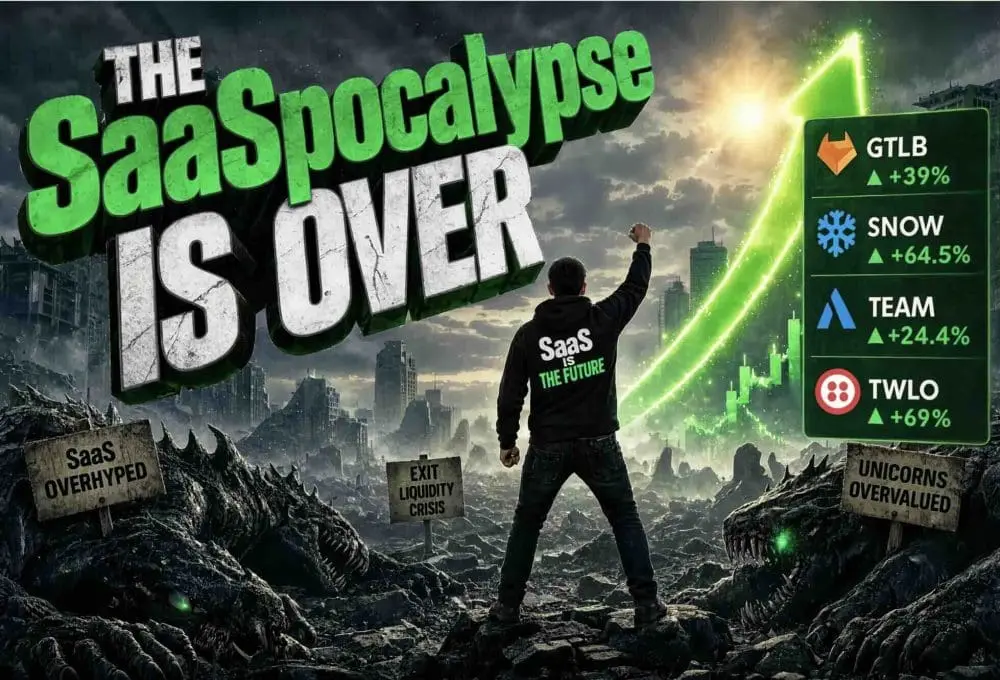
The recovery at the index level has been nearly complete. The iShares Expanded Tech-Software ETF (IGV) closed September 3 at $106.81, roaring back roughly 40% from its April low near $74, punctuated by a blistering 16% surge in August alone. State Street’s XSW software ETF notched an all-time high in late August, and institutional voices like Jefferies reassured clients over the Labor Day weekend that fears of outright AI displacement were significantly overblown.
Yet, beneath this superficial index-level recovery lies a staggering 117-point performance spread. CrowdStrike is up 83% on the year, while monday.com sits down 36%. Both sell software to enterprise buyers, and both boast relatively strong top-line growth—albeit with radically different slopes. The central question for founders, operators, and investors is no longer if AI will change enterprise software, but how the public markets are choosing winners and losers in real time.
Executive Overview: The Anatomy of a Market Bifurcation
To understand the current state of B2B software, one must look past aggregate market movements and examine the structural fault lines exposed by the generative AI wave. The 2026 market has effectively discarded blanket valuations, opting instead for a brutal, highly granular reassessment of business models.
Three primary pillars have driven this massive market sorting:
- The Billing Unit: The structural debate between seat-based pricing versus consumption- and outcome-based monetization.
- AI Alignment: Whether a software platform’s core utility expands or contracts as enterprises deploy autonomous AI agents.
- Valuation Entry Points: The multiples companies carried into January 2026, which dictated how much room they had for error when macroeconomic and technological headwinds intensified.
While top-line growth metrics traditionally dictated stock performance, the 2026 tape has proven that raw growth alone is no longer a shield. Companies growing at identical rates have experienced diverging fortunes of over 100 percentage points, leaving market watchers to conclude that the fundamental architecture of monetization is now the ultimate arbiter of enterprise value.
Detailed Chronology: From the $2 Trillion Wipeout to the August Rebound
The Winter of Discontent (Late 2025 to April 2026)
The seeds of the 2026 software correction were planted as generative AI moved rapidly from proof-of-concept experiments to enterprise deployment. Market sentiment turned hostile toward software-as-a-service (SaaS) incumbents. The narrative was simple: if an AI agent can write code, manage workflows, and interact with customers, enterprises will buy fewer software seats.
This sentiment triggered an indiscriminate sell-off. High-growth and moderate-growth B2B software stocks alike were battered. Salesforce plunged nearly 30% early in the year before hitting a 52-week low of $146 on June 22—more than 30% off its late-December highs. Atlassian suffered an even more harrowing descent, dropping roughly 57% by March with a 52-week low of $56.01.
The Summer Realignment and Q2 Earnings Catalysts
The narrative began to fracture in August during the second-quarter earnings reporting season. Rather than succumbing to AI displacement, several legacy and cloud giants demonstrated that AI was not only driving new product adoption but was also generating tangible, incremental annual recurring revenue (ARR).
Salesforce reported its Q2 FY27 earnings on August 26, catalyzing a massive 40% rally over the course of the month to close at $264.43. Atlassian posted a blowout Q4 FY26 on August 6, triggering a single-day 35.31% jump and an 88% monthly surge to close at $194.68.
The market re-rated these giants not on vague promises, but on hard metrics: Salesforce disclosed $1.5 billion in Agentforce ARR and noted that Slackbot had surpassed 1 million users in just five months. Atlassian revealed over 1 million monthly active users on its MCP server and Teamwork Graph CLI. Proof of an additive AI revenue line broke the ice, proving that enterprise software could monetize the AI shift rather than be crushed by it.

Supporting Context & Metrics: Winners vs. Losers
The Winners: Consumption and Security (Up 54% to 83%)
The ultimate victors of the 2026 market recovery share a common trait: they either bill by consumption or sit within a budgetary vector that AI naturally expands.
When an enterprise deploys autonomous AI agents, the operational footprint explodes. Agents generate more system logs to monitor, more data queries to execute, higher network traffic to route, and a vastly expanded attack surface to defend. Consequently, infrastructure and security providers reap the rewards regardless of whether the primary user is human or machine.
- Datadog and Snowflake: These platforms capture value directly from telemetry and data consumption. Snowflake gets paid regardless of who—or what—runs the query; Datadog collects revenue whether system telemetry originates from a human developer or an automated agent.
- CrowdStrike: Security represents the cleanest expression of the AI demand-driver thesis. As enterprise adoption of AI accelerates the proliferation of vulnerabilities, the attack surface broadens. CrowdStrike’s momentum underscores the reality that digital disruption is the primary catalyst for security demand.
The Consumption Caveat: Consumption pricing is a double-edged sword. On August 6, Datadog suffered a 19% drop—its steepest single-day decline since its 2019 IPO—despite beating earnings estimates and raising guidance. Management disclosed that its single largest customer was scaling back usage. Consumption pricing offers explosive upside during workload expansions, but it introduces acute customer concentration and volatility risks.
The Losers: Seat-Priced Platforms (Down 33% and Beyond)
Conversely, companies anchored strictly to traditional per-seat pricing models faced unrelenting pressure, even when their underlying business metrics remained relatively robust.
- HubSpot: Down 33.3% year-to-date, HubSpot experienced its worst trading day in a decade on August 6, tumbling 19.47%. While Q2 revenue grew 20% year-over-year, net customer additions fell to 7,000 (missing expectations of 9,000 to 10,000), and net revenue retention slipped to 102%. Management cited longer sales cycles, larger buying committees, and intense C-suite budget scrutiny as enterprises prioritized AI tokens over traditional seat licenses.
- monday.com: Down 35.5% despite posting steady revenue growth of 24% in Q1 and 22% in Q2. Although the company restructured and transitioned to consumption-based pricing for AI products—doubling AI ARR quarter-over-quarter to comprise 17% of net new ARR—the public markets largely ignored the transition.
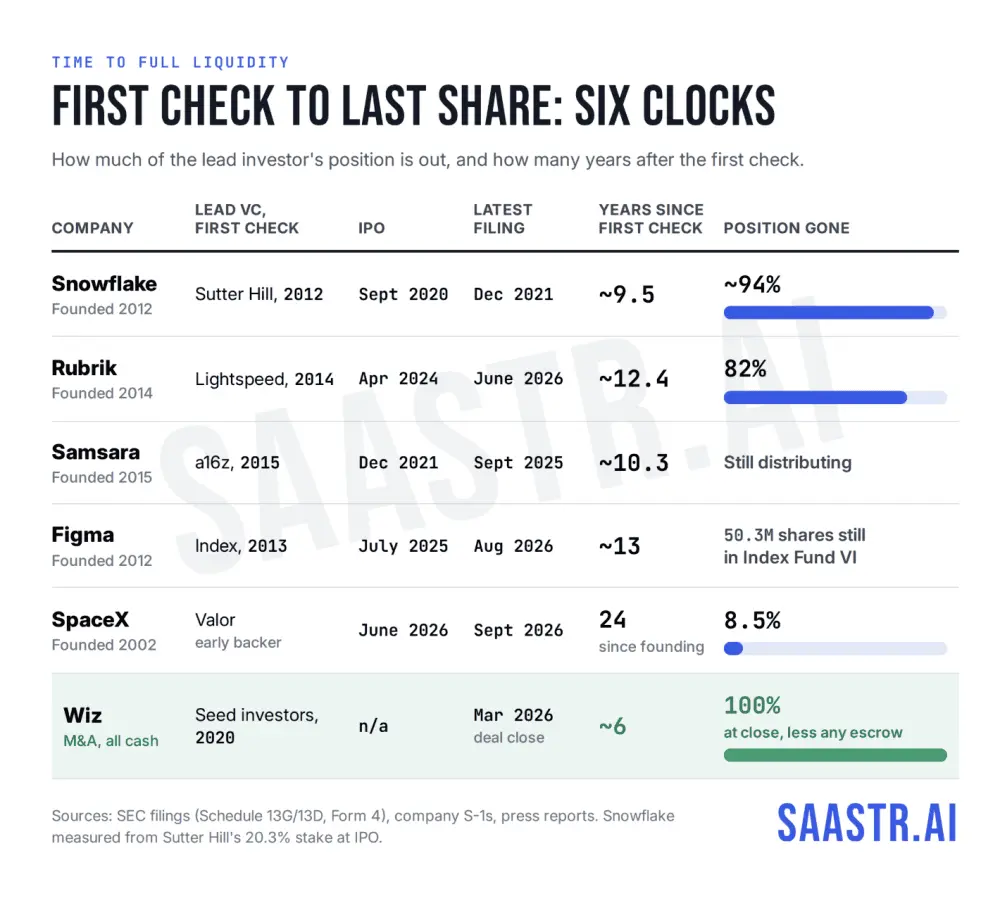
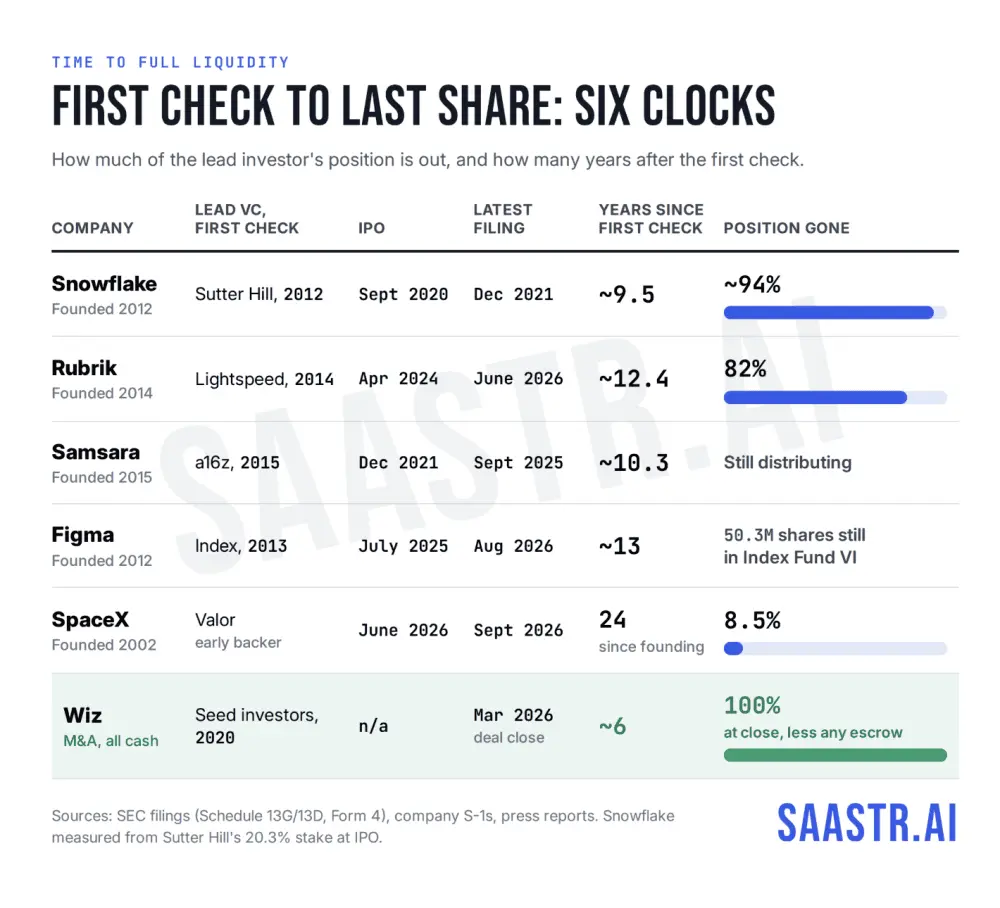
- Figma: Down 35.1% with a market cap of $13.0 billion, Figma sits as one of the market’s supreme growth engines, boasting a stellar 48% top-line growth rate and 136% net revenue retention. Yet, it remains one of the worst-performing stocks in the cohort. Despite a beat-and-raise quarter in August, the stock fell 15% because its Q3 guidance signaled modest sequential revenue growth, compounded by a five-point drop in gross margins driven by AI inference costs eating into COGS while its pricing unit remained static.
Official Statements and Industry Insights
The disconnect between top-line growth and stock performance has forced industry leaders and financial institutions to reassess long-held SaaS operating principles.
Reflecting on the cybersecurity landscape, CrowdStrike CEO George Kurtz emphasized that the rapid global adoption of AI has fundamentally widened the corporate attack surface, transforming technological disruption into an organic demand driver for enterprise-grade defense mechanisms.
Meanwhile, mid-market headwinds were laid bare during HubSpot’s earnings call, where executive leadership highlighted structural changes in corporate spending habits:
"Larger buying committees, mandatory C-suite and board-level approvals, and significantly extended sales cycles are becoming the baseline as budget scrutiny increases across the mid-market."
Financial institutions have similarly updated their investment theses. Jefferies analysts noted over the Labor Day weekend that while enterprise caution is real, broader market fears regarding total AI displacement of B2B software are fundamentally overblown. However, the private markets are keeping score in parallel with public exchanges: Airtable, once valued at nearly $12 billion during its 2021 peak, agreed to a buyout by Bending Spoons for under $1.3 billion, illustrating the stark valuation resets occurring across the tech landscape. Concurrently, buyout rumors swirling around Workday and Silver Lake suggest that private equity firms are circling mature, cash-flow-positive SaaS companies trading at compressed multiples.
Future Outlook: What Lies Ahead for the Next 6–12 Months?
As the B2B software sector looks toward the remainder of 2026 and into 2027, several critical questions will determine whether the current market equilibrium holds or fractures once more:
- Can Consumption Models Withstand a Full Budget Cycle?
The bull case for infrastructure stalwarts like Snowflake and Datadog rests on a relatively brief window of AI-driven results. Datadog’s recent experience with its largest customer cutting usage serves as a potent reminder that consumption meters run in both directions. The upcoming quarters will test whether consumption resilience can weather broader enterprise IT budget optimizations. - Will Mid-Market Net Adds Stabilize?
For companies like HubSpot, management’s reduced guidance projecting quarterly net customer additions down to 5,000–6,000 represents the single most critical barometer for mid-market B2B health. If net additions stabilize, the recent drawdowns will be viewed in hindsight as an emotional overreaction. If they continue to drift lower, the market’s pessimistic pricing will be vindicated. - Will the Market Reward Business Model Transitions?
Incumbents are increasingly forced to re-architect their pricing models to capture AI value. While monday.com successfully doubled its AI ARR after shifting to consumption pricing, the market initially offered zero reward. Salesforce continues to navigate multiple pricing frameworks simultaneously. Until public markets learn to price these complex business model transitions in advance, incumbents will likely continue to absorb initial drawdowns before receiving credit for successful execution. - Will Take-Private M&A Activity Accelerate?
With a massive cohort of enterprise software companies growing at 12% to 20% annually while generating real cash flow under compressed valuations, private equity appetite is swelling. The rumored interest in Workday and the Airtable acquisition signal that financial buyers see deep value in discounted enterprise software assets.
Key Takeaways for Founders and Investors
For software founders benchmarking against public comps, the overarching lesson of 2026 is unambiguous: the public market pays a premium for revenue streams that scale in tandem with AI adoption, provided the asset was acquired at a rational entry multiple.
The 117-point spread between the best and worst performers this year ultimately boils down to a single engineering and financial design choice: What unit sits on the invoice, and does that unit automatically expand when your customer deploys an army of autonomous AI agents? Until legacy SaaS providers successfully solve that equation, the great B2B software re-rating will continue to separate the victors from the vanquished.